

Early Symptoms of Dementia
Your mother forgets a conversation you had yesterday. Your father asks the same question twice within a few minutes. At first, it feels like normal forgetfulness. But when these moments start happening often, families begin to wonder: could this be something more?
Knowing the early symptoms of dementia can make a real difference. The sooner a family notices the signs, the sooner they can talk to a doctor, plan ahead, and get the right support in place. This article walks through the most common early warning signs so you know what to watch for and when to act.
Early Symptoms of Dementia at a Glance
If you’re short on time, here are the signs covered in this article:
- Memory loss that disrupts daily life
- Trouble planning or solving problems
- Difficulty completing familiar tasks
- Confusion about time or place
- Misplacing things and losing the ability to retrace steps
- Changes in mood or personality
- Withdrawal from work or social activities
- Poor judgment
- Trouble finding the right words
- Struggling with money, phones, or other familiar routines
Below is a closer look at each one, plus how to tell them apart from normal aging.
What Is Dementia?
Dementia is not one single disease. It’s a general term for a decline in memory, thinking, and daily function that is severe enough to affect everyday life. It happens when brain cells are damaged over time, and Alzheimer’s disease is the most common cause behind it.
Dementia usually develops slowly. That’s exactly why early symptoms are so easy to miss — they can look like normal aging at first.
Early Signs of Dementia to Watch For
Here are the changes that families and caregivers most often notice first.
Memory Loss That Disrupts Daily Life
Everyone forgets things sometimes. But with dementia, forgetting goes further — repeating the same question minutes apart, forgetting recently learned information, or relying heavily on notes and reminders for things they used to remember easily.
Trouble Planning or Solving Problems
Some people start struggling with tasks that involve steps, like following a recipe, paying monthly bills, or keeping track of a household budget. Simple plans that once felt easy may now take much longer or feel confusing.
Difficulty Completing Familiar Tasks
A person may have trouble finishing daily tasks they’ve done for years — driving to a familiar place, managing a grocery list, or remembering the rules of a favorite game.
Confusion With Time or Place
Losing track of dates, seasons, or the passage of time is another early sign. Some people forget where they are or how they got there, especially outside their usual routine.
Misplacing Things and Losing the Ability to Retrace Steps
Everyone misplaces items now and then. With dementia, it becomes a pattern — putting things in unusual places and being unable to retrace their steps to find them, sometimes leading to accusations that others have taken the item.
Changes in Mood or Personality
Family members often notice this one first. A person may become unusually anxious, suspicious, withdrawn, or easily upset, especially when they’re outside their comfort zone or normal routine.
Withdrawal From Work or Social Activities
Some people start pulling away from hobbies, social events, or work projects they used to enjoy. This often happens because the changes they’re going through make them feel embarrassed or overwhelmed.
Poor Judgment
Early dementia can affect decision-making — for example, giving away large amounts of money to strangers, paying less attention to grooming, or wearing clothes that don’t match the weather.
Trouble With Words
Struggling to find the right word during a conversation, repeating phrases, or losing the thread mid-sentence can also be an early sign, separate from the occasional “it’s on the tip of my tongue” moment we all experience.
Signs Families Often Overlook
Some early signs don’t look like “memory loss” at all, so families miss them at first:
- Trouble managing money or paying bills correctly
- Struggling to operate a familiar phone or appliance
- Repeating the same story without realizing it’s already been told
- Losing track partway through a conversation
- Unusual suspicion toward family members
- Less attention to grooming or dressing appropriately
- Growing hesitant to go out alone, even to familiar places
If you notice a few of these together, it’s worth paying closer attention.
Early Symptoms vs. Normal Aging
Families often ask how to tell the difference between normal forgetfulness and something more serious. Here’s a simple way to look at it:
| Normal Aging | Possible Early Dementia |
|---|---|
| Forgetting a name but remembering it later | Forgetting recently learned information entirely |
| Occasionally misplacing keys | Putting items in unusual places and being unable to find them |
| Making an occasional bad decision | A noticeable pattern of poor judgment |
| Sometimes losing track of the day of the week | Losing track of dates, seasons, or where they are |
If the changes are occasional, that’s usually part of normal aging. If they’re becoming frequent and starting to affect daily life, it’s worth getting checked.
A quick note on sudden confusion: dementia symptoms usually build up slowly, over months or years. If an older adult becomes confused, unusually drowsy, or disoriented suddenly — over hours or a couple of days — that’s different from typical dementia progression. It can point to other causes, like an infection or a reaction to medication, and needs prompt medical attention rather than a routine check-up.
When to See a Doctor
Don’t wait for symptoms to become severe before reaching out for medical advice. A doctor can run proper assessments to understand what’s really going on — some causes of memory and thinking changes, like vitamin deficiencies or thyroid problems, are treatable and not related to dementia at all.
An early diagnosis also gives families more time to plan ahead, explore care options, and make decisions together while the person can still take part in those conversations.
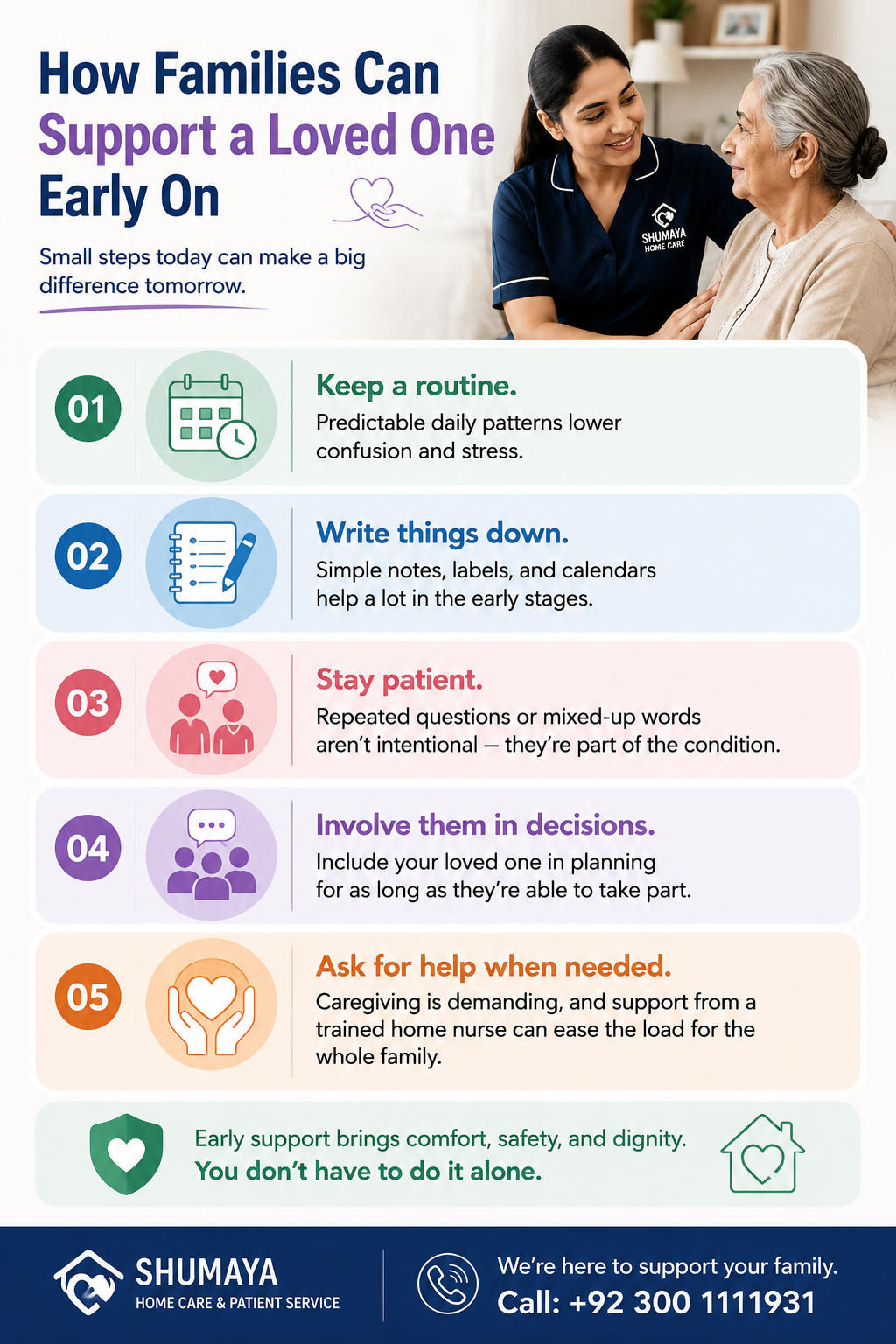
How Families Can Support a Loved One Early On
- Keep a routine. Predictable daily patterns lower confusion and stress.
- Write things down. Simple notes, labels, and calendars help a lot in the early stages.
- Stay patient. Repeated questions or mixed-up words aren’t intentional — they’re part of the condition.
- Involve them in decisions. Include your loved one in planning for as long as they’re able to take part.
- Ask for help when needed. Caregiving is demanding, and support from a trained home nurse can ease the load for the whole family.
For families in Lahore managing early-stage dementia at home, professional dementia home care services can offer trained support, safety supervision, and daily routines built around the patient’s needs — while allowing them to stay comfortable in familiar surroundings. This kind of support often works alongside broader elderly care services and patient care services in Lahore as needs change over time.
Frequently Asked Questions
What are the first warning signs of dementia? Memory loss that disrupts daily life is typically the earliest and most noticeable sign, though changes in mood or personality are sometimes noticed even before memory problems.
What is the difference between normal aging and dementia? Normal aging involves occasional forgetfulness that doesn’t interfere with daily life — like misplacing keys or blanking on a name you remember later. Dementia involves a pattern of memory and thinking changes that start to affect everyday tasks and independence.
Can forgetting names be an early sign of dementia? Occasionally forgetting a name is normal. Frequently forgetting the names of close family members, or not recognizing them later, is more concerning and worth discussing with a doctor.
Can dementia symptoms start suddenly? Typical dementia develops gradually. Sudden confusion over hours or days usually has a different cause — such as an infection, dehydration, or a medication reaction — and needs prompt medical attention.
Can depression cause symptoms similar to dementia? Yes. Depression, certain medications, thyroid problems, and vitamin deficiencies can all cause memory and concentration problems that look like early dementia. A doctor can help tell the difference.
Is forgetfulness always a sign of dementia? No. Occasional forgetfulness is a normal part of aging. It becomes a concern when it happens often and starts to affect a person’s ability to manage daily tasks safely.
Final Thoughts
Noticing the early symptoms of dementia isn’t about panic — it’s about paying attention. The earlier a family recognizes these changes, the more options they have: getting a proper diagnosis, exploring treatment for reversible causes, and building a care plan that keeps their loved one safe and comfortable.
If you’re noticing these signs in someone you love, a conversation with a doctor is the right next step — and support from experienced home nursing services in Lahore can help your family manage the journey ahead with confidence.