
A daily routine for dementia patients can make everyday life more manageable for both the person with dementia and their family. Familiar times for waking, meals, personal care, activities, rest, and bedtime can reduce confusion and make the day feel more predictable.
The routine does not need to be strict. The best schedule is simple, familiar, and flexible enough to match the person’s abilities, preferences, and energy levels.
Dementia can make familiar tasks harder to remember or complete. Having activities happen in a similar order each day can make them easier to follow.
A regular routine can help a person:
Know what to expect during the day
Take part in familiar activities
Maintain some independence
Get regular meals and rest
Stay active during the day
Prepare for nighttime more easily
The goal is not to keep the person busy all day. It is to create a comfortable rhythm that works for them.
The times below are examples, not fixed medical instructions. Adjust them according to the person’s usual sleep pattern, meal times, prescribed medicines, appointments, and energy levels.
7:00–8:00 AM
Start the morning calmly rather than rushing the person.
The morning routine may include:
Getting out of bed safely
Using the bathroom
Washing and brushing teeth
Getting dressed
Taking prescribed medicines according to the medication schedule
Having breakfast
Give the person enough time to complete tasks they can still manage safely.
Simple choices can make dressing easier. Instead of asking, “What would you like to wear?” offer two options, such as, “Would you like the blue shirt or the white shirt?”
8:00–9:00 AM
Try to serve breakfast at around the same time each morning and in a familiar place.
Encourage fluids throughout the day unless a healthcare professional has advised fluid restriction. Meals should follow the person’s usual dietary needs.
If the person repeatedly has difficulty swallowing, coughs during meals, or has a major change in eating, speak with their healthcare professional.
9:30–11:00 AM
Morning may be a good time for activities when the person is more alert.
Choose something simple and familiar, such as:
A short walk if it is safe
Gentle movement or stretching
Watering plants
Folding towels
Listening to familiar music
Looking through family photographs
Helping with a simple household task
The activity should match the person’s current abilities. If something becomes frustrating or too difficult, simplify it or try something else.
12:00–1:30 PM
Keep lunch around the same time each day when possible.
A quiet, familiar eating environment may make meals easier. If the person becomes distracted or confused during meals, reducing unnecessary noise and activity around them may help.
After lunch, allow some quiet time or a short rest. Avoid long or late naps if they appear to interfere with nighttime sleep.
2:00–4:00 PM
Choose one or two meaningful activities rather than filling the entire afternoon.
Depending on the person’s interests, activities could include:
Listening to favorite songs
Gardening
Looking at photographs
Reading a familiar book
Simple puzzles
Talking about familiar memories
Sitting outside in a safe area
Helping with a simple household task
The activity does not need to be difficult. A familiar task that gives the person a sense of involvement can be just as useful as a structured exercise.
4:00–6:00 PM
Some people with dementia become more confused, restless, or irritable later in the day. This is sometimes called sundowning.
During this time, caregivers can keep things calm by:
Reducing unnecessary noise
Keeping rooms well lit
Offering a familiar activity
Avoiding complicated tasks
Providing reassurance
Following the usual meal and evening schedule
If confusion develops suddenly or is very different from the person’s usual behavior, contact a healthcare professional rather than assuming it is part of dementia.
6:00–8:00 PM
Keep the evening predictable.
Dinner, prescribed evening medicines, personal care, and relaxing activities can follow a familiar order each night.
Quiet activities such as listening to music or talking with family may be more suitable than stimulating activities close to bedtime.
8:00–10:00 PM
A consistent bedtime can help the person understand that the day is coming to an end.
Before bed:
Help with bathroom needs
Assist with washing and changing if needed
Make the bedroom comfortable
Keep walking paths clear
Provide suitable night lighting
Keep commonly needed items easy to reach
If the person wakes during the night, respond calmly and provide reassurance. Avoid arguing with them about what they believe is happening.
Several instructions at once can be confusing.
Instead of saying:
“Get dressed, brush your teeth, come downstairs, and have breakfast.”
Try:
“Let’s brush your teeth first.”
Then guide the person through the next step.
Let the person do tasks they can still manage safely. They may need reminders or some assistance, but taking over every task can reduce opportunities for independence.
Some people are more alert in the morning, while others function better later. Schedule activities that require more attention when the person is usually feeling their best.
A visible clock, calendar, labels, or simple daily schedule may help the person understand what is happening next.
A routine should support the person, not make them feel rushed.
If they refuse an activity, consider whether they are tired, uncomfortable, hungry, or confused. If appropriate, try again later rather than turning the activity into an argument.
Doctor appointments, family visits, illness, and other events can interrupt a normal dementia care routine.
When a change is necessary:
Explain it simply
Give a reminder beforehand when possible
Keep other parts of the day familiar
Allow extra time
Bring familiar items when away from home
Stay calm if the person becomes confused
You do not need to maintain the schedule perfectly. Consistency is helpful, but flexibility is also part of good dementia care.
As dementia progresses, a person may need more assistance with personal care, meals, mobility, supervision, and daily activities.
Families in Lahore who find these tasks difficult may consider dementia home care services to provide additional support while the person remains in a familiar home environment.
Shumaya Home Care & Patient Service provides home-based support for families caring for elderly people and patients who need assistance with daily care.
There is no single routine that works for everyone. A useful routine usually includes regular waking, meals, personal care, meaningful activities, rest, and bedtime. It should be adjusted to the person’s abilities and preferences.
A consistent routine can help reduce confusion, but it does not have to be exactly the same every day. Keep major activities such as meals and bedtime reasonably consistent while allowing room for normal changes.
Simple and familiar activities are often best. Walking, listening to music, gardening, looking at photographs, folding laundry, and helping with simple household tasks can provide movement and enjoyment.
Avoid turning the activity into a confrontation. Consider why they may be refusing it and, when appropriate, try again later with a simpler approach.
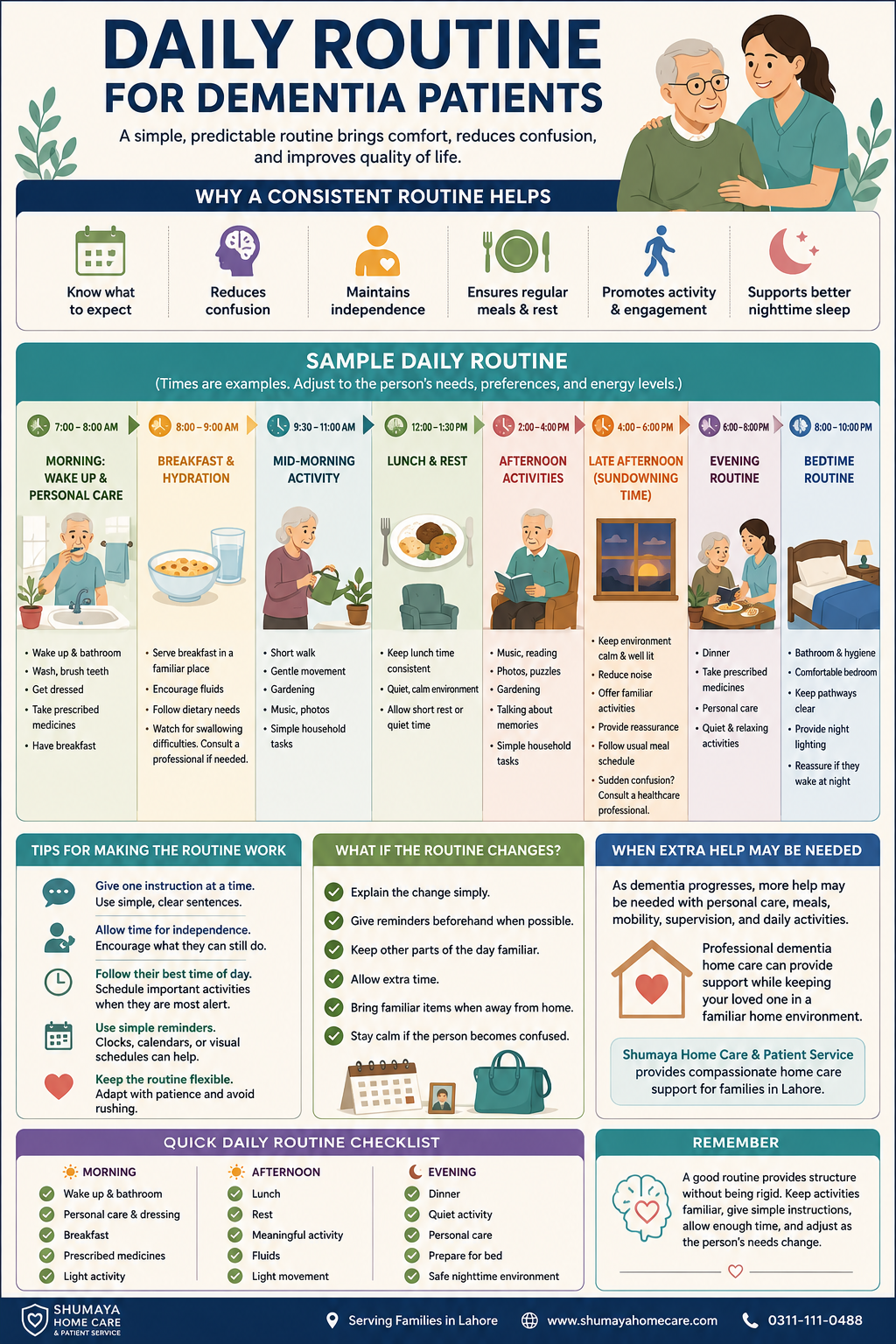
Morning
Wake up and bathroom
Personal care and dressing
Breakfast
Prescribed medicines
Light activity
Afternoon
Lunch
Rest
Meaningful activity
Fluids
Light movement
Evening
Dinner
Quiet activity
Personal care
Prepare for bed
Safe nighttime environment
A good daily routine for dementia patients provides structure without making the day rigid. Keep activities familiar, give simple instructions, allow enough time, and adjust the routine as the person’s needs change.