

Wandering is a common concern for families caring for someone with dementia. A person may walk around the house repeatedly, head toward an exit, or leave home without telling anyone. They may be looking for a familiar person or place, following an old routine, or simply feeling confused about where they are.
Wandering can become a safety concern when a person gets lost or cannot find their way home. Wandering prevention in dementia patients focuses on understanding the person’s behavior, reducing common triggers, improving home safety, and planning ahead in case they leave unexpectedly.
Why Do Dementia Patients Wander?
Wandering can look different from one person to another. Some people walk without a clear destination, while others may have a specific goal in mind.
A person with dementia may wander because they:
Are looking for a familiar person or place
Believe they need to go to work or another familiar location
Want to return to a former home
Feel restless, bored, anxious, or uncomfortable
Need to use the bathroom or find food
Become confused about the time or day
Are trying to follow a familiar daily routine
Become disoriented in an unfamiliar environment
Sometimes the reason is not obvious. Instead of assuming the behavior is intentional or difficult, caregivers can watch for patterns and possible triggers.
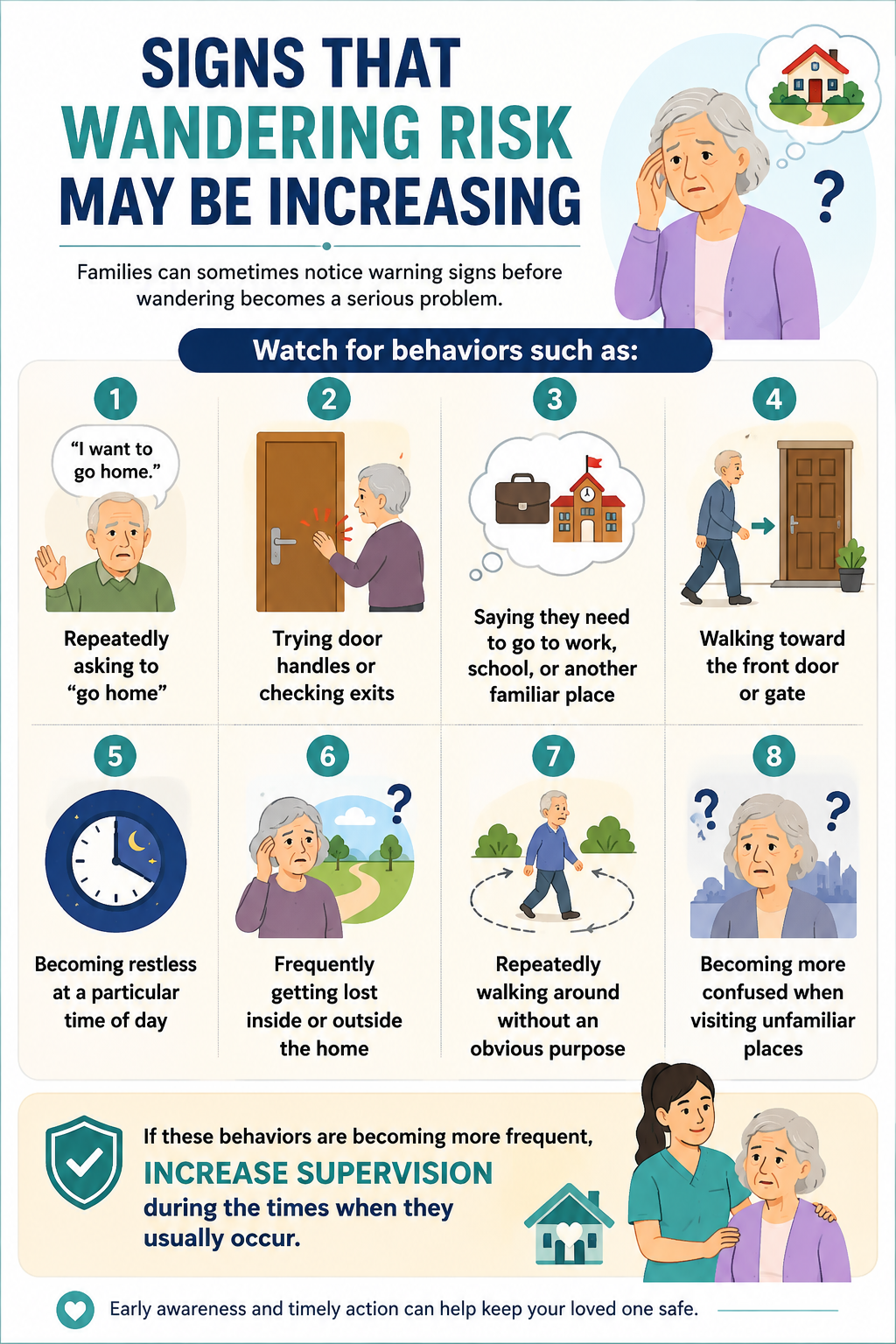
Signs That Wandering Risk May Be Increasing
Families can sometimes notice warning signs before wandering becomes a serious problem.
Watch for behaviors such as:
Repeatedly asking to “go home”
Trying door handles or checking exits
Saying they need to go to work, school, or another familiar place
Walking toward the front door or gate
Becoming restless at a particular time of day
Frequently getting lost inside or outside the home
Repeatedly walking around without an obvious purpose
Becoming more confused when visiting unfamiliar places
If these behaviors are becoming more frequent, increase supervision during the times when they usually occur.
How to Prevent Wandering at Home
There is no guaranteed way to prevent wandering. However, several practical steps can reduce the risk and help make the home safer.
1. Keep a Predictable Daily Routine
A familiar routine may help reduce confusion and restlessness.
Try to keep regular times for:
Waking up
Meals
Personal care
Activities
Rest
Going to bed
If wandering usually happens at a certain time, plan additional supervision around that period.
A routine does not need to be complicated. Simple, familiar activities repeated at roughly the same time each day can provide structure.
2. Identify Wandering Triggers
Pay attention to what happens shortly before the person starts walking around or tries to leave.
For example, wandering may happen when the person:
Becomes tired
Is looking for someone
Needs the bathroom
Becomes bored
Is in a noisy environment
Believes it is time to leave for work
Becomes confused later in the day
A simple wandering behavior log can help. Record the time, location, activity, and anything unusual that happened before the behavior.
After several days, you may notice a pattern that helps you plan supervision more effectively.
3. Make Doors and Exits Safer
External doors deserve special attention when a person with dementia has a history of leaving without supervision.
Depending on the person’s needs and the home, families may consider:
Door alarms or alerts
Motion sensors
Secure fencing around suitable outdoor areas
Visual cues that make exits less confusing
Keeping car keys out of easy reach
Any safety device should be used carefully. It must not create a fire, evacuation, or other emergency hazard. A person should still be able to leave safely when there is a genuine emergency.
4. Use Identification
If a person with dementia leaves home unexpectedly, identification may help others contact the family.
Consider using an identification bracelet or another suitable form of identification containing:
The person’s name
A family caregiver’s phone number
Relevant medical information, where appropriate
Families should also keep a recent photograph of the person readily available. This can be useful if a search becomes necessary.
5. Reduce Boredom and Restlessness During the Day
Meaningful daytime activities may help reduce boredom and restlessness for some people.
Depending on the person’s abilities, activities could include:
Folding clothes
Looking through family photographs
Listening to familiar music
Taking a supervised walk
Gardening with supervision
Simple household tasks
Talking about familiar people and memories
Activities should be appropriate for the person’s abilities and should not be treated as a replacement for supervision when there is a high risk of wandering.
What If Wandering Happens in the Evening?
Some people with dementia become more confused, restless, or agitated later in the afternoon or evening. If wandering tends to happen around this time, families can plan ahead.
Try to:
Keep the evening routine calm and familiar
Reduce unnecessary noise and activity
Make sure the person has used the bathroom
Offer a familiar, relaxing activity
Increase supervision during the person’s usual wandering period
Keep exits secure while maintaining safe emergency access
Knowing the person’s usual pattern can make these periods easier to manage.
What to Do If a Dementia Patient Wants to Leave
Arguing or repeatedly telling the person that they are wrong may increase anxiety or frustration.
Instead, stay calm and try to understand what they are trying to do.
You might ask:
“Where would you like to go?”
If the person says they need to go somewhere familiar, acknowledge the concern rather than immediately correcting them.
For example:
“You want to go home. Let’s sit down for a moment and have some tea.”
You can then redirect their attention to a familiar activity.
If the person is physically able to walk safely, a supervised walk may also help with restlessness.
The goal is not to win an argument. It is to keep the person calm and safe.
What to Do If a Person With Dementia Goes Missing
If a person with dementia leaves home and cannot be found, start searching immediately and contact local emergency services or police promptly.
Do not assume that the person will return on their own. Someone who is confused may continue walking, become lost, or be unable to explain where they live.
Give responders and people helping with the search as much useful information as possible, including:
A recent photograph
The person’s name and age
What they were wearing
The time they were last seen
Their usual walking routes
Familiar places they may try to reach
Any mobility problems
Important medical information
Family members can also check nearby familiar locations while help is being arranged.
Having this information prepared in advance can save time during an emergency.
When to Speak With a Doctor
A sudden increase in wandering or confusion should not automatically be blamed on dementia.
Speak with a healthcare professional if wandering is:
New or suddenly worse
Accompanied by unusual confusion
Associated with a major behavior change
Happening with signs of illness or pain
Creating a serious safety risk
Pain, infection, medication changes, dehydration, or another health problem can sometimes contribute to sudden changes in confusion or behavior.
A healthcare professional can assess the change and determine whether further evaluation is needed.
How Home Care Can Help With Wandering Risk
Caring for a person with dementia can become difficult when they need frequent supervision, especially when family caregivers have work and other responsibilities.
Professional dementia home care can provide additional support with daily routines, supervision, personal care, and safe activities.
For families in Lahore, professional home nursing and patient care support may be useful when a person with dementia needs closer observation at home.
The level of support should depend on the person’s condition, mobility, wandering history, and overall care needs.
Frequently Asked Questions
Is wandering normal in dementia?
Wandering can occur in people with dementia, particularly when memory, judgment, or orientation are affected. However, repeated or suddenly increased wandering should be discussed with a healthcare professional.
How can I prevent a dementia patient from wandering outside?
There is no guaranteed way to prevent wandering. A predictable routine, attention to triggers, appropriate supervision, safer exits, identification, and meaningful activities can help reduce the risk.
Should I lock the doors to prevent wandering?
Door safety measures may help, but they must not create a fire or emergency escape hazard. Families should use safety measures appropriate for the person’s needs while maintaining a safe way to exit during an emergency.
What should I do if my loved one with dementia disappears?
Start searching immediately and contact local emergency services or police promptly. Tell them that the missing person has dementia and may be confused or unable to explain where they live. Provide a recent photograph, clothing details, usual routes, and familiar destinations.
Can a daily routine reduce wandering?
A predictable routine may help reduce confusion and restlessness for some people with dementia. It works best when combined with suitable activities and appropriate supervision.
Final Thoughts
Wandering prevention in dementia patients is mainly about reducing safety risks while helping the person feel calm, familiar, and understood.
Watch for changes in behavior, learn the person’s wandering patterns, maintain a predictable routine, make exits safer, provide meaningful activities, and keep identification and emergency information ready.
If wandering becomes frequent or difficult for the family to manage, dementia care at home and professional supervision may provide additional support.
This article provides general caregiving information and does not replace advice from a doctor or qualified healthcare professional.