

A person with dementia may sleep much of the day but still have trouble sleeping at night. They may wake repeatedly, become restless, feel confused about the time, or walk around the house when everyone else is asleep. These changes can be exhausting for the person and the family caring for them.
Sleep problems in dementia are common, but they should not simply be accepted as an unavoidable part of the condition. A regular daytime routine, natural daylight, suitable activity, and a calm bedtime routine may help improve sleep patterns.
Common Sleep Problems in Dementia Patients
Dementia can affect the brain systems that help control the body’s normal sleep-wake cycle. This can lead to changes such as:
Difficulty falling asleep
Waking several times during the night
Waking very early in the morning
Sleeping for long periods during the day
Becoming restless or confused at night
Walking around the home during the night
Feeling awake at times when they would normally be sleeping
Some people may also become more confused, anxious, or restless in the late afternoon or evening.
Why Does Dementia Affect Sleep?
There is not always one reason for sleep problems. Several factors may contribute.
Changes in the Body Clock
Dementia can affect the brain areas involved in regulating the body’s internal clock. As a result, a person may have difficulty knowing when it is time to sleep or wake up.
Their normal difference between daytime and nighttime may become less clear.
Too Much Daytime Sleeping
Long or frequent naps can reduce the person’s sleepiness at bedtime. Someone who sleeps for several hours during the afternoon may then remain awake for much of the night.
Short periods of rest can still be appropriate, especially when the person is tired. The aim is to avoid a pattern of sleeping through much of the day and being awake all night.
Not Enough Daytime Activity
People with dementia may become less active as the condition progresses. Spending most of the day sitting or staying indoors can make it harder to establish a healthy day-night routine.
Gentle activity during the day may help the person feel more ready for sleep at night.
Pain or Physical Discomfort
Nighttime waking may sometimes be caused by a physical need rather than dementia itself.
Check whether the person may need:
The bathroom
Water
Food
Help changing position
Relief from pain or another physical discomfort
Persistent or unexplained discomfort should be discussed with a healthcare professional.
Medicines and Other Health Problems
Some medicines can affect alertness or sleep. Other health problems can also disturb nighttime rest.
If sleep problems begin after a medicine is started or changed, tell the person’s doctor. Do not stop, add, or change medicines or sleep aids without medical advice.
Evening Confusion and Sundowning
Some people with dementia experience increased confusion, anxiety, restlessness, or agitation later in the day. This pattern is often called sundowning.
Sundowning is not simply a sleep disorder, but it can make it harder for a person to settle down at bedtime and may contribute to nighttime waking.
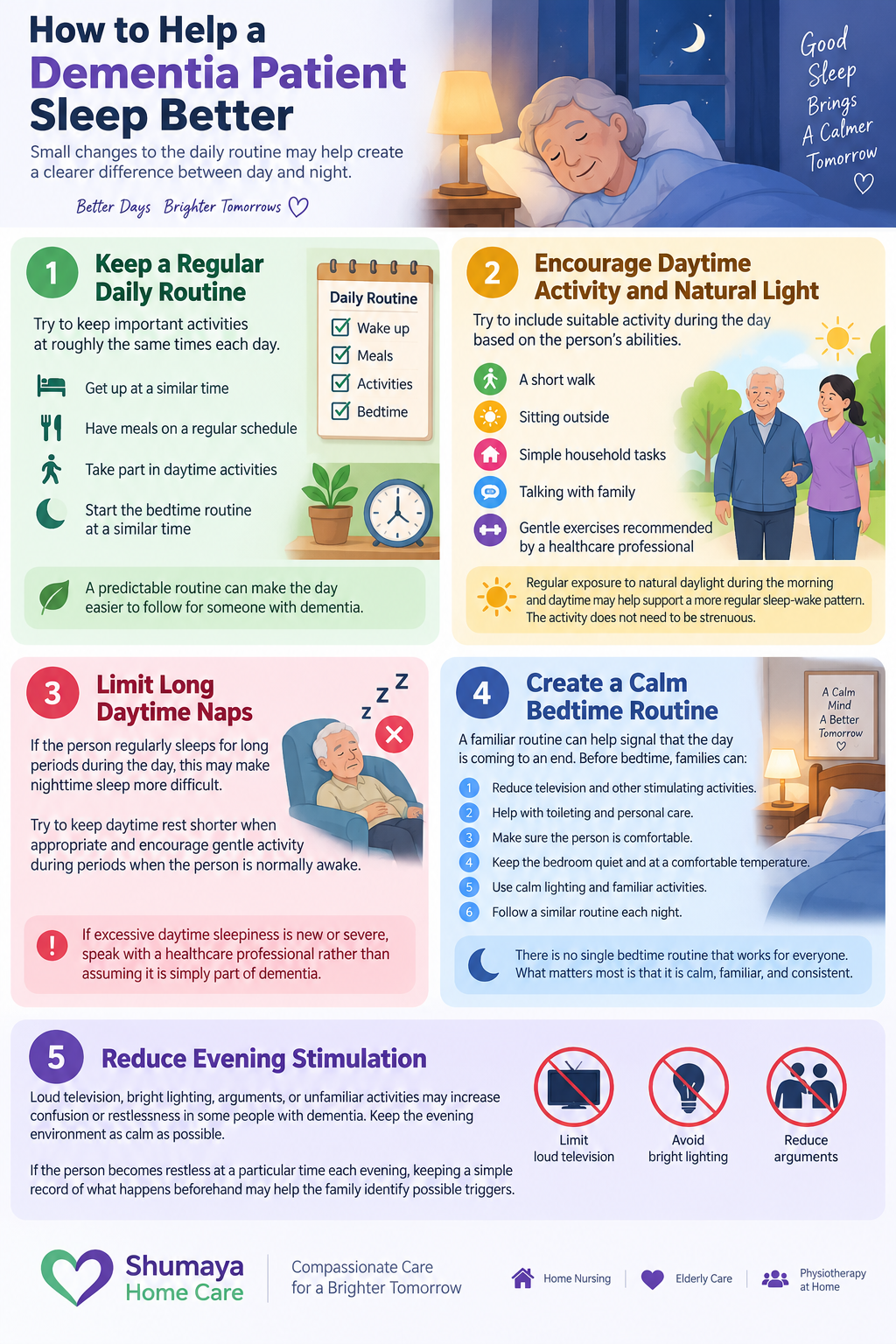
How to Help a Dementia Patient Sleep Better
Small changes to the daily routine may help create a clearer difference between day and night.
Keep a Regular Daily Routine
Try to keep important activities at roughly the same times each day.
This may include:
Getting up at a similar time
Having meals on a regular schedule
Taking part in daytime activities
Starting the bedtime routine at a similar time
A predictable routine can make the day easier to follow for someone with dementia.
Encourage Daytime Activity and Natural Light
Try to include suitable activity during the day based on the person’s abilities.
This could include:
A short walk
Sitting outside
Simple household tasks
Talking with family
Gentle exercises recommended by a healthcare professional
Regular exposure to natural daylight during the morning and daytime may also help support a more regular sleep-wake pattern.
The activity does not need to be strenuous. The goal is to avoid spending most of the day asleep or inactive.
Limit Long Daytime Naps
If the person regularly sleeps for long periods during the day, this may make nighttime sleep more difficult.
Try to keep daytime rest shorter when appropriate and encourage gentle activity during periods when the person is normally awake.
If excessive daytime sleepiness is new or severe, speak with a healthcare professional rather than assuming it is simply part of dementia.
Create a Calm Bedtime Routine
A familiar routine can help signal that the day is coming to an end.
Before bedtime, families can:
Reduce television and other stimulating activities.
Help with toileting and personal care.
Make sure the person is comfortable.
Keep the bedroom quiet and at a comfortable temperature.
Use calm lighting and familiar activities.
Follow a similar routine each night.
There is no single bedtime routine that works for everyone. What matters most is that it is calm, familiar, and consistent.
Reduce Evening Stimulation
Loud television, bright lighting, arguments, or unfamiliar activities may increase confusion or restlessness in some people with dementia.
Keep the evening environment as calm as possible.
If the person becomes restless at a particular time each evening, keeping a simple record of what happens beforehand may help the family identify possible triggers.
What to Do When a Dementia Patient Wakes at Night
Nighttime waking can be stressful, especially when it happens repeatedly. Try to respond calmly.
First, check for simple needs such as:
Needing to use the bathroom
Pain or discomfort
Hunger or thirst
Feeling too hot or cold
Fear or confusion
Use a calm voice and offer reassurance. Avoid arguing with the person or trying to convince them that their feelings are wrong.
If they believe it is morning or want to go somewhere, lengthy explanations may not help. A simple reassurance and gentle redirection may work better.
If the person gets out of bed, make sure the path is clear and the environment is safe.
Keep the Home Safe at Night
A person with dementia who wakes and walks around at night may have a higher risk of falling or leaving the home.
Families can reduce hazards by:
Keeping walkways free of clutter
Removing loose rugs where they may cause trips
Providing safe access to the bathroom
Using suitable night lighting
Keeping frequently used items easy to reach
Checking that doors and exits are appropriately secured without restricting the person’s movement unnecessarily
If nighttime wandering is becoming frequent, families should discuss the person’s safety needs with a healthcare professional or dementia-care provider.
What Families Should Avoid
Some responses can make nighttime confusion worse.
Try to avoid:
Arguing about what time it is
Shouting or showing frustration
Using sleeping medicines without medical advice
Allowing the person to sleep for most of the day when this worsens nighttime wakefulness
Ignoring a sudden change in sleep or behavior
Using physical restraints to prevent nighttime movement
A calm response is usually more helpful than trying to force the person to behave as they did before dementia.
When Should Sleep Problems Be Discussed With a Doctor?
Contact the person’s healthcare professional when sleep problems continue, become worse, or are affecting the person’s daytime functioning or the family’s ability to provide care.
Medical advice is especially important when:
Sleep problems start suddenly
Nighttime confusion or restlessness becomes much worse
The person becomes unusually sleepy during the day
There have been repeated nighttime falls
Sleep problems begin after a medicine is started or changed
The person appears to be in pain
There are signs of another illness
A sudden change in sleep or behavior should not automatically be blamed on dementia. An infection, pain, constipation, medication effect, or another health problem may sometimes be involved and may need medical assessment.
Seek urgent medical help if sudden confusion or nighttime behavior occurs together with serious symptoms such as difficulty breathing, chest pain, loss of consciousness, severe weakness, or a serious injury.
Keep a Simple Sleep Record
If sleep problems continue, a simple sleep diary can help the family and healthcare professional understand the pattern.
Record:
Bedtime
Wake-up time
Nighttime awakenings
Daytime naps
Evening restlessness
Changes in routine
Recent medicine changes
After several days, patterns may become easier to notice.
For example, a family may discover that nighttime waking is more common after a long afternoon nap or that restlessness starts at the same time each evening.
When Dementia Home Care May Help
Nighttime dementia care can become difficult when a person wakes repeatedly, needs help with personal care, or requires supervision for safety.
Professional dementia home care can provide support with daily routines, personal care, supervision, and family respite.
For families in Lahore, professional home care support may be useful when nighttime care is becoming difficult to manage alone. The type and amount of support should depend on the person’s needs and the advice of their healthcare team.
Frequently Asked Questions
Why do dementia patients stay awake at night?
Dementia can affect the body’s sleep-wake cycle. Daytime sleeping, low activity, pain, physical discomfort, medicines, anxiety, and evening confusion can also contribute to nighttime wakefulness.
Should a dementia patient sleep during the day?
Some daytime rest may be appropriate, but long or frequent naps can make nighttime sleep harder. A regular daytime routine with suitable activity may help.
What should I do when a dementia patient wakes up at night?
Stay calm and check for basic needs such as toileting, pain, hunger, thirst, or discomfort. Reassure the person and keep the environment safe. If nighttime waking becomes frequent or suddenly worse, discuss it with a healthcare professional.
When should I call a doctor about sleep problems in dementia?
Speak with a doctor when sleep problems persist, suddenly worsen, cause repeated falls, follow a medicine change, or are accompanied by other signs of illness or unusual daytime sleepiness.
Final Thoughts
Sleep problems in dementia patients can be challenging, but a regular daily routine, daytime activity, natural daylight, limited daytime naps, and a calm bedtime routine may help create a more settled sleep pattern.
Most importantly, do not assume that every new sleep or behavior change is caused by dementia. Sudden or severe changes may have another medical cause and should be assessed by a healthcare professional.
If your family is finding it difficult to manage dementia care, including nighttime supervision and daily personal care, Shumaya Home Care & Patient Service provides professional home care support for families in Lahore. Contact us to discuss your loved one’s care needs and available support at home.