

Caring for someone with cancer at home can be challenging for the whole family. A patient may need help with bathing, meals, mobility, medicines, personal care, or recovery after hospital visits. As the illness or treatment changes, the level of support may also change.
Home care for cancer patients in Lahore can provide practical and nursing support while allowing the patient to stay in a familiar home environment.
Home care does not replace an oncologist, cancer treatment, or emergency medical services. Instead, it helps families manage the patient’s everyday care and appropriate nursing needs between medical appointments and treatments.
Can Cancer Patients Receive Care at Home?
Yes, many cancer patients can receive supportive care at home. The type and amount of support should be based on the patient’s current condition, daily abilities, treatment plan, and recommendations from their healthcare team.
Some patients may remain mostly independent and only need occasional assistance. Others may need a caregiver or nurse for several hours a day or longer periods.
Home care may be helpful for patients who:
- Feel weak or tired during or after treatment
- Need help with bathing and personal hygiene
- Have difficulty walking or moving safely
- Need assistance with meals or drinking
- Spend much of the day in bed
- Need help with everyday activities
- Have recently returned home after hospitalization
- Need appropriate nursing support
- Require help from a family caregiver while relatives are at work
The patient’s oncology team should remain involved in decisions about cancer treatment and medical care.
What Does Home Care for Cancer Patients Include?
Cancer home care is not one fixed service. The support should match what the patient can and cannot safely do for themselves.
It may include personal care, daily living assistance, nursing support, mobility assistance, medication-related support, and help after hospital discharge.
Personal Care
Cancer-related weakness or treatment effects can make normal personal activities harder.
A trained caregiver or attendant may help with:
- Bathing
- Grooming
- Dressing
- Toileting
- Eating
- Basic mobility
- Getting in and out of bed
- Maintaining personal hygiene
The goal is to provide assistance while allowing the patient to remain as independent as safely possible.
Daily Living Assistance
A patient may not need medical procedures but still struggle with everyday tasks.
A caregiver can help with activities such as:
- Preparing or serving meals
- Moving safely around the home
- Getting comfortable in bed or a chair
- Keeping frequently used items within reach
- Providing companionship
- Supporting basic daily routines
This type of help can reduce the physical burden on family members.
Home Nursing Care
Some cancer patients need professional nursing support rather than general caregiving.
Depending on the patient’s care plan and the nurse’s professional scope, home nursing may involve:
- Monitoring the patient’s condition
- Following prescribed nursing instructions
- Medication-related support
- Wound or dressing care when appropriate
- Supporting patients with limited mobility
- Post-hospital nursing care
- Reporting important changes to the family or healthcare team
The patient’s diagnosis, current medicines, treatment plan, and specific nursing instructions should be discussed with the care provider before services begin.
[Internal link: Home Nursing Services in Lahore]
When Does a Cancer Patient Need Professional Home Care?
Families often manage basic care themselves at first. Professional support may become useful when the patient’s needs increase or family members cannot safely provide all the required assistance.
Consider professional home care when a patient:
- Needs help with most daily activities
- Has difficulty getting out of bed
- Requires regular personal care
- Is frequently alone because family members have work or other responsibilities
- Has limited mobility
- Needs regular nursing support
- Has recently been discharged from hospital
- Requires assistance that family members are not trained to provide
The right choice depends on the patient. A caregiver may be enough for daily assistance, while a qualified nurse may be needed for nursing-related care.
Caregiver or Nurse: Which Does a Cancer Patient Need?
This is an important question for families arranging cancer patient care at home.
A caregiver or patient attendant generally focuses on daily living and personal support.
A qualified nurse is more appropriate when the patient requires professional nursing care within the nurse’s scope of practice.
| Patient need | Possible support |
|---|---|
| Bathing and grooming | Caregiver or attendant |
| Dressing and toileting | Caregiver or attendant |
| Companionship | Caregiver or attendant |
| Feeding assistance | Caregiver or attendant |
| Basic mobility assistance | Caregiver or attendant |
| Medication reminders | Caregiver, where appropriate |
| Nursing assessment and support | Qualified nurse |
| Wound or dressing care | Qualified healthcare professional when required |
| More complex medical needs | Nurse and/or treating medical team |
If you are unsure which type of care is appropriate, discuss the patient’s needs with their healthcare team and the home-care provider.
Caring for a Weak or Bedridden Cancer Patient
Some patients become very weak and may spend long periods in bed. They can need considerably more assistance with personal care and daily activities.
Families and caregivers should pay attention to:
Positioning
Patients with limited mobility may need help changing position according to their care plan.
Skin Care
Check areas exposed to prolonged pressure for redness, irritation, or skin damage. A healthcare professional can advise on appropriate prevention and treatment when needed.
Personal Hygiene
Regular hygiene can improve comfort and help protect the skin. Assistance may be needed with bathing, changing clothes, toileting, and other personal-care activities.
Safe Movement
Do not try to move a very weak patient alone if doing so could cause a fall or injury. A trained caregiver or healthcare professional can help families understand safer ways to assist with movement.
Detailed guidance on preventing pressure injuries should be covered in a dedicated supporting article rather than repeated here.
Managing Medicines at Home
Cancer patients may take several medicines during treatment or for other health conditions.
Families can make the medication routine easier to manage by:
- Keeping an up-to-date medicine list
- Following the prescribed schedule
- Using a written medication routine if helpful
- Storing medicines safely
- Recording questions or concerns
- Taking questions about medicines to the doctor or pharmacist
A caregiver may provide appropriate reminders, while a nurse may provide medication-related support within their professional scope and according to the patient’s prescription.
Never start, stop, or change cancer medicines without guidance from the treating healthcare professional.
[Internal link: Medication Management for Patients at Home]
Food, Fluids, and Daily Comfort
Cancer and its treatment can sometimes affect appetite, eating, drinking, or energy levels.
Families should follow any diet or fluid instructions given by the patient’s healthcare team.
Simple supportive steps may include creating a calm mealtime routine and helping the patient access food and fluids safely.
Speak with the healthcare team if the patient:
- Cannot eat or drink adequately
- Has repeated vomiting
- Has difficulty swallowing
- Shows signs of dehydration
- Has a major change in appetite
- Is losing weight unexpectedly
Nutrition needs can vary greatly between patients, so detailed dietary advice should come from the appropriate healthcare professional.
Supporting a Cancer Patient Emotionally
Cancer can affect a person’s mood as well as their physical health.
A patient may feel worried, frustrated, sad, lonely, or afraid about their illness or treatment. Family members do not need to have an answer for every concern.
Often, simple support helps:
- Listen when the patient wants to talk
- Spend time together
- Respect their need for rest
- Include them in family conversations
- Allow them to make decisions when they are able
- Help them stay connected with people they care about
- Ask what kind of help they would like
If emotional distress becomes severe or persistent, discuss it with the patient’s healthcare team.
Keeping the Home Safe
Weakness, fatigue, dizziness, or reduced mobility can increase the risk of falls.
Families can make the home safer by:
- Removing unnecessary clutter
- Keeping floors dry
- Improving lighting
- Keeping frequently used items within reach
- Making the bathroom safer
- Storing medicines securely
- Keeping emergency contact information accessible
- Following mobility or equipment advice from healthcare professionals
Small changes can make everyday activities easier for someone whose strength or balance has changed.
Cancer Care After Hospital Discharge
Returning home after hospitalization can be a relief, but the patient may still need considerable support.
Before bringing the patient home, families should understand:
- Which medicines need to be taken
- What follow-up appointments are planned
- Which activities should be limited
- Whether wound or dressing care is required
- What symptoms should be reported
- Who to contact with medical questions
- Whether professional home nursing or caregiving is needed
A written list of instructions can be useful, especially when several family members are involved in the patient’s care.
If the patient needs more assistance than the family can safely provide, arranging professional patient care services in Lahore can help bridge the gap between hospital discharge and daily life at home.
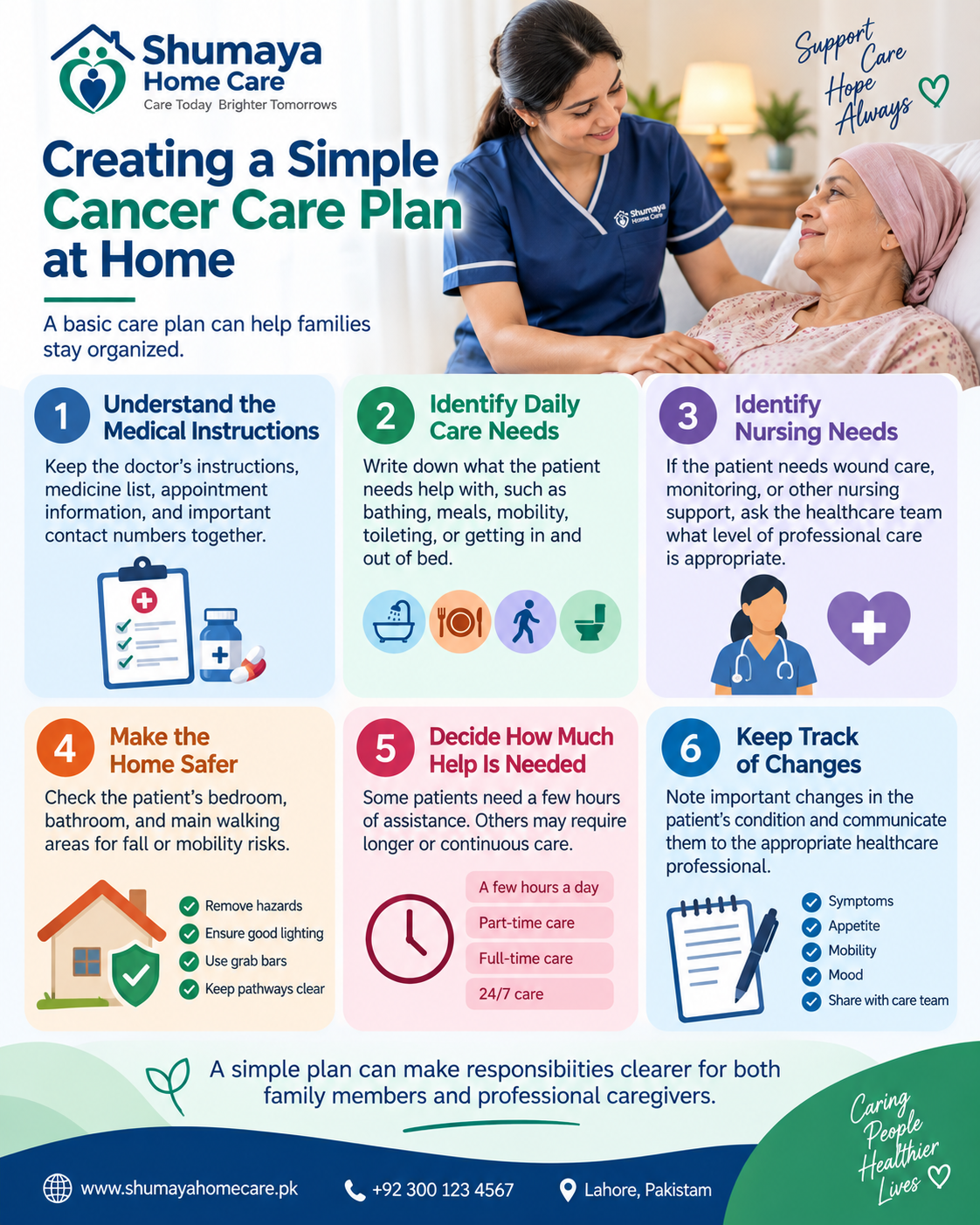
Creating a Simple Cancer Care Plan at Home
A basic care plan can help families stay organized.
1. Understand the Medical Instructions
Keep the doctor’s instructions, medicine list, appointment information, and important contact numbers together.
2. Identify Daily Care Needs
Write down what the patient needs help with, such as bathing, meals, mobility, toileting, or getting in and out of bed.
3. Identify Nursing Needs
If the patient needs wound care, monitoring, or other nursing support, ask the healthcare team what level of professional care is appropriate.
4. Make the Home Safer
Check the patient’s bedroom, bathroom, and main walking areas for fall or mobility risks.
5. Decide How Much Help Is Needed
Some patients need a few hours of assistance. Others may require longer or continuous care.
6. Keep Track of Changes
Note important changes in the patient’s condition and communicate them to the appropriate healthcare professional.
A simple plan can make responsibilities clearer for both family members and professional caregivers.
What Home Care Does Not Replace
Home care can support a cancer patient’s daily needs, but it does not replace medical treatment.
Home care does not replace:
- Oncology consultations
- Cancer diagnosis and medical assessment
- Chemotherapy or radiotherapy when prescribed
- Required laboratory or diagnostic testing
- Medical decisions about cancer treatment
- Emergency medical care
A home nurse or caregiver works alongside the patient’s medical team. They should not independently change the patient’s cancer treatment.
This distinction is especially important when families are looking for home healthcare in Lahore.
Warning Signs That Need Medical Attention
Caregivers should know which changes need medical advice and which situations may require urgent care.
Contact the patient’s healthcare team about a significant or unexpected change in their condition.
Depending on the patient’s treatment and individual circumstances, concerning symptoms may include:
- New or worsening breathing difficulty
- Severe or uncontrolled pain
- Persistent vomiting
- New confusion or unusual behavior
- Significant bleeding
- Difficulty waking the patient
- A sudden major change in mobility
- Inability to eat or drink adequately
- Fever or other signs of infection
Cancer treatments can affect the body’s ability to fight infection in some patients. The oncology team may provide specific instructions about symptoms that require urgent assessment, so families should follow those instructions carefully.
If the patient has a medical emergency, seek emergency medical care rather than waiting for a home caregiver or nurse to manage it.
How to Choose Cancer Home Care in Lahore
Choosing a home-care provider is about more than finding someone who is available.
Before arranging care, families should ask a few practical questions.
What Type of Staff Does the Patient Need?
Determine whether the patient needs a caregiver, patient attendant, assistant nurse, or qualified nurse.
How Many Hours of Care Are Needed?
Think about when the patient needs the most help. Some families need daytime assistance, while others may need longer shifts or continuous support.
Does the Provider Understand the Patient’s Needs?
Explain the patient’s condition, mobility, personal-care needs, recent hospitalization, and any nursing instructions before care begins.
Is the Care Plan Clear?
Everyone involved should understand what the caregiver or nurse is expected to do and which medical decisions remain with the patient’s healthcare team.
Can the Provider Adjust Care as Needs Change?
Cancer care needs can change over time. A patient who initially needs only a few hours of assistance may later require more support.
For families in Lahore, choosing a provider that can match the patient’s needs with appropriate home-care staff can make daily care easier to manage.
Home Care for Cancer Patients in Lahore by Shumaya
Shumaya Home Care & Patient Service provides home nursing and patient-care support for families in Lahore.
Depending on the patient’s needs, families may arrange support such as:
- Home nursing
- Patient attendants
- Personal-care assistance
- Bedridden patient support
- Mobility assistance
- Medication-related support
- Appropriate wound and dressing care
- Post-hospital patient support
- Longer-hour or 24/7 care where suitable
The type of staff should be matched to the patient’s actual care needs. Families can discuss the patient’s condition and daily requirements before arranging services.
Shumaya’s role is to provide professional healthcare and patient support at home, while the patient’s oncologist and medical team remain responsible for cancer treatment and medical decisions.
[Internal link: Home Nursing Services in Lahore]
Frequently Asked Questions
Can cancer patients receive care at home?
Yes. Many cancer patients can receive supportive care at home. The appropriate level of care depends on the patient’s condition, daily needs, treatment plan, and recommendations from their healthcare team.
What does a cancer caregiver do at home?
A caregiver may help with personal hygiene, bathing, dressing, meals, mobility, companionship, and other daily activities. The exact duties should be agreed upon before care begins.
When does a cancer patient need a home nurse?
A patient may need a home nurse when their needs include professional nursing care, monitoring, wound or dressing care, or other tasks that require a qualified healthcare professional.
Can a bedridden cancer patient be cared for at home?
Yes, home care may be appropriate for some bedridden cancer patients. They may need help with positioning, hygiene, meals, mobility, and skin care. Patients with complex medical needs may also require professional nursing support.
How many hours of home care does a cancer patient need?
There is no standard number of hours. It depends on the patient’s condition and how much assistance they need. Some patients require occasional help, while others may need extended or continuous support.
Does home care replace cancer treatment?
No. Home care supports the patient’s daily and appropriate nursing needs. It does not replace oncology treatment, medical consultations, diagnostic testing, or emergency care.
What should families look for in a cancer home-care provider in Lahore?
Families should look for appropriate staff qualifications, clear responsibilities, suitable care hours, good communication, and a care plan that matches the patient’s needs.
Can Shumaya provide cancer patient care at home in Lahore?
Shumaya Home Care & Patient Service provides home nursing and patient-care support in Lahore. Families can discuss the patient’s condition and care requirements to determine what type of home support may be appropriate.
Final Thoughts
Cancer care at home is often about helping a patient manage everyday life safely and comfortably while staying connected to their medical team.
The right support may range from assistance with bathing and meals to professional nursing care. The level of care should change as the patient’s needs change.
For families seeking home care for cancer patients in Lahore, starting with a clear assessment of the patient’s daily and nursing needs can make it easier to choose the right type of support.
If your family needs help caring for a cancer patient at home, contact Shumaya Home Care & Patient Service to discuss the patient’s needs and available home nursing or patient-care support in Lahore.
Medical note: This article provides general information about home care for cancer patients. Cancer treatment and medical decisions should always follow the advice of the patient’s oncologist or healthcare team. In an emergency, seek immediate medical care.