

After chemotherapy, a patient may feel very different from one day to the next. Tiredness, nausea, poor appetite, mouth soreness, and changes in bowel habits can make normal daily activities difficult.
With the right chemotherapy home care, families can help make these days more manageable. Simple routines, safe medication use, suitable food, enough fluids, and careful monitoring can help the patient stay as comfortable as possible at home.
Every patient responds differently to chemotherapy. Always follow the instructions provided by the patient’s oncologist or treatment team.
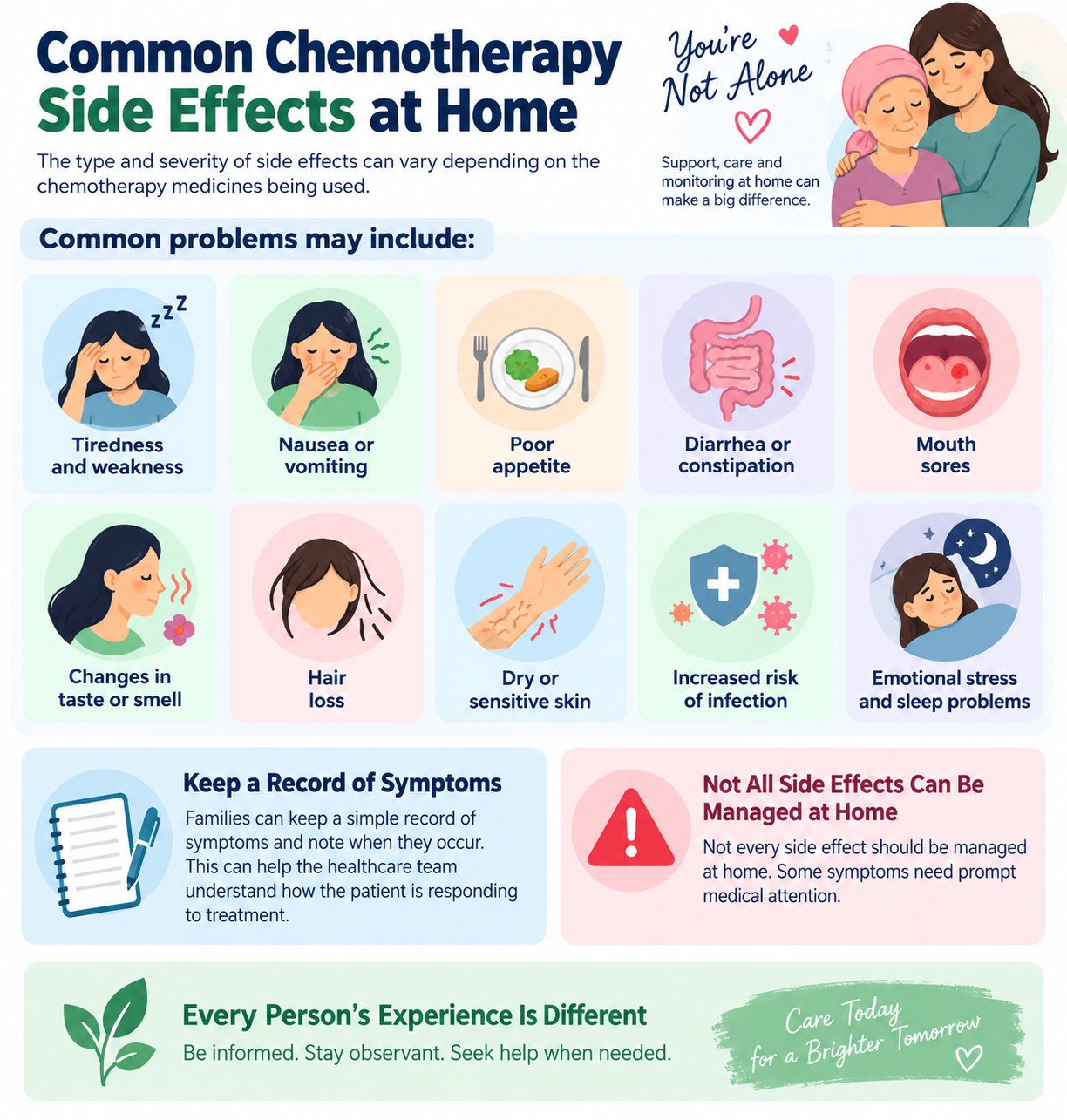
Common Chemotherapy Side Effects at Home
The type and severity of side effects can vary depending on the chemotherapy medicines being used.
Common problems may include:
Tiredness and weakness
Nausea or vomiting
Poor appetite
Diarrhea or constipation
Mouth sores
Changes in taste or smell
Hair loss
Dry or sensitive skin
Increased risk of infection
Emotional stress and sleep problems
Families can keep a simple record of symptoms and note when they occur. This can help the healthcare team understand how the patient is responding to treatment.
Not every side effect should be managed at home. Some symptoms need prompt medical attention.
Managing Tiredness and Weakness
Fatigue can be one of the hardest chemotherapy side effects for patients and families. A patient may need more rest than usual and may not be able to complete normal activities.
Try to:
Plan important activities when the patient has the most energy.
Allow regular rest periods during the day.
Keep frequently used items within easy reach.
Encourage gentle movement if the patient’s doctor says it is safe.
Ask for help with bathing, dressing, meals, and household tasks when needed.
Do not expect the patient to maintain their usual level of activity. Rest is an important part of coping with treatment.
Helping With Nausea and Vomiting
Nausea may occur during or after chemotherapy. Some patients find that smaller meals are easier to tolerate than large meals.
Helpful steps may include:
Offer small meals and snacks throughout the day.
Encourage fluids in small, frequent amounts if tolerated and allowed by the medical team.
Avoid strong food smells if they trigger nausea.
Choose simple foods that the patient can tolerate.
Give prescribed anti-nausea medicine exactly as instructed.
If vomiting continues or the patient cannot keep fluids down, contact the oncology team. Dehydration can become a serious problem.
Supporting Food and Fluid Intake
A patient may lose interest in food during chemotherapy. Changes in taste, nausea, mouth soreness, and tiredness can all affect eating.
Families can make meals easier by offering foods the patient enjoys and can safely tolerate. Smaller portions may feel easier when appetite is poor.
Encourage fluids according to the patient’s medical team’s advice. If the patient has heart, kidney, or another condition that requires fluid restriction, follow those instructions.
If poor appetite, difficulty eating, or weight loss continues, tell the oncology team. They may recommend nutritional support or referral to a dietitian.
Caring for Mouth Sores
Some chemotherapy treatments can cause soreness or irritation in the mouth.
Gentle oral hygiene and following the mouth-care instructions provided by the oncology team can help protect the mouth and reduce discomfort.
A patient may find it easier to eat soft foods and avoid foods that are very spicy, acidic, rough, or otherwise irritating.
Do not use mouth treatments or medicines that have not been recommended for the patient without checking with the healthcare team.
Tell the medical team if mouth sores make it difficult to eat, drink, swallow, or speak.
Managing Constipation and Diarrhea
Changes in bowel movements can occur during chemotherapy. Both constipation and diarrhea should be taken seriously, especially when they are severe or continue.
For constipation, the patient’s healthcare team may recommend changes in fluids, food, activity, or medicines depending on the patient’s condition.
For diarrhea, follow the treatment team’s instructions and focus on preventing dehydration when fluids are allowed.
Do not give anti-diarrhea medicines, laxatives, or other medicines without checking whether they are suitable for the patient.
Contact the healthcare team if bowel problems are severe, persistent, or accompanied by other concerning symptoms.
Reducing Infection Risk
Chemotherapy can lower the body’s ability to fight some infections in some patients. Families should take infection prevention seriously during treatment.
At home:
Wash hands regularly.
Keep the patient’s surroundings clean.
Encourage visitors to stay away if they are sick.
Follow food-safety instructions from the healthcare team.
Watch for signs of infection.
Follow the oncology team’s advice about reducing infection risks.
Simple precautions can help protect a patient when their immune defenses are reduced.
When Should You Contact the Oncology Team?
Chemotherapy can sometimes lower infection-fighting white blood cells. Because of this, a fever during chemotherapy may require urgent medical assessment.
Follow the temperature threshold and emergency instructions given by the patient’s oncology team. Do not wait for the next chemotherapy appointment if the treatment team has told you to seek help immediately.
Contact the healthcare team promptly for concerning symptoms such as:
Fever or other signs of infection
Persistent or severe vomiting
Inability to drink or keep fluids down
Severe or persistent diarrhea
New confusion or unusual drowsiness
Severe or worsening pain
Unusual or uncontrolled bleeding
Trouble breathing
Sudden or marked worsening of the patient’s condition
The patient’s oncology team should provide specific instructions about which symptoms require an immediate call or emergency care.
Keep Medicines Organized
Patients receiving chemotherapy may have several medicines for side effects and other health conditions.
Keep medicines organized and follow the prescribed schedule. A written medication list can help family members and caregivers avoid missed or repeated doses.
Do not start, stop, or change a medicine without discussing it with the patient’s doctor or oncology team.
A trained caregiver or home nurse can help with medication reminders and observe changes that should be reported to the healthcare team, according to the patient’s care plan.
Make the Home More Comfortable
Chemotherapy can leave a patient weak and tired. Small changes around the home can make daily care easier.
Keep the patient’s bed or resting area comfortable and make commonly used items easy to reach. Reduce unnecessary noise and allow enough time for rest.
If weakness affects walking, ask the healthcare team about safe movement and fall prevention. A family member or caregiver may need to provide assistance with bathing, toileting, meals, or mobility.
The goal is to make daily activities easier without expecting the patient to do more than they safely can.
Emotional Support During Chemotherapy
Side effects can affect more than physical health. Patients may feel frustrated, worried, sad, or overwhelmed.
Families can help by listening without forcing the patient to talk. Keep daily routines simple and allow the patient to make choices when possible.
Sometimes practical help is the best support. Preparing meals, arranging appointments, helping with personal care, or simply staying nearby can make difficult treatment days easier.
If emotional distress becomes severe or persistent, discuss it with the patient’s healthcare team.
When Professional Home Care May Help
Some patients need more support than family members can provide, particularly when chemotherapy causes significant weakness or when the patient is also managing other health problems.
Professional patient care services in Lahore can provide practical support at home. Depending on the patient’s needs and care plan, this may include assistance with personal care, mobility, meals, observation, and other daily activities.
Families looking for home nursing services in Lahore may also consider trained nursing support when the patient’s condition requires closer monitoring or nursing care under medical guidance.
A home nurse or caregiver does not replace the patient’s oncology team. The role is to provide appropriate support at home and report important changes to the family and healthcare professionals according to the care plan.
A Simple Chemotherapy Home Care Routine
A simple routine can make caregiving less stressful.
Morning
Check how the patient feels, help with personal care if needed, offer breakfast and suitable fluids, and review prescribed medicines.
During the Day
Allow rest periods, offer small meals or snacks, encourage suitable fluids when permitted, and monitor symptoms.
Evening
Help the patient settle comfortably, review medicines as prescribed, and note any new or worsening symptoms.
Keep a Symptom Record
A simple written record can help the family and healthcare team understand changes over time.
Depending on the patient’s treatment instructions, record:
Temperature when monitoring has been advised
Vomiting episodes
Diarrhea or constipation
Difficulty eating or drinking
Pain or changes in pain
Unusual symptoms
Medicines taken
Take the record to appointments or have it available when speaking with the oncology team.
Frequently Asked Questions
Can a chemotherapy patient stay at home?
Many patients receive chemotherapy as outpatients and spend much of their recovery time at home. Whether home care is suitable depends on the treatment plan, side effects, overall health, and instructions from the medical team.
What should a caregiver monitor after chemotherapy?
Caregivers should monitor the symptoms the oncology team has asked them to watch. These may include temperature, hydration concerns, vomiting, diarrhea, pain, weakness, and signs of infection.
Should chemotherapy patients be encouraged to eat?
Patients should be supported with food and fluids according to their medical team’s advice. Small, manageable meals may be easier when appetite is poor. Persistent difficulty eating or drinking should be reported to the healthcare team.
Can a home nurse help a chemotherapy patient?
A trained home nurse may help with appropriate nursing and daily-care needs based on the patient’s condition and care plan. Families should make sure the caregiver’s duties match the patient’s needs and the instructions of the medical team.
Final Thoughts
Managing chemotherapy side effects at home is mainly about comfort, observation, safe daily care, and knowing when to contact the medical team.
Families do not have to handle every task alone. Practical support with personal care, meals, mobility, medication reminders, and symptom observation can make home recovery easier.
If your loved one needs additional support during cancer treatment, Shumaya Home Care & Patient Service provides professional home nursing and patient care services in Lahore. Our team can help families arrange suitable home-based support according to the patient’s care needs.
Contact Shumaya Home Care & Patient Service to discuss home care support for your loved one.
Medical Note
Chemotherapy affects each patient differently. This article provides general home-care information and does not replace instructions from the patient’s oncologist, cancer care team, or other healthcare professionals.