

Caring for someone with cancer at home can become harder as treatment continues. A patient who was once independent may start needing help with medicines, mobility, wound care, personal care, or regular health monitoring.
Not every cancer patient needs a home nurse. Some need only family support, while others may benefit from a caregiver or patient attendant. Home nursing may be appropriate when a patient needs skilled nursing support that family members cannot safely provide.
Knowing the difference can help families arrange the right level of care without adding unnecessary support.
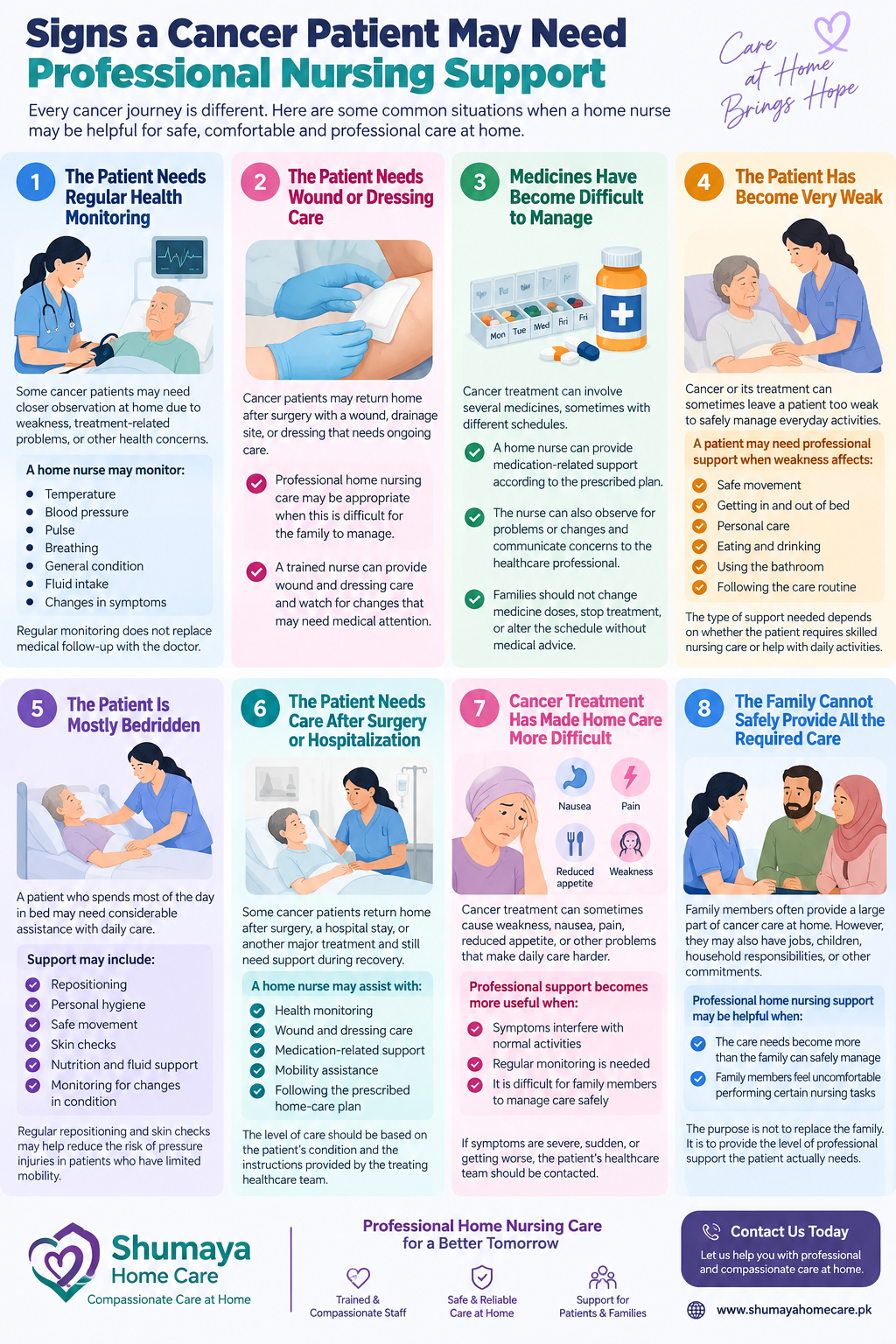
When Does a Cancer Patient Need a Home Nurse?
A cancer patient may need a home nurse when their condition requires regular nursing care, health monitoring, wound or dressing care, medication-related support, or care after surgery or hospitalization.
A home nurse may also be helpful when the patient has become very weak or dependent and needs professional support as part of the care plan.
The need depends on the patient’s condition, treatment, daily needs, and recommendations from their healthcare team.
Signs a Cancer Patient May Need Professional Nursing Support
1. The Patient Needs Regular Health Monitoring
Some cancer patients may need closer observation at home because of weakness, treatment-related problems, or other health concerns.
A home nurse may monitor things such as:
Temperature
Blood pressure
Pulse
Breathing
General condition
Fluid intake
Changes in symptoms
The nurse can report concerning changes to the family or healthcare team according to the patient’s care plan.
Regular monitoring does not replace medical follow-up with the patient’s doctor.
2. The Patient Needs Wound or Dressing Care
Cancer patients may return home after surgery with a wound, drainage site, or dressing that requires ongoing care.
When this care is difficult for the family to manage, professional home nursing care may be appropriate.
A trained nurse can provide wound and dressing care according to the instructions from the treating healthcare team and watch for changes that may need medical attention.
3. Medicines Have Become Difficult to Manage
Cancer treatment can involve several medicines, sometimes with different schedules.
A home nurse can provide medication-related support according to the patient’s prescribed plan and the nurse’s professional scope. The nurse can also observe for problems or changes and communicate concerns to the appropriate healthcare professional.
Families should not change medicine doses, stop treatment, or alter the treatment schedule without medical advice.
4. The Patient Has Become Very Weak
Cancer or its treatment can sometimes leave a patient too weak to safely manage everyday activities.
A patient may need professional support when weakness affects:
Safe movement
Getting in and out of bed
Personal care
Eating and drinking
Using the bathroom
Following the care routine
The type of support needed depends on whether the patient requires skilled nursing care or mainly help with daily activities.
5. The Patient Is Mostly Bedridden
A patient who spends most of the day in bed may need considerable assistance with daily care.
Depending on the patient’s condition, support may include:
Repositioning
Personal hygiene
Safe movement
Skin checks
Nutrition and fluid support
Monitoring for changes in condition
Regular repositioning and skin checks may help reduce the risk of pressure injuries in patients who have limited mobility.
A dedicated bedridden patient care service or caregiver may be appropriate for routine daily assistance, while a home nurse may be needed when skilled nursing tasks are also required.
6. The Patient Needs Care After Surgery or Hospitalization
Some cancer patients return home after surgery, a hospital stay, or another major treatment and still need support during recovery.
A home nurse may assist with:
Health monitoring
Wound and dressing care
Medication-related support
Mobility assistance
Following the prescribed home-care plan
The level of care should be based on the patient’s condition and the instructions provided by the treating healthcare team.
7. Cancer Treatment Has Made Home Care More Difficult
Cancer treatment can sometimes cause weakness, nausea, pain, reduced appetite, or other problems that make daily care harder.
These symptoms do not automatically mean that a patient needs a home nurse.
Professional support becomes more useful when symptoms interfere with normal activities, create a need for regular monitoring, or make it difficult for family members to manage the patient’s care safely.
If symptoms are severe, sudden, or getting worse, the patient’s healthcare team should be contacted rather than relying only on home nursing support.
8. The Family Cannot Safely Provide All the Required Care
Family members often provide a large part of cancer care at home. However, they may also have jobs, children, household responsibilities, or other commitments.
They may also feel uncomfortable performing certain nursing tasks.
When a patient’s care needs become more than the family can safely manage, professional patient care services or home nursing support may provide additional help.
The purpose is not to replace the family. It is to provide the level of professional support the patient actually needs.
Does a Cancer Patient Need a Nurse or a Caregiver?
This is an important distinction when arranging cancer care at home.
A caregiver or patient attendant may be appropriate when the patient mainly needs help with:
Bathing
Dressing
Feeding
Walking
Toileting
Personal hygiene
Companionship
Routine daily activities
A home nurse may be appropriate when the patient needs:
Regular nursing assessment or monitoring
Wound or dressing care
Medication-related nursing support
Care following surgery or hospitalization
Monitoring of changes in the patient’s condition
Other skilled nursing tasks included in the patient’s care plan
Some patients may need both nursing and daily caregiving support.
The best arrangement depends on the patient’s health needs rather than simply the fact that they have cancer.
What Can a Home Nurse Do for a Cancer Patient?
The exact role of a home nurse depends on the patient’s condition, medical plan, and the nurse’s professional scope.
Depending on those factors, home nursing support may include:
Monitoring vital signs
Assessing changes in the patient’s condition
Wound and dressing care
Medication-related support
Mobility assistance when part of the care plan
Support for patients with limited mobility
Communicating important changes to the family or healthcare team
Advanced procedures should only be provided when the nurse has the appropriate training and the care is part of the patient’s medical plan.
A home nurse does not prescribe cancer treatment or replace the patient’s oncologist or other treating doctors.
When Should You Contact the Doctor?
Families should contact the patient’s healthcare team when there are new, persistent, or worsening symptoms that may need medical assessment.
Do not wait for a routine home nursing visit if the patient develops a serious medical problem.
Seek urgent medical attention for symptoms such as:
Severe difficulty breathing
Chest pain
Loss of consciousness
Severe bleeding
A sudden major change in consciousness
Severe or rapidly worsening symptoms
Home nursing is not a substitute for emergency medical care. In an emergency, contact the appropriate emergency service or go to an appropriate emergency facility.
How Families Can Decide What Level of Home Care Is Needed
The easiest way to decide is to look at what the patient actually needs each day.
Family support may be enough when:
The patient is mostly independent.
Daily medicines and appointments can be managed safely.
The patient can perform personal care without major assistance.
There are no regular nursing tasks that require professional help.
A caregiver or patient attendant may help when:
The patient needs help bathing or dressing.
Walking or transferring has become difficult.
The patient needs help with eating or toileting.
Family members cannot provide enough daily assistance.
The patient needs companionship and routine support.
A home nurse may be appropriate when:
Skilled nursing tasks are required.
Regular health monitoring is needed.
Wound or dressing care is required.
The patient needs nursing support after surgery or hospitalization.
The patient’s condition requires closer professional observation.
The treating healthcare team has recommended nursing care at home.
The level of care can also change over time. A patient may need a nurse for a short period after surgery and later require only routine caregiving support.
Home Nursing Support for Cancer Patients in Lahore
For families looking for home nursing services in Lahore, professional support can make it easier to manage appropriate cancer care at home.
Shumaya Home Care & Patient Service provides home nursing and patient-care support in Lahore for families who need professional assistance at home. Depending on the patient’s needs and care plan, support may include nursing monitoring, wound care, medication-related assistance, mobility support, and daily patient care.
The appropriate type of care should be decided according to the patient’s condition and medical instructions.
Frequently Asked Questions
Does every cancer patient need a home nurse?
No. Many cancer patients can continue their daily activities with family support. A home nurse may be needed when the patient requires skilled nursing care, regular monitoring, wound care, or other professional nursing support.
Does a cancer patient need a nurse or a caregiver?
It depends on the patient’s needs. A caregiver or attendant may be suitable for daily personal assistance, while a home nurse is more appropriate when skilled nursing tasks or health monitoring are required. Some patients may need both.
Can a home nurse help with cancer medicines?
A home nurse can provide medication-related support according to the prescribed treatment plan and professional scope. Families should not change medicine doses or treatment schedules without medical advice.
Can a home nurse care for a bedridden cancer patient?
Yes, depending on the patient’s condition and the nurse’s qualifications. Nursing support may include monitoring, wound care, skin checks, and other appropriate nursing tasks. A caregiver or attendant may provide additional help with routine personal care.
How long does a cancer patient need a home nurse?
There is no fixed period. Some patients may need nursing support for a few days or weeks after surgery or hospitalization, while others may need longer-term care because of ongoing health needs.
Is home nursing a replacement for the cancer doctor?
No. A home nurse provides nursing support but does not replace the patient’s oncologist or other treating doctors. Medical treatment decisions should remain with the healthcare team.
Final Thoughts
A cancer patient may need a home nurse when their condition creates skilled nursing needs, regular monitoring requirements, wound-care needs, or other tasks that the family cannot safely manage alone.
Daily assistance such as bathing, dressing, feeding, and companionship may instead be provided by a caregiver or patient attendant. Some patients need both types of support.
The right level of care should be based on the patient’s condition, treatment plan, and daily needs. If you are unsure what type of support is appropriate, discuss the patient’s needs with the treating healthcare team.
For families in Lahore who need professional support, Shumaya Home Care & Patient Service can help arrange appropriate home nursing and patient-care support based on the patient’s needs.
Need professional support for a cancer patient at home in Lahore? Contact Shumaya Home Care & Patient Service to discuss the patient’s care needs and available home nursing support.