

Cancer patients may become dehydrated more easily than other people. Cancer treatment, poor appetite, vomiting, diarrhea, fever, or simply not drinking enough fluids can all reduce the amount of water in the body.
For families providing cancer patient care at home, knowing the signs of dehydration can help them notice a problem early and contact the healthcare team when needed.
This guide explains the common dehydration symptoms in cancer patients, practical ways to support fluid intake at home, and when medical help is needed.
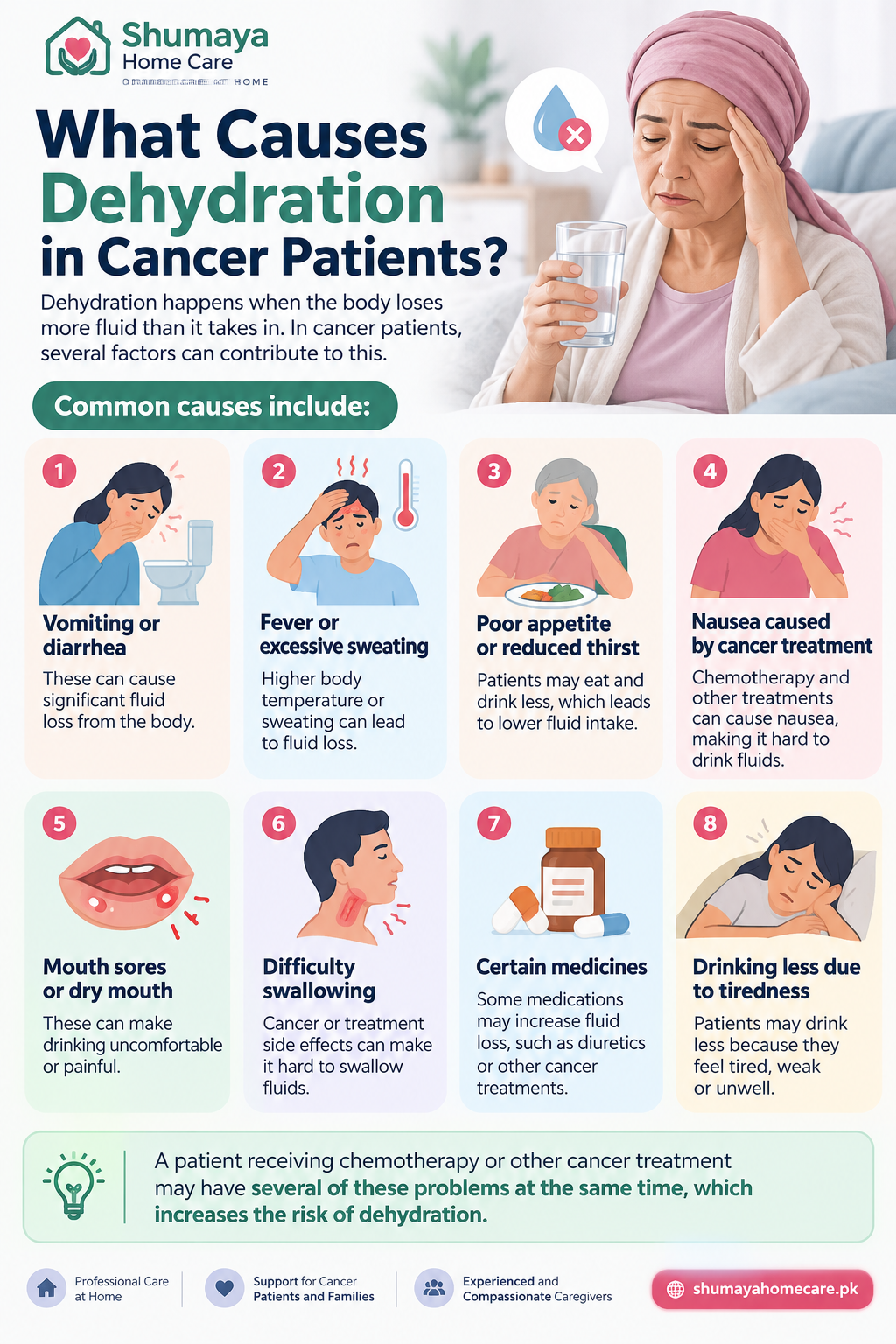
What Causes Dehydration in Cancer Patients?
Dehydration happens when the body loses more fluid than it takes in. In cancer patients, several factors can contribute to this.
Common causes include:
Vomiting or diarrhea that causes fluid loss
Fever or excessive sweating
Poor appetite or reduced thirst
Nausea caused by cancer treatment
Mouth sores or dry mouth that make drinking uncomfortable
Difficulty swallowing
Certain medicines that may increase fluid loss
Drinking less because the patient feels tired or unwell
A patient receiving chemotherapy or other cancer treatment may have several of these problems at the same time.
Quick Signs of Dehydration in Cancer Patients
Families caring for someone at home should watch for changes from the patient’s normal condition.
Common cancer dehydration signs include:
Increased thirst
Dry mouth or lips
Dark yellow urine
Urinating less often
Dry skin
Headache
Tiredness or weakness
Dizziness, especially when standing
Constipation
More serious dehydration may cause:
Very little or no urine
Severe dizziness or fainting
Confusion or unusual drowsiness
Rapid heartbeat
Rapid breathing
Marked weakness
Inability to keep fluids down
Severe symptoms require prompt medical attention rather than continued home management.
How to Help a Cancer Patient Drink More Fluids
If the patient’s healthcare team has not placed a fluid restriction, caregivers can encourage regular fluid intake throughout the day.
Large amounts at once may feel difficult, especially when the patient has nausea. Small, frequent sips may be easier to tolerate.
Try:
Offering small amounts of fluid regularly
Keeping water within easy reach
Offering fluids the patient prefers
Using a cup or straw if it makes drinking easier
Offering fluids between meals if drinking with meals causes discomfort
Tracking fluid intake when the healthcare team has advised monitoring it
Water is a simple choice, but other suitable fluids may also contribute to hydration. Depending on the patient’s condition, options can include clear soups, milk, oral rehydration solutions, or other drinks recommended by the healthcare team.

What About Oral Rehydration Solutions?
Oral rehydration solutions contain water and electrolytes and may be useful when fluid and electrolyte losses occur, such as with diarrhea or vomiting.
However, they are not appropriate for every patient. Cancer patients with certain medical conditions or prescribed fluid restrictions should follow their healthcare team’s advice before using them regularly.
What If the Patient Has Nausea or Vomiting?
Nausea can make drinking difficult. Trying to make a patient drink a large amount quickly may worsen discomfort or trigger more vomiting.
Instead, offer small, frequent sips and allow the patient to rest between them.
If vomiting continues, the patient cannot keep fluids down, or signs of dehydration are developing, contact the cancer care team. The patient may need medical assessment and treatment rather than continued attempts to manage dehydration at home.
What If the Patient Has Diarrhea?
Diarrhea can cause the body to lose both fluids and electrolytes.
Encourage fluids as tolerated, but do not ignore ongoing diarrhea in a cancer patient. Some cancer treatments and medicines can cause diarrhea, while infections and other medical problems may also be responsible.
Contact the patient’s healthcare team if diarrhea is severe, continues, or is accompanied by weakness, dizziness, fever, blood in the stool, or signs of dehydration.
Helping a Patient With Mouth Sores Drink
Mouth sores and a dry or painful mouth can make drinking uncomfortable during cancer treatment.
Depending on the patient’s treatment plan and personal tolerance, some patients may find cool fluids, ice chips, or softer foods easier to manage.
Avoid forcing foods or drinks that cause pain. If mouth sores make it difficult for the patient to drink enough, tell the healthcare team. The patient may need advice for managing the mouth problem as well as the risk of dehydration.
Foods and Fluids That May Help
If the patient is able to eat and has no dietary restrictions, foods with a high water content may also contribute to fluid intake.
Depending on the person’s treatment plan and ability to eat, examples may include:
Soups and broths
Yogurt
Soft fruits with high water content
Jelly or similar soft foods
Ice chips or ice pops, if appropriate
Food should not replace needed fluids when a patient is dehydrated. A cancer patient’s diet may also need to follow specific instructions from their doctor or dietitian.
Be Careful With Fluid Restrictions
Not every cancer patient should simply be encouraged to drink as much as possible.
Some patients may have medical conditions that require limits on fluid intake. This can include certain heart or kidney problems, among other conditions.
If the patient has been given a fluid restriction, follow the healthcare team’s instructions rather than increasing fluids on your own.
How Caregivers Can Monitor Hydration at Home
Simple daily observations can help families notice changes early.
When appropriate, caregivers can keep a basic record of:
Approximate fluid intake
How often the patient urinates
Changes in urine color
Vomiting episodes
Diarrhea episodes
Increasing weakness or dizziness
Changes in alertness or behavior
These notes can be useful when speaking with the patient’s doctor or cancer care team.
Caregivers do not need to diagnose dehydration themselves. The purpose of monitoring is to notice changes and communicate them clearly to healthcare professionals.
When Should You Contact the Doctor?
Contact the patient’s healthcare team when:
The patient is drinking very little
Urine output has noticeably decreased
Vomiting prevents the patient from keeping fluids down
Diarrhea continues or becomes severe
The patient becomes increasingly weak or dizzy
There are signs of dehydration despite efforts to increase fluid intake
The patient has a fever or other new concerning symptoms
Cancer patients may have special treatment-related risks, so their oncology team should be involved when dehydration is persistent or significant.
When Is Emergency Help Needed?
Severe dehydration can become dangerous.
Seek urgent medical attention if the patient has fainting, severe confusion, extreme drowsiness, very little or no urine, difficulty staying awake, severe weakness, or other serious changes in their condition.
Do not delay emergency care while trying to correct severe dehydration at home.
Tips for Families Providing Cancer Care at Home
A simple daily routine can make it easier to notice changes early.
Caregivers can:
Keep appropriate fluids within the patient’s reach.
Offer small amounts regularly when medically appropriate.
Watch for changes in urine color and frequency.
Note vomiting or diarrhea episodes.
Watch for increasing weakness or dizziness.
Follow the cancer team’s dietary and fluid instructions.
Keep track of symptoms and share important changes with the healthcare team.
Families managing other aspects of cancer care may also benefit from guidance on cancer patient nutrition, daily routines, and professional home nursing support rather than trying to manage every problem alone.
Professional Home Care for Cancer Patients in Lahore
Managing cancer care at home can be difficult when a patient is weak, needs regular monitoring, or has trouble managing daily activities.
Shumaya Home Care & Patient Service provides professional patient care services in Lahore for families who need support at home. Depending on the patient’s needs and care plan, trained staff can assist with daily patient support, monitoring, medication-related routines, personal care, mobility support, and other home nursing needs.
Families caring for a cancer patient can discuss the patient’s condition and care requirements with the healthcare team and arrange suitable home nursing services in Lahore when additional support is needed.
Frequently Asked Questions
What are the first signs of dehydration in a cancer patient?
Early signs may include increased thirst, dry mouth, dark yellow urine, reduced urination, tiredness, weakness, dizziness, and headache. Changes from the patient’s normal condition are important to watch for.
How can I tell if a cancer patient is dehydrated?
Look for changes in fluid intake, urine output, urine color, mouth dryness, weakness, dizziness, and alertness. Severe dehydration may cause confusion, fainting, very little urine, or extreme weakness.
Should a cancer patient drink a lot of water?
Not necessarily. Many patients benefit from regular fluid intake, but some people have medical conditions that require fluid restriction. Follow the patient’s individual instructions from their healthcare team.
What should I do if a cancer patient keeps vomiting?
Offer small sips if the patient can tolerate them, but contact the healthcare team if vomiting continues or the patient cannot keep fluids down. Persistent vomiting can lead to dehydration and may require medical treatment.
Can dehydration happen during chemotherapy?
Yes. Chemotherapy and other cancer treatments can sometimes cause side effects such as nausea, vomiting, diarrhea, poor appetite, or mouth problems that make drinking difficult. These can increase the risk of dehydration.
Can dehydration make cancer fatigue worse?
Dehydration can contribute to tiredness, weakness, dizziness, and difficulty concentrating. If a cancer patient becomes noticeably more tired or weak while drinking less than usual, caregivers should discuss the change with the healthcare team.
Can home nursing help a dehydrated cancer patient?
Home nursing can provide support with patient care and monitoring, but dehydration that is severe or worsening may require medical assessment. A nurse or caregiver should follow the patient’s prescribed care plan and contact the healthcare team when concerning symptoms appear.
Final Thoughts
Dehydration in cancer patients can develop when illness or treatment makes it difficult to eat and drink normally. Watching for changes in fluid intake, urine output, vomiting, diarrhea, weakness, and dizziness can help families notice problems early.
Small, regular amounts of fluid may be easier for some patients to tolerate, but patients with fluid restrictions need individualized guidance.
If a cancer patient is becoming increasingly weak, confused, dizzy, unable to keep fluids down, or producing very little urine, contact the healthcare team promptly.
For families in Lahore who need additional support with cancer patient care at home, Shumaya Home Care & Patient Service provides professional home nursing services in Lahore and patient support based on the patient’s needs and care plan.