

The hours and days after chemotherapy can be difficult for both the patient and the family. A person may feel very tired, have nausea, eat less than usual, or need help with everyday activities.
Caring for a cancer patient after chemotherapy at home is mainly about providing comfort, following the cancer team’s instructions, supporting food and fluid intake, preventing infection, and watching for symptoms that need medical attention.
Every patient responds differently to chemotherapy. Always follow the individual instructions provided by the patient’s oncologist or cancer care team.
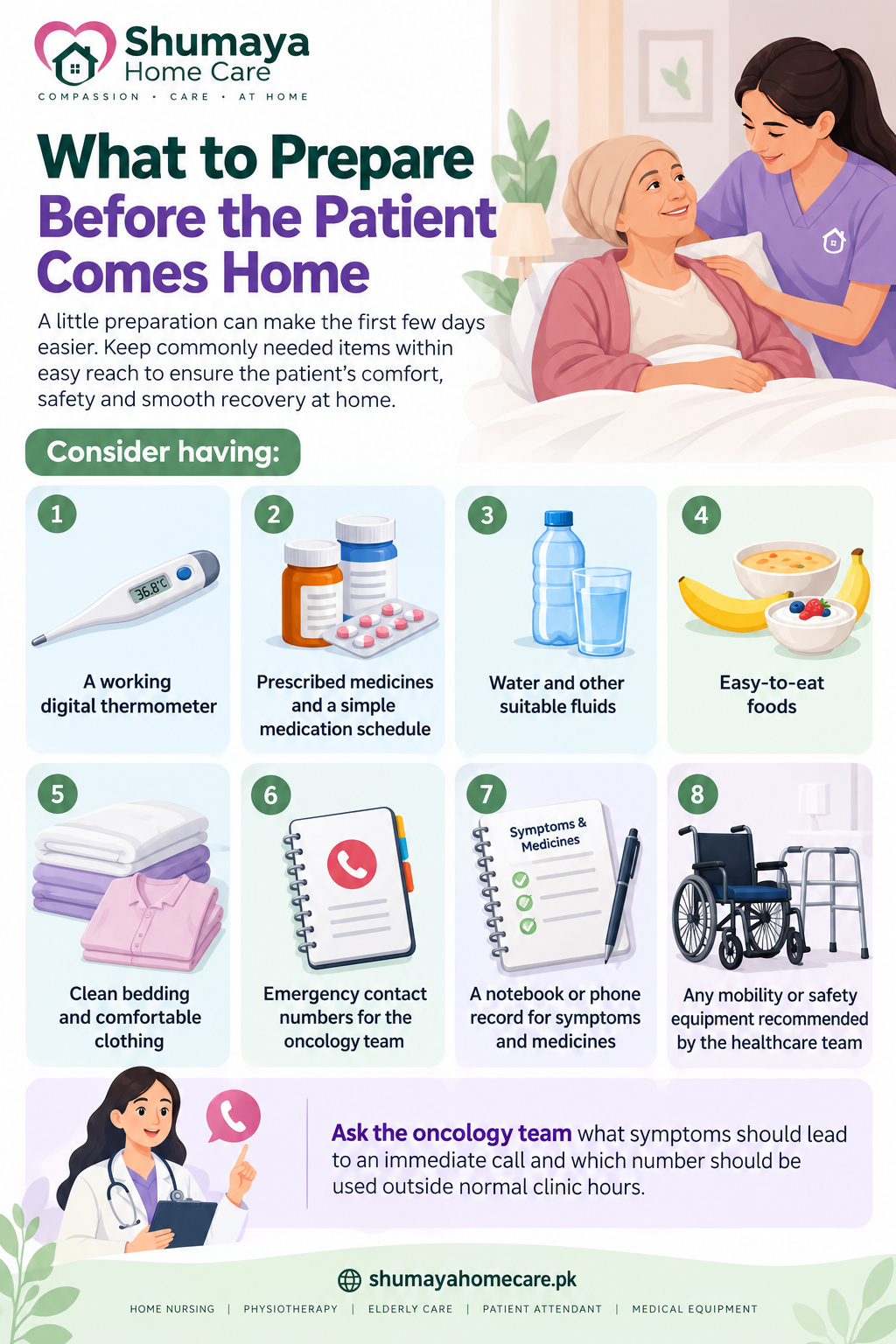
What to Prepare Before the Patient Comes Home
A little preparation can make the first few days easier. Keep commonly needed items within easy reach.
Consider having:
A working digital thermometer
Prescribed medicines and a simple medication schedule
Water and other suitable fluids
Easy-to-eat foods
Clean bedding and comfortable clothing
Emergency contact numbers for the oncology team
A notebook or phone record for symptoms and medicines
Any mobility or safety equipment recommended by the healthcare team
Ask the oncology team what symptoms should lead to an immediate call and which number should be used outside normal clinic hours.
Help the Patient Rest and Recover
Fatigue is common after chemotherapy. A patient may need more rest than usual, even if they were active before treatment.
Create a quiet, comfortable place where the patient can rest. Encourage gentle movement when they feel able and when their healthcare team has said activity is safe.
Simple activities such as sitting in a chair or taking a short walk around the room may be appropriate for some patients. Do not push the patient to exercise when they are exhausted or unwell.
Try to balance rest with safe, gentle movement. Staying in bed continuously can lead to greater weakness and make movement more difficult.
Encourage Fluids
Nausea, vomiting, diarrhea, fever, and reduced food intake can increase the risk of dehydration.
Offer small amounts of fluid regularly rather than expecting the patient to drink a large amount at once.
Depending on the patient’s condition and treatment plan, suitable fluids may include:
Water
Oral rehydration solutions when recommended
Clear soups
Other drinks approved by the healthcare team
Possible signs of dehydration include:
Very dark urine
Passing urine less often
Dizziness
Dry mouth
Unusual weakness
If the patient has a heart, kidney, or other condition that requires fluid restriction, follow the fluid plan provided by their healthcare team rather than increasing fluids on your own.
If repeated vomiting prevents the patient from keeping fluids down, contact the cancer care team promptly.
Offer Small, Nutritious Meals
Chemotherapy can affect appetite, taste, and the ability to tolerate certain foods. Some patients may feel full quickly or feel nauseated by strong food smells.
Instead of serving large portions, offer small meals and snacks throughout the day.
Depending on the patient’s dietary needs and medical advice, meals may include:
Eggs
Yogurt or other suitable dairy foods
Soft-cooked vegetables
Rice or other tolerated grains
Chicken, fish, or other suitable protein foods
Soups and other easy-to-eat meals
Do not pressure the patient to finish a meal. If poor appetite continues, ask the oncology team or a dietitian for individual nutrition advice.
Follow Food-Safety Precautions
Some chemotherapy treatments can lower infection-fighting white blood cells. When the patient’s immune defenses are reduced, careful food handling becomes especially important.
Basic precautions include:
Wash hands before preparing or eating food.
Wash fruits and vegetables properly.
Keep raw and cooked foods separate.
Cook meat, eggs, seafood, and other foods thoroughly.
Refrigerate perishable foods promptly.
Avoid food that is spoiled, expired, or has been stored unsafely.
Follow any additional food-safety instructions given by the patient’s oncology team.
Manage Nausea and Vomiting Carefully
Nausea is a common side effect of some chemotherapy treatments. The oncology team may prescribe medicine to prevent or control it.
Give prescribed anti-nausea medicines exactly as directed. Do not change the dose or stop a prescribed medicine without speaking with the healthcare team.
Some patients may find that small meals, slow eating, fresh air, and avoiding strong food smells make eating easier.
Contact the healthcare team if vomiting is repeated, becomes severe, or prevents the patient from drinking fluids or taking prescribed medicines.
Take Infection Prevention Seriously
Some chemotherapy medicines can temporarily lower the number of white blood cells, including neutrophils, which help the body fight infections.
When neutrophil levels are low, an infection can become serious quickly. The risk and timing vary depending on the chemotherapy treatment and the individual patient.
At home:
Wash hands regularly with soap and water.
Ask visitors to clean their hands before touching the patient.
Avoid close contact with people who are sick.
Keep frequently touched surfaces clean.
Follow food-safety instructions from the cancer care team.
Take care of wounds, catheters, or other medical devices exactly as instructed.
Do not assume that a fever after chemotherapy is simply a normal side effect.
Know When a Fever Needs Urgent Attention
A fever during or after chemotherapy can be a sign of infection. This can be especially serious when the patient’s white blood cell count is low.
Many cancer care teams use 100.4°F (38°C) or higher as a temperature that requires urgent medical attention during chemotherapy. However, the patient’s own oncology team may provide specific instructions, so follow their stated threshold and emergency plan.
If a patient receiving chemotherapy develops a temperature of 100.4°F (38°C) or higher, contact the cancer care team immediately according to their instructions.
Do not simply wait for the next appointment.
Other warning signs that need prompt medical attention include:
Chills or shaking
New or worsening breathing difficulty
New confusion
Severe or rapidly worsening weakness
Repeated vomiting
Severe or persistent diarrhea
Unusual bleeding
Severe or uncontrolled pain
Inability to drink or keep fluids down
A sudden major change in the patient’s condition
For severe breathing problems, loss of consciousness, serious bleeding, or another life-threatening emergency, seek emergency medical care immediately.
Be Careful With Medicines and Supplements
After chemotherapy, a patient may have several medicines to take at home. These may include medicines for nausea, pain, constipation, diarrhea, or other treatment-related problems.
Keep a simple medication record showing:
The name of each medicine
The prescribed dose
When it should be taken
What it is being used for
Any special instructions
Before giving a new over-the-counter medicine, painkiller, vitamin, supplement, or herbal product, check with the patient’s cancer care team or pharmacist. Some products can interact with cancer treatment or affect bleeding and other side effects.
If a dose is missed or the patient develops a possible medicine side effect, ask the healthcare professional what to do rather than guessing.
Help With Personal Care
Fatigue and weakness can make bathing, dressing, toileting, grooming, and moving around difficult after chemotherapy.
A family caregiver can help with these activities while allowing the patient to do whatever they can safely manage themselves.
Keep frequently used items within easy reach and reduce unnecessary walking around the home.
If the patient is weak or unsteady, provide appropriate assistance with walking and transfers. Do not attempt to lift a patient alone if doing so could injure the patient or caregiver.
Watch for Changes in the Patient
Caregivers often notice changes in a patient’s condition during daily care. Keep a simple record when advised by the healthcare team.
You may record:
Temperature
Fluid intake
Food intake
Vomiting or diarrhea
Medicines taken
Pain or other new symptoms
Urination
Energy level
Ability to walk or perform normal activities
This information can help the oncology team understand what is happening between appointments.
If a symptom is new, severe, or getting worse, contact the healthcare team rather than relying only on the symptom record.
Give Emotional Support
Chemotherapy can be physically and emotionally tiring. A patient may feel worried, frustrated, sad, or withdrawn after treatment.
You do not always need to find the perfect words. Sitting with the patient, listening, helping with daily tasks, or giving quiet company can be helpful.
Allow the patient to talk about concerns without forcing a conversation.
If emotional distress continues or starts interfering with eating, sleeping, treatment, or daily activities, discuss it with the cancer care team.
Keep the Home Safe
Weakness, dizziness, and fatigue can increase the risk of falls after chemotherapy.
Make the patient’s main living area easier and safer to move around:
Keep floors and walkways clear.
Remove loose rugs where possible.
Keep important items within reach.
Make sure lighting is adequate.
Use prescribed mobility aids correctly.
Help the patient when they need to get up or walk.
If the patient becomes much weaker than before treatment or has repeated falls, inform the healthcare team.
When Professional Home Nursing Support Can Help
Some families can manage recovery with help from relatives. Others may need additional support, particularly when a patient is elderly, weak, bedridden, or needs regular help with personal care and daily activities.
Professional home nursing services in Lahore can provide practical support based on the patient’s needs and the instructions of the healthcare team.
Depending on the patient’s care plan, support may include:
Personal care assistance
Patient monitoring
Medication support as directed
Mobility assistance
Help with food and fluids
Bedridden patient care
Support with daily routines
Reporting concerning changes to the family
For families who cannot provide continuous assistance, patient care services in Lahore may provide additional support while the patient recovers at home.
Home nursing support does not replace the patient’s oncologist or cancer treatment team. Medical treatment decisions should remain with the appropriate healthcare professionals.
When to Contact the Cancer Care Team
Do not wait for the next scheduled appointment if the patient develops a concerning change.
Contact the patient’s cancer care team promptly according to their instructions for:
Fever or chills
Repeated vomiting
Inability to drink enough fluids
Severe or persistent diarrhea
New breathing difficulty
Unusual bleeding or bruising
Severe or uncontrolled pain
New confusion
Unusual or rapidly worsening weakness
A sudden decline in the patient’s ability to function
Keep the oncology team’s contact number and emergency instructions somewhere that every caregiver can find easily.
A Simple After-Chemotherapy Home Care Routine
A simple routine can make caregiving less stressful.
Morning
Check how the patient feels.
Check temperature if advised by the healthcare team.
Give prescribed medicines according to the schedule.
Offer fluids and a small meal.
Help with personal care if needed.
During the Day
Offer fluids regularly.
Provide small meals or snacks as tolerated.
Allow plenty of rest.
Encourage safe movement when appropriate.
Watch for new or worsening symptoms.
Evening
Review medicines that were taken.
Offer food and fluids as tolerated.
Make sure the sleeping area is safe and comfortable.
Record symptoms or concerns that need to be discussed with the healthcare team.
The routine should always be adjusted to the patient’s chemotherapy plan, symptoms, energy level, and medical instructions.
Helpful Related Cancer Care Resources
Families may also benefit from reading related guidance on cancer patient nutrition, appetite changes, daily routines, and mobility after treatment. These topics should be considered alongside the patient’s individual cancer treatment plan rather than used as a replacement for professional medical advice.
For broader information about caring for a cancer patient at home, see our home care for cancer patients guide.
Final Thoughts
Caring for a cancer patient after chemotherapy at home is mainly about comfort, safety, hydration, nutrition, prescribed medicines, infection prevention, and watching for changes.
The most important thing is to know what is normal for the individual patient and what requires medical attention. Fever, breathing problems, repeated vomiting, unusual bleeding, confusion, or a sudden decline in the patient’s condition should not simply be watched at home.
Families do not have to manage every part of recovery alone. When a patient needs additional help with daily activities, personal care, mobility, or monitoring, professional home nursing support can provide practical assistance.
If your loved one needs help after chemotherapy, Shumaya Home Care & Patient Service provides professional home nursing services in Lahore. Contact our team to discuss suitable patient care support at home.
Medical note: Chemotherapy and recovery can affect people differently. Always follow the patient’s oncology team’s instructions, including their specific fever threshold, medication plan, infection precautions, and emergency contact guidance.