

Cancer-related fatigue is more than ordinary tiredness. A person may feel weak, drained, or unable to do normal activities even after resting or sleeping.
Fatigue is common in people with cancer and can occur because of the cancer itself, its treatment, or other problems such as anemia, pain, poor nutrition, sleep problems, or infection. For families caring for someone at home, learning how to manage daily activities and conserve energy can make the day easier.
This guide focuses specifically on managing cancer-related fatigue at home. It is not a substitute for advice from the patient’s cancer care team.
What Is Cancer-Related Fatigue?
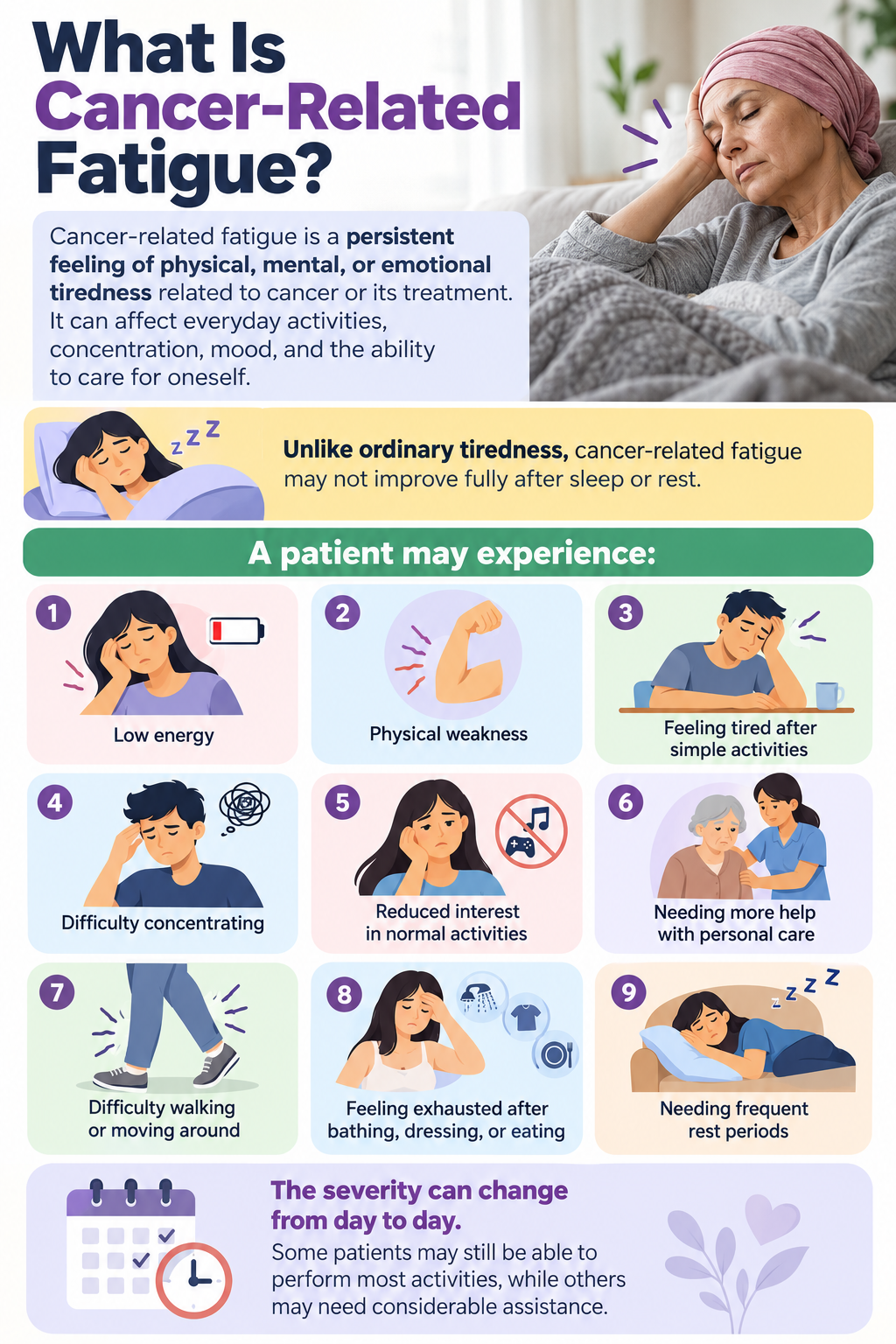
Cancer-related fatigue is a persistent feeling of physical, mental, or emotional tiredness related to cancer or its treatment. It can affect everyday activities, concentration, mood, and the ability to care for oneself.
Unlike ordinary tiredness, cancer-related fatigue may not improve fully after sleep or rest.
A patient may experience:
Low energy
Physical weakness
Feeling tired after simple activities
Difficulty concentrating
Reduced interest in normal activities
Needing more help with personal care
Difficulty walking or moving around
Feeling exhausted after bathing, dressing, or eating
Needing frequent rest periods
The severity can change from day to day. Some patients may still be able to perform most activities, while others may need considerable assistance.
Why Does Cancer Cause Fatigue?
There is not always one cause of cancer-related fatigue.
Cancer itself can affect the body’s energy levels. Treatments such as chemotherapy, radiation therapy, surgery, immunotherapy, and other cancer treatments may also contribute to tiredness.
Other factors can make fatigue worse, including:
Anemia
Infection
Pain
Poor sleep
Poor nutrition
Dehydration
Medication side effects
Anxiety or depression
Reduced physical activity
Emotional stress
Some causes of fatigue can be treated or managed. This is why severe or worsening fatigue should not simply be assumed to be an unavoidable part of cancer.
If fatigue changes significantly or begins interfering with normal activities, the patient’s healthcare team should be informed.
Common Signs of Cancer-Related Fatigue
Cancer-related fatigue can affect both the body and the mind.
Common signs include:
Feeling exhausted most of the day
Having little energy for normal activities
Needing more breaks than usual
Difficulty completing household or personal-care tasks
Feeling physically heavy or weak
Trouble concentrating
Reduced motivation
Sleeping more than usual without feeling refreshed
Finding short walks or simple movements tiring
A patient may also become more dependent on family members for activities that were previously easy.
What Can Make Cancer Fatigue Worse?
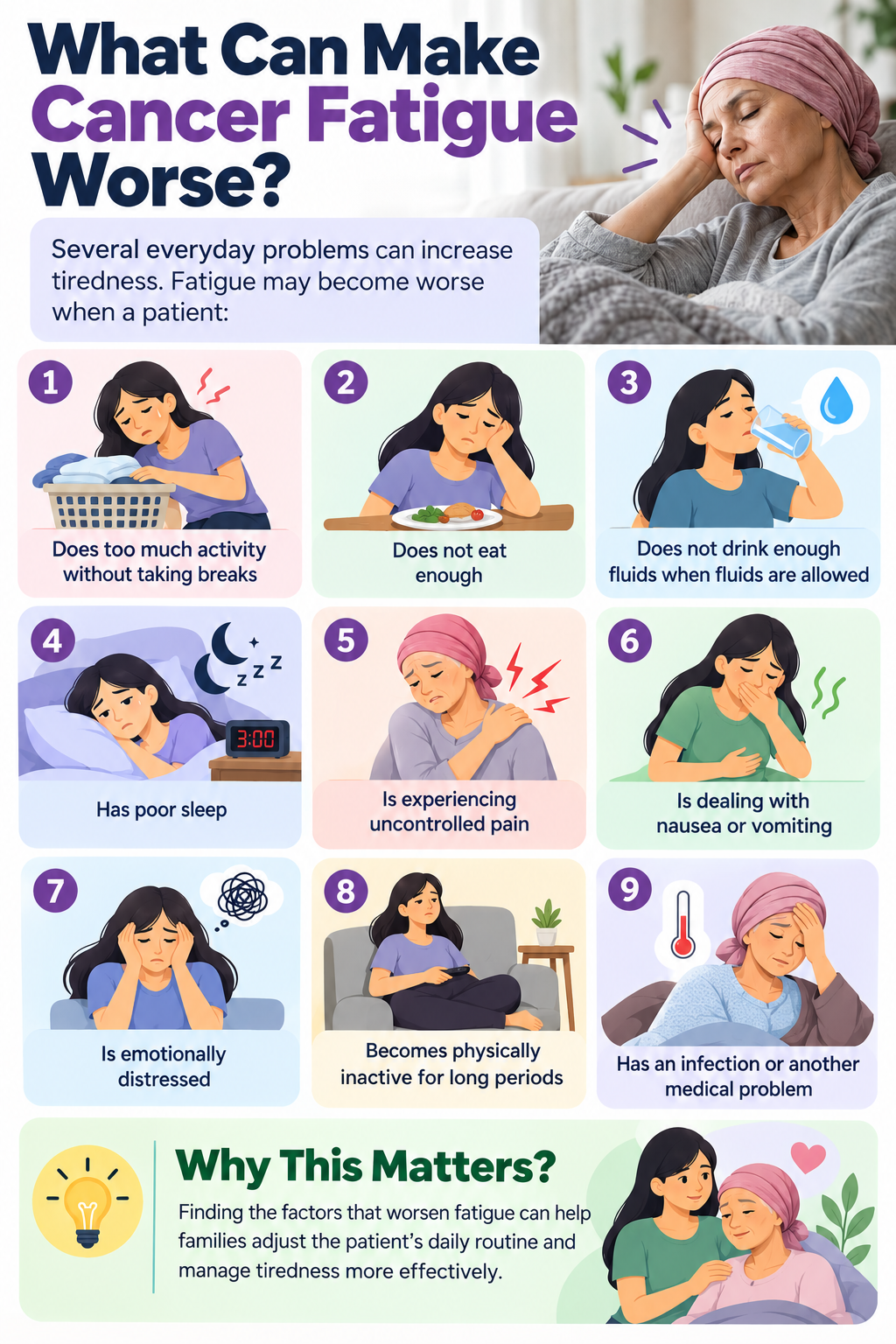
Several everyday problems can increase tiredness.
Fatigue may become worse when a patient:
Does too much activity without taking breaks
Does not eat enough
Does not drink enough fluids when fluids are allowed
Has poor sleep
Is experiencing uncontrolled pain
Is dealing with nausea or vomiting
Is emotionally distressed
Becomes physically inactive for long periods
Has an infection or another medical problem
Finding the factors that worsen fatigue can help families adjust the patient’s daily routine.
Home Care Tips for Managing Cancer-Related Fatigue
There is no single routine that works for every cancer patient. The goal is to help the person use their available energy wisely while getting enough rest.
1. Plan Important Activities During Better Energy Periods
Many patients notice that they have more energy at certain times of the day.
If the patient feels better in the morning, important activities such as bathing, eating, short walks, or appointments may be easier during that period.
Less important activities can wait until the patient feels stronger.
Try not to schedule several demanding activities close together.
2. Pace Activities Instead of Doing Everything at Once
Large tasks can be divided into smaller steps.
For example, instead of expecting a weak patient to get dressed, bathe, walk, and prepare for breakfast without breaks, allow time between each activity.
A useful approach is:
Do a little → rest → continue when ready.
The patient does not need to wait until they are completely exhausted before taking a break.
3. Allow Enough Rest
Rest is important when managing cancer-related fatigue.
Short rest periods between activities can help conserve energy. Some patients may also need daytime naps.
However, if long or late naps make it harder to sleep at night, the family can discuss a better rest schedule with the patient’s healthcare team.
The right balance between activity and rest depends on the patient’s condition.
4. Use Gentle Movement When It Is Safe
For some patients, appropriate physical activity can help maintain strength and physical function.
This does not mean pushing a tired patient through exhaustion.
If the healthcare team says activity is safe, the patient may be able to do simple activities such as:
Short walks
Gentle stretching
Moving around the room
Simple daily activities
Other exercises recommended by a healthcare professional
The amount of activity should depend on the patient’s treatment, strength, balance, symptoms, and overall health.
Stop the activity and seek medical advice if the patient develops concerning symptoms such as severe weakness, dizziness, unusual breathlessness, chest pain, or fainting.
5. Make Personal Care Easier
Bathing, dressing, toileting, and moving around the home can become tiring when cancer-related fatigue is severe.
Families can make these activities easier by:
Allowing the patient to sit while completing tasks when safe
Keeping frequently used items nearby
Preparing clothes in advance
Keeping the bathroom area safe and uncluttered
Allowing extra time for bathing and dressing
Providing assistance when the patient is too weak to manage safely
The aim is to provide help without taking away the patient’s independence when they are still able to do something safely themselves.
When fatigue is severe, a trained patient attendant may also help with appropriate daily activities such as personal hygiene, feeding, mobility, toileting, positioning, and companionship.
A patient attendant should not replace a qualified nurse when professional nursing care is required.
6. Support Good Nutrition
Poor appetite and treatment side effects can make eating difficult.
Instead of expecting a patient with little appetite to eat large meals, smaller meals and snacks may be easier to manage.
Depending on the patient’s medical needs and food tolerance, nutritious foods may include:
Eggs
Yogurt
Milk or suitable alternatives
Beans and lentils
Fish or chicken
Soft vegetables
Fruits
Other protein- and energy-containing foods
These are general examples rather than a specific cancer diet. Some patients have special dietary needs because of their cancer, treatment, diabetes, kidney disease, swallowing problems, nausea, or other conditions.
If the patient is eating very little, losing weight, vomiting frequently, or having difficulty swallowing, speak with the healthcare team or an appropriate diet professional.
7. Pay Attention to Fluids
Dehydration can make tiredness and weakness worse.
If the patient’s medical team has not restricted fluids, keep suitable drinks available and encourage regular intake.
Some patients, however, have medical conditions that require fluid restrictions or special hydration advice. Follow the healthcare team’s instructions in these situations.
Very little urination, dizziness, unusual weakness, confusion, or other concerning symptoms should be discussed with the patient’s healthcare team.
8. Support Better Sleep
Poor sleep can make daytime fatigue harder to manage.
A simple routine may help:
Keep a regular bedtime when possible
Wake around the same time each day
Keep the sleeping environment comfortable
Manage pain and other symptoms according to medical advice
Avoid very long or late naps if they interfere with nighttime sleep
Allow enough time for rest
If sleep problems continue, tell the healthcare team. Pain, medication effects, anxiety, treatment side effects, or other problems may be contributing.
9. Reduce Unnecessary Stress
Cancer can be emotionally exhausting as well as physically tiring.
Families can support the patient by:
Listening to their concerns
Keeping unnecessary visitors to a minimum
Helping with household tasks
Maintaining a familiar routine
Giving the patient quiet time
Encouraging appropriate emotional support
Patients should not feel guilty about needing help while they are receiving treatment or recovering.
10. Conserve Energy Throughout the Day
Energy conservation means using available energy for the activities that matter most.
A simple way to do this is to divide activities into three groups:
Must do:
Important activities such as eating, personal care, medication-related care, and medical appointments.
Should do:
Useful activities that can be postponed when the patient is tired.
Can wait:
Non-essential household tasks that someone else can handle.
Families can also help by keeping commonly used items within easy reach and reducing unnecessary movement around the home.
Keep a Simple Fatigue Diary
A simple record can help the patient and family identify patterns.
You can record:
Fatigue level
Sleep
Meals
Fluid intake
Physical activity
Pain
Nausea or vomiting
Treatment days
Medications or treatment-related changes
Other new symptoms
For example, a patient may notice that fatigue is worse for several days after treatment or that poor sleep makes the following day more difficult.
Sharing these observations with the healthcare team can make discussions about fatigue more useful.
When a Cancer Patient May Need a Home Nurse
Not every patient with cancer-related fatigue needs a nurse at home.
However, professional nursing support may be appropriate when the patient requires nursing care, clinical monitoring, wound care, or other healthcare tasks that fall within a qualified nurse’s professional scope.
A male nurse at home or female nurse at home may be considered according to the patient’s care needs and family preferences.
For example, some families may prefer a nurse of a particular gender when privacy or personal-care needs are involved. The choice should be based on the patient’s condition, required care, qualifications, comfort, and family preferences.
For families in Lahore, home nursing support may be useful when cancer-related weakness makes it difficult to manage appropriate care safely at home.
When a Patient Attendant May Be Helpful
A patient attendant has a different role from a nurse.
When fatigue makes everyday activities difficult, a trained patient attendant may provide practical assistance with:
Personal hygiene
Feeding
Mobility
Toileting
Positioning
Companionship
Basic daily activities
For example, a patient may need temporary assistance getting out of bed, walking to the bathroom, getting dressed, or preparing for a meal.
Some families may prefer a male patient attendant in Lahore for a male patient who needs regular assistance with personal care or mobility. Others may prefer a female patient attendant in Lahore for a female patient when privacy and comfort during personal care are important.
The patient’s gender does not automatically determine which caregiver is appropriate. The decision can depend on:
Personal comfort
Privacy
Personal hygiene needs
Mobility requirements
The patient’s condition
Cultural or family preferences
The type of support required
A patient attendant should not perform clinical nursing procedures unless appropriately qualified and authorized to do so.
When Should You Contact the Cancer Care Team?
Families should tell the patient’s healthcare team if fatigue:
Is new or suddenly worse
Continues to worsen
Prevents normal daily activities
Makes walking or moving around unsafe
Is associated with poor food or fluid intake
Is accompanied by new or concerning symptoms
Is interfering with treatment or recovery
The healthcare team may need to look for possible causes such as anemia, infection, medication effects, pain, dehydration, nutritional problems, sleep problems, or other medical issues.
Do not assume that severe fatigue simply has to be tolerated.
When Is Urgent Medical Help Needed?
Seek urgent medical attention for serious symptoms such as:
Severe difficulty breathing
Chest pain
Fainting
Severe confusion
Sudden severe weakness
Inability to stay awake or respond normally
Other symptoms that appear to require immediate medical attention
When in doubt about a serious or rapidly changing symptom, contact the patient’s healthcare provider or local emergency medical service.
Caring for a Cancer Patient at Home Can Be Demanding
Cancer-related fatigue can affect not only the patient but also the people caring for them.
A family member may need to balance patient care with work, household responsibilities, and other commitments. When fatigue becomes severe, even basic activities can require additional time and assistance.
Professional home-care support can sometimes reduce this burden.
Depending on the patient’s needs, a family may require a qualified nurse for professional nursing care or a trained patient attendant for appropriate daily activities.
The important point is to match the type of support to the patient’s actual needs.
How Shumaya Home Care & Patient Service Can Help
Shumaya Home Care & Patient Service provides home-care support in Lahore for patients who need assistance at home.
Depending on the patient’s needs, families may consider:
Bedridden patient support
Assistance with daily activities
Long-term home-care support
The appropriate staff depends on whether the patient needs professional nursing care or help with everyday activities.
Families caring for a cancer patient can discuss the patient’s condition and daily requirements with Shumaya to determine what type of home-care support may be appropriate.
Frequently Asked Questions
Is cancer-related fatigue normal?
Cancer-related fatigue is common in people with cancer, particularly during treatment. However, severe, sudden, or worsening fatigue should be discussed with the patient’s healthcare team because several treatable problems can contribute to it.
Does sleeping more get rid of cancer-related fatigue?
Not always. Unlike ordinary tiredness, cancer-related fatigue may continue even after adequate rest. Managing contributing factors and balancing activity with rest may help.
Should a cancer patient stay in bed all day?
Not necessarily. If the healthcare team says activity is safe, gentle movement may help maintain strength and physical function. However, patients should not push themselves beyond what their condition allows.
Can a patient attendant help someone with cancer-related fatigue?
Yes. A trained patient attendant may help with appropriate daily activities such as personal hygiene, feeding, mobility, toileting, positioning, and companionship.
Does a cancer patient need a nurse or a patient attendant?
It depends on the type of care required. A patient attendant provides daily-living support, while a qualified nurse provides professional nursing care within their scope of practice.
Can a family choose a male or female caregiver?
Yes. Families may have a preference for a male or female nurse or patient attendant based on privacy, comfort, personal-care needs, cultural preferences, or the patient’s condition.
When should cancer-related fatigue be taken seriously?
Contact the patient’s healthcare team when fatigue is persistent, worsening, interfering with normal activities, or accompanied by other concerning symptoms. Severe breathing difficulty, chest pain, fainting, severe confusion, or sudden severe weakness requires urgent medical attention.
Final Thoughts
Cancer-related fatigue can make ordinary daily activities surprisingly difficult. Families can help by planning activities around the patient’s energy levels, allowing regular rest, supporting nutrition and hydration, encouraging safe movement when appropriate, and making personal care easier.
It is also important to look beyond tiredness itself. New or worsening fatigue can sometimes be linked to a problem that needs medical attention.
When daily care becomes difficult, the right home-care support can make things more manageable. A qualified nurse may be appropriate when professional nursing care is needed, while a trained patient attendant can assist with suitable everyday activities.
For families in Lahore, the best approach is to choose home-care support according to the patient’s medical needs, daily activities, safety, comfort, and personal preferences.