

 Caring for a heart patient at home requires a balance of proper rest, suitable meals, prescribed medicines, safe activity, and regular medical follow-up. A well-planned daily routine can help patients manage everyday tasks and help families notice changes in their condition.
For families in Lahore caring for a loved one with heart disease, knowing how to organize the day can make home care easier. However, the right routine depends on the patient’s condition. Someone living with stable heart disease may have different needs from someone recovering after a heart attack, heart surgery, or a hospital admission.
This guide explains how to plan a daily routine for heart patients at home, support safe movement, organize meals and medicines, and recognize warning signs that require medical attention.
Why Is a Daily Routine Important for Heart Patients?
A regular routine helps patients follow their treatment plan and gives family members a clearer way to organize care.
A suitable routine can help with:
- Taking prescribed medicines at the correct times.
- Eating balanced meals according to medical advice.
- Getting enough rest without unnecessary bed rest.
- Staying active within recommended limits.
- Monitoring symptoms when advised by the healthcare team.
- Reducing the risk of falls during daily activities.
- Keeping track of medical appointments and follow-up instructions.
A routine should be flexible. Patients should not be pushed to follow a fixed timetable if they feel unwell or have been given different instructions by their doctor.
Important: This is a general guide, not an individual treatment plan. Patients recovering from a heart attack or heart surgery, or those with heart failure or an irregular heartbeat, should follow the instructions of their treating clinician.
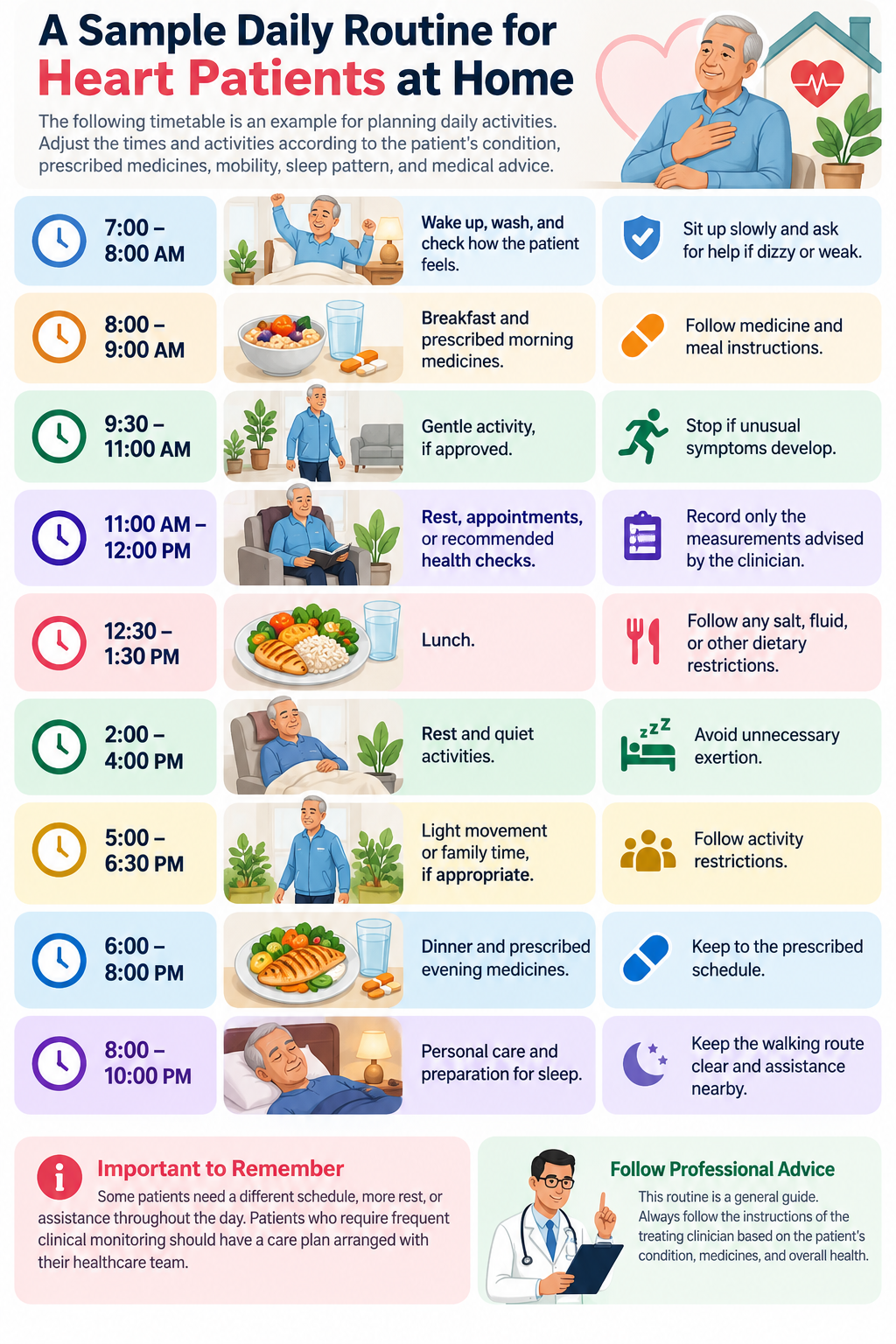
A Sample Daily Routine for Heart Patients at Home
The following timetable is an example for planning daily activities. Adjust the times and activities according to the patient’s condition, prescribed medicines, mobility, sleep pattern, and medical advice.
| Time | Suggested activity | Safety consideration |
|---|---|---|
| 7:00–8:00 AM | Wake up, wash, and check how the patient feels | Sit up slowly and ask for help if dizzy or weak |
| 8:00–9:00 AM | Breakfast and prescribed morning medicines | Follow medicine and meal instructions |
| 9:30–11:00 AM | Gentle activity, if approved | Stop if unusual symptoms develop |
| 11:00 AM–12:00 PM | Rest, appointments, or recommended health checks | Record only the measurements advised by the clinician |
| 12:30–1:30 PM | Lunch | Follow any salt, fluid, or other dietary restrictions |
| 2:00–4:00 PM | Rest and quiet activities | Avoid unnecessary exertion |
| 5:00–6:30 PM | Light movement or family time, if appropriate | Follow activity restrictions |
| 6:30–8:00 PM | Dinner and prescribed evening medicines | Keep to the prescribed schedule |
| 8:00–10:00 PM | Personal care and preparation for sleep | Keep the walking route clear and assistance nearby |
Some patients need a different schedule, more rest, or assistance throughout the day. Patients who require frequent clinical monitoring should have a care plan arranged with their healthcare team.
1. Morning Care: Start the Day Safely
The morning routine should allow the patient to wake up, move, and prepare for the day without unnecessary strain.
Begin by asking how the patient feels. Notice whether there is new breathlessness, chest discomfort, dizziness, unusual weakness, or swelling.
Helpful morning activities include:
- Sitting up slowly before getting out of bed.
- Washing and dressing at a comfortable pace.
- Using a walking aid if recommended.
- Checking blood pressure, pulse, or weight when instructed.
- Taking prescribed morning medicines.
- Eating a suitable breakfast.
Patients who are weak, unsteady, or at risk of falling may need help walking to the bathroom or changing clothes. Do not encourage a patient to walk independently if it is unsafe.
New or worsening symptoms should not be dismissed as normal morning tiredness.
2. Breakfast and Heart-Friendly Meals
A balanced diet can support overall health and help patients manage conditions associated with heart disease. The right food choices depend on the patient’s diagnosis and any additional conditions, such as diabetes or kidney disease.
Suitable options may include:
- Oatmeal or another whole-grain food.
- Whole-wheat bread.
- Eggs prepared with little added oil, if suitable.
- Fresh fruit in appropriate portions.
- Plain yogurt when consistent with the patient’s dietary plan.
For Pakistani households, small changes to familiar meals can help. For example, families can prepare paratha with less oil, choose less salty foods, and use herbs or spices for flavour instead of adding excessive salt.
Patients who have been advised to limit sodium should pay attention to salty pickles, packaged snacks, processed meats, instant foods, and heavily salted dishes.
There is no single diet that is right for every heart patient. People with heart failure or kidney disease may need specific fluid, potassium, or other dietary limits. Follow the treating clinician’s advice rather than removing important food groups without guidance.
3. Safe Activity and Movement During the Day
Many heart patients benefit from suitable physical activity, but the amount and type of movement must match their condition.
If activity has been approved by the doctor, it may include:
- Short walks indoors.
- Sitting in a comfortable area with family.
- Gentle movements recommended by a physiotherapist.
- Light daily activities that do not cause strain.
Patients recovering from a heart attack or heart surgery may need a specific rehabilitation plan. Some patients require supervised cardiac rehabilitation before increasing their activity.
Avoid heavy lifting, strenuous exercise, or climbing stairs if these activities have been restricted. Do not force a patient to complete a walk simply because it is part of the daily timetable.
Stop the activity if the patient develops unusual breathlessness, dizziness, palpitations, or marked fatigue. Chest pain, severe breathing difficulty, or fainting requires emergency medical attention.
4. Medicine Management and Health Monitoring
Prescribed medicines are an important part of care for many heart conditions. Depending on the diagnosis, a patient may take medicines for blood pressure, cholesterol, fluid retention, blood clot prevention, or heart rhythm control.
Families can make medicine management easier by:
- Keeping an up-to-date list of all prescribed medicines.
- Following the prescribed dose and timing.
- Using a pill organizer when appropriate.
- Arranging refills before medicines run out.
- Recording side effects or concerns.
- Taking the medicine list to medical appointments.
Do not stop a medicine, change its dose, or start a new supplement without appropriate medical advice. If a dose is missed, follow the instructions for that particular medicine rather than automatically taking an extra dose.
What Should Families Monitor?
Not every patient needs daily blood pressure, pulse, or weight checks. The healthcare team should explain which measurements are needed and how often they should be taken.
For patients who have been instructed to monitor their condition at home, keep a simple record of:
- Blood pressure and pulse, if prescribed.
- Morning weight, particularly when monitoring heart failure.
- Changes in breathing or exercise tolerance.
- Swelling in the feet, ankles, or legs.
- Dizziness, palpitations, or unusual tiredness.
- Questions or concerns to discuss at the next appointment.
For patients with heart failure, unexpected weight gain can indicate fluid retention. Follow the clinician’s specific reporting threshold and seek advice when the patient’s weight or symptoms change as directed in their care plan.
A nurse may assist with clinical monitoring within their qualifications and professional scope. A patient attendant may help record observations and inform the family of changes, but should not be expected to diagnose a medical problem.
5. Lunch, Hydration, and Afternoon Rest
Lunch should provide suitable nutrition without making the patient uncomfortably full.
Depending on the patient’s dietary plan, a meal might include:
- Whole-wheat roti or another suitable grain.
- Daal or an appropriate protein source.
- Cooked vegetables prepared with less salt and oil.
- Fish or skinless chicken, when suitable.
- Fruit or plain yogurt, if permitted.
Portions and ingredients should reflect the patient’s appetite, nutritional needs, and other medical conditions.
How Much Water Should a Heart Patient Drink?
There is no single fluid limit for every heart patient.
Some people with heart failure or other conditions may be given a specific fluid restriction. Others may not need one. Follow the treating clinician’s instructions, especially when kidney disease or medicines that affect fluid balance are involved.
Do not encourage excessive fluid intake or sharply restrict water without medical advice.
After lunch, the patient may rest, listen to the radio, read, or spend time with family. Rest is useful when someone feels tired, but not every heart patient needs to remain in bed throughout the afternoon.
If the patient experiences new breathlessness while lying flat or needs more pillows than usual to breathe comfortably, contact the treating clinician promptly. Severe or sudden breathing difficulty is an emergency.
6. Evening Routine and Emotional Well-Being
The evening can include family time, a suitable meal, prescribed medicines, and light activity if approved.
Encourage the patient to share any concerns about symptoms, sleep, or daily activities. Some people feel anxious after a heart attack or become afraid of moving around. Families should listen patiently and discuss ongoing anxiety with the healthcare team.
Avoid pressuring the patient to perform tasks beyond their abilities. At the same time, support safe independence when the doctor has approved normal daily activities.
Dinner should follow the same general principles as other meals: appropriate portions, balanced nutrition, and any prescribed limits on salt or other nutrients.
7. Nighttime Safety and Sleep
Before bedtime, help the patient prepare for a comfortable and safe night.
- Follow the prescribed evening medicine schedule.
- Assist with personal hygiene or toileting if needed.
- Keep the route to the bathroom clear.
- Place a phone or other means of requesting help within reach.
- Keep necessary walking aids nearby.
- Follow medical advice about sleeping position and fluid intake.
Patients with limited mobility may need assistance getting into bed or moving safely during the night.
A patient who regularly needs overnight help may benefit from a suitable home-care arrangement. However, new nighttime breathlessness, chest discomfort, fainting, or other serious symptoms must not be managed solely by a caregiver.
8. Special Care After a Heart Attack or Hospital Discharge
Patients returning home after a heart attack, heart procedure, or heart surgery may have additional instructions.
Before discharge, or during follow-up, families should understand:
- Which medicines must be taken and when.
- Which activities are permitted or restricted.
- How to care for any wound, if present.
- When follow-up appointments are due.
- Which symptoms require urgent medical attention.
- Whether cardiac rehabilitation is recommended.
- How and when the patient may resume ordinary activities.
Do not assume that a patient can immediately return to their previous routine. Recovery varies, and some restrictions may remain in place for a period of time.
If instructions are unclear, contact the treating hospital or clinician rather than relying on a general online timetable.
9. A Daily Checklist for Family Caregivers
A short checklist can help families stay organized without turning the patient’s day into a series of unnecessary medical checks.
Daily Home-Care Checklist
0 of 7 completedThis checklist helps organize daily care. Follow the patient’s prescribed care plan and seek medical help for urgent symptoms.
10. When Should a Heart Patient Get Medical Help?
Knowing the warning signs is an important part of safe home care.
Seek Emergency Medical Help Immediately
Call local emergency services if the patient develops:
- New, severe, persistent, or concerning chest pain or pressure.
- Sudden or severe difficulty breathing.
- Fainting or collapse.
- Sudden facial drooping, weakness on one side, or difficulty speaking.
- A rapid or irregular heartbeat accompanied by chest pain, severe breathlessness, or faintness.
Do not wait for a home nurse, caregiver, or routine appointment. Do not attempt to transport a seriously unwell patient yourself if emergency medical assistance is available. Follow the emergency dispatcher’s instructions.
Contact the Treating Clinician Promptly
Seek medical advice about:
- Increasing swelling in the legs or ankles.
- Unexpected weight gain in a patient with heart failure.
- Worsening breathlessness during ordinary activities.
- Repeated dizziness or new palpitations.
- Unusual tiredness or a clear change from the patient’s normal condition.
Follow any specific emergency action plan provided by the patient’s cardiologist. When in doubt about a potentially serious change, seek professional advice promptly.
11. When Can a Home Nurse or Patient Attendant Help?
Some heart patients can manage their daily routine independently. Others need help after hospital discharge or because weakness, reduced mobility, or other health conditions make everyday tasks difficult.
The right support depends on the patient’s condition and the care required.
Home Nursing Support
A qualified nurse may be suitable when the patient requires clinical care, such as:
- Vital-sign monitoring according to the care plan.
- Nursing care after hospital discharge.
- Wound care when required and within professional scope.
- Support with prescribed clinical care and reporting changes in the patient’s condition.
Families arranging home nursing services in Lahore should confirm the nurse’s qualifications and experience with the patient’s needs.
Patient Attendant Support
A trained patient attendant may help with everyday activities, including:
- Bathing, dressing, and personal hygiene.
- Assistance with meals and feeding when appropriate.
- Safe movement and positioning.
- Toileting and other daily activities.
- Companionship and reminders about the daily schedule.
A patient attendant does not replace a qualified nurse when clinical nursing care is required.
Should You Choose a Male or Female Caregiver?
Families may prefer a male or female staff member based on the patient’s comfort, privacy, mobility, and personal-care needs.
For example, some families may prefer a male patient attendant for a male patient who needs regular assistance with mobility or hygiene. Others may prefer a female attendant or nurse for personal care. The patient’s preference and the staff member’s qualifications should guide the choice.
Frequently Asked Questions
What is the best daily routine for heart patients at home?
A suitable routine includes prescribed medicines, balanced meals, appropriate activity, rest, and medical follow-up. The schedule should be adjusted to the patient’s diagnosis, symptoms, and doctor’s instructions.
Can heart patients walk every day?
Many heart patients can walk regularly, but the safe amount varies. Patients recovering from a heart attack or heart surgery should follow their doctor’s activity restrictions and rehabilitation plan.
What foods should heart patients avoid?
Some patients need to limit salty foods, processed meats, deep-fried foods, and foods high in saturated fat. Specific restrictions on fluids, potassium, or other nutrients depend on the patient’s medical condition and should be discussed with a healthcare professional.
Do heart patients need someone to stay with them at home?
Not everyone needs constant supervision. Patients who are frail, at risk of falling, recently discharged, or unable to manage daily activities safely may need support from family members or professional care staff.
Can a nurse monitor a heart patient at home?
A qualified nurse can provide appropriate nursing care and monitor vital signs according to the care plan. Home nursing does not replace cardiology appointments, investigations, or emergency treatment.
Home-Care Support for Heart Patients in Lahore
A good daily routine can help families organize care, but each patient’s needs are different. Safe home care includes following medical advice, supporting appropriate activity, managing prescribed medicines, and recognizing changes that require professional attention.
Shumaya Home Care & Patient Service provides home-care support in Lahore, including nursing and patient assistance based on individual needs and staff availability.
If your loved one needs help with personal care, mobility, daily activities, or prescribed nursing care, contact Shumaya to discuss suitable support. Families can also discuss their preference for male or female staff.
Contact Shumaya Home Care & Patient Service: +92 300 1111931
With a suitable care plan, regular medical follow-up, and appropriate family or professional support, heart patients can manage daily activities more safely and comfortably at home.