
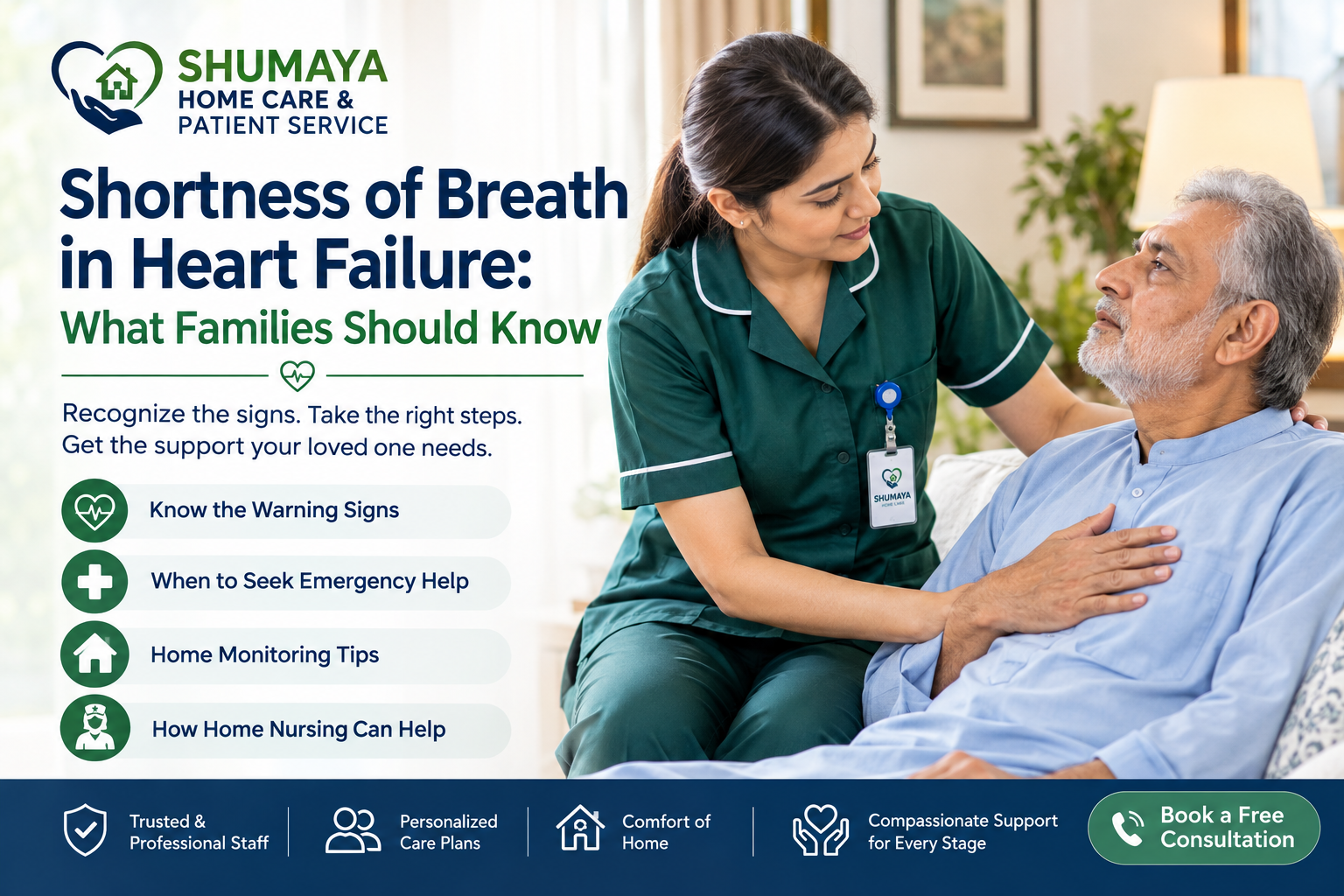
Shortness of breath is a common symptom of heart failure. It may occur while walking, performing daily activities, or lying down to sleep. For families caring for a loved one at home, understanding these breathing changes can help them recognize warning signs and seek medical help at the right time.
Heart failure does not mean the heart has stopped working. It means the heart cannot pump blood as effectively as the body needs. In some patients, pressure builds up around the lungs, causing fluid to collect in lung tissue and making breathing difficult.
Emergency warning: Sudden or severe shortness of breath, chest pain, blue or grey lips, fainting, new confusion, or severe breathing difficulty with pink, frothy sputum requires emergency medical assistance. Do not wait for a home nurse or routine appointment.
This guide explains why heart failure can cause breathlessness, which symptoms families should watch for, how to monitor changes at home, and when professional home nursing support may help.
What Causes Shortness of Breath in Heart Failure?
When the heart cannot pump blood effectively, pressure may increase in the blood vessels around the lungs. Fluid can then collect in the lung tissue, making it harder for oxygen to move into the bloodstream.
As a result, a person with heart failure may feel breathless during physical activity or even while resting if the condition becomes more severe.
Other conditions can also cause or worsen breathing problems, including:
Respiratory infections, such as pneumonia
An irregular heartbeat
Anemia
Other heart or lung conditions
Changes in the patient’s condition or prescribed treatment
Breathlessness should not automatically be blamed on heart failure. New, persistent, or worsening symptoms need medical assessment to identify the cause.
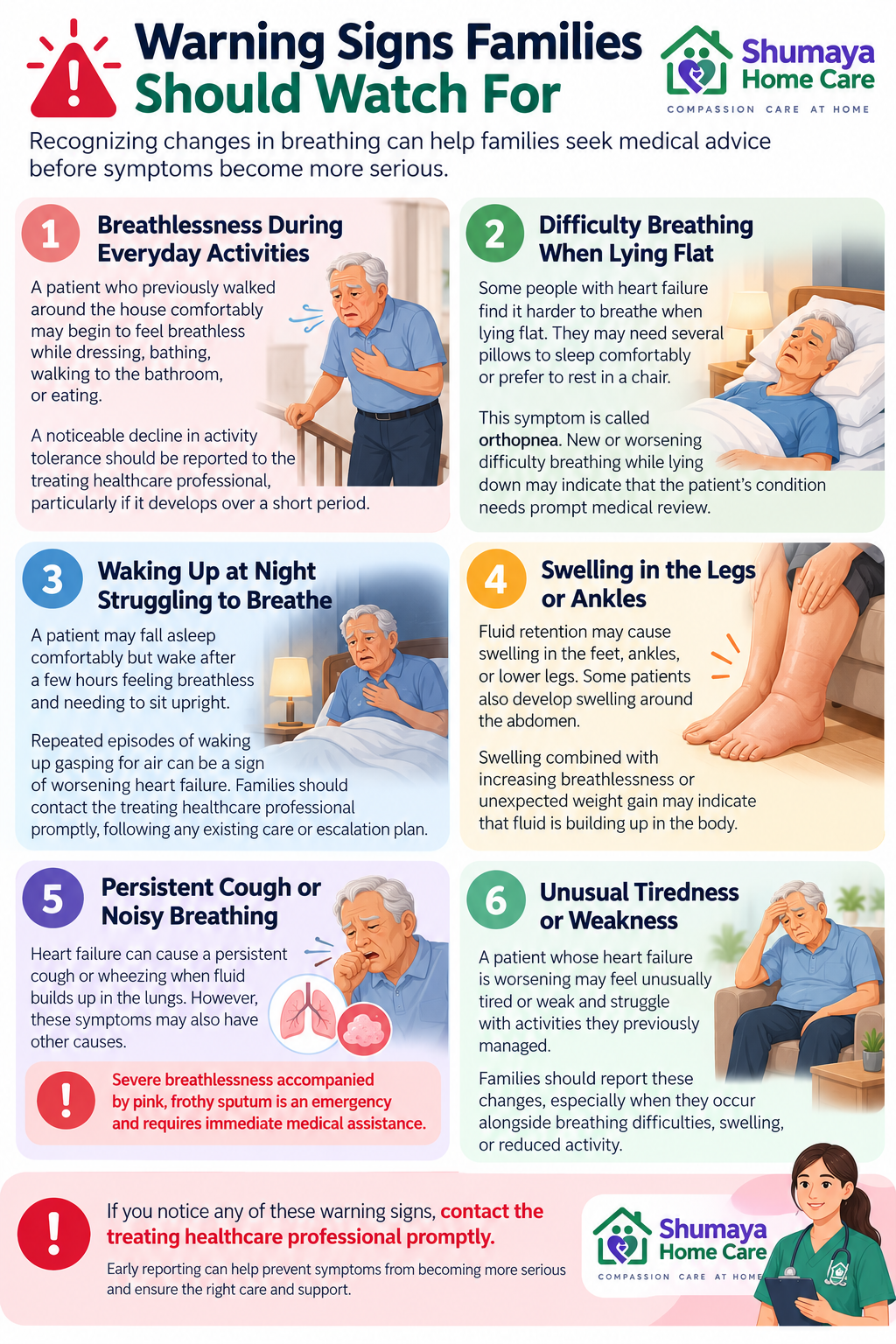
Warning Signs Families Should Watch For
Recognizing changes in breathing can help families seek medical advice before symptoms become more serious.
1. Breathlessness During Everyday Activities
A patient who previously walked around the house comfortably may begin to feel breathless while dressing, bathing, walking to the bathroom, or eating.
A noticeable decline in activity tolerance should be reported to the treating healthcare professional, particularly if it develops over a short period.
2. Difficulty Breathing When Lying Flat
Some people with heart failure find it harder to breathe when lying flat. They may need several pillows to sleep comfortably or prefer to rest in a chair.
This symptom is called orthopnea. New or worsening difficulty breathing while lying down may indicate that the patient’s condition needs prompt medical review.
3. Waking Up at Night Struggling to Breathe
A patient may fall asleep comfortably but wake after a few hours feeling breathless and needing to sit upright.
Repeated episodes of waking up gasping for air can be a sign of worsening heart failure. Families should contact the treating healthcare professional promptly, following any existing care or escalation plan.
4. Swelling in the Legs or Ankles
Fluid retention may cause swelling in the feet, ankles, or lower legs. Some patients also develop swelling around the abdomen.
Swelling combined with increasing breathlessness or unexpected weight gain may indicate that fluid is building up in the body.
5. Persistent Cough or Noisy Breathing
Heart failure can cause a persistent cough or wheezing when fluid builds up in the lungs. However, these symptoms may also have other causes.
Severe breathlessness accompanied by pink, frothy sputum is an emergency and requires immediate medical assistance.
6. Unusual Tiredness or Weakness
A patient whose heart failure is worsening may feel unusually tired or weak and struggle with activities they previously managed.
Families should report these changes, especially when they occur alongside breathing difficulties, swelling, or reduced activity.
When Is Shortness of Breath an Emergency?
Some symptoms require immediate emergency care rather than a routine doctor’s appointment.
Call emergency services if the patient experiences:
Sudden or severe difficulty breathing
Severe breathlessness while resting
Chest pain, pressure, or tightness
Blue or grey lips or skin
Fainting, collapse, or new confusion
Severe breathing difficulty with pink, frothy sputum
Rapid deterioration in breathing or consciousness
In Lahore and elsewhere in Punjab, families can contact Rescue 1122 when emergency assistance is needed.
While waiting for help:
Help the patient sit upright if this makes breathing easier.
Keep the patient calm and avoid unnecessary movement.
Loosen tight clothing around the neck and chest.
Follow any emergency instructions provided by the treating healthcare professional.
Do not give extra heart medicines or diuretics unless specifically directed by the patient’s prescribed plan or a qualified clinician.
Do not leave a severely breathless patient alone. Never delay emergency care while waiting for a home nurse, arranging transport unnecessarily, or trying home remedies.
When Should Families Contact the Doctor Promptly?
Not every change in breathing requires an ambulance, but worsening symptoms should not be ignored.
Contact the patient’s healthcare professional promptly if you notice:
Increasing breathlessness during normal activities
New or worsening difficulty lying flat
Repeated nighttime episodes of breathlessness
New or increasing swelling in the legs or abdomen
Unexpected weight gain according to the patient’s monitoring plan
A new or worsening cough
A noticeable decline in energy or ability to perform daily tasks
Follow the patient’s individual escalation plan if one has been provided. If symptoms become severe or sudden, seek emergency help instead of waiting for a callback.
How to Monitor Heart Failure Symptoms at Home
Regular observation can help families notice changes in a patient’s condition. The treating clinician should explain which measurements are needed and what changes require medical attention.
Monitor Weight When Recommended
Some patients are advised to weigh themselves daily to help detect fluid retention.
If daily weighing is part of the care plan, use the same scale at approximately the same time each morning. Record the results and report unexpected changes according to the clinician’s instructions.
A rapid increase in weight can indicate fluid retention, particularly when it occurs alongside swelling or worsening breathlessness.
Observe Breathing Patterns
Notice whether the patient:
Becomes breathless during activities that were previously comfortable
Needs more pillows to sleep
Starts sleeping in a chair
Wakes up gasping for air
Develops a new or worsening cough
Keep a simple record of when these changes occur and share it with the healthcare professional.
Monitor Vital Signs as Directed
If the patient’s care plan includes monitoring pulse, blood pressure, breathing rate, or oxygen saturation, follow the clinician’s instructions.
A pulse oximeter reading is only one part of the assessment. A normal reading does not rule out a serious problem, and families should never delay emergency care because a measurement appears reassuring.
Do not change prescribed oxygen settings without appropriate medical guidance.
Follow the Prescribed Medication and Fluid Plan
Heart failure treatment may include medicines that help the heart function or remove excess fluid. Patients should take medicines as prescribed.
Do not stop medicines, change doses, or increase diuretics without appropriate medical guidance.
Some patients also need to limit sodium or follow a specific fluid plan. The appropriate limits vary depending on their condition, kidney function, medicines, and medical advice. Avoid imposing strict fluid restrictions or encouraging extra fluids without guidance from the treating clinician.
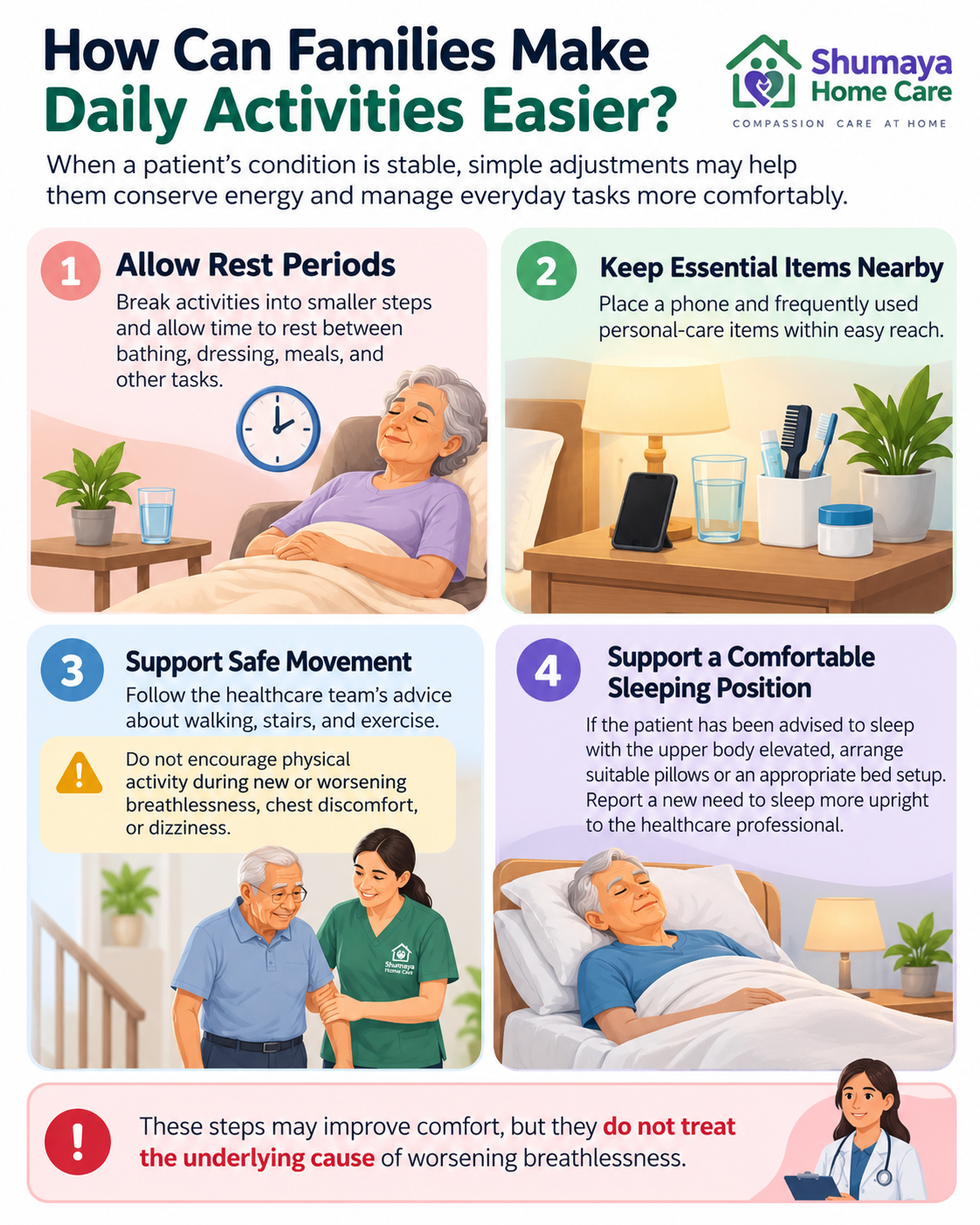
How Can Families Make Daily Activities Easier?
When a patient’s condition is stable, simple adjustments may help them conserve energy and manage everyday tasks more comfortably.
Allow rest periods: Break activities into smaller steps and allow time to rest between bathing, dressing, meals, and other tasks.
Keep essential items nearby: Place a phone and frequently used personal-care items within easy reach.
Support safe movement: Follow the healthcare team’s advice about walking, stairs, and exercise. Do not encourage physical activity during new or worsening breathlessness, chest discomfort, or dizziness.
Support a comfortable sleeping position: If the patient has been advised to sleep with the upper body elevated, arrange suitable pillows or an appropriate bed setup. Report a new need to sleep more upright to the healthcare professional.
These steps may improve comfort, but they do not treat the underlying cause of worsening breathlessness.
When Might a Home Nurse Help a Heart Failure Patient?
Some people with heart failure can manage daily activities with family support. Others need additional assistance after hospital discharge or when their condition makes everyday care more difficult.
A qualified home nurse may help with:
Monitoring vital signs according to the care plan
Observing and reporting changes in breathing or swelling
Supporting prescribed medication routines within their professional scope
Providing nursing care after hospital discharge
Helping families understand home-care instructions
Communicating concerning changes to the family and treating healthcare team
The nurse’s duties depend on their qualifications and the patient’s needs. Home nursing can support an established treatment plan, but it does not replace a doctor, emergency services, or hospital treatment when required.
Male or Female Home Nurse: Which Is Suitable?
Families may prefer a male or female nurse based on the patient’s comfort, privacy, personal-care needs, and family preferences.
For example, a family caring for an elderly man who needs regular assistance with personal care may prefer a male nurse. Another family may prefer a female nurse for a female patient.
The choice should also consider the nurse’s qualifications, experience, and ability to meet the patient’s clinical needs. A patient’s gender does not automatically determine which nurse is most suitable.
When Might a Patient Attendant Be Appropriate?
A patient attendant may help a person whose heart failure is stable but who needs assistance with everyday activities, including:
Bathing and dressing
Meal and feeding assistance
Mobility and positioning
Toileting and personal hygiene
Companionship and daily routines
A patient attendant is not a substitute for a qualified nurse when clinical monitoring or nursing procedures are required.
Some families may need both a nurse and an attendant, depending on the patient’s condition and care plan.
Home Nursing Support for Heart Patients in Lahore
Caring for someone with heart failure can be demanding, especially after a hospital stay or when the patient needs regular help at home.
Shumaya Home Care & Patient Service provides home nursing and patient-care support in Lahore. Depending on the patient’s needs, families can discuss arranging a qualified home nurse for nursing care and monitoring or a trained patient attendant for daily activities and personal care.
If your loved one needs ongoing support at home, discuss their diagnosis, current symptoms, mobility, prescribed treatment, and discharge instructions when arranging care.
Explore our home nursing services in Lahore to learn more about the available support.
Remember that a home-care worker cannot manage a sudden heart failure emergency independently. New or worsening breathing problems need appropriate medical assessment.
Frequently Asked Questions
Why does heart failure cause shortness of breath?
Heart failure can increase pressure in the blood vessels around the lungs, allowing fluid to collect in lung tissue. This can make breathing harder, especially during physical activity or when lying flat. Other medical conditions can also cause breathlessness.
Is shortness of breath always a sign that heart failure is getting worse?
No. Breathlessness can also occur because of lung infections, anemia, abnormal heart rhythms, or other conditions. However, new or worsening breathlessness in someone with heart failure needs medical assessment.
Should a heart failure patient lie down when feeling breathless?
Not necessarily. Many patients find it easier to breathe while sitting upright. Help the patient adopt a comfortable position, but seek emergency assistance for severe or sudden breathing difficulty.
Can a home nurse monitor a heart failure patient?
A qualified home nurse can monitor symptoms and vital signs as directed by the care plan, support prescribed treatment routines, and report concerning changes. Home nursing does not replace the treating clinician or emergency care.
Can a patient attendant care for someone with heart failure?
A patient attendant can assist with personal hygiene, meals, mobility, positioning, and other daily activities. Patients who need clinical monitoring or nursing procedures may require a qualified nurse.
Should families give more water when a heart failure patient becomes breathless?
Do not assume that extra water will relieve breathlessness. Some patients have specific fluid limits, and excess fluid may worsen congestion. Follow the prescribed fluid plan and seek medical advice about new or worsening symptoms.
Final Advice for Families
Shortness of breath in heart failure can range from a symptom that needs prompt medical review to a life-threatening emergency. Families should pay attention to changes in breathing, sleeping position, swelling, weight, and daily activity.
Follow the patient’s treatment plan and seek medical advice when symptoms change. Call emergency services for severe or sudden breathing difficulty, chest pain, blue or grey lips, collapse, or new confusion.
If your loved one needs ongoing support after hospital discharge or help managing daily activities, contact Shumaya Home Care & Patient Service to discuss suitable home nursing and patient-care services in Lahore.
Medical note: This article is for general educational purposes and does not replace advice from a qualified healthcare professional. Clinical review is recommended before publication.