

Heart medicines help manage conditions such as high blood pressure, heart failure, coronary artery disease, and irregular heart rhythms. Depending on the condition, these medicines may control symptoms, reduce the heart’s workload, prevent harmful blood clots, and lower the risk of serious complications.
However, some patients stop taking their medicines when they feel better, experience side effects, forget doses, or worry about long-term use. Others reduce their doses without consulting their doctor.
Stopping prescribed heart medicines without medical advice can be dangerous, even when the patient feels healthy. Some medicines need to be taken regularly to control a heart condition, while stopping others suddenly can cause symptoms to return or increase the risk of complications.
Families caring for a heart patient at home should understand why prescribed medicines matter, what to do when problems arise, and when to seek medical help.
Why Is It Dangerous to Stop Heart Medicines Suddenly?
Heart medicines work in different ways. Some control blood pressure, others reduce the heart’s workload, and some help prevent blood clots or control an irregular heartbeat.
When a patient stops a medicine, its protective effects may decrease. Depending on the medicine and the patient’s condition, this can lead to:
Blood pressure rising again.
Chest pain returning or becoming worse.
A faster heart rate or worsening irregular heartbeat.
Worsening heart failure symptoms, such as swelling or breathlessness.
An increased risk of blood clots in certain patients.
A higher risk of serious complications in some circumstances.
Not every patient will experience these problems, and the risks vary from one medicine to another.
Some medicines, including certain beta-blockers and clonidine, may cause a rebound effect when stopped suddenly. Other medicines may need to be reduced gradually under a clinician’s direction. Patients should never try to taper their own doses.
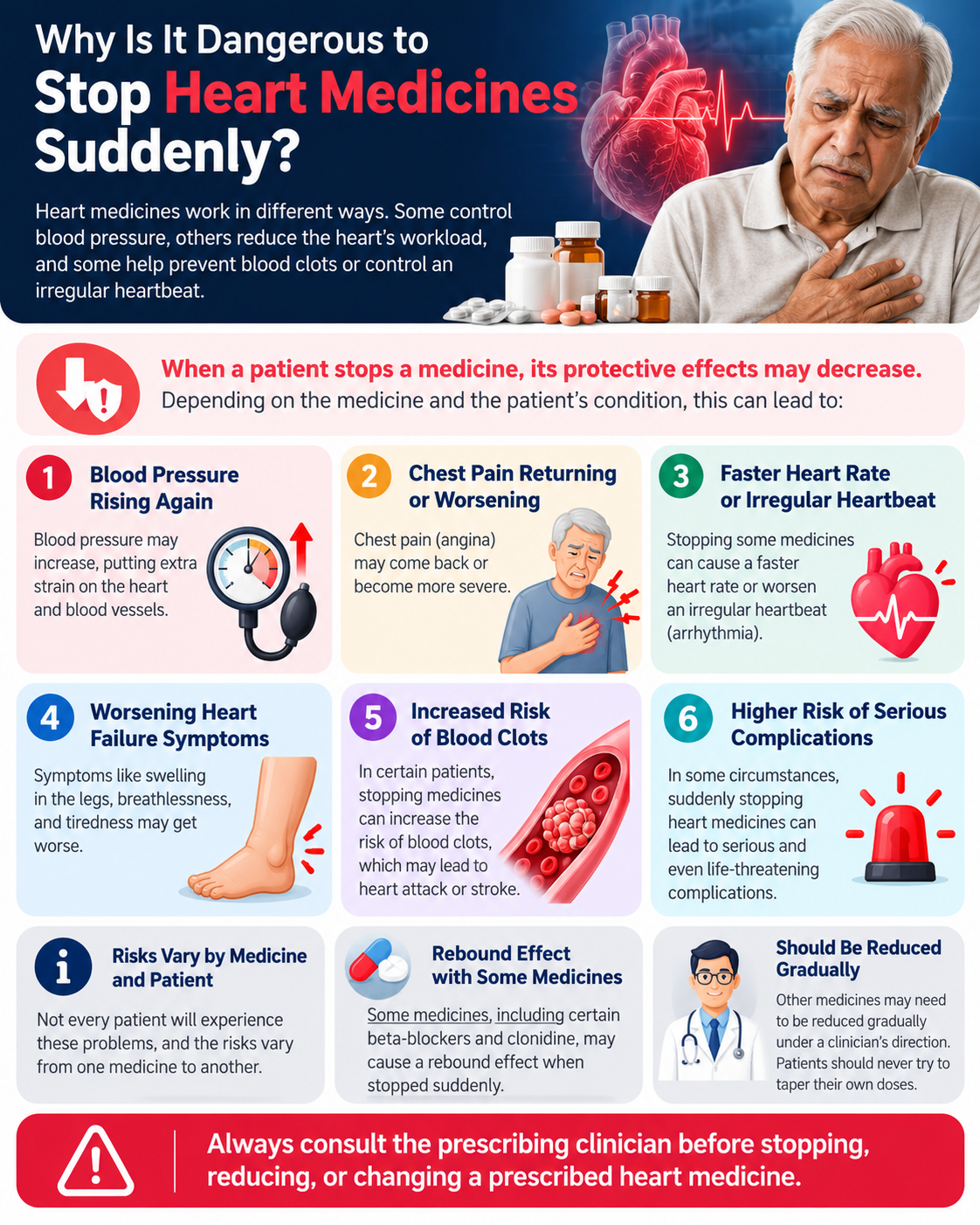
Always consult the prescribing clinician before stopping, reducing, or changing a prescribed heart medicine.
What Can Happen If a Heart Patient Stops Different Medicines?
The possible effects depend on the medicine, the patient’s diagnosis, and why the treatment was prescribed.
1. Stopping Blood Pressure Medicines
Blood pressure medicines help keep blood pressure under control. Some also protect the heart and kidneys or reduce the heart’s workload.
Stopping certain medicines may cause blood pressure to rise. Some medicines can cause a more sudden rebound increase when stopped abruptly.
High blood pressure often has no obvious symptoms. A patient may feel well even when their blood pressure is too high.
What should you do? Continue taking the medicine as prescribed. If the patient experiences dizziness, weakness, or other side effects, contact the prescribing clinician. The clinician can decide whether the dose or medicine needs to change.
2. Stopping Blood Thinners and Antiplatelet Medicines
Some heart patients take anticoagulants or antiplatelet medicines to reduce the risk of harmful blood clots.
These medicines may be prescribed for conditions such as atrial fibrillation, previous blood clots, or after certain heart procedures.
Stopping them without medical advice may increase the risk of a clot, stroke, or other serious complication, depending on the patient’s condition.
What should you do? Do not stop these medicines on your own, including before surgery or dental treatment. Ask the prescribing clinician for specific instructions.
If unusual bleeding occurs, seek medical advice promptly. Heavy bleeding, vomiting blood, or bleeding accompanied by collapse requires emergency care.
3. Stopping Heart Failure Medicines
People with heart failure may take several medicines to manage symptoms, control fluid buildup, and reduce the risk of hospital admission.
Stopping certain prescribed medicines can lead to worsening breathlessness, increased swelling in the legs or feet, or unexpected weight gain caused by fluid retention. It may also remove important protection against further heart problems.
What should you do? Follow the prescribed treatment plan. Contact the healthcare team if swelling increases, breathing becomes worse, or weight rises unexpectedly. Follow any weight-monitoring instructions provided by the treating team.
4. Stopping Medicines for Chest Pain
Some medicines help prevent or control angina, which is chest discomfort caused by reduced blood flow to the heart.
If a patient stops these medicines, chest discomfort may return or become more frequent. The risk depends on the medicine and the underlying heart condition.
What should you do? Contact the doctor if chest pain returns or becomes more frequent. New, severe, or persistent chest pain may signal a medical emergency. Do not wait to see whether restarting a medicine makes it go away.
5. Stopping Medicines for Irregular Heart Rhythms
Medicines used to control abnormal heart rhythms can help manage the heart’s rate or rhythm.
Stopping some of these medicines may allow an irregular rhythm to return or worsen. The effects depend on the specific medicine and the patient’s condition.
What should you do? Do not stop or change a heart rhythm medicine without professional guidance. Report new palpitations, dizziness, or fainting promptly. Fainting or collapse requires emergency assessment.
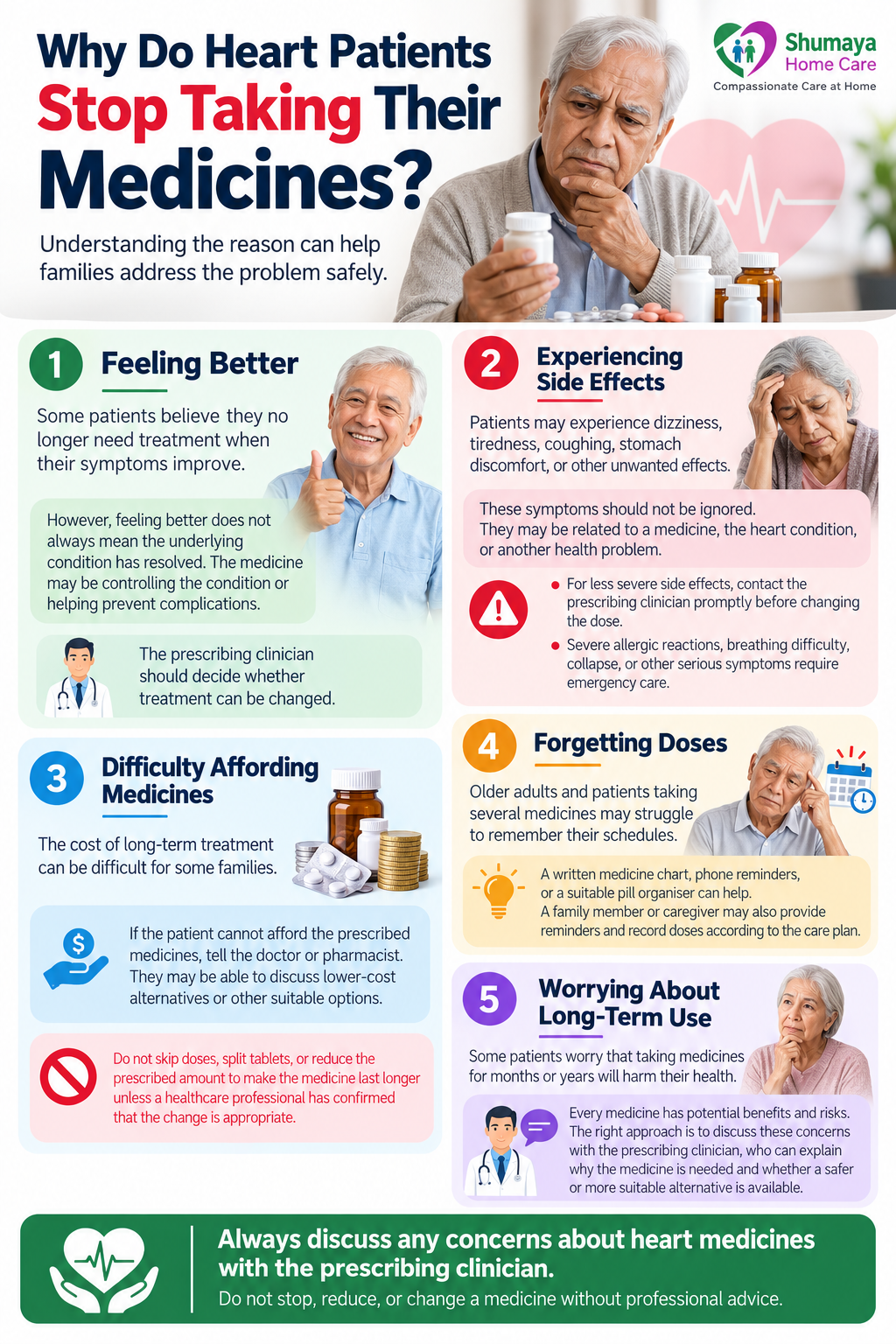
Why Do Heart Patients Stop Taking Their Medicines?
Understanding the reason can help families address the problem safely.
Feeling Better
Some patients believe they no longer need treatment when their symptoms improve.
However, feeling better does not always mean the underlying condition has resolved. The medicine may be controlling the condition or helping prevent complications.
The prescribing clinician should decide whether treatment can be changed.
Experiencing Side Effects
Patients may experience dizziness, tiredness, coughing, stomach discomfort, or other unwanted effects.
These symptoms should not be ignored. They may be related to a medicine, the heart condition, or another health problem.
For less severe side effects, contact the prescribing clinician promptly before changing the dose. Severe allergic reactions, breathing difficulty, collapse, or other serious symptoms require emergency care.
Difficulty Affording Medicines
The cost of long-term treatment can be difficult for some families.
If the patient cannot afford the prescribed medicines, tell the doctor or pharmacist. They may be able to discuss lower-cost alternatives or other suitable options.
Do not skip doses, split tablets, or reduce the prescribed amount to make the medicine last longer unless a healthcare professional has confirmed that the change is appropriate.
Forgetting Doses
Older adults and patients taking several medicines may struggle to remember their schedules.
A written medicine chart, phone reminders, or a suitable pill organiser can help. A family member or caregiver may also provide reminders and record doses according to the care plan.
Worrying About Long-Term Use
Some patients worry that taking medicines for months or years will harm their health.
Every medicine has potential benefits and risks. The right approach is to discuss these concerns with the prescribing clinician, who can explain why the medicine is needed and whether a safer or more suitable alternative is available.
What Should Families Do If a Heart Patient Wants to Stop Medication?
Family members can help the patient manage treatment more safely by following these steps.
Ask about the concern. Find out whether the patient is experiencing side effects, struggling with the schedule, worried about cost, or unsure why the medicine is needed.
Avoid making changes independently. Do not stop, reduce, or replace prescribed medicines without appropriate medical advice.
Contact the doctor or pharmacist. Explain the problem and ask what action is appropriate for the specific medicine.
Keep an updated medicine list. Record each medicine’s name, prescribed dose, timing, and purpose if known. Include non-prescription medicines and supplements.
Track symptoms and readings when advised. Record blood pressure, pulse, weight, or other measurements if they are part of the patient’s care plan.
Use reminders. A written schedule or phone alarm can reduce missed doses.
Know what to do about missed doses. Follow the medicine-specific instructions or ask a pharmacist or clinician. Do not automatically double the next dose.
Keep follow-up appointments. Regular reviews help the healthcare team assess whether the treatment remains appropriate.
A single blood pressure or pulse reading should not be used to decide independently whether a medicine should be stopped. Follow the clinician’s instructions for readings that are too high or too low.
A Simple Daily Medication Safety Checklist
Families can use this checklist to support a heart patient’s daily routine.
Check the current prescription and medicine schedule.
Confirm which medicines are due at each prescribed time.
Record doses taken according to the care plan.
Note missed doses and follow the specific instructions for that medicine.
Watch for new symptoms or possible side effects.
Record blood pressure, pulse, or weight when instructed.
Keep the medicine list and healthcare team’s contact details available.
Arrange prescription refills before the supply runs out.
Never change a dose based only on symptoms or a single home measurement.
If a patient has difficulty swallowing, remembering medicines, or following the schedule, ask the healthcare team or pharmacist for a safe solution. Do not crush tablets or open capsules unless a pharmacist or clinician confirms that it is appropriate for that specific medicine.
When Should a Heart Patient Seek Emergency Help?
Some symptoms require immediate medical attention rather than a routine appointment.
Call local emergency services if the patient develops:
New, severe, or persistent chest pain or pressure.
Severe or sudden difficulty breathing.
Fainting or collapse.
Sudden weakness or numbness, especially on one side of the body.
Sudden difficulty speaking, understanding speech, or seeing.
Heavy bleeding that does not stop.
Do not delay emergency care while trying to adjust medicines, contact a home nurse, or wait for symptoms to improve.
If the patient develops new dizziness, unusual palpitations, increasing leg swelling, or worsening breathlessness without severe emergency symptoms, contact the healthcare team promptly for assessment.
How Can a Home Nurse Help With Medication Safety?
Managing several medicines at home can be difficult, particularly for older adults, bedridden patients, and people returning home after a heart-related hospital admission.
A qualified home nurse may help with medication-related care within their professional scope and the prescribed care plan.
Support may include:
Following the prescribed medication schedule.
Recording medicines administered as part of the care plan.
Monitoring blood pressure and pulse when instructed.
Observing and reporting possible side effects.
Helping maintain an updated medicine list.
Reporting missed doses, medication concerns, or changes in the patient’s condition to the appropriate healthcare professional.
A home nurse should not independently change prescribed treatment outside their professional authority or the applicable care arrangements.
A patient attendant may help with reminders, daily routines, meals, mobility, and personal care. However, a patient attendant is not a substitute for a qualified nurse when clinical nursing care is required.
Families may benefit from professional home nursing support when a patient takes several medicines, has difficulty following the prescribed routine, has memory problems, or needs nursing care after hospital discharge.
For families seeking home nursing services in Lahore, the appropriate level of support depends on the patient’s condition, care plan, and daily needs.
Frequently Asked Questions
Can a heart patient stop taking medicines if they feel better?
No, not without medical advice. Improved symptoms or blood pressure readings may mean that treatment is working. The prescribing clinician should decide whether any changes are appropriate.
What if a heart patient experiences side effects?
Contact the prescribing clinician or pharmacist and explain the symptoms. Do not change the dose independently. Severe allergic reactions, breathing difficulty, collapse, or other serious symptoms require emergency care.
What should I do if a heart patient misses a dose?
Follow the instructions for that specific medicine or ask a pharmacist or clinician. The correct action depends on the medicine and how much time has passed. Do not double the next dose unless specifically instructed.
Can heart medicines be stopped when blood pressure becomes normal?
Not without medical advice. Normal blood pressure may indicate that the medicine is working. Stopping treatment may cause blood pressure to rise again, depending on the medicine and the patient’s condition.
Can a home nurse help an elderly heart patient manage medicines?
A qualified home nurse may help follow the prescribed medication plan, monitor the patient as directed, document care, and report concerns. Changes to treatment must be handled by an appropriately authorised healthcare professional.
Does every heart patient need a home nurse?
No. Some patients manage their medicines independently or with family support. Others may benefit from professional help because of memory problems, limited mobility, complex treatment, or the need for nursing care after hospital discharge.
Shumaya Home Care Support in Lahore
Managing heart disease at home requires a consistent routine, clear communication, and attention to changes in the patient’s condition. Patients and families should not stop or change prescribed heart medicines simply because symptoms improve or side effects become inconvenient.
Shumaya Home Care & Patient Service provides home nursing and patient care support in Lahore, based on individual care needs. Families can discuss whether a qualified home nurse or a patient attendant is more suitable for their loved one.
If you are caring for an elderly parent, a bedridden patient, or someone recovering after a heart-related hospital admission, professional support may help with daily care routines and communication with the treating healthcare team.
Contact Shumaya Home Care & Patient Service to discuss home nursing and patient care support in Lahore.
Medical information note: This article is for general educational purposes and does not replace advice from a qualified healthcare professional. Patients should consult their treating clinician before changing prescribed heart medicines. Emergency symptoms require immediate medical assessment.