
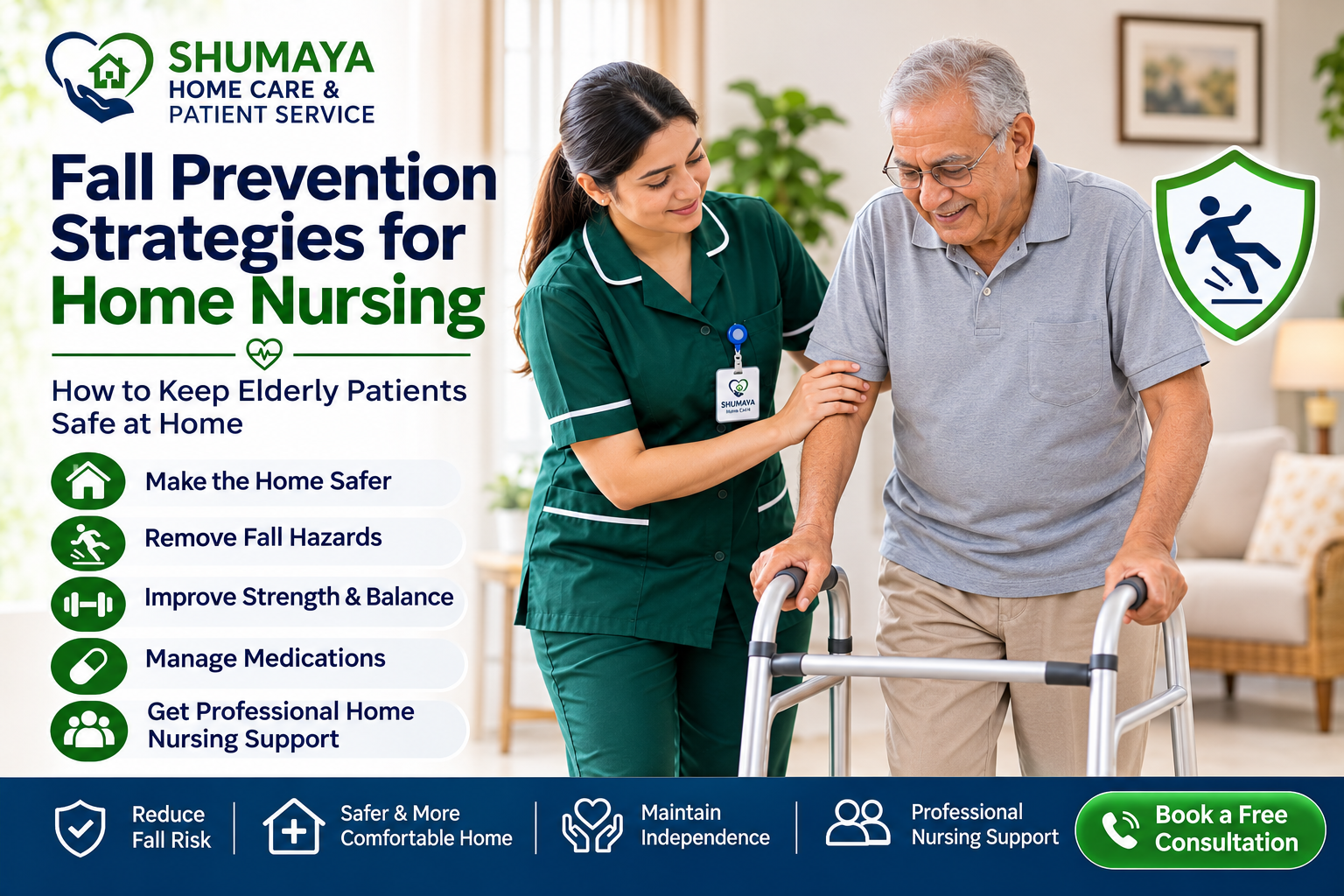
Falls are a common safety concern for older adults and patients with limited mobility. A simple fall can cause bruises, fractures, head injuries, or a loss of confidence that makes everyday activities more difficult. For elderly people, bedridden patients, and those recovering from surgery or illness, even a minor accident can affect their independence and recovery.
Preventing falls at home requires more than keeping floors clean. Families need to understand the patient’s fall risks, improve the home environment, support safe movement, and follow appropriate care routines.
With proper planning and professional assistance, families can make the home safer and reduce the risk of preventable accidents. This guide explains practical fall prevention strategies for home nursing and elderly patient care.
Why Is Fall Prevention Important for Patients at Home?
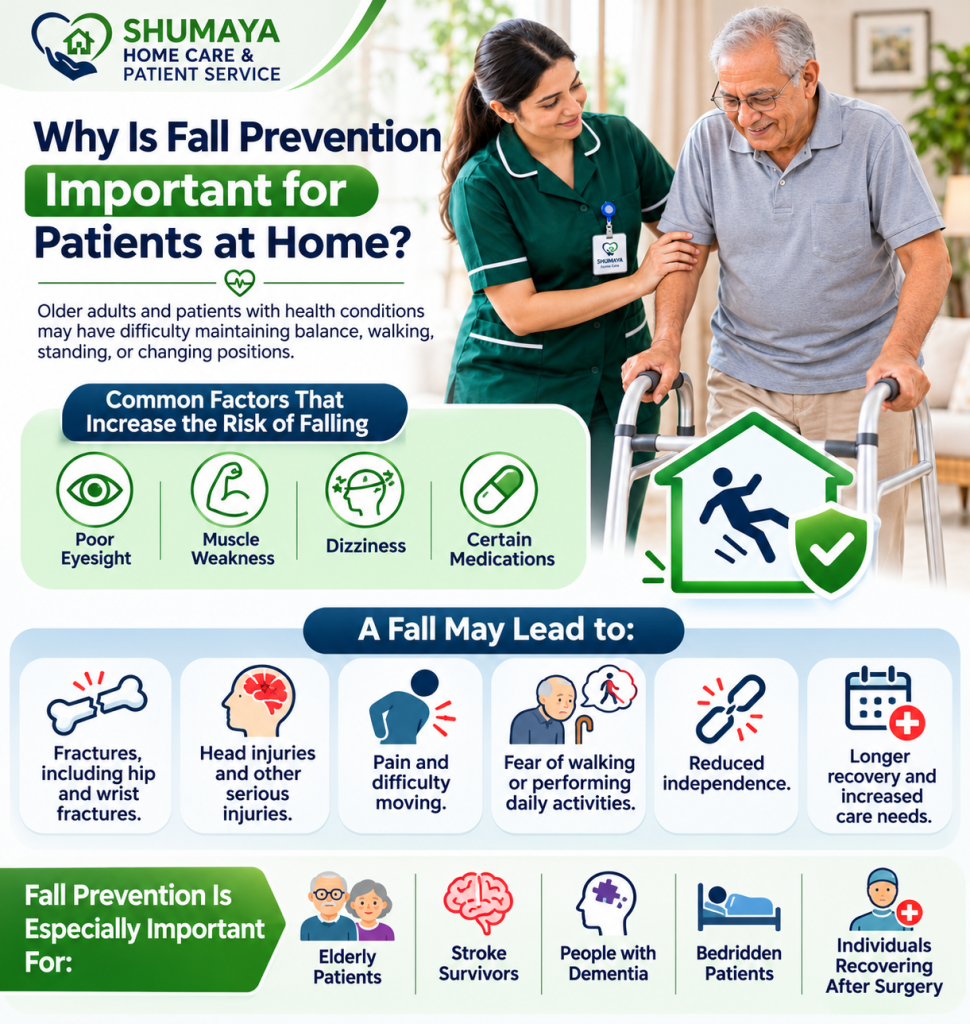
Older adults and patients with health conditions may have difficulty maintaining balance, walking, standing, or changing positions. Poor eyesight, muscle weakness, dizziness, and certain medications can further increase the risk of falling.
A fall may lead to:
Fractures, including hip and wrist fractures.
Head injuries and other serious injuries.
Pain and difficulty moving.
Fear of walking or performing daily activities.
Reduced independence.
Longer recovery and increased care needs.
Fall prevention is especially important for elderly patients, stroke survivors, people with dementia, bedridden patients, and individuals recovering after surgery.
Common Causes of Falls in Elderly and Weak Patients
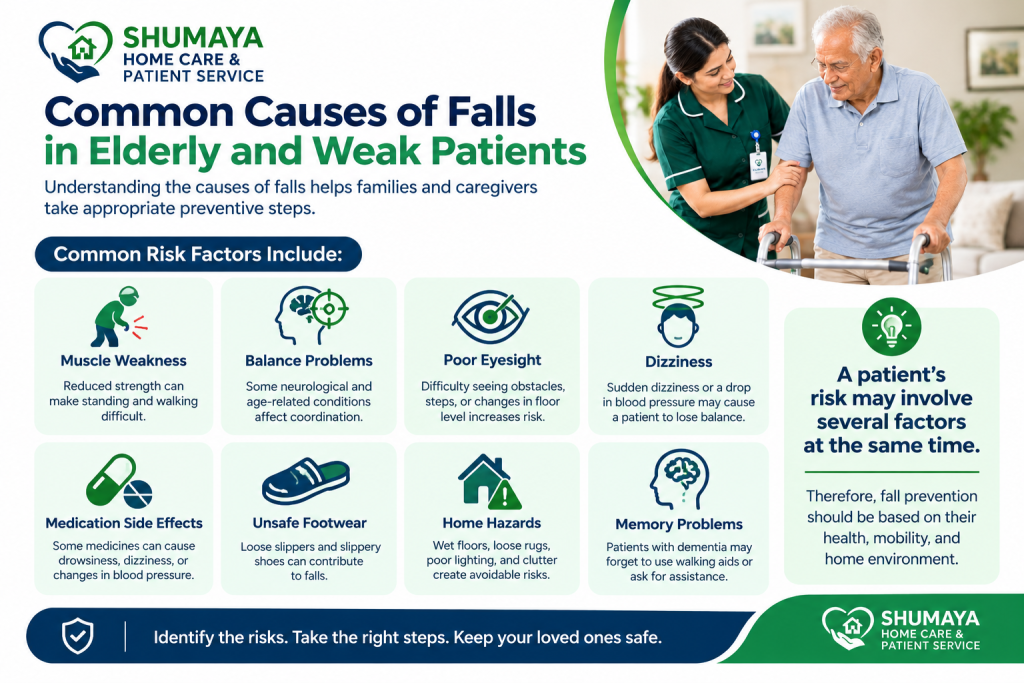
Understanding the causes of falls helps families and caregivers take appropriate preventive steps.
Common risk factors include:
Muscle weakness: Reduced strength can make standing and walking difficult.
Balance problems: Some neurological and age-related conditions affect coordination.
Poor eyesight: Difficulty seeing obstacles, steps, or changes in floor level increases risk.
Dizziness: Sudden dizziness or a drop in blood pressure may cause a patient to lose balance.
Medication side effects: Some medicines can cause drowsiness, dizziness, or changes in blood pressure.
Unsafe footwear: Loose slippers and slippery shoes can contribute to falls.
Home hazards: Wet floors, loose rugs, poor lighting, and clutter create avoidable risks.
Memory problems: Patients with dementia may forget to use walking aids or ask for assistance.
A patient’s risk may involve several factors at the same time. Therefore, fall prevention should be based on their health, mobility, and home environment.
Identify Patients Who May Be at High Risk of Falling
Some patients need closer supervision and a more structured fall-prevention plan.
Pay particular attention if a patient:
Has fallen recently or experienced repeated near-falls.
Feels unsteady while standing or walking.
Needs support when getting out of bed or sitting on a chair.
Experiences dizziness or weakness.
Has poor eyesight or difficulty recognizing obstacles.
Has memory problems or confusion.
Takes several medicines that may affect balance or alertness.
Has recently undergone surgery or suffered a stroke.
A healthcare professional can assess the patient’s walking ability, balance, strength, medical conditions, and medication-related risks. Families should share any recent falls or changes in mobility with the patient’s doctor.
1. Keep Floors Clear and Remove Tripping Hazards
A clean and organized home can reduce many common fall risks.
Families and caregivers should:
Remove loose rugs or secure them with suitable non-slip backing.
Keep electrical wires away from walking areas.
Move furniture that blocks common walking routes.
Keep floors dry and clean.
Remove unnecessary objects from hallways and bedrooms.
Keep frequently used items within easy reach.
Make sure floor surfaces are even and free from damage.
Avoid placing household items where patients need to walk, especially between the bedroom, bathroom, and living area.
2. Improve Lighting Throughout the Home
Poor lighting makes it difficult for patients to identify obstacles and changes in floor levels.
To improve visibility:
Use bright, suitable lighting in bedrooms and hallways.
Install night lights along the route to the bathroom.
Keep switches easy to reach from the bed and room entrance.
Ensure stairways and entrance areas are properly illuminated.
Avoid dark corners and sudden changes in lighting.
Patients who wake up during the night should have a safe, well-lit route to the bathroom.
3. Make Bathrooms Safer
Bathrooms are common places for falls because water can make floors slippery. Patients with weakness or limited mobility may also struggle when getting into or out of the shower or using the toilet.
Useful safety measures include:
Install securely fixed grab bars near the toilet and shower.
Use suitable non-slip flooring or securely placed non-slip mats.
Clean water spills immediately.
Provide a stable shower chair when appropriate.
Consider a raised toilet seat if recommended for the patient’s needs.
Keep towels, toiletries, and clothing within easy reach.
Provide assistance with bathing and toileting when necessary.
Loose mats can create additional tripping hazards, so make sure any mat is designed to stay securely in place.
If a patient cannot safely walk to the bathroom, a bedside commode may be a suitable option after discussing the arrangement with a healthcare professional.
4. Encourage Safe Footwear
The right footwear can help patients maintain stability while walking.
Choose footwear that:
Fits properly.
Has a non-slip sole.
Provides support around the foot.
Has a secure fastening or heel support.
Does not slide off easily.
Avoid loose slippers, high heels, and socks on slippery floors. Patients should not walk barefoot on smooth or wet surfaces if they are at risk of falling.
5. Support Safe Walking and Movement
Patients with reduced mobility may need assistance when standing, sitting, walking, or changing positions.
Caregivers should:
Allow the patient time to sit before standing.
Encourage slow and controlled movements.
Make sure the patient is stable before walking.
Keep walking routes clear.
Provide assistance according to the patient’s mobility needs.
Avoid rushing the patient during transfers.
If a patient experiences dizziness after standing, help them sit or lie down safely and inform their healthcare provider. Do not encourage them to continue walking while dizzy.
Safe Patient Transfers: Bed, Chair, and Wheelchair
Moving a patient from a bed to a chair or wheelchair requires careful handling. Incorrect lifting or transfer techniques can cause injuries to both the patient and caregiver.
For safer transfers:
Assess whether the patient can bear weight and follow instructions.
Make sure the bed and chair are stable.
Position the wheelchair correctly and lock its brakes before transferring.
Use the transfer method recommended for the patient’s condition.
Use appropriate transfer equipment when needed.
Ask for trained assistance if the patient cannot safely support their own weight.
Caregivers should not attempt to lift a patient beyond their training or physical ability. A healthcare professional can advise whether a transfer belt, slide sheet, transfer board, or mechanical lifting equipment is appropriate.
6. Use Walking Aids and Mobility Equipment Correctly
Walking aids can provide additional support for patients with balance or mobility difficulties.
Depending on the patient’s needs, suitable equipment may include:
Walking sticks.
Walkers or walking frames.
Wheelchairs.
Shower chairs.
Raised toilet seats.
Bedside commodes.
Appropriate transfer equipment.
Walking aids should be correctly sized and suitable for the patient’s physical condition. A physiotherapist or healthcare professional can help select and adjust the equipment.
Caregivers should also check that wheelchair brakes work properly and that walking aids are stable and in good condition.
7. Review Medicines That May Increase Fall Risk
Some medicines can affect balance, alertness, or blood pressure. These effects may increase the risk of falling, particularly in older adults who take multiple medicines.
Possible warning signs include:
Dizziness after taking medication.
Unusual sleepiness or drowsiness.
Confusion or reduced alertness.
Weakness when standing.
Changes in balance or coordination.
Families should maintain an updated list of the patient’s medicines and discuss possible side effects with the doctor or pharmacist.
Never stop, reduce, or change a prescribed medicine without medical advice. A healthcare professional can review the patient’s medication and determine whether any adjustments are needed.
8. Encourage Appropriate Exercise and Physiotherapy
Suitable physical activity can help improve muscle strength, balance, coordination, and mobility. However, exercise must match the patient’s medical condition and physical abilities.
A healthcare professional or physiotherapist may recommend:
Gentle leg-strengthening exercises.
Supported standing exercises.
Balance training.
Walking practice.
Range-of-motion exercises.
Rehabilitation exercises after a stroke or surgery.
Patients who are weak, bedridden, or recovering from serious illness should not begin a new exercise routine without professional guidance.
Regular, appropriate activity may help patients maintain mobility and confidence while reducing some fall-related risks.
9. Provide Extra Support for Patients With Dementia
Patients with dementia may have difficulty remembering safety instructions, recognizing hazards, or understanding their physical limitations.
Families and caregivers can improve safety by:
Keeping furniture and room arrangements familiar.
Maintaining clear and consistent walking routes.
Providing good lighting.
Keeping essential items in predictable places.
Supervising walking and bathroom visits when needed.
Using simple and calm instructions.
Encouraging the patient to ask for help before standing or walking.
Avoid unnecessary changes to the home environment, as unfamiliar surroundings may increase confusion.
10. Take Special Care of Bedridden and Weak Patients
Bedridden patients may not walk independently, but they can still experience falls during transfers, repositioning, or attempts to get out of bed without assistance.
Helpful precautions include:
Keeping the bed at an appropriate height for safe transfers.
Making sure the bed is stable.
Keeping essential items within reach.
Providing assistance when changing positions or moving out of bed.
Using appropriate transfer equipment when necessary.
Ensuring that wheelchair brakes are locked during transfers.
Bed rails should not be used automatically for every patient. Depending on the patient’s condition, they may create risks such as entrapment or attempts to climb over them. Their use should be assessed individually by a qualified healthcare professional.
11. Create an Individual Fall-Prevention Plan
Every patient has different health conditions, mobility levels, and care requirements. A suitable fall-prevention plan should address the patient’s specific risks.
A practical plan may include:
Reviewing previous falls and mobility difficulties.
Identifying unsafe areas in the home.
Checking eyesight and footwear needs.
Reviewing medicines with the healthcare provider.
Selecting suitable walking and transfer equipment.
Planning assistance for bathing and toileting.
Scheduling appropriate exercise or physiotherapy.
Monitoring changes in strength, balance, and alertness.
Families should review the plan whenever the patient’s health or mobility changes.
What Should You Do If a Patient Falls at Home?
Even with preventive measures, falls can still happen. Knowing how to respond can help prevent further injury.
If a patient falls:
Stay calm: Reassure the patient and avoid rushing them.
Check their condition: Look for pain, bleeding, swelling, confusion, or difficulty moving.
Do not move them unnecessarily: If a serious injury, fracture, or neck or back injury is suspected, avoid moving the patient unless they are in immediate danger.
Seek emergency help when needed: Call emergency services for loss of consciousness, difficulty breathing, severe pain, suspected fracture, serious bleeding, new weakness, or other signs of a serious injury.
Arrange prompt medical assessment after a head injury: This is particularly important for patients taking blood-thinning medicines, even if they initially appear well.
Inform the healthcare provider: A fall should be reported so the patient’s condition and fall risks can be reviewed.
If there are no obvious injuries, the patient should still be observed and the fall discussed with their healthcare provider. Do not assume that a fall is harmless simply because the patient can stand or walk afterward.
How Can a Home Nurse or Patient Attendant Help Prevent Falls?
Professional home care can provide additional support for patients who need assistance with mobility, personal care, and health monitoring.
However, the responsibilities of a nurse and a patient attendant are different.
Role of a Home Nurse
A qualified home nurse may help with:
Monitoring the patient’s health condition as appropriate.
Assessing and reporting changes in mobility or general condition.
Providing nursing care within their professional scope.
Supporting prescribed wound care and post-operative care.
Following clinical instructions and communicating concerns to the family or doctor.
Helping families understand patient safety precautions.
Role of a Patient Attendant
A patient attendant may assist with daily activities such as:
Helping the patient move around safely.
Supporting bathing, dressing, and personal hygiene.
Assisting with toileting and daily routines.
Helping with meals and basic comfort.
Providing companionship and supervision.
Supporting safe positioning and transfers according to training and the care plan.
A patient attendant does not replace a qualified nurse for clinical nursing procedures or medical assessment.
Families may also have a preference for male or female nursing staff or patient attendants, depending on the patient’s comfort, privacy, and personal care requirements.
When Should Families Consider Professional Home Care?
Professional support may be helpful when a patient:
Has experienced repeated falls or near-falls.
Cannot walk or stand without assistance.
Needs help with bathing, toileting, or transfers.
Is recovering after surgery, stroke, or serious illness.
Has dementia or other conditions affecting judgment and mobility.
Requires regular nursing care or closer supervision.
Families looking for home nursing services in Lahore should consider the patient’s medical needs, mobility, required care hours, and the qualifications of the staff.
Shumaya Home Care & Patient Service provides home nursing and patient care support in Lahore, including male and female nursing staff and patient attendants according to patient requirements. Families seeking home patient services in Lahore Pakistan can discuss their care needs and suitable support arrangements with the team.
Frequently Asked Questions
What is the most effective way to prevent falls at home?
Start by identifying the patient’s fall risks, removing tripping hazards, improving lighting, making bathrooms safer, and providing suitable assistance with walking and transfers. Medication review and appropriate exercise can also help.
Why are elderly patients more likely to fall?
Age-related muscle weakness, balance difficulties, poor eyesight, chronic health conditions, dizziness, and certain medication side effects can increase fall risk. Several factors may affect the same patient.
How can bedridden patients be protected from falls?
Keep the bed area organized, provide assistance during transfers, use appropriate equipment, and avoid allowing the patient to get up without support when they cannot move safely. Bed rails should be assessed individually rather than used automatically.
Should an elderly patient see a doctor after a fall?
Yes, a fall should be reported to a healthcare provider, even if there is no obvious injury. Urgent assessment is important after a head injury, suspected fracture, severe pain, loss of consciousness, or new neurological symptoms. Patients taking blood thinners need particular attention after a head injury.
Can a home nurse help reduce fall risks?
A home nurse can support patient monitoring, nursing care, and safety planning within their professional scope. A patient attendant can help with daily activities, mobility assistance, and supervision according to the care plan.
Get Professional Home Nursing and Patient Care Support in Lahore
Preventing falls requires consistent attention to the patient’s health, mobility, and surroundings. A safer home environment, appropriate equipment, careful transfers, and the right level of supervision can help reduce avoidable risks.
If your loved one needs assistance with daily activities, mobility, or nursing care, Shumaya Home Care & Patient Service can help you discuss suitable home care arrangements in Lahore.
Contact our team to discuss your requirements for elderly patient care at home in Lahore Pakistan.
Call: +92 300 1111931
Website: https://www.shumayahomecare.pk/
Internal link: Explore Home Nursing Services in Lahore