
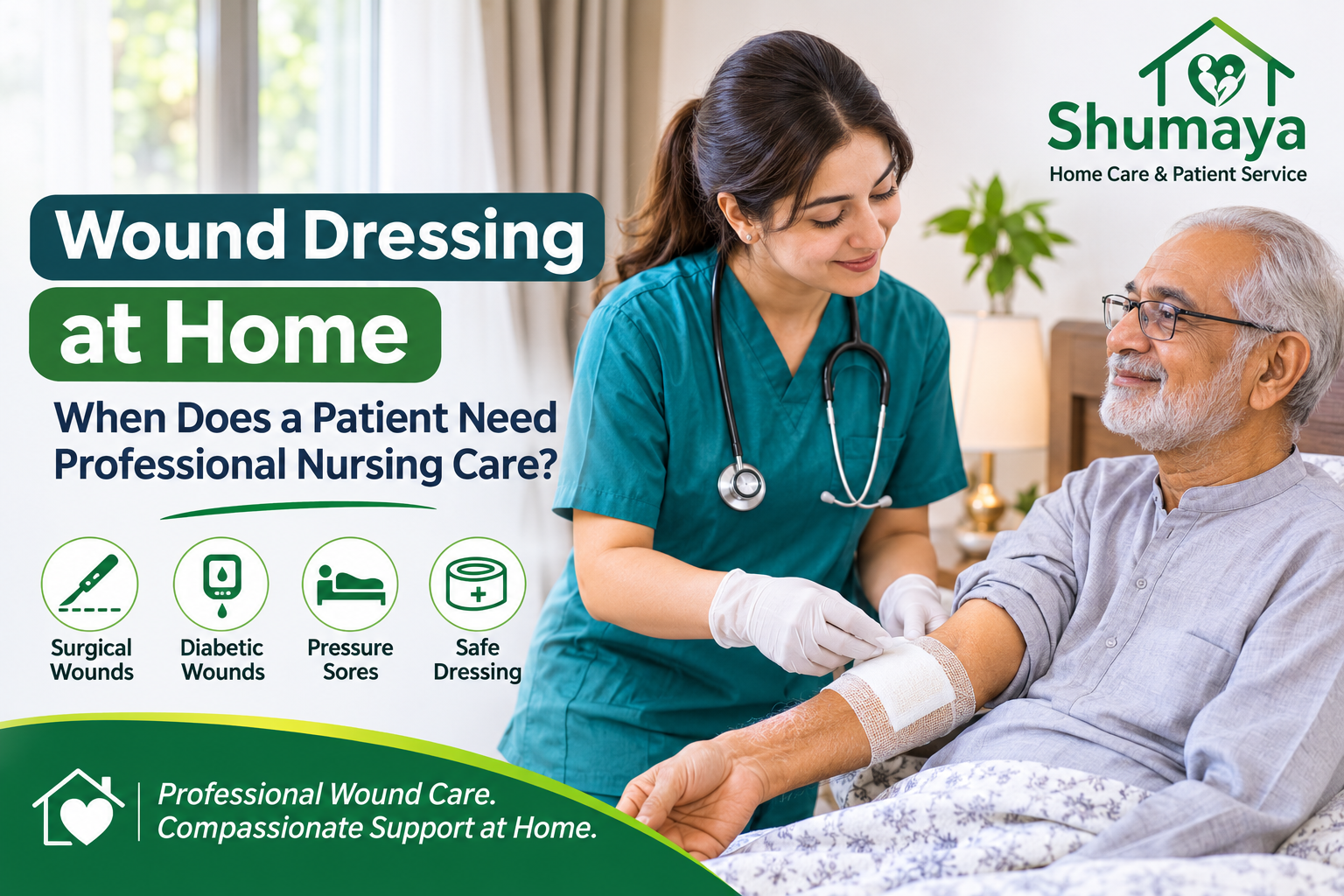
Wound care is an important part of recovery after surgery, injury, or certain medical conditions. Some wounds need regular cleaning and dressing changes to protect the affected area and support healing. For patients who have difficulty travelling to a hospital or clinic, wound dressing at home can be a practical option when the wound is suitable for home management.
However, not every wound should be treated at home. Deep wounds, infected wounds, diabetic foot ulcers, and wounds that are not healing properly may require professional assessment and nursing care.
Understanding when to arrange a home nurse, what proper wound dressing involves, and when medical attention is urgent can help families make safer decisions.
What Is Wound Dressing?
Wound dressing is the process of covering a wound with an appropriate dressing material after cleaning or treating it according to the healthcare professional’s instructions.
A suitable dressing helps protect the wound from contamination, manage drainage, maintain an appropriate healing environment, and protect surrounding skin.
The type of dressing depends on several factors, including:
The size and depth of the wound.
The amount of wound drainage.
Whether infection is suspected or confirmed.
The location and cause of the wound.
The patient’s medical condition.
The treatment plan recommended by the doctor.
Some wounds need simple dressings, while others require specialized materials and regular clinical monitoring.
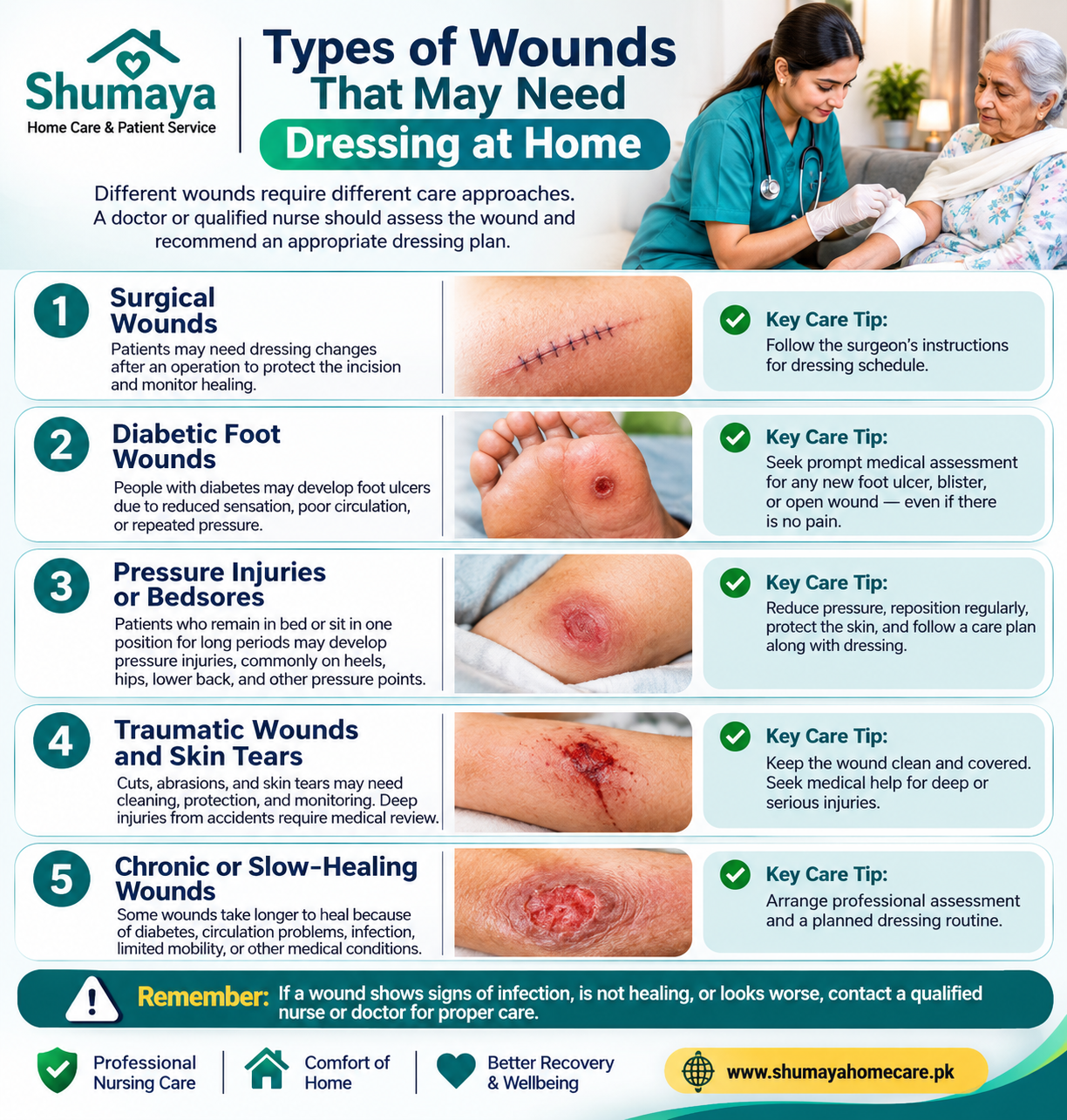
Types of Wounds That May Need Dressing at Home
Different wounds require different care approaches. A doctor or qualified nurse should assess the wound and recommend an appropriate dressing plan.
1. Surgical Wounds
Patients may need dressing changes after an operation to protect the incision and monitor healing. The dressing schedule should follow the surgeon’s instructions.
2. Diabetic Foot Wounds
People with diabetes may develop foot ulcers because of reduced sensation, poor circulation, or repeated pressure. These wounds can become serious even when the patient does not feel pain.
A new diabetic foot ulcer, blister, or open wound should receive prompt medical assessment. Do not wait for pain or obvious infection before seeking advice.
3. Pressure Injuries or Bedsores
Patients who remain in bed or sit in one position for long periods may develop pressure injuries. These commonly affect the heels, hips, lower back, and other pressure points.
Dressing is only one part of pressure injury care. Reducing pressure, repositioning, protecting the skin, and following an individual care plan are also important.
4. Traumatic Wounds and Skin Tears
Cuts, abrasions, and skin tears may need cleaning, protection, and monitoring. Deep injuries or wounds caused by serious accidents need medical assessment rather than routine home dressing alone.
5. Chronic or Slow-Healing Wounds
Some wounds take longer to heal because of diabetes, circulation problems, infection, limited mobility, or other medical conditions. These wounds may require ongoing professional assessment and a planned dressing routine.
When Does a Patient Need Wound Dressing at Home?
Home wound dressing may be appropriate when a patient’s condition is stable and a healthcare professional has determined that the wound can safely be managed outside a hospital.
It may be useful in the following situations:
After surgery: A patient needs regular dressing changes following discharge.
Limited mobility: An elderly, bedridden, or disabled patient cannot easily travel for routine wound care.
Ongoing wound management: A wound requires scheduled dressing changes according to a treatment plan.
Pressure injuries: A patient needs wound care alongside pressure relief and skin protection.
Chronic wounds: A patient needs regular observation and dressing support under medical guidance.
Family limitations: Family members are unable to manage the dressing safely or confidently.
Home care should not replace a doctor’s assessment when the wound is new, worsening, unusually painful, or showing signs of complications.
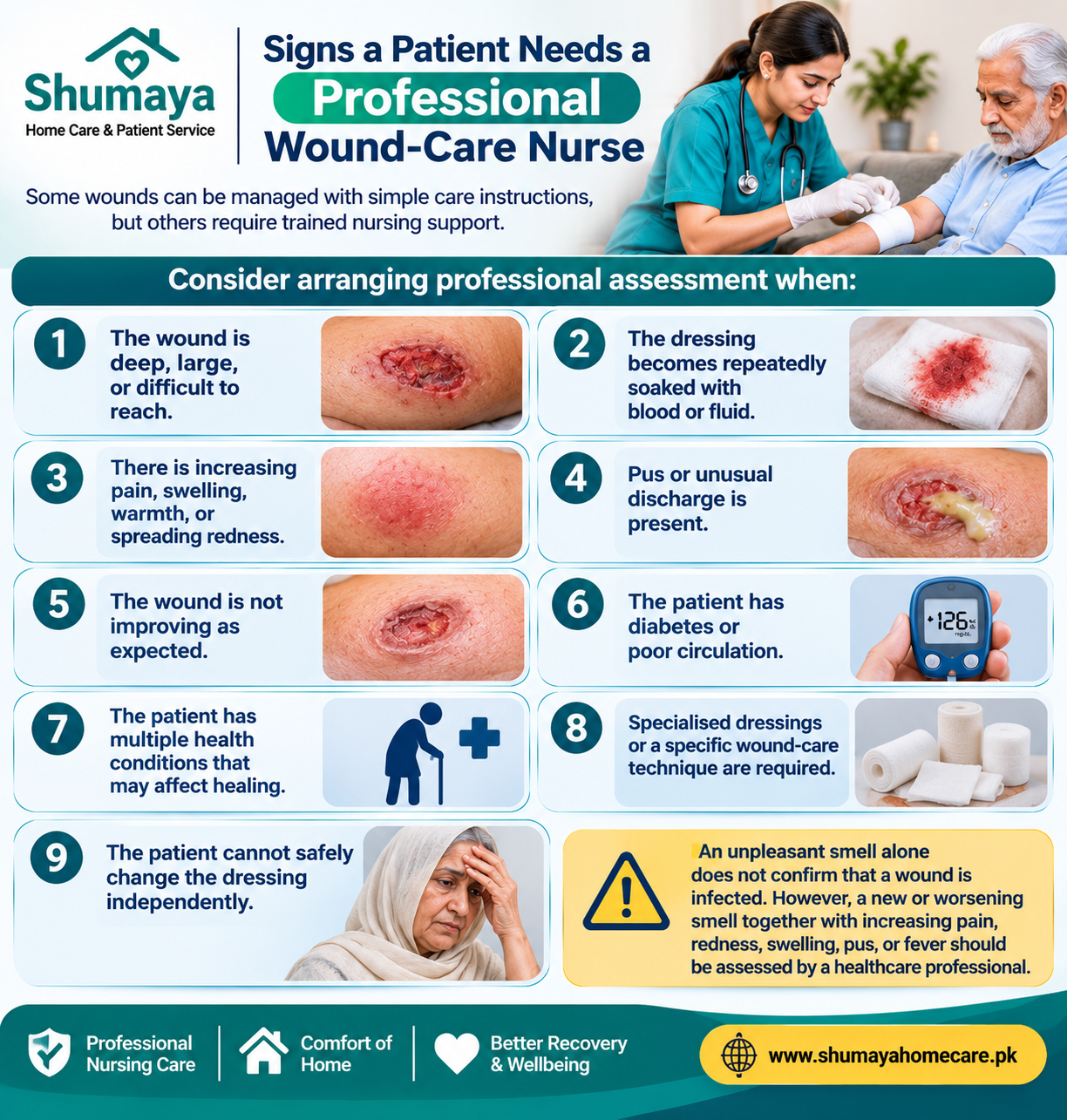
Signs a Patient Needs a Professional Wound-Care Nurse
Some wounds can be managed with simple care instructions, but others require trained nursing support.
Consider arranging professional assessment when:
The wound is deep, large, or difficult to reach.
The dressing becomes repeatedly soaked with blood or fluid.
There is increasing pain, swelling, warmth, or spreading redness.
Pus or unusual discharge is present.
The wound is not improving as expected.
The patient has diabetes or poor circulation.
The patient has multiple health conditions that may affect healing.
Specialised dressings or a specific wound-care technique are required.
The patient cannot safely change the dressing independently.
An unpleasant smell alone does not confirm that a wound is infected. However, a new or worsening smell together with increasing pain, redness, swelling, pus, or fever should be assessed by a healthcare professional.
What Does a Home Nurse Do During Wound Dressing?
A qualified nurse follows the patient’s treatment plan and uses an appropriate wound-care technique. The exact procedure depends on the wound and the instructions provided by the treating clinician.
A home nursing visit may include:
Reviewing the care instructions: Checking the doctor’s recommendations and the patient’s relevant medical history.
Preparing the supplies: Arranging suitable dressing materials and protective equipment.
Hand hygiene and preparation: Cleaning hands and preparing an appropriate clean or aseptic working area.
Removing the old dressing: Carefully removing the previous dressing while avoiding unnecessary injury to the wound or surrounding skin.
Observing the wound: Checking its appearance, drainage, surrounding skin, and any changes that may need medical attention.
Cleaning as instructed: Using the solution and method specified in the wound-care plan.
Applying the new dressing: Selecting and securing the appropriate dressing material.
Documenting changes: Recording relevant observations and reporting concerns to the responsible healthcare professional.
The nurse should use sterile supplies when clinically indicated and follow the appropriate infection-prevention protocol. The dressing technique should be based on the wound type and the clinician’s instructions.
A home nurse should not independently change prescribed treatment or use unapproved creams, medicines, or wound products.
Patient Attendant vs Professional Nurse for Wound Dressing
Families should understand the difference between personal care assistance and clinical nursing responsibilities.
| Responsibility | Professional Nurse | Patient Attendant |
|---|---|---|
| Clinical wound assessment | Within qualifications and care plan | Not an independent responsibility |
| Prescribed wound dressing | Can perform when trained and authorised | Should not independently perform clinical dressing |
| Personal hygiene | Can assist | Main responsibility |
| Feeding assistance | Can assist | Main responsibility |
| Mobility support | Can assist according to care plan | Can assist according to care plan |
| Observing and reporting changes | Clinical observation and escalation | Reports visible concerns to the nurse or family |
A patient attendant can help with daily activities, comfort, hygiene, and mobility. However, clinical wound assessment and dressing should be handled by an appropriately qualified and trained healthcare professional.
Families should not assume that every caregiver or attendant has the training required for wound-care procedures.
Factors That Can Delay Wound Healing
Wound healing depends on more than dressing changes. Several health and lifestyle factors can affect how quickly a wound improves.
Diabetes and Poor Blood Sugar Control
High blood sugar can affect circulation, immune function, and the body’s ability to repair damaged tissue.
Poor Blood Circulation
Reduced blood supply can limit the oxygen and nutrients needed for wound healing. This is particularly important in patients with diabetes or vascular disease.
Infection
An infected wound may become more painful, swollen, or red and may produce pus. Infection can delay healing and sometimes requires medical treatment.
Poor Nutrition
The body needs adequate protein, calories, vitamins, minerals, and fluids to support tissue repair. Patients with poor appetite or nutritional problems may need dietary assessment.
Repeated Pressure and Friction
Pressure on the same area can worsen an existing wound or cause a new pressure injury. This is particularly relevant for bedridden patients.
Smoking and Other Medical Conditions
Smoking, certain medications, chronic illnesses, and reduced mobility may also affect healing. Patients should discuss these factors with their doctor rather than stopping prescribed medicines independently.
Can Wound Dressing Be Done at Home Without a Nurse?
Some minor wounds may be managed at home if a healthcare professional has confirmed that they are suitable for simple care and explained what to do.
However, professional nursing support is preferable when:
The wound is deep or complicated.
The patient has diabetes or circulation problems.
The dressing requires specialised materials.
The wound is not healing as expected.
The patient cannot safely perform the dressing.
There are possible signs of infection.
Families should follow the clinician’s instructions and avoid using household remedies, unprescribed creams, or harsh antiseptics.
If the wound becomes worse, seek medical advice instead of simply changing the dressing more frequently.
How to Prepare for a Home Wound-Dressing Visit
Preparing before the nurse arrives can make the visit more organised and help the nurse understand the patient’s needs.
Families should:
Keep the doctor’s wound-care instructions or discharge summary available.
Share information about diabetes, allergies, and other medical conditions.
Provide details of current medicines.
Explain when the wound first appeared or when surgery took place.
Keep previous wound-care reports or relevant photographs available, if appropriate.
Arrange a clean, well-lit area for the procedure.
Keep the prescribed dressing materials available if the family has been asked to arrange them.
Provide the treating doctor’s contact details if follow-up is needed.
Tell the nurse about any recent changes, including increased pain, bleeding, discharge, swelling, or fever.
Wound-Care Safety Tips for Families
Good wound-care habits can reduce avoidable problems and support the treatment plan.
Wash hands before and after handling wound dressings.
Follow the dressing schedule provided by the healthcare professional.
Use the recommended dressing materials.
Do not reuse disposable dressing supplies.
Avoid touching the wound with unclean hands or objects.
Do not apply toothpaste, oils, powders, or other household remedies.
Do not use antiseptics or creams unless recommended by the treating professional.
Keep the surrounding skin protected and follow instructions if the dressing becomes wet or loose.
Report unexpected changes rather than waiting for the next scheduled visit.
For patients with pressure injuries, follow the individual repositioning and pressure-relief plan. Appropriate mattresses, cushions, skin care, nutrition, and mobility support may also be necessary.
When Is Home Wound Dressing Not Enough?
Some wounds need urgent medical attention and should not be managed through routine home dressing alone.
Seek urgent medical assessment if the patient has:
Heavy or uncontrolled bleeding.
A very deep wound or exposed bone, tendon, or other underlying structures.
A serious burn or major traumatic injury.
Rapidly spreading redness or swelling.
Severe or rapidly worsening pain.
Black or dead-looking tissue.
Fever or chills with a worsening wound.
Red streaks spreading from the wound.
Confusion, fainting, or unusual drowsiness alongside signs of infection.
These symptoms may indicate serious complications. If the patient appears severely unwell or may have a serious infection, seek emergency medical care.
For diabetic patients, any new foot wound should be assessed promptly, even if it appears small or painless.
How Often Should a Wound Dressing Be Changed?
There is no single dressing schedule suitable for every wound.
The frequency depends on:
The type and depth of the wound.
The amount of drainage.
The dressing material being used.
The condition of the surrounding skin.
Whether infection is present or suspected.
The patient’s healing progress.
The doctor’s or wound-care professional’s instructions.
Some dressings may remain in place for longer periods, while others require more frequent changes. Changing a dressing too often or leaving it in place when it needs attention may cause problems.
Follow the prescribed schedule. If a dressing becomes soaked, dirty, loose, or unexpectedly wet, contact the healthcare professional for advice.
Home Nursing Support for Wound Dressing in Lahore
Patients recovering from surgery, living with limited mobility, or managing chronic wounds may need regular nursing assistance at home.
Shumaya Home Care & Patient Service provides home nursing and patient-care support in Lahore. Families looking for nursing assistance can discuss their patient’s condition, care requirements, and suitable staffing arrangements with the Shumaya team.
The appropriate care arrangement depends on the patient’s medical needs. Clinical wound dressing should be performed by a suitably qualified and trained nurse, according to the treating clinician’s instructions.
Learn more about our home nursing services in Lahore to understand the nursing support available for patients at home.
Frequently Asked Questions
1. Can wound dressing be done at home?
Yes. Some wounds can be managed at home when a healthcare professional confirms that home care is appropriate and provides a dressing plan. Complex, infected, or worsening wounds may need medical assessment or hospital treatment.
2. Can a diabetic patient receive wound dressing at home?
A diabetic patient may receive wound dressing at home when a clinician has assessed the wound and confirmed that home management is suitable. However, any new diabetic foot ulcer, blister, or open wound should receive prompt medical assessment because complications can develop even without pain.
3. Who should perform professional wound dressing?
Clinical wound dressing should be performed by a suitably qualified and trained nurse or other authorised healthcare professional, depending on the wound and applicable scope of practice.
4. Can a patient attendant change a surgical dressing?
A patient attendant should not independently perform clinical wound dressing. Attendants can help with personal care and daily activities, while clinical dressing should be handled by an appropriately trained healthcare professional.
5. What should I do if a wound dressing becomes wet?
Follow the instructions provided by the treating healthcare professional. A wet or contaminated dressing may need to be changed, but the correct action depends on the wound and dressing type. Contact the nurse or doctor if you are unsure.
6. Can a bedridden patient receive wound dressing at home?
Yes, if the wound and the patient’s overall condition are suitable for home management. Bedridden patients may also need pressure relief, repositioning, skin protection, and nutritional support as part of their care plan.
7. Does professional wound dressing guarantee faster healing?
No. Professional wound care helps ensure that the dressing follows an appropriate care plan and that concerning changes can be recognised. Healing also depends on blood circulation, nutrition, infection control, underlying conditions, and the patient’s overall health.
8. When should a wound be treated in a hospital?
Hospital assessment may be necessary for uncontrolled bleeding, deep or severe wounds, serious burns, rapidly spreading infection, severe tissue damage, or signs of a serious systemic infection.
Conclusion
Wound dressing at home can be a useful option for patients who need regular wound care but have difficulty travelling to a healthcare facility. However, safe wound management requires the right assessment, suitable dressing materials, proper technique, and monitoring.
Patients with diabetes, pressure injuries, surgical wounds, or slow-healing wounds should follow professional medical advice. Families should also understand when a wound needs urgent assessment rather than routine home care.
Choosing an appropriately qualified nurse and following the prescribed wound-care plan can help families manage recovery more safely at home.