
Finishing radiation therapy can bring relief, but recovery does not always end with the last treatment session. A cancer patient may still feel tired, have skin changes, experience appetite problems, or need extra help with daily activities.
Some side effects may continue for days or weeks after radiation therapy ends, depending on the area treated and the type of treatment. Some patients may also develop longer-term effects, so follow-up with the cancer care team remains important.
For families, caring for a cancer patient after radiation therapy at home is often about creating a calm routine, watching for changes, supporting nutrition and rest, and knowing when medical advice is needed.
With the right support, families can make the recovery period more comfortable while following the patient’s cancer care team’s instructions.
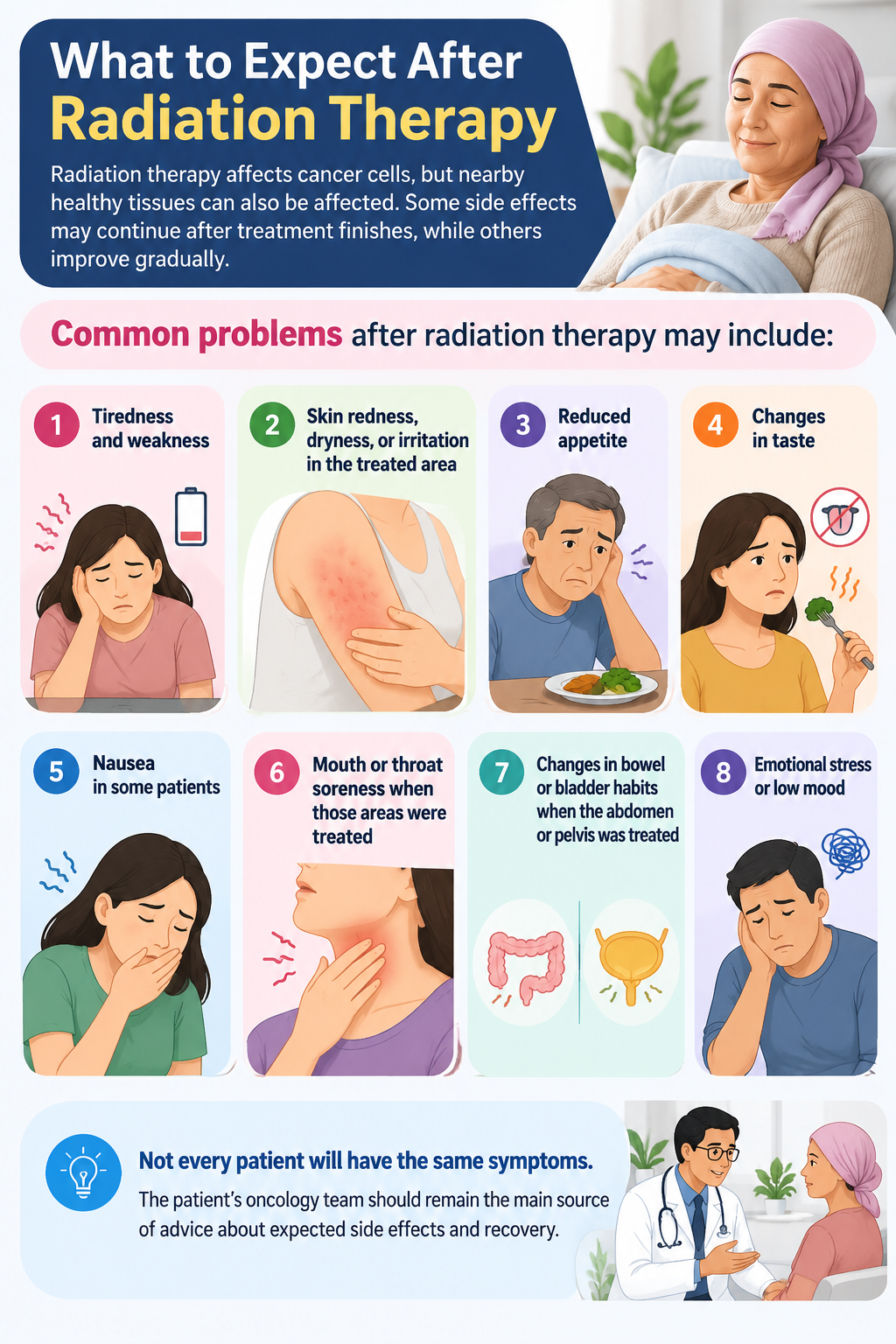
What to Expect After Radiation Therapy
Radiation therapy affects cancer cells, but nearby healthy tissues can also be affected. Some side effects may continue after treatment finishes, while others improve gradually.
Common problems after radiation therapy may include:
Tiredness and weakness
Skin redness, dryness, or irritation in the treated area
Reduced appetite
Changes in taste
Nausea in some patients
Mouth or throat soreness when those areas were treated
Changes in bowel or bladder habits when the abdomen or pelvis was treated
Emotional stress or low mood
Not every patient will have the same symptoms. The patient’s oncology team should remain the main source of advice about expected side effects and recovery.
Is It Safe to Stay Close to Someone After Radiation Therapy?
For most patients receiving external-beam radiation therapy, there is no need to isolate from family members because the treatment does not make the person radioactive.
Some forms of internal radiation therapy or systemic radioactive treatment can require specific safety precautions for a period of time. If the patient received this type of treatment, the radiation team should provide instructions about contact with other people.
Families should follow those instructions carefully rather than assuming that every type of radiation therapy has the same safety requirements.
How to Care for a Cancer Patient at Home After Radiation
Home care should focus on comfort, safety, nutrition, rest, and observation.
1. Encourage Plenty of Rest
Fatigue is common during and after cancer treatment. A patient may become tired after simple activities that were previously easy.
Help the patient balance activity with rest. Short periods of light activity, such as walking around the home when safe, may be easier than trying to complete many tasks at once.
A simple daily routine can help:
Keep regular sleeping and waking times.
Allow rest periods during the day.
Avoid unnecessary physical strain.
Help with household tasks when the patient is weak.
Encourage gentle movement if the doctor has approved it.
Do not pressure the patient to return to their normal routine too quickly.
2. Take Care of Radiation-Treated Skin
Skin in the treated area can become dry, red, sore, itchy, or sensitive. Skin reactions vary depending on the treatment area and the individual patient.
Families should follow the radiation team’s specific skin-care instructions.
General precautions may include:
Keep the treated area clean and dry as advised.
Avoid rubbing or scratching irritated skin.
Use only creams, lotions, or other products recommended by the healthcare team.
Avoid applying unapproved products to the treatment area.
Protect sensitive skin from excessive sun exposure.
Wear loose, comfortable clothing when possible.
If the skin becomes increasingly painful, develops open areas, blisters, significant swelling, drainage, or other signs of infection, contact the patient’s healthcare provider.
3. Support Good Nutrition and Fluids
Some patients have less appetite after radiation therapy. Others may experience changes in taste, nausea, or discomfort when eating.
Instead of expecting the patient to eat large meals, families can offer smaller meals and snacks throughout the day when appropriate.
Depending on the patient’s medical condition and doctor’s advice, meals may include foods that are:
Easy to eat and digest
Rich in protein when appropriate
Nutrient-dense
Suitable for the patient’s treatment and other health conditions
Nutrition needs can vary depending on the type of cancer, treatment area, swallowing ability, and other medical conditions. A doctor or dietitian can provide more specific advice when needed.
Encourage fluids unless the healthcare team has advised fluid restriction.
If the patient is consistently unable to eat or drink enough, has repeated vomiting, or shows signs of dehydration, contact the medical team.
4. Help With Medication Management
A cancer patient may still have medicines to take after radiation therapy. These could include medicines prescribed for pain, nausea, other symptoms, or existing health conditions.
Keep medicines organized and follow the prescribed schedule.
A caregiver can help by:
Keeping an updated medication list
Setting reminders for doses
Checking whether medicines are running low
Watching for unexpected side effects
Reporting concerns to the doctor or pharmacist
Caregivers should not start, stop, or change prescribed medicines unless instructed by the patient’s healthcare professional.
5. Keep the Home Safe
Weakness and fatigue can increase the risk of falls, especially in older adults or patients recovering from intensive treatment.
Make the home easier and safer to move around by:
Keeping walkways clear
Removing loose rugs where possible
Keeping frequently used items within easy reach
Providing good lighting
Helping the patient when getting up if they are unsteady
Using prescribed walking aids correctly
If the patient needs help with bathing, toileting, dressing, or moving from bed to chair, a family caregiver or trained home care professional can provide support.
6. Pay Attention to Emotional Well-Being
Completing radiation therapy can bring mixed emotions. A patient may feel relieved, worried about the future, frustrated by ongoing symptoms, or emotionally exhausted.
Simple support can make a difference.
Give the patient time to talk about how they feel. Listen without forcing them to stay positive all the time. Family members can also help by maintaining familiar routines and staying involved in everyday activities.
If sadness, anxiety, withdrawal, sleep problems, or emotional distress becomes persistent or severe, discuss it with the patient’s healthcare provider.
Warning Signs to Watch For After Radiation Therapy
Most side effects can be managed with guidance from the healthcare team, but some symptoms require prompt medical attention.
Contact the patient’s doctor or oncology team if there is:
Increasing or severe pain
Persistent vomiting
Difficulty eating or drinking enough
Severe or worsening weakness
Fever or other signs of infection
Significant skin breakdown or worsening skin changes
New or worsening breathing problems
New or worsening swallowing problems
Confusion or a major change in alertness
Unexpected or difficult-to-control bleeding
Any symptom that the oncology team has specifically told you to report
For severe or rapidly worsening symptoms, seek urgent medical care.
Keep Follow-Up Appointments
Finishing radiation therapy does not necessarily mean medical follow-up is finished. Keep all scheduled appointments with the cancer care team.
Follow-up may be used to:
Check recovery and ongoing symptoms
Review medicines
Monitor side effects
Assess the patient’s overall condition
Arrange tests or scans when needed
Provide additional treatment or rehabilitation support when appropriate
Families should also mention new or persistent symptoms during follow-up visits rather than waiting for the next appointment if the symptoms are concerning.
When Does a Patient Need Professional Home Care?
Some cancer patients can manage most daily activities with family support. Others may need additional help, particularly when they are weak, elderly, bedridden, or dealing with several health needs at the same time.
Professional home nursing services in Lahore may be useful when a patient needs regular monitoring, medication support, personal care, or assistance with daily activities.
A trained caregiver or nurse may help with:
Personal hygiene and bathing
Mobility and safe transfers
Medication support as directed
Monitoring changes in the patient’s condition
Nutrition and hydration support
Comfort and daily patient care
Communication with family members about care needs
The level of support should match the patient’s condition and the care plan provided by their healthcare team.
A Simple Recovery Routine After Radiation Therapy
A predictable routine can make recovery easier for both the patient and family.
The day can include regular meals, prescribed medicines, personal care, periods of rest, and light activity when approved by the healthcare team.
The routine should be adjusted according to the patient’s energy level, symptoms, treatment plan, and doctor’s advice. There is no single recovery schedule that works for every cancer patient.
Frequently Asked Questions
How long do side effects last after radiation therapy?
It depends on the treatment area, type of radiation therapy, dose, and the individual patient. Some side effects improve after treatment ends, while others may continue for longer. The oncology team can explain what is expected for a specific patient.
Can radiation side effects get worse after treatment ends?
Some side effects can continue or temporarily become more noticeable after radiation therapy ends. The timing varies according to the treatment area and type of radiation. Contact the patient’s cancer care team if symptoms are new, severe, or getting worse.
Can a cancer patient be cared for at home after radiation therapy?
Yes. Many patients receive much of their recovery support at home. The type of care needed depends on their symptoms, strength, treatment plan, and overall health.
Should a patient rest all day after radiation therapy?
Not necessarily. Rest is important when the patient is tired, but appropriate light activity may also be helpful if the healthcare team considers it safe. The patient should avoid pushing beyond their energy level.
What should I do if the patient’s symptoms are getting worse?
Contact the patient’s doctor or oncology team and explain what has changed. If the symptoms are severe or rapidly worsening, seek urgent medical attention.
Can a home nurse help after radiation therapy?
A trained home nurse can provide patient support based on the patient’s needs and care plan. This may include monitoring, medication support, personal care, and assistance with daily activities.
Caring for a Cancer Patient at Home in Lahore
Recovery after radiation therapy can place extra responsibilities on family members. When a patient needs regular assistance, professional patient care services in Lahore can provide additional support at home.
Shumaya Home Care & Patient Service provides home healthcare support for families who need professional assistance with patient care, home nursing, elderly care, bedridden patient care, medication support, and other home-based needs.
If your family in Lahore needs additional help during recovery after cancer treatment, Shumaya Home Care & Patient Service can provide home-based patient support according to the patient’s care needs. Families can contact Shumaya to discuss nursing, personal care, mobility assistance, and other home-care requirements.