
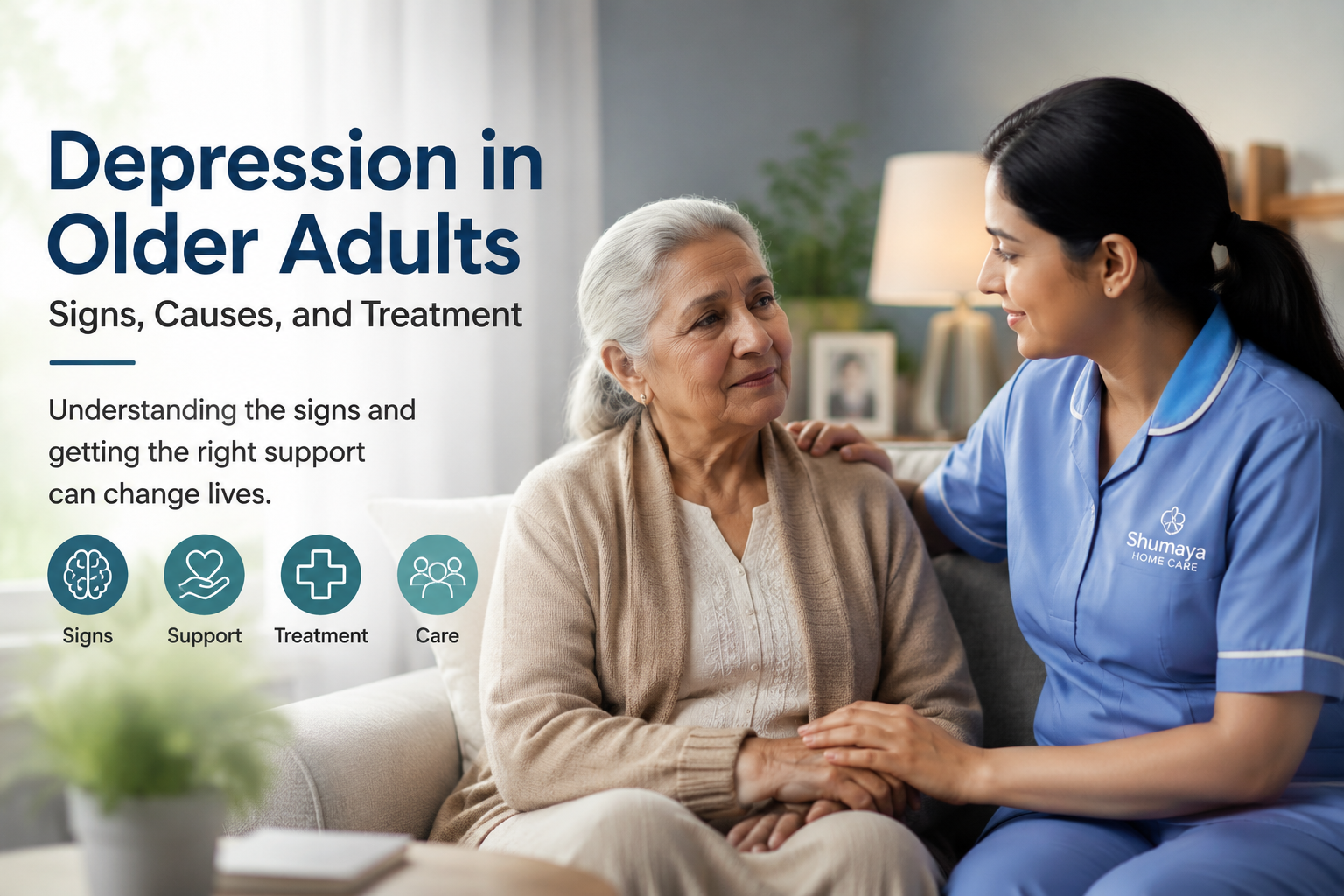
Depression in older adults can be easy to miss. An elderly parent may stop enjoying favorite activities, spend more time alone, sleep poorly, or complain of tiredness and body aches. Families may assume these changes are simply part of getting older.
They are not.
Depression is not a normal or inevitable part of aging. It is a medical condition that can affect mood, sleep, appetite, energy, thinking, relationships, and everyday activities. With proper assessment and treatment, many older adults can improve.
Understanding the signs of depression can help families notice changes early and encourage their loved one to get the right support.
What Is Depression in Older Adults?
Depression is more than temporary sadness. It can cause a lasting change in how a person feels, thinks, behaves, and manages everyday life.
In older adults, depression does not always appear as obvious sadness. Some people may mainly report:
Low energy or constant tiredness
Trouble sleeping or sleeping too much
Changes in appetite
Loss of interest in hobbies
Difficulty concentrating
Irritability
Physical aches or discomfort
Social withdrawal
Feelings of hopelessness or worthlessness
Because these symptoms can overlap with other health problems, a healthcare professional should assess persistent or unexplained changes.
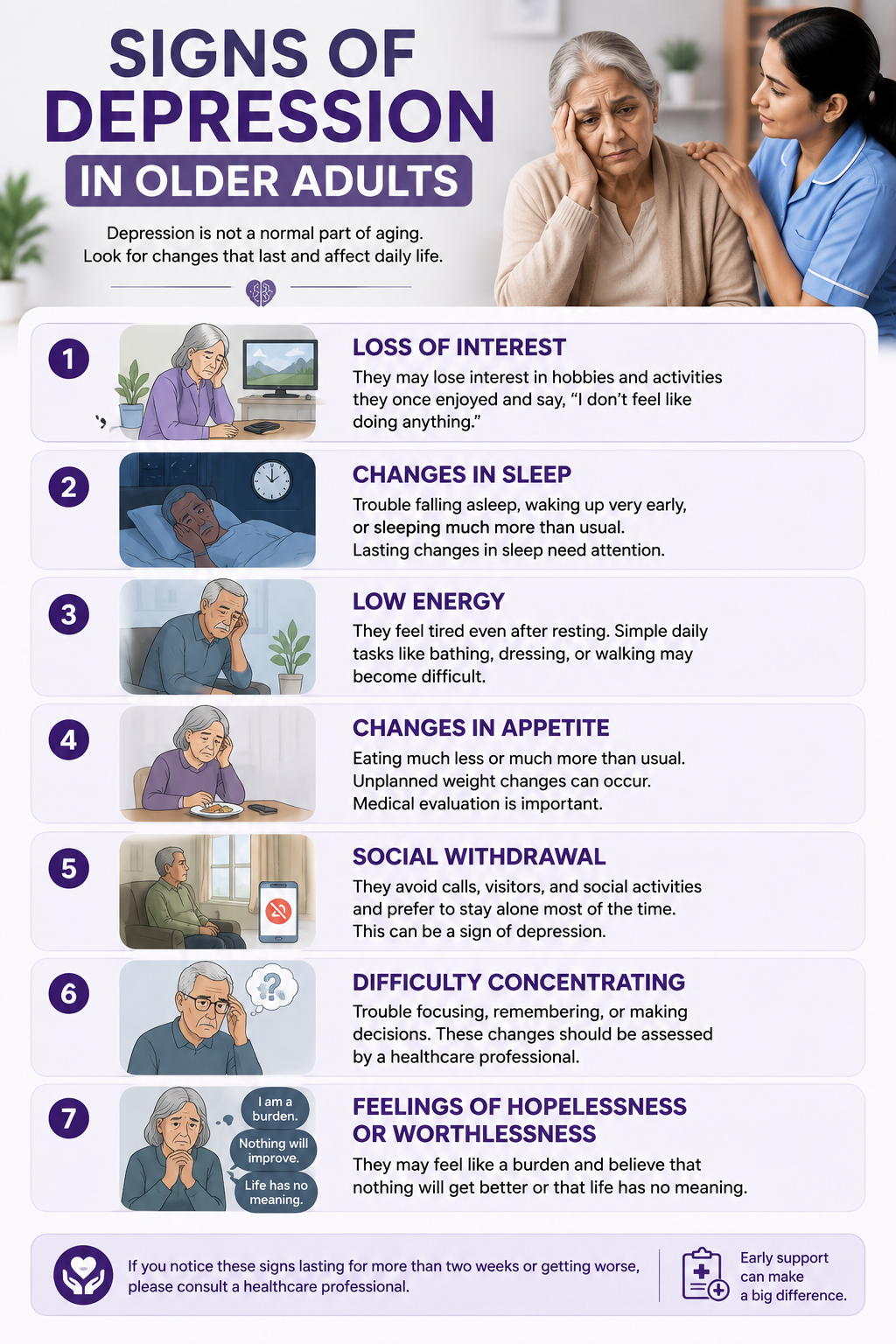
Signs of Depression in Older Adults
The symptoms of depression can vary from person to person. However, families may notice several changes in mood, behavior, or daily routines.
Loss of Interest
An older adult who once enjoyed gardening, watching television, meeting friends, praying with others, or spending time with family may suddenly lose interest.
They may say they “don’t feel like doing anything” or stop taking part in activities they normally enjoy.
Changes in Sleep
Depression can affect sleep in different ways. Some older adults have trouble falling asleep or wake up very early. Others may sleep much more than usual.
A lasting change in sleep should not automatically be blamed on aging.
Low Energy
A person may feel tired even after resting. Simple activities such as bathing, getting dressed, preparing food, or walking around the home may begin to feel difficult.
Changes in Appetite
Depression may lead to eating less or, in some cases, eating more. Unplanned weight changes can also occur.
If an older adult has a major change in appetite or weight, medical assessment is important because physical illnesses can cause similar symptoms.
Social Withdrawal
Some seniors with depression stop answering calls, avoid visitors, or spend most of the day alone.
This may look like loneliness, but withdrawal can also be a sign that the person is struggling with depression.
Difficulty Concentrating
Depression can affect attention, concentration, and memory. However, these symptoms can also have many other causes in older adults.
For that reason, new or worsening cognitive problems should be discussed with a healthcare professional rather than assumed to be depression.
Feelings of Hopelessness or Worthlessness
A person may repeatedly say that they are a burden, that nothing will improve, or that life has lost its meaning.
These statements should always be taken seriously.
Why Depression Can Be Missed in Seniors
Depression in elderly people can sometimes go unnoticed because its symptoms overlap with normal life changes and physical health problems.
For example, an older adult may complain about:
Pain
Poor sleep
Low energy
Appetite changes
Difficulty concentrating
General weakness
These symptoms may have a physical cause, a psychological cause, or both.
In addition, some older adults may feel uncomfortable talking about emotional problems. They may describe physical symptoms instead of saying they feel depressed.
That is why families should look for changes from the person’s usual behavior.
Factors That May Increase the Risk of Depression
There is usually no single reason why an older adult develops depression. Several physical, emotional, and social factors may contribute.
Bereavement and Loss
Losing a spouse, close friend, sibling, or another loved one can be extremely difficult. Grief is a normal response to loss, but depression can also occur during or after bereavement.
If symptoms become severe or begin to interfere with everyday life, professional assessment can help.
Social Isolation
Limited contact with family, friends, or the wider community can increase loneliness and may contribute to poor emotional health.
Older adults with mobility problems may be particularly vulnerable because leaving home can become difficult.
Chronic Health Conditions
Long-term health problems can affect independence, sleep, mobility, and quality of life. Managing several conditions at once can also place emotional strain on an older adult.
Loss of Independence
Needing help with bathing, dressing, walking, eating, medication routines, or household tasks can be difficult for someone who was previously independent.
Major Life Changes
Retirement, moving house, financial stress, changes in family relationships, or moving into a different care setting can affect emotional well-being.
Certain Medicines or Medical Conditions
Some medical conditions and medicines can produce symptoms that look similar to depression.
Therefore, new or persistent symptoms should be discussed with a healthcare professional. They can review the person’s health history, current medicines, and symptoms.
Depression, Grief, and Loneliness: What’s the Difference?
These experiences can overlap, but they are not the same.
Grief is a natural response to losing someone or experiencing another major loss. It can last for a long time and may come in waves.
Loneliness describes the feeling of lacking meaningful social connection. Someone can feel lonely without having depression.
Depression is a medical condition that can affect mood, interest, sleep, appetite, energy, thinking, and daily functioning.
An older adult can experience grief or loneliness, depression, or a combination of these experiences. A healthcare professional can help determine what is happening.
How Is Depression Treated in Older Adults?
Treatment depends on the person’s symptoms, health conditions, medicines, preferences, and overall needs.
A healthcare professional may recommend one or more approaches.
Talking Therapy
Psychotherapy, sometimes called talking therapy, can help a person understand and manage difficult thoughts, feelings, and behaviors.
Different forms of therapy may be appropriate for different people.
Medication
Antidepressant medicines may be recommended for some older adults.
However, older people often take medicines for several health conditions. This makes it especially important for a doctor or other qualified healthcare professional to review potential side effects, medicine interactions, and the person’s overall health.
Never start, stop, or change an antidepressant without medical advice.
Social Support
Regular contact with family, friends, caregivers, community groups, or other trusted people can support emotional well-being.
Social support does not replace medical treatment when treatment is needed. However, it can be an important part of recovery.
Healthy Daily Habits
When medically appropriate, regular movement, nutritious meals, a consistent sleep routine, and enjoyable activities can support overall health.
The goal is not to force an older adult to “stay busy.” Instead, families can start with small activities that feel manageable.
How Families Can Help an Older Adult With Depression
Family support can make a real difference.
Listen Without Judging
Give your loved one time to talk. Avoid telling them to “snap out of it” or suggesting that they have no reason to feel sad.
Instead, try:
“I’ve noticed that you’ve seemed different lately. How have you been feeling?”
A calm conversation may make it easier for them to ask for help.
Keep a Simple Routine
A predictable daily routine can help an older adult maintain regular meals, personal care, sleep, and appropriate activities.
Keep expectations realistic. Small steps are often easier than major changes.
Encourage Social Contact
Regular phone calls, family visits, shared meals, or short outings can help reduce isolation.
If the person has limited mobility, regular companionship at home can still provide meaningful social contact.
Support Medical Appointments
Offer to help arrange appointments or accompany the older adult if they would like support.
Also, write down changes in mood, sleep, appetite, energy, and behavior. This information can help the healthcare professional understand what has been happening.
When Should an Older Adult See a Doctor?
Encourage professional assessment when symptoms:
Continue or keep returning
Affect normal daily activities
Cause major changes in sleep or appetite
Lead to social withdrawal
Make personal care difficult
Cause persistent hopelessness
Include unexplained physical symptoms
Are getting worse over time
A healthcare professional can assess the symptoms and look for medical conditions or medicines that may be contributing.
Do not try to diagnose depression at home.
Warning Signs That Need Immediate Help
Take any statement about suicide, self-harm, or wanting to die seriously.
Seek urgent help if an older adult:
Says they want to die
Talks about suicide or self-harm
Says they have no reason to live
Talks about a plan to hurt themselves
Appears to be in immediate danger
If there is an immediate safety concern, do not leave the person alone if it is safe for you to stay with them. Seek emergency medical help or take them to the nearest emergency department.
How Home Care Can Support an Older Adult With Depression
Home care does not diagnose or treat depression. However, appropriate support at home can make daily life easier and help an older adult stay connected with others.
Depending on the person’s care plan, a trained caregiver may help with:
Personal care and hygiene
Meal preparation
Daily routines
Safe mobility
Companionship
Appropriate social activities
Reminders for scheduled medicines or activities
Accompanying the person to appointments
For families arranging elderly care services in Lahore, reliable in-home support may also help reduce the pressure on family caregivers.
When depression occurs alongside physical illness, reduced mobility, or other care needs, professional home nursing services in Lahore may also be appropriate depending on the person’s condition and care plan.
The key is to treat home care as support alongside professional medical care, not as a replacement for it.
Frequently Asked Questions
Is depression a normal part of aging?
No. Depression is not a normal or inevitable part of aging. Older adults can experience depression, and persistent symptoms should be assessed by a healthcare professional.
What are the most common signs of depression in older adults?
Common signs include loss of interest, low energy, changes in sleep or appetite, social withdrawal, difficulty concentrating, hopelessness, and persistent low mood. Some older adults may mainly report physical symptoms.
Can depression cause physical symptoms in seniors?
Yes. Depression can occur with tiredness, sleep changes, appetite changes, pain, and other physical complaints. However, these symptoms can also result from medical conditions, so they should be assessed when they are new or persistent.
Can loneliness cause depression in older adults?
Loneliness and depression are different, but loneliness can affect emotional health and may increase the risk of depression. Regular social contact can help, but depression may require professional treatment.
Can depression in older adults be treated?
Yes. Treatment may include talking therapy, medication, social support, and healthy daily habits. The appropriate treatment depends on the person’s health and individual needs.
How can I help my elderly parent with depression?
Listen without judging, encourage professional assessment, maintain a simple daily routine, support social contact, and help with medical appointments when needed. Avoid changing medicines without medical advice.
What should I do if an older adult talks about suicide?
Take the statement seriously. If there is an immediate safety concern, stay with the person if it is safe to do so and seek urgent medical or emergency help.
Quick Summary
Depression in older adults is not a normal part of aging. It can affect mood, energy, sleep, appetite, concentration, social activity, and daily life.
The symptoms may sometimes look like physical illness or normal aging, so families should pay attention to meaningful changes in behavior and health.
If depression is suspected, encourage a professional assessment. Treatment can help, while family support, social connection, healthy routines, and appropriate home care can make everyday life easier.
Medical Note
This article is for general educational purposes and does not replace assessment or treatment from a qualified healthcare professional. If an older adult has persistent symptoms of depression or an immediate safety concern, seek professional medical help.