
As people get older, everyday tasks at home can sometimes become harder. A loose rug, poor lighting, a wet bathroom floor, or clutter near the stairs may create a fall risk that was easy to overlook before.
The good news is that many home safety problems can be found and fixed with a simple review. This home safety checklist for seniors can help families make the living space safer, more comfortable, and easier to move around.
Why Home Safety Matters for Older Adults
Older adults may have changes in balance, vision, strength, hearing, or movement. Some medicines can also cause dizziness or drowsiness. These changes can make common household hazards more risky.
A safer home does not need to look like a hospital. Small changes in key areas can make daily activities easier and reduce avoidable accidents.
Families caring for an elderly person at home should pay particular attention to fall prevention, bathroom safety, bedroom safety, stairs, lighting, and clear walking paths.
Home Safety Checklist for Seniors
Walk through the home with the senior and check each area carefully. Ask whether anything feels difficult, uncomfortable, or unsafe during normal daily activities.
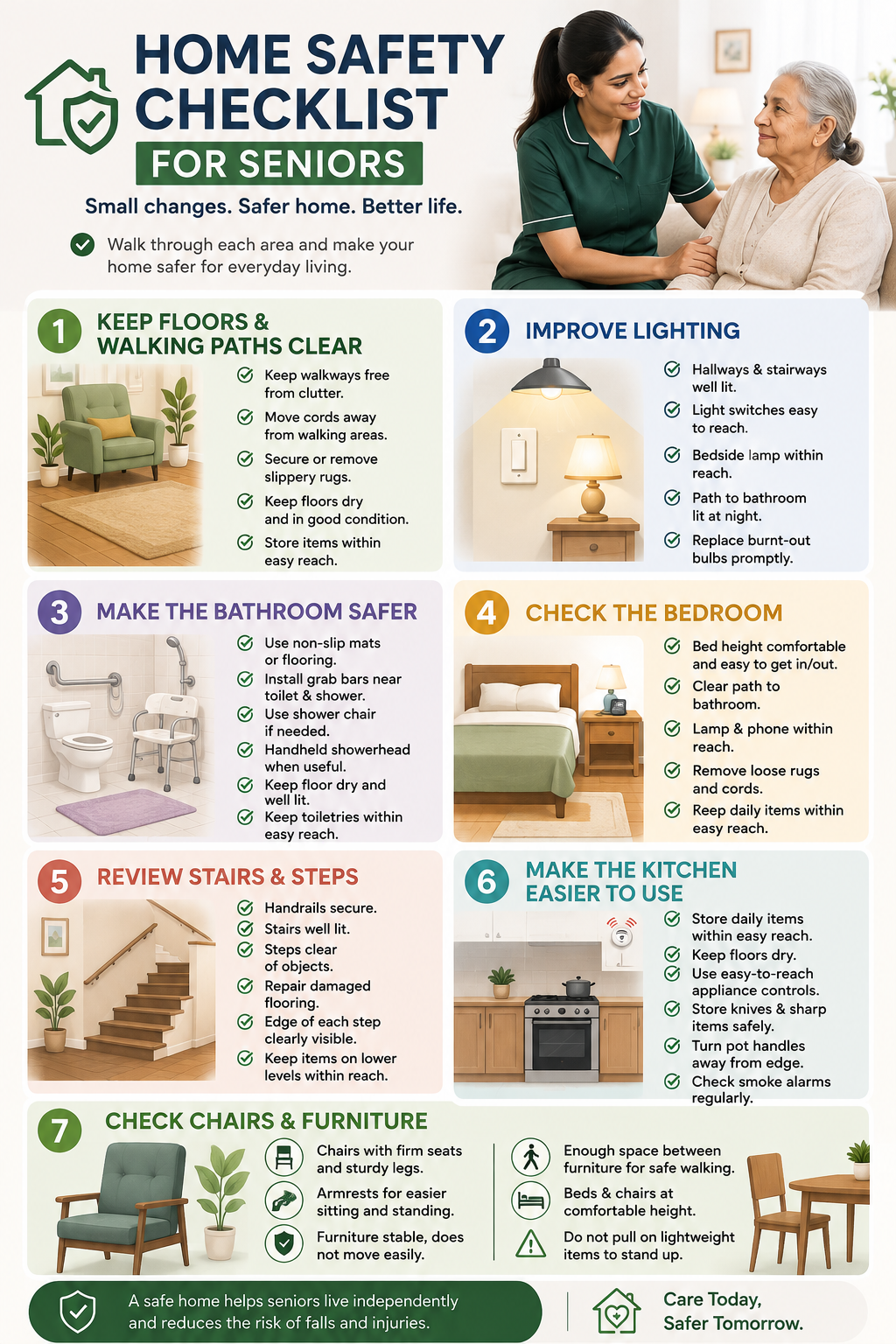
1. Keep Floors and Walking Paths Clear
Clutter is one of the easiest hazards to remove.
Check that:
Walkways are free from boxes, shoes, wires, and small furniture.
Electrical cords are placed away from walking areas.
Rugs are firmly secured or removed if they slide.
Floor surfaces are dry and in good condition.
Frequently used items are kept where they can be reached safely.
Avoid asking an older adult to step over objects or squeeze through narrow spaces.
2. Improve Lighting
Good lighting helps seniors see obstacles and changes in floor level.
Make sure:
Hallways and stairways are well lit.
Light switches are easy to reach.
The bedroom has a lamp or light within easy reach of the bed.
The path from the bedroom to the bathroom is adequately lit at night.
Burnt-out bulbs are replaced promptly.
Night lights can be useful in bedrooms, hallways, and bathrooms.
3. Make the Bathroom Safer
Bathrooms can become particularly risky because water makes surfaces slippery.
Check for:
Non-slip mats or suitable non-slip flooring.
Grab bars near the toilet and shower where appropriate.
A stable shower chair if standing for long periods is difficult.
A handheld showerhead when useful.
Easy-to-reach toiletries.
Adequate lighting.
A dry floor after bathing.
Do not use a towel rack as a substitute for a properly installed grab bar. If a senior has difficulty getting in or out of the shower, discuss suitable equipment with a healthcare professional.
4. Check the Bedroom
The bedroom should allow the senior to get in and out of bed without unnecessary obstacles.
Look for:
A bed at a comfortable height.
A clear path between the bed and bathroom.
A bedside lamp that is easy to reach.
A phone or emergency contact method nearby.
Loose rugs or cords that could cause trips.
Frequently used clothing and personal items stored within safe reach.
If the person needs help getting out of bed, families should consider whether additional support is needed rather than expecting them to manage alone.
5. Review Stairs and Steps
Stairs require extra attention when an older adult has weakness, poor balance, or vision problems.
Make sure:
Handrails are secure.
Stairs are well lit.
Steps are clear of objects.
Damaged flooring is repaired.
The senior can clearly see the edge of each step.
Frequently used rooms and items are arranged to reduce unnecessary trips up and down stairs.
If stairs have become difficult or unsafe, speak with a healthcare professional about safer ways to manage movement around the home.
6. Make the Kitchen Easier to Use
A senior who cooks independently should be able to reach everyday items without climbing or stretching.
Check that:
Frequently used dishes and food are stored within easy reach.
Floors are kept dry.
Appliance controls are easy to see and use.
Knives and other sharp objects are stored safely.
Pot handles are turned away from the edge of the stove.
Smoke alarms are working properly.
Avoid using unstable chairs or stools as makeshift step ladders.
7. Check Chairs and Furniture
Furniture should provide stable support.
Look for:
Chairs with firm seats and sturdy legs.
Armrests that make sitting down and standing up easier.
Furniture that does not move easily when used for support.
Enough space between furniture for safe walking.
Beds and chairs at practical heights.
An older adult should not have to pull on a lightweight table or unstable chair to stand up.
Medication and Emergency Safety
Home safety also includes knowing what to do when something goes wrong.
Keep important information easy to find, such as:
Current medication information.
Doctor and healthcare provider contact details.
Emergency contact numbers.
Known allergies.
Important medical conditions.
Medicines should be stored safely and taken according to the instructions provided by the prescribing healthcare professional.
For seniors who need regular assistance with medication routines, families may benefit from appropriate medication management support at home.
Fall Prevention Tips for Seniors
Falls can happen quickly, so prevention should be part of everyday care.
Simple steps include:
Encourage the senior to use prescribed walking aids correctly.
Keep frequently used items within easy reach.
Remove loose rugs and clutter.
Use suitable footwear with good grip.
Keep floors dry.
Improve lighting in darker areas.
Avoid rushing to answer the phone or door.
Arrange professional assessment if balance or walking has changed.
If an older adult has recently fallen, repeated falls should not simply be treated as part of getting older. Talk with a healthcare professional to identify possible causes and ways to reduce future risk.
Safety for Seniors Who Need Extra Help
Some older adults can manage most activities independently but need help with bathing, walking, toileting, dressing, or moving around the home.
Others may need more regular elderly patient care because of weakness, dementia, stroke recovery, chronic illness, or limited mobility.
In these situations, families should match the level of support to the person’s actual needs. Trying to keep an unsafe routine simply because the person managed it before can increase the chance of an accident.
Professional patient care services in Lahore may also be considered when a family needs trained support with daily activities and safe movement at home.
A Simple Room-by-Room Safety Check
Use this quick review when walking through the home:
Entrance
Entryway is clear.
Steps and surfaces are stable.
Lighting is adequate.
Living Room
Walking paths are clear.
Rugs are secure or removed.
Furniture is stable.
Electrical cords are out of walking areas.
Bedroom
Bed is easy to get in and out of.
Lamp or light is within reach.
Path to the bathroom is clear.
Phone or emergency contact method is nearby.
Bathroom
Floor is non-slip or has suitable safety measures.
Grab bars are installed where needed.
Shower area is safe.
Lighting is adequate.
Kitchen
Frequently used items are easy to reach.
Floors are dry.
Appliances are safe to operate.
Sharp and hazardous items are stored safely.
Stairs
Handrails are secure.
Steps are clear.
Lighting is good.
Step edges can be seen clearly.
When Should Families Consider Home Care Support?
Home modifications can reduce hazards, but they may not be enough when an older adult needs physical assistance throughout the day.
Consider additional support if a senior:
Frequently loses balance or falls.
Needs help with bathing or toileting.
Has difficulty walking safely.
Needs assistance getting in or out of bed.
Has memory problems that affect safety.
Is recovering from illness, surgery, or a stroke.
Is unable to manage daily activities independently.
In Lahore, families may consider elderly care services at home or patient care support when an older adult needs help with daily routines and safe mobility.
Frequently Asked Questions
What is the most important home safety change for seniors?
There is no single change that works for everyone. Removing fall hazards, improving lighting, making the bathroom safer, and keeping walking paths clear are good starting points.
How can I make a bathroom safer for an elderly person?
Keep the floor dry, use suitable non-slip measures, improve lighting, and consider properly installed grab bars or a shower chair when needed.
Are rugs safe for older adults?
Loose or sliding rugs can increase fall risk. If a rug is needed, it should be securely fixed and should not create an uneven surface.
Should seniors use stairs?
That depends on the person’s strength, balance, mobility, and health. If stairs have become difficult or unsafe, a healthcare professional can help assess the person’s mobility and suggest safer options.
When does an elderly person need help at home?
A senior may need additional support when they can no longer safely manage important daily activities such as bathing, dressing, toileting, walking, or getting in and out of bed.
Final Home Safety Check
A safer home starts with noticing small problems before they cause an accident. Walk through each room, remove clutter, improve lighting, secure unstable items, and make areas such as the bathroom and stairs easier to use.
For seniors who need more than home modifications, professional home nursing and patient care support can provide additional help with daily activities and safe care at home.
For Lahore families, Shumaya Home Care & Patient Service provides home healthcare support for elderly people and patients who need assistance with daily care.