

Caring for someone with diabetes at home may feel confusing at first, but guess what? With the right steps and a little patience, you can make daily life much safer and more comfortable for your loved one.
Diabetes is a long-term health condition that affects how the body uses sugar (glucose). If blood sugar levels become too high or too low, it can lead to serious health problems. That’s why proper patient care at home is so important.
At Shumaya Home Care & Patient Service, we understand how stressful it can feel when a family member needs extra support. Many families in Lahore now choose Home nursing services in Lahore because professional help can make diabetes management easier, safer, and less tiring for everyone.
In this guide, we’ll talk about simple and practical ways to care for a diabetic patient at home. We’ll explain everything in easy language, just like a friendly conversation.

What Is Diabetes?
Before we talk about care, let’s quickly understand diabetes.
Our body uses sugar for energy. A hormone called insulin helps move sugar from the blood into the body’s cells. In diabetes, the body either:
Doesn’t make enough insulin
Or can’t use insulin properly
This causes blood sugar levels to rise.
Common Types of Diabetes
Type 1 Diabetes
The body stops making insulin. People with Type 1 diabetes usually need insulin injections every day.
Type 2 Diabetes
This is more common. The body still makes insulin, but it doesn’t work well.
Gestational Diabetes
This happens during pregnancy and usually improves after delivery.
No matter the type, proper patient care services in Lahore can help people live healthier and happier lives.
Why Home Care Matters for Diabetic Patients
Managing diabetes isn’t only about taking medicine.
A diabetic patient may need help with:
Healthy meals
Blood sugar monitoring
Medicine reminders
Exercise
Foot care
Wound care
Emergency support
Without proper care, diabetes can affect the:
Eyes
Kidneys
Heart
Feet
Nerves
That’s why many families trust Home Nursing services in Lahore for daily support.
And honestly? Having someone nearby who understands diabetes can bring huge peace of mind.
Signs That a Diabetic Patient Needs Extra Help at Home
Sometimes family members try to manage everything alone. But there are signs that extra support may be needed.
Watch for These Signs
Frequent weakness or tiredness
Forgetting medicines
Trouble walking safely
Repeated infections
Slow wound healing
Sudden weight loss
Vision problems
Confusion or dizziness
Very high or very low blood sugar levels
If you notice these issues, professional patient care services in Lahore may help keep the patient safe.
Daily Care Tips for Diabetic Patients at Home
Now let’s talk about the most important part — everyday care.
1. Monitor Blood Sugar Regularly
Checking blood sugar is one of the biggest parts of diabetes care.
A glucometer is a small machine used to test blood sugar levels.
Why Monitoring Matters
Regular checking helps you:
Know if medicines are working
Prevent emergencies
Understand how food affects sugar levels
Catch problems early
Helpful Tips
Test at the same time daily
Keep a notebook of readings
Wash hands before testing
Follow the doctor’s instructions
For example, if blood sugar keeps rising after dinner, the doctor may suggest changing the meal plan.
Isn’t it amazing how one small test can tell us so much?
2. Give Medicines on Time
Medicines help control blood sugar levels.
Some patients take tablets, while others need insulin injections.
Important Medicine Tips
Never skip doses
Use alarms for reminders
Store insulin properly
Don’t change medicine doses without a doctor
If insulin is needed, trained nurses from Home nursing services in Lahore can safely give injections at home.
That can really help families who feel nervous about insulin shots.
3. Help the Patient Eat Healthy Meals
Food plays a huge role in diabetes management.
The goal isn’t to stop eating tasty food forever. It’s about balance.
Foods That Are Usually Better Choices
Whole wheat roti
Brown rice
Vegetables
Lentils
Eggs
Fish
Chicken
Yogurt
Fruits in moderate amounts
Foods to Limit
Sugary drinks
Mithai and desserts
White bread
Fried snacks
Fast food
Too much rice
Simple Meal Tips
Eat smaller meals more often
Avoid skipping meals
Drink enough water
Control portion sizes
For example, instead of drinking a large bottle of soft drink, try lemon water without sugar.
Small changes can make a big difference.
4. Encourage Safe Physical Activity
Exercise helps lower blood sugar naturally.
Now don’t worry — the patient doesn’t need to become a gym hero overnight!
Simple daily movement is enough for many people.
Easy Activities
Walking
Light stretching
Chair exercises
Gentle yoga
Household movement
Safety Tips
Check blood sugar before heavy exercise
Wear comfortable shoes
Keep water nearby
Stop if dizziness happens
Even a 20–30 minute walk can help improve energy and sugar control.
You’ve got this!
5. Watch for Low Blood Sugar (Hypoglycemia)
Low blood sugar can happen if:
Meals are skipped
Too much insulin is taken
Exercise is excessive
Signs of Low Blood Sugar
Sweating
Shaking
Fast heartbeat
Confusion
Hunger
Weakness
Irritability
What To Do
Give a quick sugar source such as:
Fruit juice
Glucose tablets
Candy
Honey
After 15 minutes, check blood sugar again if possible.
If the patient becomes unconscious, seek emergency medical help immediately.
6. Know the Signs of High Blood Sugar
High blood sugar can also become dangerous.
Symptoms May Include
Extreme thirst
Frequent urination
Blurry vision
Tiredness
Dry mouth
Headaches
If blood sugar stays high for a long time, contact a doctor.
Professional Home Nursing support can also help monitor the patient closely.
7. Take Care of the Patient’s Feet
Diabetes can reduce feeling in the feet and slow wound healing.
Even a small cut may turn into a serious infection.
Daily Foot Care Tips
Check feet every day
Wash with lukewarm water
Dry carefully between toes
Use soft socks
Avoid walking barefoot
Trim nails carefully
If you notice redness, swelling, or wounds, don’t ignore it.
Many diabetic patients need wound care support from trained nurses.
8. Prevent Infections at Home
People with diabetes may get infections more easily.
Ways to Reduce Infection Risk
Keep hands clean
Change dressings properly
Keep wounds dry and clean
Clean medical equipment regularly
Maintain good hygiene
Professional caregivers offering patient care services in Lahore can help maintain a cleaner and safer home care routine.
9. Help the Patient Stay Emotionally Strong
Living with diabetes can sometimes feel frustrating.
Some patients feel worried, tired, or upset about their condition.
That’s why emotional support matters too.
Simple Ways to Help
Listen patiently
Encourage healthy habits
Celebrate small improvements
Avoid angry comments about food
Spend quality time together
A little kindness can brighten someone’s entire day.
And yes — even sharing a funny joke during medicine time can help!
10. Keep Regular Doctor Checkups
Home care is important, but doctor visits still matter.
Regular checkups help monitor:
Blood sugar levels
Blood pressure
Eye health
Kidney function
Foot health
Keep Important Records
It helps to maintain:
Sugar readings
Medicine lists
Test reports
Emergency numbers
This makes medical visits easier and more organized.
Creating a Diabetes-Friendly Home Environment
A safe and comfortable home can make daily care easier.
Helpful Home Adjustments
Keep medicines in one place
Label medicine boxes clearly
Remove slippery rugs
Improve lighting
Keep healthy snacks nearby
Store emergency contact numbers visibly
For elderly patients, these small changes may help prevent falls and confusion.
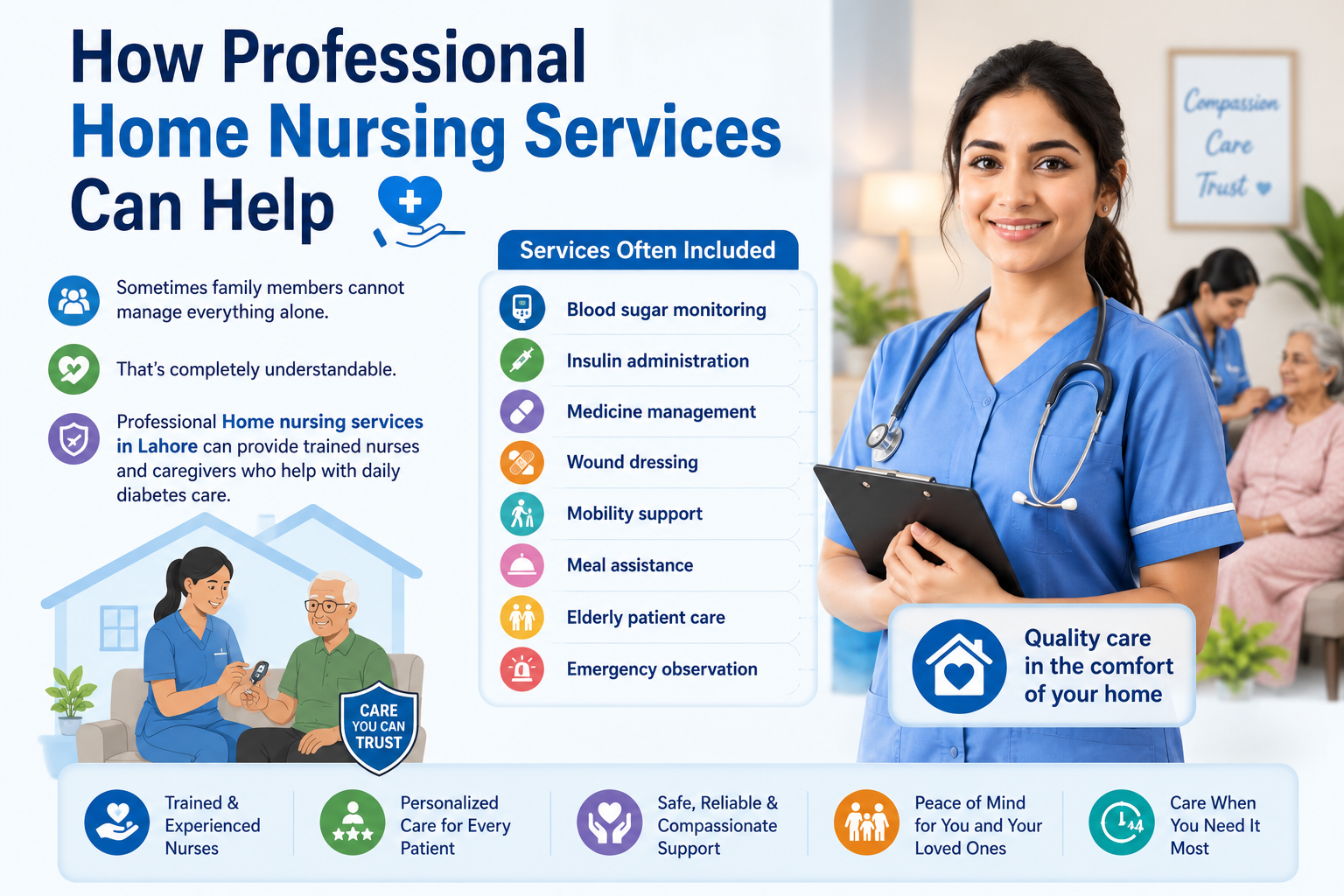
How Professional Home Nursing Services Can Help
Sometimes family members cannot manage everything alone.
That’s completely understandable.
Professional Home nursing services in Lahore can provide trained nurses and caregivers who help with daily diabetes care.
Services Often Included
Blood sugar monitoring
Insulin administration
Medicine management
Wound dressing
Mobility support
Meal assistance
Elderly patient care
Emergency observation
At Shumaya Home Care & Patient Service, we aim to provide caring and respectful support so families feel less stressed.
Everyday Example of Diabetes Care at Home
Let’s imagine a simple daily routine.
Mr. Ahmed is 68 years old and has Type 2 diabetes.
His daughter helps him:
Check blood sugar every morning
Eat healthy breakfast on time
Take medicines regularly
Walk for 20 minutes after dinner
Inspect his feet daily
A home nurse visits twice a week for monitoring and wound care.
Because of this routine, Mr. Ahmed feels more active and avoids frequent hospital visits.
That’s the power of good home care.
Common Mistakes to Avoid
Sometimes simple mistakes can create bigger health problems.
Avoid These Common Problems
Skipping medicines
Ignoring foot wounds
Eating too many sweets
Missing doctor appointments
Not checking blood sugar
Reusing dirty needles
Ignoring signs of infection
Good habits every day can help prevent emergencies.
When Should You Call a Doctor Immediately?
Seek medical help if the patient has:
Severe weakness
Chest pain
Difficulty breathing
Unconsciousness
Very high fever
Severe vomiting
Confusion
Blood sugar that stays dangerously high or low
Quick action can save lives.
Frequently Asked Questions About Diabetic Patient Care at Home
Can a diabetic patient eat sweets?
Yes, but in limited amounts and with doctor guidance. Portion control is very important.
How often should blood sugar be checked?
It depends on the patient’s condition and doctor’s advice. Some people check once daily, while others need multiple checks.
Is walking good for diabetic patients?
Yes! Walking is one of the best and safest exercises for many diabetic patients.
Why is foot care important in diabetes?
Diabetes may reduce feeling in the feet and slow healing. Small injuries can become infected if ignored.
Can home nurses manage insulin injections?
Yes. Trained nurses from Home nursing services in Lahore can safely administer insulin and monitor patients.
What foods should diabetic patients avoid?
Sugary drinks, excess sweets, fried foods, and processed snacks should usually be limited.
Internal Links
To learn more about home patient care, you may also find these helpful:
Final Thoughts
Caring for a diabetic patient at home may seem challenging in the beginning, but small daily steps can make a huge difference.
Regular blood sugar checks, healthy meals, medicine management, exercise, foot care, and emotional support all work together to improve health and comfort.
Remember — you don’t have to do everything alone.
Professional patient care services in Lahore and Home nursing services in Lahore can provide trained support when families need extra help.
At Shumaya Home Care & Patient Service, we believe every patient deserves safe, respectful, and compassionate care at home.
With patience, teamwork, and proper support, diabetic patients can enjoy healthier and happier lives.
And hey — one healthy step at a time is still progress!