

Helping a cancer patient get out of bed, stand, walk, or move from a bed to a chair can become difficult during illness or treatment. Weakness, fatigue, pain, reduced activity, or the effects of surgery and treatment may make normal movements harder than before.
Safe mobility and transfers can help reduce the risk of falls and injuries. The key is to work within the patient’s abilities, avoid rushing, and know when a transfer is too difficult to manage without professional help.
Why Cancer Patients May Have Difficulty Moving
Cancer patients may have mobility problems for different reasons. Common factors include:
Weakness or severe fatigue
Pain or stiffness
Reduced muscle strength after prolonged bed rest
Dizziness or feeling light-headed
Numbness or tingling in the hands or feet
Balance problems
Recovery after surgery
Effects of cancer treatment
Reduced activity after a hospital stay
The amount of help needed can change from day to day. A patient who can walk independently one day may need more assistance when they are tired or unwell.
If the patient’s healthcare team has given instructions about movement, weight-bearing, or activity restrictions, follow those instructions during transfers and walking.
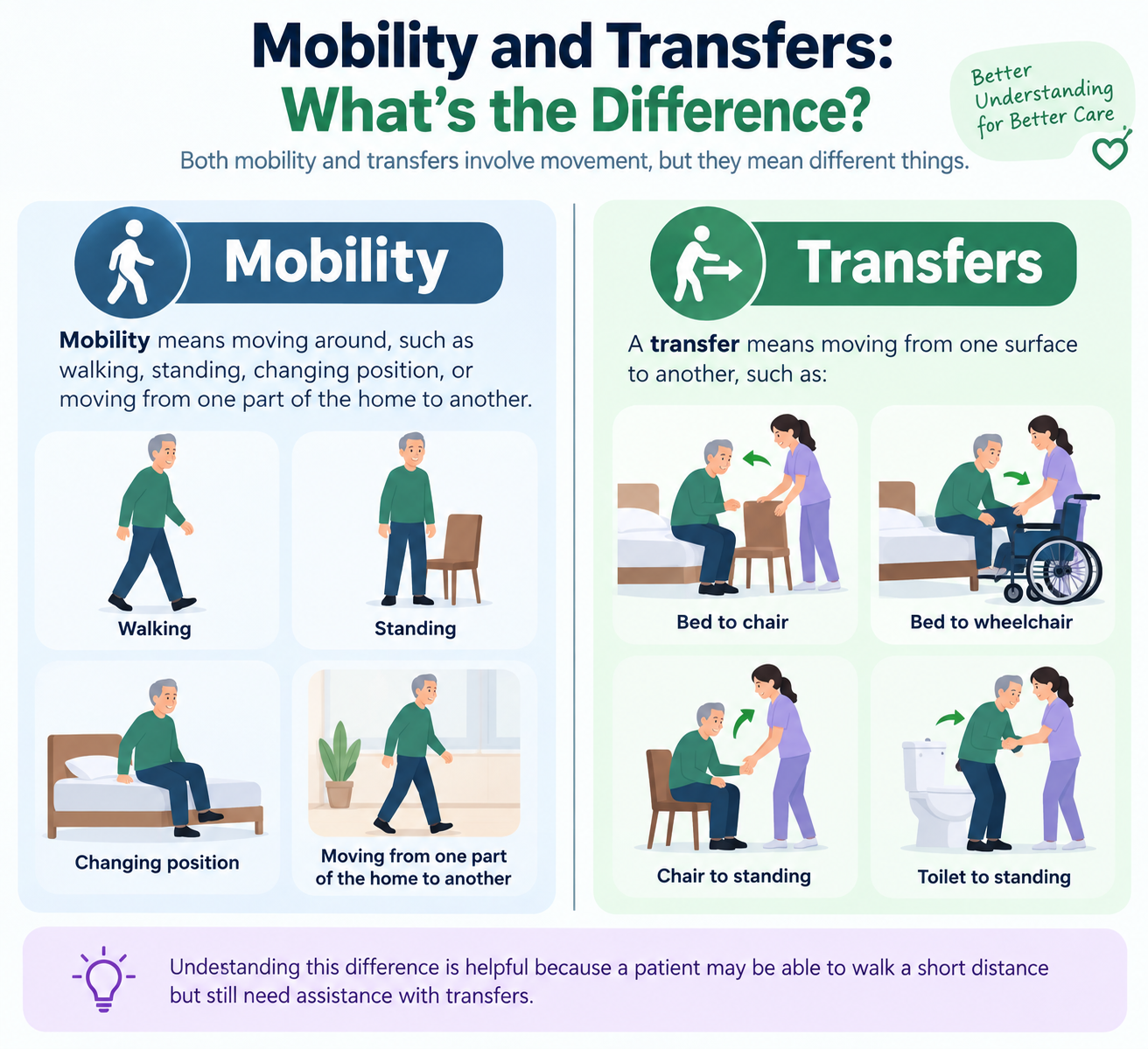
Mobility and Transfers: What’s the Difference?
Mobility means moving around, such as walking, standing, changing position, or moving from one part of the home to another.
A transfer means moving from one surface to another, such as:
Bed to chair
Bed to wheelchair
Chair to standing
Toilet to standing
Understanding this difference is helpful because a patient may be able to walk a short distance but still need assistance with transfers.
Prepare the Home Before Helping the Patient Move
A safe transfer starts before the patient begins moving.
Keep the area around the bed and chair free from objects that could cause a trip. Remove loose rugs and electrical cords from walking paths, and keep the floor dry.
Before helping the patient:
Place the chair or wheelchair close enough for a safe transfer.
Lock both wheelchair brakes.
Move wheelchair footrests out of the way when appropriate.
Make sure the patient’s footwear fits securely and provides good grip.
Keep a prescribed walking aid within reach.
Make sure there is enough space for the patient and caregiver to move safely.
Explain what you are going to do before starting.
If the patient cannot safely stand or bear weight, do not try to improvise a lifting technique. They may need professional assessment and appropriate transfer equipment.
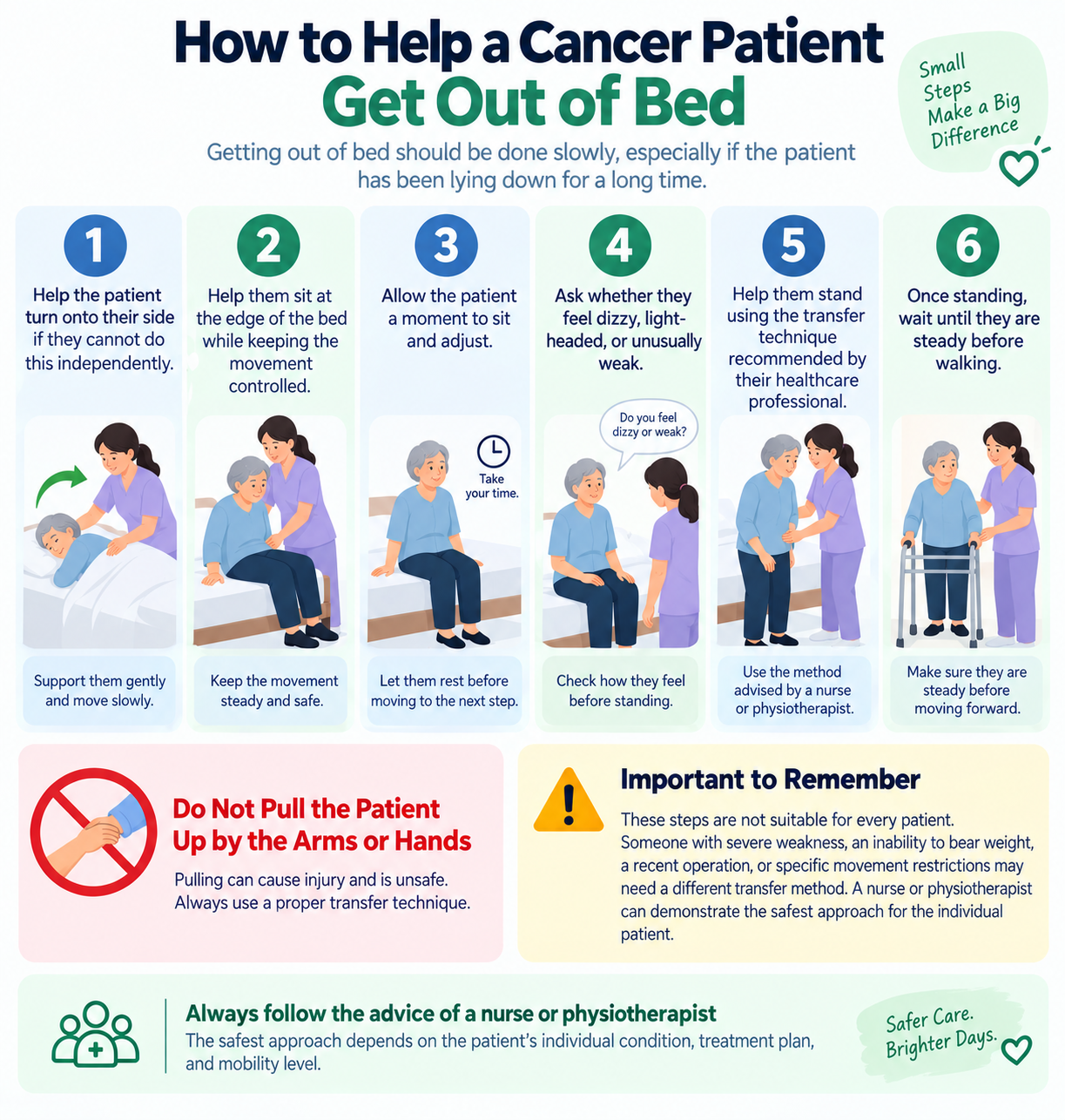
How to Help a Cancer Patient Get Out of Bed
Getting out of bed should be done slowly, especially if the patient has been lying down for a long time.
For a patient who has been assessed as able to stand with assistance, a general sequence may include:
Help the patient turn onto their side if they cannot do this independently.
Help them sit at the edge of the bed while keeping the movement controlled.
Allow the patient a moment to sit and adjust.
Ask whether they feel dizzy, light-headed, or unusually weak.
Help them stand using the transfer technique recommended by their healthcare professional.
Once standing, wait until they are steady before walking.
Do not pull the patient up by the arms or hands.
These steps are not suitable for every patient. Someone with severe weakness, an inability to bear weight, a recent operation, or specific movement restrictions may need a different transfer method. A nurse or physiotherapist can demonstrate the safest approach for the individual patient.
How to Help With a Bed-to-Chair Transfer
A bed-to-chair transfer is common in home-based cancer patient care.
First, position the chair as close to the bed as safely possible. If using a wheelchair, make sure both brakes are locked and move the footrests out of the way when needed.
Explain each step so the patient knows what to expect. Encourage them to do whatever part of the movement they can safely manage rather than lifting their entire body weight yourself.
For a patient who can stand with assistance, the transfer may generally involve:
Help the patient sit upright at the edge of the bed.
Make sure their feet are positioned securely.
Ask them to lean forward as instructed by their healthcare professional.
Assist them to stand using the recommended technique.
Help them turn slowly toward the chair.
Once they are positioned safely in front of the chair, help them lower themselves in a controlled manner.
The exact technique depends on the patient’s strength, balance, weight-bearing ability, and medical restrictions.
Do not attempt a manual transfer if the patient cannot safely bear weight or if you cannot physically manage the transfer. A trained healthcare professional can assess the situation and recommend the appropriate method or equipment.
Helping a Cancer Patient Walk Safely
When walking is medically appropriate, movement within the patient’s limits may help maintain mobility and independence.
Start with short distances and allow plenty of time. Do not pressure the patient to keep walking when they are becoming tired.
If the patient has been prescribed a walker, cane, or another mobility aid, make sure it is used correctly and is properly fitted.
During walking, watch for:
Sudden weakness
Dizziness or light-headedness
Unsteady steps
Increased or new pain
Shortness of breath
Confusion
Extreme fatigue
Stop the activity if the patient becomes unwell or cannot continue safely. If symptoms are new, severe, or concerning, contact their healthcare team or seek urgent medical care as appropriate.
What Not to Do During a Patient Transfer
Some common caregiver actions can increase the risk of injury.
Avoid:
Pulling the patient by the arms or hands
Trying to lift a heavy patient by yourself
Twisting your body while supporting the patient’s weight
Rushing the patient because the transfer is taking too long
Using a walking aid that has not been properly fitted or recommended
Attempting a transfer that is beyond your physical ability
Ignoring instructions about weight-bearing or movement restrictions
If a transfer feels unsafe, stop and ask for help.
Protecting the caregiver matters too. A family member who gets injured while trying to move a patient may then be unable to provide further care.
What If the Patient Starts to Fall?
If a patient begins to lose their balance, do not attempt a sudden heavy lift unless you have been specifically trained to do so.
Try to reduce immediate hazards around them and call for assistance. Do not automatically try to pull the patient back to their feet after a fall.
The patient may need medical assessment, particularly if they:
Hit their head
Lose consciousness
Have severe or new pain
Have significant bleeding
Cannot move normally
Develop new confusion
Have difficulty breathing
Appear seriously injured
If you suspect a serious injury, seek urgent medical help rather than trying to move the patient unnecessarily.
When a Cancer Patient Needs More Mobility Support
A cancer patient may need additional assistance when they:
Cannot stand without substantial help
Have repeated falls or near-falls
Are becoming increasingly weak
Need help getting in or out of bed
Cannot safely use their walking aid
Have difficulty following transfer instructions
Become dizzy during movement
Spend most of the day in bed or a chair
Need help with several daily activities
A healthcare professional can assess the patient’s mobility and determine what type of assistance, equipment, or rehabilitation support may be appropriate.
When Professional Home Care May Help
Families often want to care for a loved one at home but may find transfers and mobility assistance physically difficult.
Professional home nursing services in Lahore may be helpful when a patient needs regular support with mobility, positioning, personal care, monitoring, or other daily care needs.
For families managing cancer care at home, patient care services in Lahore can provide additional assistance when the patient’s mobility has become difficult to manage safely without help.
The appropriate level of care depends on the patient’s condition and should be based on their healthcare needs and professional guidance.
If your family is also managing a patient who spends most of the day in bed, related guidance on bedridden patient care can help with other daily care challenges.
Frequently Asked Questions
How do you safely move a cancer patient from bed to a chair?
First, make sure the patient is able to participate in the transfer and follow any movement or weight-bearing restrictions given by their healthcare team. Position the chair safely, lock wheelchair brakes when applicable, and use the transfer technique taught by a healthcare professional.
Should you pull a cancer patient up by their arms?
No. Pulling a patient by the arms can cause injury and may make them lose balance. Use a safe transfer technique recommended for that patient’s condition.
What if a cancer patient is too weak to stand?
Do not force the patient to stand. If they cannot safely bear weight, they may need an assessment by their healthcare team and possibly professional assistance or suitable transfer equipment.
Can a nurse help with mobility and transfers at home?
Depending on the patient’s needs and the services provided, a home nurse or trained caregiver may assist with mobility, transfers, positioning, personal care, and other patient-care tasks.
Conclusion
Helping a cancer patient with mobility and transfers requires patience, preparation, and attention to their physical limits. The safest approach is not to force a movement that the patient cannot manage and not to attempt a transfer that is beyond the caregiver’s ability.
Keep walking areas clear, use mobility aids correctly, follow medical restrictions, and give the patient enough time to move safely. If the patient becomes too weak to stand or needs substantial physical assistance, professional support may be appropriate.
Need Help With Cancer Patient Care at Home?
Shumaya Home Care & Patient Service provides professional home nursing and patient care services in Lahore for families who need support caring for a loved one at home.
Depending on the patient’s needs, trained staff can assist with mobility, transfers, personal care, monitoring, and other daily patient-care needs.
Contact Shumaya Home Care & Patient Service to discuss your patient’s care requirements and arrange suitable home-care support.