

Living with heart failure can make everyday tasks such as bathing, dressing, walking, and preparing meals more difficult. Patients may experience fatigue, breathlessness, swelling, or reduced stamina, which can affect their ability to manage daily routines.
Families can help by making everyday activities easier, allowing time for rest, and following the patient’s care plan. Some patients need only occasional assistance, while others may require regular support from a caregiver or qualified home nurse.
This guide explains how to help a heart failure patient with daily activities, keep the home safer, recognize warning signs, and decide when professional home-care support may be useful.
1. Understand the Patient’s Daily Care Needs
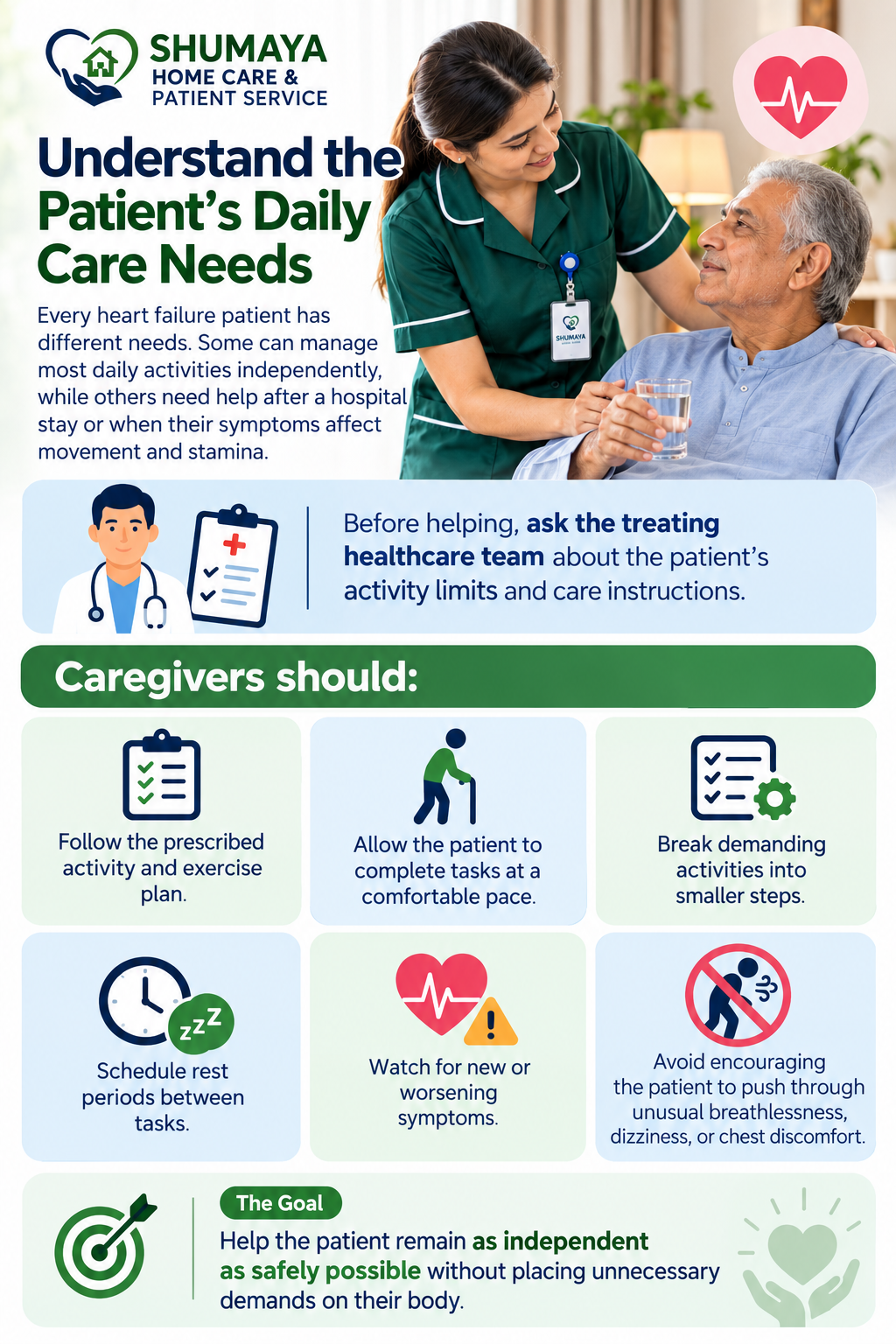
Every heart failure patient has different needs. Some can manage most daily activities independently, while others need help after a hospital stay or when their symptoms affect movement and stamina.
Before helping, ask the treating healthcare team about the patient’s activity limits and care instructions.
Caregivers should:
Follow the prescribed activity and exercise plan.
Allow the patient to complete tasks at a comfortable pace.
Break demanding activities into smaller steps.
Schedule rest periods between tasks.
Watch for new or worsening symptoms.
Avoid encouraging the patient to push through unusual breathlessness, dizziness, or chest discomfort.
The goal is to help the patient remain as independent as safely possible without placing unnecessary demands on their body.
2. Help With Bathing and Personal Hygiene
Bathing can be tiring for someone with heart failure, particularly when standing for long periods causes weakness or breathlessness.
To make personal care easier:
Keep soap, towels, and clean clothes within reach.
Consider a suitable shower chair if needed.
Use a handheld shower to reduce unnecessary movement.
Allow the patient to sit while washing or grooming.
Keep bathroom floors dry and remove obstacles.
Help with bathing, dressing, and toileting when the patient cannot manage safely alone.
Respect the patient’s privacy and allow them to complete any tasks they can manage comfortably.
Some families may prefer a male or female patient attendant based on personal comfort, privacy, and cultural preferences. The patient’s own wishes should be considered whenever possible.
If bathing causes unusual or worsening breathlessness, stop the activity and seek appropriate medical advice. Severe breathing difficulty requires emergency medical attention.
3. Make Dressing Easier
Getting dressed can use considerable energy when a patient feels weak or becomes breathless with movement.
Caregivers can make this task easier by:
Choosing loose, comfortable clothing.
Preparing clothes before dressing begins.
Letting the patient sit while dressing.
Selecting easy-to-wear footwear and clothing fasteners.
Allowing enough time to avoid rushing.
Helping with socks, trousers, or other difficult items when necessary.
Avoid unnecessary bending or prolonged standing if these movements cause discomfort. Follow any movement restrictions provided by the patient’s healthcare team.
4. Support Safe Walking and Movement
Walking and light activity may be part of a heart failure care plan, but the appropriate level of activity depends on the patient’s condition.
Some patients can walk short distances independently, while others need assistance because of weakness, dizziness, or balance problems.
To support safe movement:
Keep hallways and walking paths clear.
Remove loose rugs and other tripping hazards.
Use a prescribed walking aid when appropriate.
Help the patient stand up slowly if they are prone to dizziness.
Allow rest breaks during activities.
Follow the healthcare team’s advice about walking, stairs, and exercise.
Do not start a new exercise routine or increase activity significantly without appropriate medical guidance, particularly after a recent hospital admission or worsening symptoms.
If the patient develops new or worsening symptoms, stop the activity and help them rest safely. Seek medical advice promptly when symptoms are concerning. Call emergency services for chest pain, severe breathlessness, fainting, or other signs of a medical emergency.
5. Help With Meals and Nutrition
Preparing meals, carrying dishes, and standing in the kitchen can be tiring for heart failure patients. Family members can reduce this effort by preparing food in advance and making meals easier to access.
Helpful steps include:
Prepare balanced meals according to the patient’s care plan.
Follow the healthcare team’s advice about sodium and fluid intake.
Avoid adding extra salt if a reduced-sodium diet has been recommended.
Offer smaller meals if large meals make the patient uncomfortable.
Arrange food and drinks within easy reach.
Assist with eating if weakness or mobility problems make it necessary.
Heart failure patients do not all have the same dietary or fluid requirements. Do not impose strict fluid restrictions or make major dietary changes without advice from the treating healthcare professional.
6. Organize Medication and Daily Monitoring
Some heart failure patients take several medicines and need regular monitoring as part of their care plan. Caregivers can help them follow the prescribed routine.
Practical steps include:
Keep an up-to-date medication list.
Use reminders or a written medication schedule.
Help the patient follow prescription instructions.
Record blood pressure, pulse, or other measurements when requested by the healthcare team.
Follow the prescribed plan for daily weight checks, if applicable.
Keep follow-up appointments and report concerning changes.
Never stop a prescribed medicine, change a dose, or give an extra dose without appropriate clinical instructions.
Monitoring Weight and Swelling
Heart failure can cause fluid buildup, leading to swelling in the feet, ankles, legs, or abdomen. Some patients may also gain weight over a short period because of fluid retention.
If the healthcare team recommends daily weighing:
Follow the instructions about when and how to weigh the patient.
Record the results as directed.
Report weight changes according to the patient’s individual action plan.
Watch for new swelling or worsening breathlessness.
The treating clinician should explain what weight change requires a call. Do not rely on a single threshold for every patient.
A qualified home nurse may assist with clinical monitoring and nursing tasks when indicated. A patient attendant can support daily routines and reminders within their role but should not replace skilled nursing care.
7. Balance Activity With Rest
Fatigue is common in heart failure, so daily activities should be planned around the patient’s condition and energy level.
Caregivers can help by:
Spreading tasks throughout the day.
Allowing rest between bathing, dressing, meals, and walking.
Keeping frequently used items within easy reach.
Avoiding unnecessary trips around the house.
Allowing enough time for each task.
Following the patient’s prescribed activity and sleep routine.
The aim is not to keep the patient in bed all day. Instead, support safe activity within the limits set by the healthcare team.
If fatigue becomes noticeably worse or the patient can no longer manage activities they previously handled, contact the treating healthcare team.
8. Recognize When Symptoms Need Medical Attention
Caregivers should know what is normal for the patient and watch for changes.
Contact the treating healthcare team promptly if the patient develops:
New or worsening swelling.
Increasing breathlessness.
Greater difficulty breathing when lying flat.
Unexpected weight gain according to their monitoring plan.
Worsening fatigue or reduced ability to perform daily activities.
Do not wait for a scheduled appointment if symptoms are getting worse.
Seek emergency medical help immediately if the patient experiences severe breathing difficulty, chest pain, fainting, blue or grey lips, or other signs of a medical emergency. Do not delay emergency care while waiting for a home-care provider.
9. Make the Home Safer and More Comfortable
A safer home can reduce falls and make daily activities less tiring.
Consider these practical changes:
Keep walking paths clear and rooms well lit.
Remove loose rugs and other trip hazards.
Keep essential items within easy reach.
Use suitable grab bars or a shower chair where needed.
Keep floors dry, especially in the bathroom.
Place a chair nearby so the patient can rest.
Keep a phone and emergency contact details accessible.
Arrange frequently used items to reduce unnecessary stair climbing.
If the patient struggles with stairs or moving between rooms, discuss safer arrangements with their healthcare team.
10. When Can a Home Nurse or Patient Attendant Help?
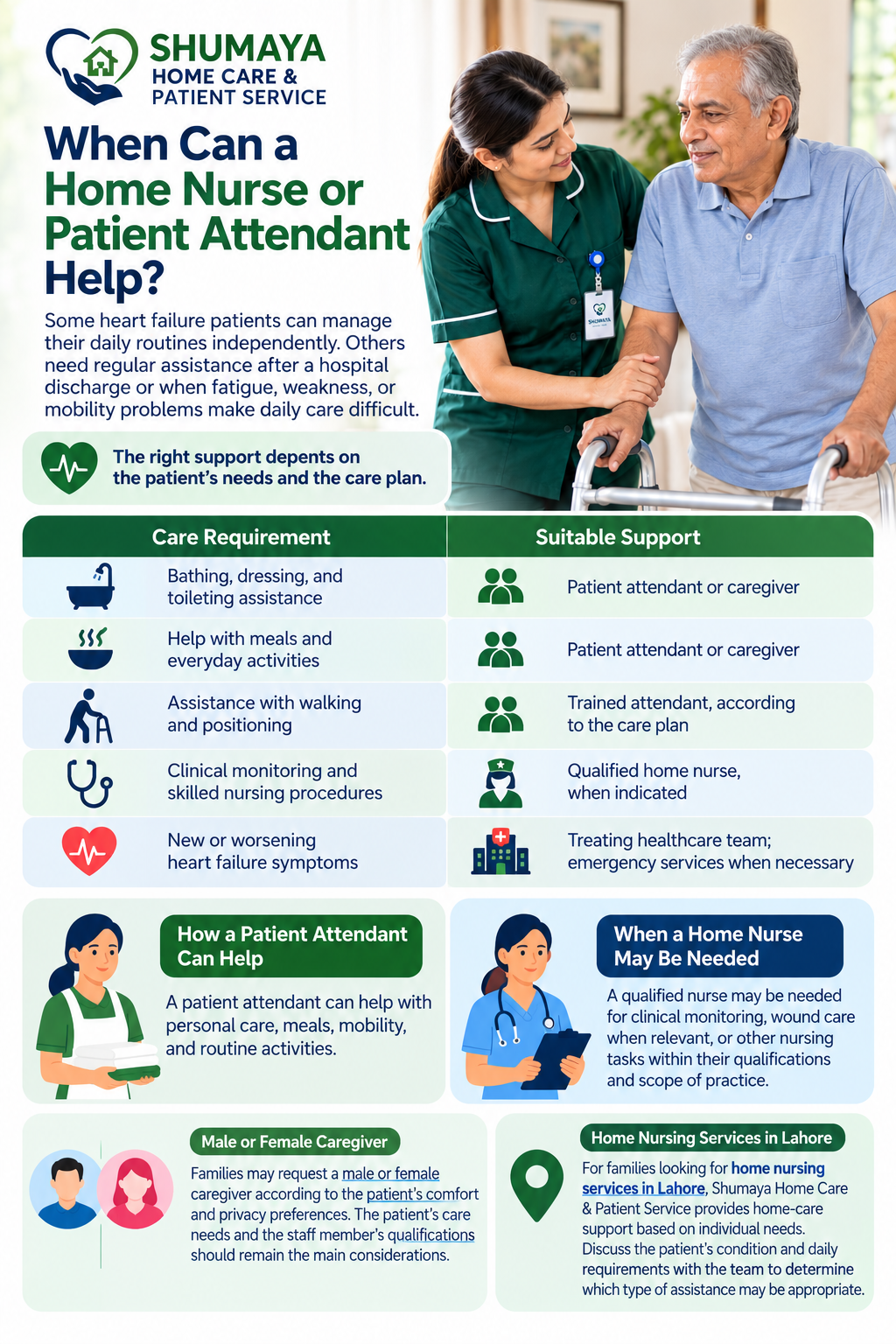
Some heart failure patients can manage their daily routines independently. Others need regular assistance after hospital discharge or when fatigue, weakness, or mobility problems make daily care difficult.
The right support depends on the patient’s needs and the care plan.
| Care requirement | Suitable support |
|---|---|
| Bathing, dressing, and toileting assistance | Patient attendant or caregiver |
| Help with meals and everyday activities | Patient attendant or caregiver |
| Assistance with walking and positioning | Trained attendant, according to the care plan |
| Clinical monitoring and skilled nursing procedures | Qualified home nurse, when indicated |
| New or worsening heart failure symptoms | Treating healthcare team; emergency services when necessary |
A patient attendant can help with personal care, meals, mobility, and routine activities. A qualified nurse may be needed for clinical monitoring, wound care when relevant, or other nursing tasks within their qualifications and scope of practice.
Families may request a male or female caregiver according to the patient’s comfort and privacy preferences. The patient’s care needs and the staff member’s qualifications should remain the main considerations.
For families looking for home nursing services in Lahore, Shumaya Home Care & Patient Service provides home-care support based on individual needs. Discuss the patient’s condition and daily requirements with the team to determine which type of assistance may be appropriate.
Frequently Asked Questions
Can a heart failure patient perform daily activities?
Many patients can continue some daily activities, depending on their symptoms and overall condition. The healthcare team can advise which tasks are safe and whether assistance is needed.
Should a heart failure patient walk every day?
Walking may be suitable for some patients, but the duration and intensity depend on their condition. Follow the prescribed activity plan and stop if symptoms worsen.
How can I help a heart failure patient who becomes tired easily?
Break tasks into smaller steps, prepare supplies in advance, allow rest periods, and help with activities that cause excessive fatigue. Report new or worsening fatigue to the treating healthcare team.
How can I help a heart failure patient with bathing and dressing?
Let the patient sit when possible, keep supplies within reach, avoid rushing, and provide assistance when needed. Stop the activity if symptoms worsen and seek medical advice as appropriate.
Does a heart failure patient need a home nurse or a patient attendant?
A patient attendant may help with hygiene, meals, mobility, and other daily activities. A qualified home nurse may be needed for clinical monitoring or skilled nursing care. Some patients may need both, depending on their care plan.
When should I contact a doctor about worsening symptoms?
Contact the treating healthcare team promptly if swelling, breathlessness, fatigue, or other symptoms worsen. Severe breathlessness, chest pain, fainting, or other emergency signs require immediate medical attention.
Get Support for Heart Failure Care at Home in Lahore
Helping someone with heart failure involves patience, safe daily routines, and attention to changes in their condition. Families can make everyday life easier by assisting with personal care, supporting safe movement, organizing medicines, and following the patient’s care plan.
If your loved one needs additional help, Shumaya Home Care & Patient Service offers home-care support in Lahore, including nursing and patient-attendant services according to individual needs.
Contact the team to discuss whether a qualified home nurse or trained patient attendant may be suitable for your loved one.
This article is for general educational purposes and does not replace advice from the patient’s doctor or heart failure care team.