

A Complete Guide for Families Providing Cancer Care at Home
Caring for a loved one with cancer can be one of the most challenging experiences a family faces. Between medical appointments, medications, treatment side effects, and emotional ups and downs, many caregivers often wonder if they are doing enough to help.
The good news is that small, consistent actions can make a big difference. Creating a safe environment, helping with daily needs, offering emotional support, and knowing when to seek professional help can improve a cancer patient’s comfort and quality of life.
If you’re searching for how to take care of a cancer patient at home, this guide will walk you through practical steps that families can follow while ensuring their loved one receives compassionate and safe care.
Understanding the Needs of a Cancer Patient at Home
Every cancer patient has different needs. Some people remain active during treatment, while others may need help with daily activities.
The level of care often depends on:
-
The type of cancer
-
The stage of the disease
-
The patient’s age
-
Overall health condition
-
Treatment plan
-
Side effects from chemotherapy, radiation, or surgery
A patient recovering from cancer treatment may need support with:
-
Taking medications
-
Personal hygiene
-
Meal preparation
-
Mobility assistance
-
Emotional support
-
Managing treatment side effects
The goal is not just treatment but helping the patient stay comfortable, safe, and emotionally supported.
Common Challenges Cancer Patients Face at Home
Cancer treatment affects more than just the disease itself. It can impact many aspects of daily life.
Extreme Fatigue
Cancer-related fatigue is often different from normal tiredness.
Patients may feel exhausted even after sleeping or resting.
Simple tasks such as walking to the bathroom or eating a meal can sometimes feel difficult.
Loss of Appetite
Many patients experience:
-
Reduced appetite
-
Changes in taste
-
Difficulty swallowing
-
Nausea after treatment
These issues can lead to weight loss if not managed properly.
Increased Risk of Infection
Certain cancer treatments can lower white blood cell counts, making it harder for the body to fight infections.
Even minor infections can become serious.
Pain and Discomfort
Pain may result from:
-
The cancer itself
-
Surgery
-
Treatment side effects
-
Reduced mobility
Proper pain management is an important part of home care.
Emotional Stress
Fear, anxiety, sadness, and uncertainty are common during cancer treatment.
Emotional support is often just as important as physical care.
Create a Safe and Comfortable Home Environment
A comfortable environment can help reduce stress and support recovery.
Keep the Home Clean
Maintaining cleanliness is especially important for patients with weakened immune systems.
Try to:
-
Clean commonly touched surfaces regularly
-
Wash bedding frequently
-
Keep the room dust-free
-
Ensure proper ventilation
-
Allow natural sunlight into the room when possible
Reduce Fall Risks
Weakness, dizziness, and fatigue can increase the risk of falls.
To improve safety:
-
Remove loose rugs
-
Keep walkways clear
-
Use non-slip footwear
-
Install grab bars if necessary
-
Ensure good lighting throughout the home
How to Prevent Infections at Home
Infection prevention is one of the most important responsibilities when caring for a cancer patient.
Encourage Frequent Hand Washing
Everyone who interacts with the patient should wash their hands thoroughly.
This includes:
-
Family members
-
Visitors
-
Caregivers
-
Healthcare workers
Limit Exposure to Illness
Avoid visits from people who have:
-
Colds
-
Flu symptoms
-
Fever
-
Contagious infections
Practice Safe Food Handling
Food safety is important because foodborne illnesses can be more dangerous for cancer patients.
Remember to:
-
Wash fruits and vegetables properly
-
Cook meat thoroughly
-
Store food safely
-
Discard spoiled food immediately
Monitor for Signs of Infection
Contact a healthcare provider if the patient develops:
-
Fever
-
Chills
-
Persistent cough
-
Unusual weakness
-
New redness or swelling
Managing Medications Safely
Cancer patients often take several medications at the same time.
These may include:
-
Chemotherapy medications
-
Pain medicines
-
Anti-nausea medications
-
Antibiotics
-
Supplements prescribed by doctors
Medication Safety Tips
-
Follow schedules exactly as prescribed
-
Use a medication organizer
-
Keep a written medication list
-
Store medicines safely
-
Never adjust doses without medical advice
Families who find medication management difficult may benefit from professional Home nursing services in Lahore, where trained nurses can assist with medication administration and monitoring.
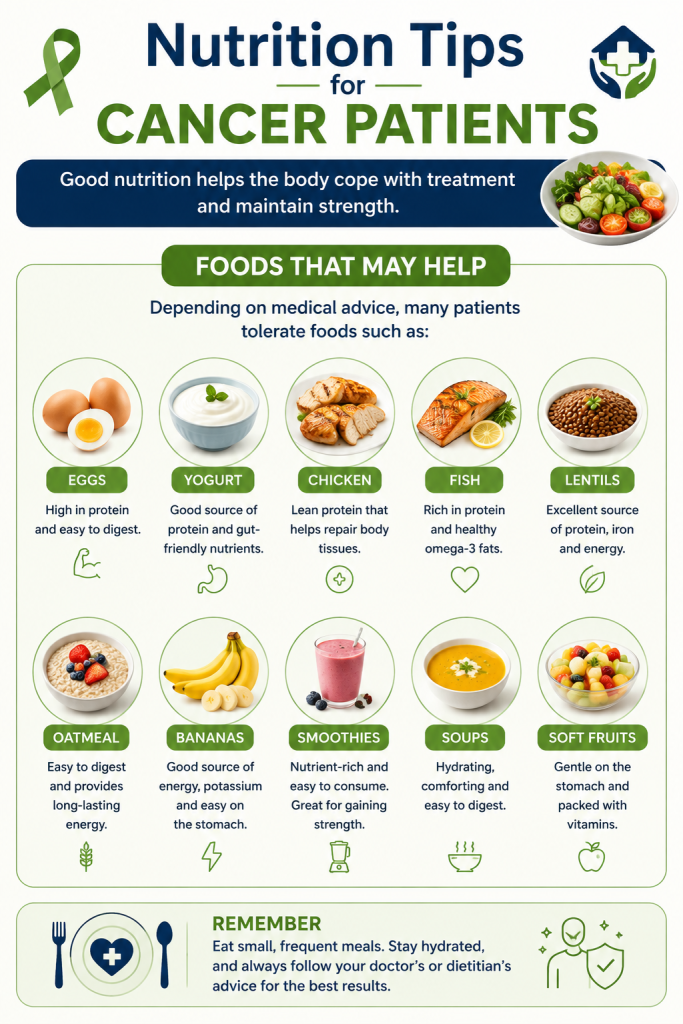
Nutrition Tips for Cancer Patients
Good nutrition helps the body cope with treatment and maintain strength.
Foods That May Help
Depending on medical advice, many patients tolerate foods such as:
-
Eggs
-
Yogurt
-
Chicken
-
Fish
-
Lentils
-
Oatmeal
-
Bananas
-
Smoothies
-
Soups
-
Soft fruits
If Appetite Is Poor
Many patients struggle to eat large meals.
Helpful strategies include:
-
Offering smaller meals every 2–3 hours
-
Providing favorite foods when appropriate
-
Serving nutrient-rich snacks
-
Avoiding overwhelming portion sizes
-
Encouraging fluids throughout the day
Prevent Dehydration
Dehydration can worsen fatigue and weakness.
Encourage:
-
Water
-
Soups
-
Oral hydration solutions
-
Doctor-approved juices
If eating or drinking becomes difficult, consult the healthcare team promptly.
Managing Common Treatment Side Effects
Fatigue
Allow plenty of rest while encouraging gentle activity when approved by the doctor.
Short walks and light movement can help maintain strength.
Nausea and Vomiting
To reduce discomfort:
-
Offer small meals
-
Avoid strong food smells
-
Follow anti-nausea medication schedules
-
Keep the patient hydrated
Mouth Sores
Some treatments can cause painful mouth sores.
Soft foods and proper oral hygiene may help improve comfort.
Constipation
Reduced activity and medications can contribute to constipation.
Follow medical recommendations regarding hydration, diet, and treatment.
Supporting Personal Hygiene and Daily Care
Maintaining personal hygiene supports comfort, dignity, and health.
Patients may need help with:
-
Bathing
-
Dressing
-
Oral care
-
Hair care
-
Skin care
For patients who spend most of their time in bed, proper hygiene and repositioning can help prevent skin damage.
Families caring for immobile patients may also benefit from learning about Bedridden patient care techniques and safe positioning methods.
Emotional Support Matters More Than Many Families Realize
Cancer affects emotional well-being as much as physical health.
Patients may feel:
-
Worried about treatment
-
Frustrated by physical limitations
-
Isolated from friends and family
-
Concerned about the future
Ways to Provide Emotional Support
-
Listen without interrupting
-
Allow patients to express their feelings
-
Include them in decisions whenever possible
-
Encourage visits from supportive family members
-
Respect their independence
-
Celebrate treatment milestones and small victories
Sometimes simply sitting together and talking can provide comfort.
Encourage Safe Physical Activity
When approved by the healthcare provider, gentle movement can help maintain strength and mobility.
Activities may include:
-
Short walks
-
Gentle stretching
-
Range-of-motion exercises
-
Physical therapy exercises
Avoid pushing patients beyond their energy limits.
Sample Daily Care Routine for a Cancer Patient at Home
Having a routine helps many patients feel more comfortable and organized.
Morning
-
Assist with hygiene if needed
-
Check temperature if advised
-
Give prescribed medications
-
Serve a nutritious breakfast
-
Encourage hydration
Afternoon
-
Light activity if appropriate
-
Small meal or snack
-
Rest period
-
Monitor symptoms
Evening
-
Healthy dinner
-
Review medications
-
Family interaction or relaxation
-
Prepare for restful sleep
Simple routines often reduce stress for both patients and caregivers.
Warning Signs You Should Never Ignore
Seek medical advice immediately if the patient develops:
-
Fever
-
Difficulty breathing
-
Severe chest pain
-
Sudden confusion
-
Uncontrolled vomiting
-
Heavy bleeding
-
Severe dehydration
-
New or worsening swelling
-
Signs of infection
Quick medical attention can help prevent serious complications.
Common Mistakes Families Make
Trying to Handle Everything Alone
Many caregivers take on too much responsibility.
As care needs increase, professional support can become very helpful.
Ignoring Their Own Health
Caregivers often focus entirely on the patient while neglecting their own well-being.
This can lead to exhaustion and burnout.
Missing Medication Schedules
Cancer treatment often depends on consistent medication management.
Missed doses can affect treatment plans.
Waiting Too Long to Ask for Help
Seeking support early often improves outcomes for both the patient and the caregiver.
Taking Care of Yourself as a Caregiver
Caregiving is rewarding, but it can also be physically and emotionally demanding.
Caregiver Self-Care Tips
-
Get enough sleep
-
Eat regular meals
-
Ask family members for assistance
-
Take short breaks when possible
-
Stay connected with friends and relatives
-
Discuss concerns with healthcare professionals
A healthy caregiver is better able to provide quality care.
For more support, families may also benefit from resources related to Patient care services in Lahore and long-term caregiving assistance.
What Home Care Nurses Commonly Observe
Experienced home care nurses often notice that patients tend to feel more comfortable when daily care routines remain consistent.
Simple habits can make a meaningful difference, including:
-
Taking medications on time
-
Staying hydrated
-
Eating regular meals
-
Getting enough rest
-
Monitoring symptoms carefully
-
Maintaining emotional support
Many families find that structure and consistency help reduce stress during treatment.
When Professional Home Nursing Support Can Help
Cancer care needs can change over time.
Professional support may be helpful when patients require:
-
Medication administration
-
Injection support
-
Wound care services
-
Mobility assistance
-
Pain management monitoring
-
Personal hygiene support
-
Long-term nursing care
Families in Lahore often balance work responsibilities, household duties, and frequent hospital visits. Professional nursing assistance can help reduce caregiver stress while ensuring patients receive proper attention at home.
How Home Nursing Services Support Cancer Patients
Professional Home nursing services in Lahore can provide trained nurses who understand the challenges cancer patients face during treatment and recovery.
Services may include:
-
Vital sign monitoring
-
Medication management
-
Pain observation
-
Wound dressing support
-
Mobility assistance
-
Personal care assistance
-
Recovery monitoring
-
Emergency observation
These services can help families feel more confident while ensuring patients receive proper care.
Real-Life Example
Consider a family caring for an elderly father undergoing chemotherapy.
At first, family members managed medications, meals, transportation, and personal care themselves. As treatment continued, fatigue and weakness increased, making daily caregiving more challenging.
After arranging professional nursing support, the patient received assistance with medication schedules, mobility, and health monitoring. The family could focus more on emotional support and quality time together while knowing medical needs were being managed safely.
Frequently Asked Questions
What is the most important thing when caring for a cancer patient at home?
Providing safe, consistent care while following the treatment plan and offering emotional support are among the most important responsibilities.
How can I improve a cancer patient’s appetite?
Offer smaller meals more frequently, provide favorite foods when appropriate, and consult healthcare professionals if appetite loss becomes severe.
How can I reduce infection risks at home?
Frequent hand washing, proper food safety, limiting exposure to sick individuals, and maintaining a clean environment can help reduce infection risks.
Can cancer patients stay at home during treatment?
Many patients can remain at home during treatment, depending on their condition and their doctor’s recommendations.
When should I consider professional home nursing care?
Professional nursing support may be beneficial when managing medications, mobility challenges, wound care, or ongoing monitoring becomes difficult for family members.
Final Thoughts
Learning how to take care of a cancer patient at home involves much more than helping with medications or meals. Patients often need physical assistance, emotional support, infection prevention, nutritional guidance, and a safe environment that helps them maintain comfort and dignity.
Many families successfully care for loved ones at home by creating structured routines, staying in close contact with healthcare providers, and seeking help when needed. For those who require additional support, professional Home nursing services in Lahore and Patient care services in Lahore can provide skilled assistance tailored to the patient’s unique needs.
With patience, compassion, and the right care plan, families can help cancer patients feel safer, more comfortable, and better supported throughout their treatment journey.
Powered by 101sols.com Best SEO Agency in Lahore Pakistan