
Caring for a loved one with Alzheimer’s disease can be one of the most emotional journeys a family experiences. One day, a parent may remember every family story and favorite recipe. Over time, they may begin forgetting names, repeating questions, or needing help with everyday tasks.
If you are wondering how to take care of an Alzheimer’s patient at home, you are not alone. Many families face similar challenges and often feel overwhelmed at first. The good news is that with patience, planning, and the right support, you can help your loved one remain comfortable, safe, and respected in their own home.
This guide covers practical tips for Alzheimer’s patient care at home, including safety, daily routines, communication, nutrition, emotional support, and when professional help may be needed.
What Is Alzheimer’s Disease?
Alzheimer’s disease is a progressive brain disorder that affects memory, thinking, behavior, and the ability to perform daily activities.
It is the most common form of dementia and usually develops gradually. Symptoms often begin with mild forgetfulness and can eventually affect a person’s ability to communicate, recognize loved ones, and care for themselves.
Although there is currently no cure, proper care can help improve quality of life and help patients remain comfortable throughout the different stages of the disease.
Understanding the Needs of an Alzheimer’s Patient
Every person experiences Alzheimer’s differently, but many patients face similar challenges.
Common symptoms include:
Memory loss
Confusion about time and place
Difficulty finding words
Repeating questions
Mood changes
Anxiety or fear
Poor judgment
Wandering from home
Difficulty performing daily activities
Understanding these challenges helps families respond with patience instead of frustration.
Many behaviors that seem intentional are actually caused by changes happening in the brain.
How Care Needs Change as Alzheimer’s Progresses
One mistake many families make is assuming Alzheimer’s care remains the same throughout the illness. In reality, caregiving needs change significantly over time.
Early-Stage Alzheimer’s Care
In the early stage, patients often remain independent but may struggle with memory and organization.
Common signs include:
Forgetting appointments
Losing personal items
Missing medications
Repeating stories
Difficulty managing finances
Care priorities:
Medication reminders
Calendar and schedule support
Home safety planning
Encouraging independence
Middle-Stage Alzheimer’s Care
This stage often requires more hands-on assistance.
Patients may:
Become confused more frequently
Need help dressing
Have trouble cooking meals
Wander away from home
Experience mood swings
Care priorities:
Daily supervision
Structured routines
Personal care assistance
Safety monitoring
Late-Stage Alzheimer’s Care
During advanced stages, patients may require full-time care.
Challenges may include:
Difficulty swallowing
Limited mobility
Incontinence
Inability to communicate clearly
Increased risk of infections
Care priorities:
Nutritional support
Skin care
Position changes for bedridden patients
Professional nursing assistance
Comfort-focused care
Creating a Safe Home Environment
Safety is one of the most important parts of caring for an Alzheimer’s patient at home.
As memory and judgment decline, everyday objects can become dangerous.
Remove Fall Hazards
Reduce accident risks by:
Removing loose rugs
Clearing clutter
Keeping pathways open
Securing electrical cords
Using non-slip bathroom mats
Improve Lighting
Poor lighting can increase confusion and accidents.
Make sure:
Hallways are well lit
Staircases are illuminated
Night lights are installed
Secure Dangerous Items
Store safely:
Medications
Cleaning products
Sharp kitchen utensils
Matches and lighters
Prevent Wandering
Wandering is common among Alzheimer’s patients.
Helpful measures include:
Door alarms
Secure locks
GPS tracking devices
Medical identification bracelets
Informing trusted neighbors
Establish a Consistent Daily Routine
A predictable routine can help reduce confusion and anxiety.
Patients often feel more secure when daily activities happen at the same time every day.
Try to maintain regular schedules for:
Waking up
Meals
Medication
Exercise
Bathing
Sleep
Consistency helps create a sense of familiarity and comfort.
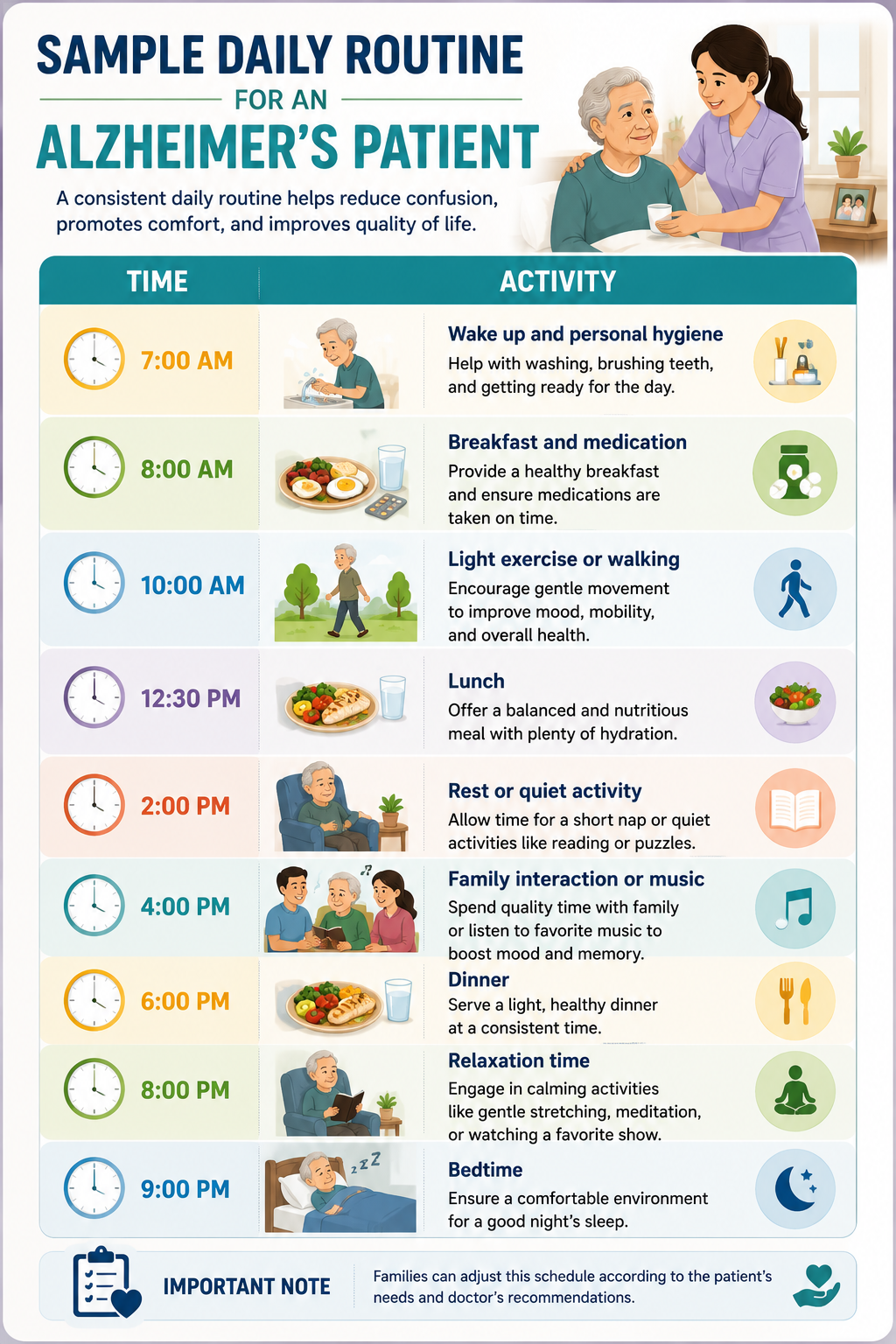
Sample Daily Routine for an Alzheimer’s Patient
| Time | Activity |
|---|---|
| 7:00 AM | Wake up and personal hygiene |
| 8:00 AM | Breakfast and medication |
| 10:00 AM | Light exercise or walking |
| 12:30 PM | Lunch |
| 2:00 PM | Rest or quiet activity |
| 4:00 PM | Family interaction or music |
| 6:00 PM | Dinner |
| 8:00 PM | Relaxation time |
| 9:00 PM | Bedtime |
Families can adjust this schedule according to the patient’s needs and doctor’s recommendations.
Communication Tips for Families
Communication often becomes harder as Alzheimer’s progresses.
Simple adjustments can make conversations easier.
Use Simple Language
Speak clearly and use short sentences.
Instead of giving multiple instructions, provide one step at a time.
Maintain Eye Contact
Face the patient while speaking and maintain gentle eye contact.
This helps keep their attention focused.
Avoid Arguments
Correcting memory mistakes repeatedly can cause distress.
Instead, redirect the conversation calmly.
Give Them Time to Respond
Many patients need extra time to process information.
Patience is often more helpful than repeating instructions quickly.
Helping With Personal Care
As the disease progresses, many patients require assistance with daily living activities.
Bathing
Helpful tips include:
Keep water comfortable
Explain each step beforehand
Maintain privacy
Follow a regular bathing schedule
Dressing
Choose clothing that is:
Comfortable
Easy to wear
Appropriate for the weather
Grooming
Assist with:
Brushing teeth
Hair care
Nail care
Shaving when necessary
These routines help preserve dignity and self-esteem.

Nutrition and Hydration Tips
Good nutrition supports overall health and energy levels.
However, Alzheimer’s patients may forget to eat or drink.
Foods That May Be Helpful
A balanced diet may include:
Vegetables
Fruits
Fish
Eggs
Whole grains
Yogurt
Lean meats
Nuts
Encourage Hydration
Offer:
Water
Soups
Milk
Fresh juices if approved by the doctor
Dehydration can worsen confusion.
Simplify Mealtimes
To make eating easier:
Serve smaller portions
Reduce distractions
Use easy-to-hold utensils
Offer finger foods when appropriate
Managing Memory Loss and Confusion
Memory loss can be frustrating for both patients and caregivers.
Simple strategies can help.
Use Labels Around the Home
Label:
Drawers
Doors
Bathrooms
Kitchen cabinets
Keep Large Clocks and Calendars Visible
Visual reminders can help maintain orientation.
Surround Them With Familiar Items
Family photos, favorite blankets, and cherished belongings often provide reassurance.
Managing Sleep Problems in Alzheimer’s Patients
Sleep difficulties are common in Alzheimer’s disease.
Many families report that their loved ones become restless or confused during the evening.
This behavior is often called sundowning.
Tips for Better Sleep
Encourage daytime activity
Limit naps when possible
Avoid caffeine late in the day
Maintain a consistent bedtime
Keep bedrooms quiet and comfortable
Reduce evening screen time
If sleep problems become severe, consult a healthcare professional.
Handling Agitation, Anxiety, and Behavioral Changes
Behavior changes can be one of the most difficult parts of caregiving.
Patients may become:
Angry
Restless
Suspicious
Anxious
Frustrated
Identify Possible Triggers
Common triggers include:
Hunger
Fatigue
Loud environments
Pain
Sudden routine changes
Stay Calm
Your tone often influences the situation.
Speak softly and avoid showing frustration.
Redirect Attention
Changing activities can often reduce distress.
A walk, favorite music, or family photos may help.
Activities That Can Help Alzheimer’s Patients
Meaningful activities can improve mood and reduce boredom.
Some helpful options include:
Music
Many patients enjoy familiar songs from earlier years.
Family Photo Albums
Photos often encourage conversation and positive memories.
Light Exercise
Examples include:
Walking
Stretching
Chair exercises
Gardening
Simple gardening tasks provide enjoyment and purpose.
Easy Puzzles and Games
Choose activities that match the patient’s abilities.
Success is more important than difficulty.
Helpful Tools That Make Alzheimer’s Home Care Easier
Several tools can make caregiving safer and more manageable.
These include:
Medication organizers
Reminder clocks
GPS tracking devices
Door alarms
Medical alert bracelets
Motion sensor lights
Non-slip flooring
Shower chairs
Grab bars
Small changes can make a big difference in daily safety.
What Families Commonly Experience
Many caregivers notice patterns that are not always discussed during medical appointments.
For example:
Increased confusion during the evening
Repeating the same question many times
Forgetting recent conversations
Becoming upset in unfamiliar environments
Looking for deceased family members
These situations are common in Alzheimer’s disease.
Understanding that these behaviors are part of the illness can help families respond more calmly and effectively.
Common Mistakes Families Should Avoid
Arguing About Forgotten Events
Arguments rarely improve memory and often increase stress.
Doing Everything for the Patient
Allow independence whenever it is safe.
Changing Routines Too Often
Consistency helps reduce confusion.
Ignoring Caregiver Fatigue
Caregivers also need support and rest.
Taking Care of Yourself as a Caregiver
Family caregivers often focus so much on the patient that they neglect their own well-being.
This can lead to burnout.
Signs of caregiver stress include:
Constant exhaustion
Irritability
Sleep problems
Anxiety
Feeling overwhelmed
To protect your own health:
Accept help from family members
Take regular breaks
Maintain social connections
Get enough sleep
Seek professional support when needed
A healthier caregiver can provide better care.
Challenges Faced by Families Caring for Alzheimer’s Patients in Lahore
Many families in Lahore face unique caregiving challenges.
These may include:
Busy work schedules
Limited caregiving experience
Transportation difficulties
Managing care for multiple family members
Lack of trained dementia caregivers at home
As Alzheimer’s progresses, families often need additional support to balance caregiving responsibilities with daily life.
This is where professional home healthcare services can be helpful.
When to Call a Doctor
Contact a healthcare professional if you notice:
Sudden worsening confusion
Refusal to eat or drink
Significant weight loss
Frequent falls
Medication problems
Hallucinations
New medical symptoms
When an Alzheimer’s Patient Needs Emergency Care
Seek immediate medical attention if the patient experiences:
Difficulty breathing
Loss of consciousness
Stroke symptoms
Severe head injuries
Choking incidents
Sudden inability to speak
Severe chest pain
Emergency treatment may prevent serious complications.
How Professional Home Nursing Services Can Help
As Alzheimer’s disease advances, caregiving demands often increase.
Professional Home nursing services in Lahore can provide trained caregivers who understand dementia-related challenges.
Services may include:
Medication management
Personal hygiene assistance
Mobility support
Health monitoring
Companionship
Bedridden patient care
Dementia home care services
Family caregiver relief
At Shumaya Home Care & Patient Service, families can access experienced caregivers and nurses who provide compassionate support tailored to the patient’s needs.
Related services may include:
Patient care services in Lahore
Elderly patient care
Bedridden patient care
Medication management support
Post-surgical nursing care
Critical care nursing
Dementia home care services
Frequently Asked Questions
Can Alzheimer’s patients live at home safely?
Yes. Many patients can remain at home safely when proper supervision and safety measures are in place.
What is the best routine for an Alzheimer’s patient?
A consistent routine that includes regular meals, medication, activities, and sleep is often most effective.
Can Alzheimer’s patients stay home alone?
It depends on the stage of the disease. Many patients eventually require supervision for safety reasons.
What foods are good for Alzheimer’s patients?
Balanced meals containing fruits, vegetables, fish, whole grains, and lean proteins are generally recommended.
Why do Alzheimer’s patients become aggressive?
Confusion, fear, pain, fatigue, or environmental stress can sometimes trigger aggressive behavior.
How do I calm an Alzheimer’s patient?
Speak calmly, reduce distractions, offer reassurance, and redirect attention to a familiar activity.
What should I do if an Alzheimer’s patient refuses medication?
Do not force medication. Contact the patient’s doctor for guidance and possible alternatives.
How long can someone live with Alzheimer’s disease?
Life expectancy varies widely. Some people live several years after diagnosis, while others may live much longer depending on overall health and disease progression.
Conclusion
Learning how to take care of an Alzheimer’s patient at home requires patience, understanding, and consistency. A safe home environment, structured daily routine, proper nutrition, effective communication, and emotional support can help patients feel more comfortable and secure.
Families should remember that Alzheimer’s care is a journey that changes over time. As needs increase, seeking additional support is not a sign of failure—it is often one of the best decisions for both the patient and the caregiver.
For families looking for professional assistance, Home nursing services in Lahore and Patient care services in Lahore can provide experienced support that helps Alzheimer’s patients remain safe, comfortable, and cared for in the place they know best: home.