
Taking care of a loved one at home can feel a bit overwhelming at first. You might be wondering,
“Am I doing this correctly?” or “What if I miss something important?”
That’s completely normal. The good news is that with a few simple nursing protocols (step-by-step care routines), you can provide safe and effective care right at home.
This guide will walk you through everything in a clear and friendly way—so you feel confident and prepared.
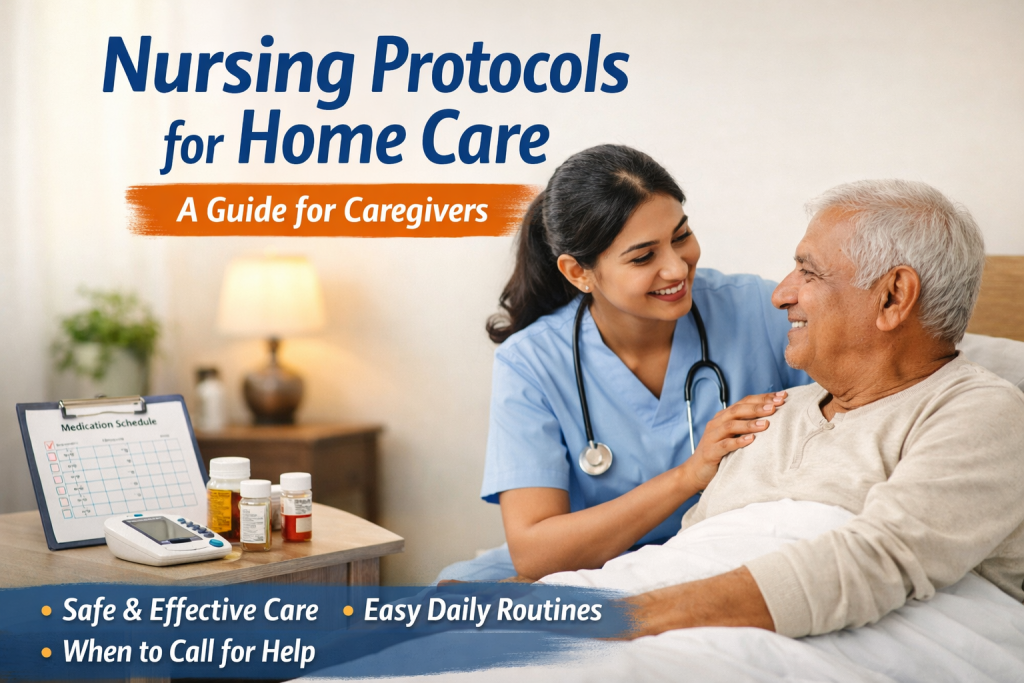
What Are Nursing Protocols in Home Care?
Let’s keep it simple.
Nursing protocols are basic instructions that help caregivers:
- Know what to do
- Know when to do it
- Do it safely
Think of them like a daily care plan. These steps are commonly used by professionals in Home nursing services in Lahore, and you can follow similar routines at home.
Example:
If a patient needs medicine every morning, the protocol helps you:
- Give the correct dose
- At the right time
- In the right way
Why Are Nursing Protocols Important?
Following proper care routines helps you:
- Keep the patient safe
- Avoid mistakes
- Support faster recovery
- Feel more confident as a caregiver
Without a clear routine, it’s easy to forget small but important things. Nursing protocols help you stay organized and consistent.
Who Needs Home Care Nursing?
You may need these protocols if you are caring for someone who:
- Is elderly
- Is recovering after surgery
- Has a long-term illness (like diabetes or stroke)
- Is bedridden
- Needs daily assistance
Many families now choose Patient care services in Lahore because patients feel more comfortable at home, surrounded by family.
Basic Nursing Protocols Every Caregiver Should Follow
Let’s go step by step.
1. Hand Hygiene (Clean Hands Come First)
This is the most important rule in patient care.
Wash your hands:
- Before touching the patient
- After giving medicine
- After helping in the bathroom
- After cleaning wounds
Use soap and water for at least 20 seconds.
Real-life tip:
Keep hand sanitizer near the patient’s bed so you can clean your hands quickly when needed.
2. Medication Management
Giving medicine correctly is very important.
Follow these simple checks:
- Right patient
- Right medicine
- Right dose
- Right time
Example:
If your father takes blood pressure medicine daily, set a phone alarm or use a chart on the wall to track doses.
This reduces the risk of missed or double doses.
3. Monitoring Vital Signs
Vital signs help you understand the patient’s health.
You may need to check:
- Temperature
- Blood pressure
- Pulse
- Blood sugar (if needed)
Write these readings in a notebook daily.
Real-life example:
If a patient’s temperature slowly increases over two days, you can inform the doctor early before it becomes serious.
4. Personal Hygiene Care
Cleanliness is key to comfort and health.
Help the patient with:
- Bathing
- Oral care (brushing teeth)
- Hair grooming
- Clean clothing
For bedridden patients:
- Use sponge baths
- Change clothes regularly
Keeping the patient clean helps prevent infections and improves mood.
5. Safe Patient Movement
Moving a patient incorrectly can cause injury.
Follow these tips:
- Support their back and arms
- Move slowly and gently
- Use pillows for support
- Avoid sudden movements
If movement feels difficult, trained staff from Home nursing services in Lahore can assist safely.
6. Preventing Bedsores
Bedsores can happen if a patient stays in one position too long.
To prevent them:
- Change position every 2 hours
- Use cushions or soft pillows
- Keep skin clean and dry
Example:
If a patient lies on their back all day, try gently turning them to the side every few hours.
7. Nutrition and Hydration
Food plays a big role in recovery.
Make sure the patient:
- Eats balanced meals
- Drinks enough water
- Follows the doctor’s diet plan
Real-life tip:
If the patient has a low appetite, give smaller meals more often instead of large portions.
8. Infection Control
Keeping the environment clean protects the patient.
Do this by:
- Changing bedsheets regularly
- Cleaning frequently touched surfaces
- Using gloves when needed
- Disposing of waste properly
Even small infections can become serious if ignored.
9. Emotional Support Matters
Care is not just physical—it’s emotional too.
Simple things can make a big difference:
- Talk to the patient
- Listen to their concerns
- Spend quality time together
Example:
Sitting with your loved one and having a short conversation can improve their mood and reduce stress.
Emergency Preparedness at Home
It’s important to be ready for unexpected situations.
Keep these things prepared:
- Emergency contact numbers
- Doctor’s contact information
- List of current medications
- Basic first aid kit
Call a doctor or seek help if you notice:
- High fever
- Difficulty breathing
- Sudden weakness
- Severe pain
- Unusual behavior
In such cases, professional Patient care services in Lahore can provide quick support.
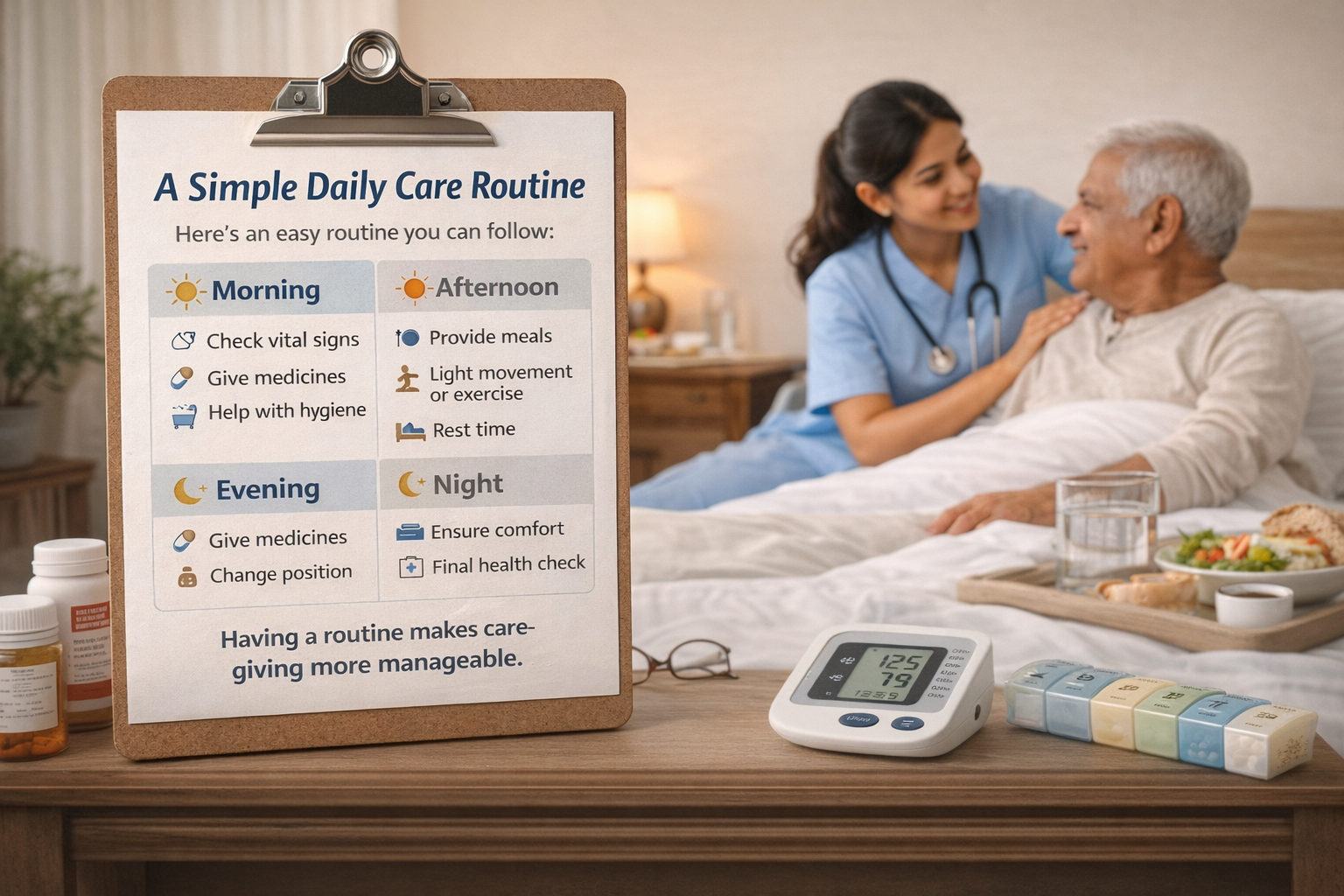
A Simple Daily Care Routine
Here’s an easy routine you can follow:
Morning:
- Check vital signs
- Give medicines
- Help with hygiene
Afternoon:
- Provide meals
- Light movement or exercise
- Rest time
Evening:
- Give medicines
- Change position
- Spend time with the patient
Night:
- Ensure comfort
- Final health check
Having a routine makes caregiving more manageable.
How Shumaya Home Care & Patient Service Supports You
At Shumaya Home Care & Patient Service, we understand that home caregiving can be challenging.
Our Home nursing services in Lahore are designed to support both patients and families with safe and reliable care.
We provide:
- Skilled and trained home nurses
- 24/7 patient care support
- Care for elderly, post-surgery, and bedridden patients
- Personalized care plans based on patient needs
- Respectful and compassionate service
We focus on making patients feel comfortable and helping families feel confident in their care decisions.
Helpful Guides You Can Read Next
To learn more, you can also read:
- 10 Signs Your Loved One Needs Home Care Services
- How to Prepare Your Home for a Patient’s Recovery
- Pain Management Techniques for Bedridden Patients
- Managing Chronic Illness at Home: Tips for Families
These guides provide more practical tips for everyday caregiving.
Common Questions About Home Nursing Care
Do I need medical training to provide home care?
No. Basic care can be learned easily. For advanced care, professional help is available.
How can I stay organized?
You can use:
- A notebook
- Medicine charts
- Mobile reminders
What if I feel tired or stressed?
Caregiving can be demanding. Take breaks and ask for help when needed. Support services are available to assist you.
Is home care better than hospital care?
In many cases, yes. Home care offers:
- Comfort
- Family support
- Personal attention
How can I avoid mistakes?
- Follow a routine
- Double-check medicines
- Keep records
Helpful Tips for Caregivers
- Stay calm and patient
- Keep emergency numbers ready
- Use reminders for medicines
- Take care of your own health
- Ask for help when needed
Taking care of yourself helps you take better care of others.
Quick Summary
Let’s quickly go over the main points:
- Nursing protocols are simple care routines for safety
- Hygiene, medication, and monitoring are key steps
- Preventing bedsores and infections is very important
- Emotional support improves patient well-being
- A daily routine makes care easier
- Help is always available when needed
Final Words
Caring for someone at home is a big responsibility, but it’s also a meaningful act of support and compassion.
With the right steps and a clear routine, you can provide safe and effective care.
If you ever need professional support, Shumaya Home Care & Patient Service is here to help with trusted Home nursing services in Lahore and dependable Patient care services in Lahore.