
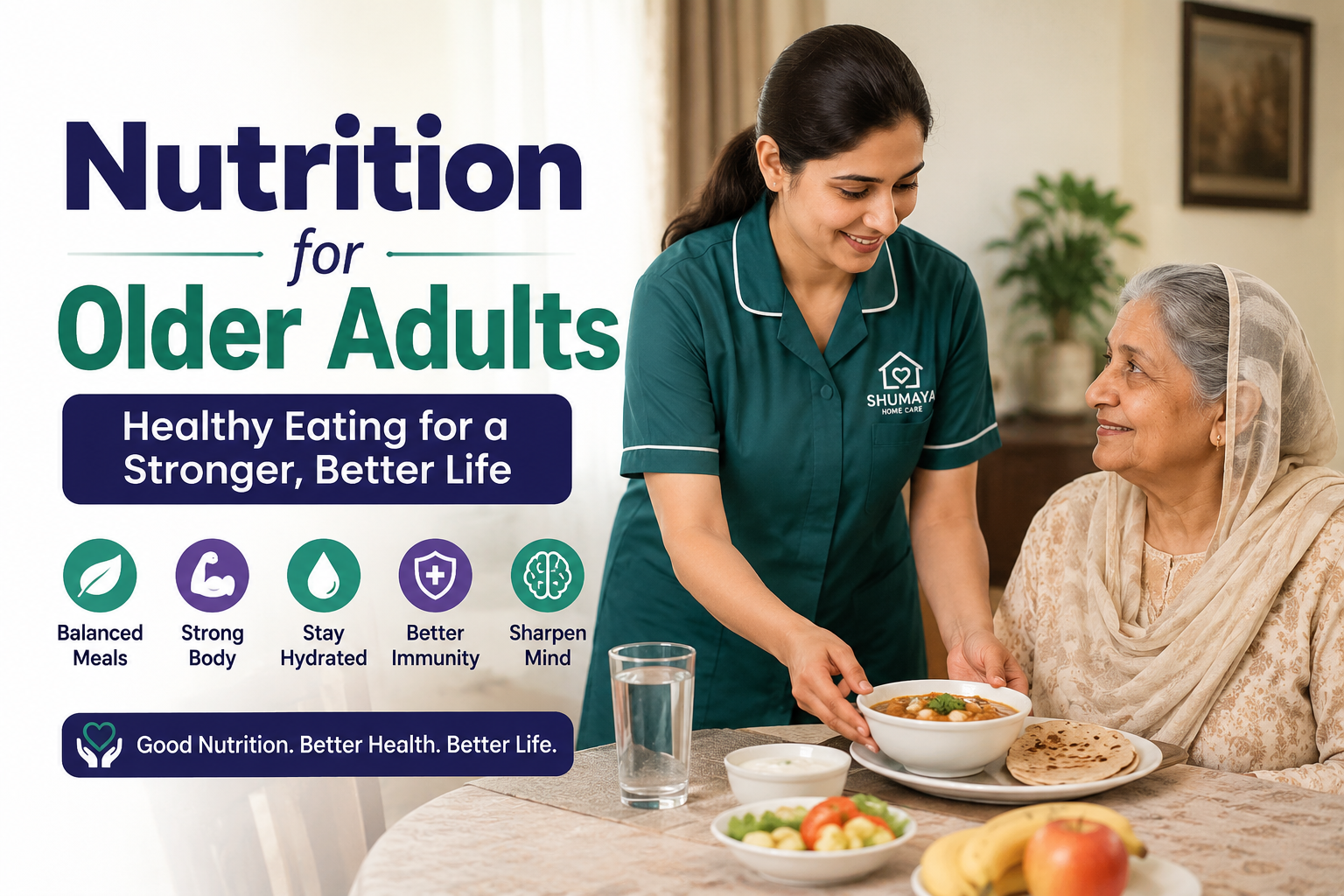
Mealtimes can change a lot as parents and grandparents get older. A plate that used to disappear in minutes might now sit half-finished. Appetite drops, chewing gets harder, and some medicines change how food tastes. For many families, this is one of the first signs that a loved one needs more support at home.
Good nutrition for older adults is not just about eating three meals a day. It’s about giving the body what it needs to stay strong, heal well, and meet daily energy needs. This guide covers what older adults need, common problems families run into, and simple ways to make eating easier and more enjoyable.
Why Nutrition Matters More With Age
As people age, changes in appetite, activity, muscle mass, digestion, and thirst can affect how much they eat and drink. At the same time, many older adults eat less than they used to.
This mix — eating less while needing more from each meal — is why nutrition becomes so important later in life. A poor diet can lead to:
- Weak bones and higher fall risk
- Slow healing after illness or surgery
- Low energy and tiredness
- A weaker immune system
- Faster loss of muscle strength
Regular, nutritious meals can help older adults maintain strength, support recovery, and meet their daily nutritional needs.
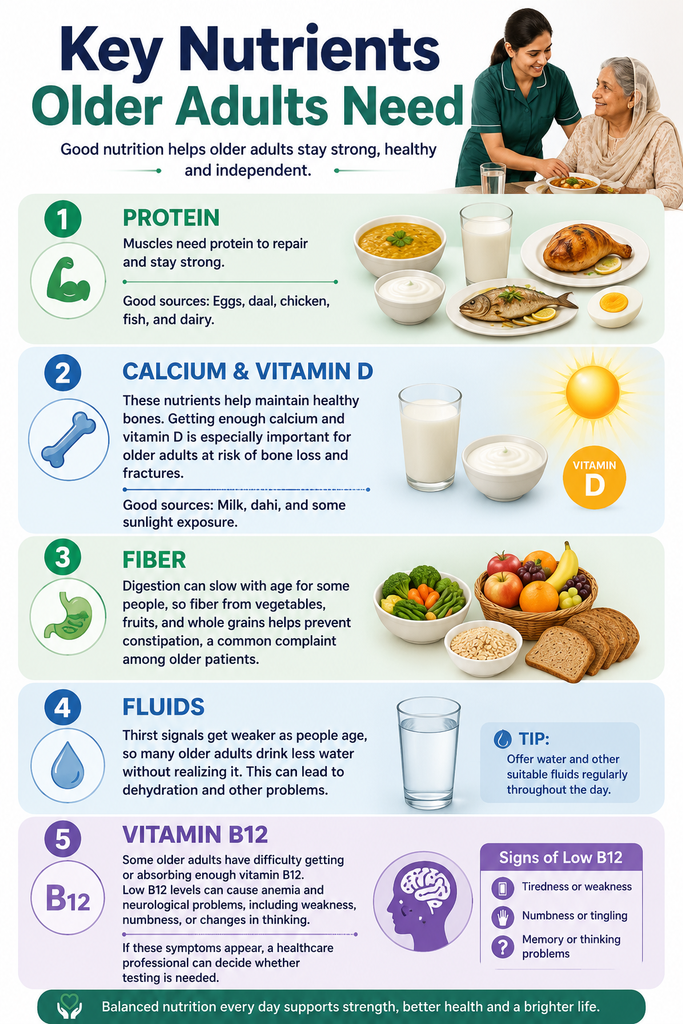
Key Nutrients Older Adults Need
Not all nutrients matter equally at this stage of life. A few stand out.
Protein. Muscles need protein to repair and stay strong. Eggs, daal, chicken, fish, and dairy are good everyday sources.
Calcium and Vitamin D. These nutrients help maintain healthy bones. Getting enough calcium and vitamin D is especially important for older adults who are at risk of bone loss and fractures. Milk, dahi, and some sunlight exposure all help.
Fiber. Digestion can slow with age for some people, so fiber from vegetables, fruits, and whole grains helps prevent constipation, which is a common complaint among older patients.
Fluids. Thirst signals get weaker as people age, so many older adults drink less water without realizing it. This can lead to dehydration and other problems.
Vitamin B12. Some older adults have difficulty getting or absorbing enough vitamin B12. Low B12 levels can cause anemia and neurological problems, including weakness, numbness, or changes in thinking. If these symptoms appear, a healthcare professional can decide whether testing is needed.
Common Eating Problems in Older Adults
Families often notice a pattern before they understand the cause. Here are a few reasons appetite and eating habits change:
- Trouble chewing or swallowing, often linked to dental issues
- Reduced sense of taste and smell, making food seem bland
- Medication side effects, such as dry mouth or nausea
- Loneliness, since eating alone can reduce interest in meals
- Digestive discomfort, which can make people avoid eating altogether
Spotting the reason behind reduced eating is the first step to fixing it. A trained caregiver can usually notice these patterns early, since they see the same person eat every day.
Healthy Foods for Older Adults
Simple, familiar foods are often the easiest ones to keep on the daily menu.
Protein: eggs, daal, chana, beans, chicken, fish, dahi, milk
Fruits and vegetables: bananas, oranges, apples, guava, seasonal vegetables, leafy greens
Whole grains: whole-wheat roti, oats, brown rice
Simple Meal Ideas for Seniors
A basic day might look like this:
- Breakfast: Egg with whole-wheat roti or oats, plus milk or dahi
- Mid-morning: A piece of fruit
- Lunch: Daal, chicken, or fish with a vegetable, roti or rice, and dahi
- Afternoon: Fruit, yogurt, or another light snack
- Dinner: A soft-cooked vegetable with a protein source and roti or rice
Portions and food choices should be adjusted for appetite, activity level, swallowing ability, and any medical conditions such as diabetes or kidney disease.
Practical Tips for Better Nutrition at Home
Small changes at home can make a real difference:
- Serve smaller, more frequent meals when needed. If a large plate feels overwhelming, try smaller meals or nutritious snacks spread through the day.
- Make food soft when needed. Mashed, stewed, or finely chopped food is easier to chew and swallow.
- Add flavor naturally. Herbs and spices can bring back some of the taste that fades with age, without relying on extra salt.
- Keep meals social. Eating with family, even for a short time, often improves appetite.
- Watch fluid intake. Keep water and other suitable fluids within easy reach throughout the day, unless a doctor has advised fluid restriction.
- Track weight changes. A steady drop in weight over a few weeks is worth mentioning to a doctor.
Signs an Older Adult May Not Be Getting Enough Nutrition
It helps to know what poor nutrition can look like before it becomes serious. Families should pay attention to:
- Unintentional weight loss
- Clothes becoming noticeably looser
- Increasing weakness
- Loss of muscle or strength
- Persistent poor appetite
- Fatigue
- Slow recovery from illness
- Poor wound healing
- Eating much smaller amounts than usual
These signs can have many causes, so persistent or unexplained changes should be discussed with a doctor or dietitian.
Nutrition for Older Adults With Special Needs
Some conditions call for extra care around food and drink:
- Diabetes often means watching portion sizes and the type of carbohydrates eaten.
- Kidney disease may require limits on certain nutrients, based on a doctor’s guidance.
- Swallowing difficulties may call for changes in food texture or liquid thickness.
- Bedridden patients often need help with feeding, positioning, and monitoring intake closely — see our guide on [bedridden patient care] for more detail.
Because these needs vary so much from person to person, it’s best to follow a doctor’s or dietitian’s specific advice rather than a general rule.
When Extra Support Helps
Some older adults need help preparing meals, eating safely, staying hydrated, or following a regular daily routine. Families who can’t provide this kind of support throughout the day may consider professional [elderly care services at home].
A trained caregiver can help with mealtime routines, monitor food and fluid intake, and report concerns such as weight loss or dehydration. If someone has difficulty swallowing, food and drink textures should be changed according to advice from a qualified healthcare professional, not decided informally. For families juggling work and caregiving, [home nursing services in Lahore] can bring real peace of mind, and support for staying active — such as [physiotherapy at home] — often complements good nutrition well.
When to Call a Doctor
Reach out to a doctor if you notice:
- A major drop in food or fluid intake, especially if it continues or comes with weakness, vomiting, or other symptoms
- Sudden or steady weight loss
- Signs of dehydration, such as dizziness or dark urine
- Difficulty swallowing that seems to be getting worse
- Sudden confusion, which should be assessed promptly since it can have many causes, including infection, medication effects, dehydration, or other [common health problems in older adults]
Frequently Asked Questions
How much protein does an older adult need daily? Needs vary by person, but many older adults need more protein per meal than younger adults to maintain muscle. A doctor or nutritionist can suggest an amount based on health history.
Is it normal for appetite to drop with age? Some drop is common, but a sudden or large change in appetite is not something to ignore. It’s worth discussing with a doctor.
What are the best foods for older adults? Foods rich in protein, calcium, fiber, and vitamins work well — eggs, daal, dahi, seasonal fruits and vegetables, and whole grains are all practical everyday choices.
What should an older adult eat if they have a poor appetite? Smaller, more frequent meals with nutrient-dense foods often work better than trying to finish large plates. Adding familiar flavors and eating with company can also help.
What are the signs of poor nutrition in older adults? Unexplained weight loss, loose-fitting clothes, ongoing weakness, poor wound healing, and low energy are common signs worth discussing with a doctor.
How much water should an older adult drink? This varies by person and health condition, so it’s best to follow a doctor’s guidance rather than a fixed number — but keeping fluids within easy reach throughout the day is a good general habit, unless fluid intake has been restricted for medical reasons.
Final Thoughts
Nutrition plays a big part in how well older adults age, heal, and stay independent. Small daily choices — softer food, regular fluids, and shared mealtimes — add up over time. For families in Lahore who need extra hands, home nursing and elderly care support can help keep meals consistent and safe, especially for patients managing chronic conditions or recovering after surgery.