

Cancer treatment can change the way a person eats. Appetite may decrease, food may taste different, or symptoms such as nausea, mouth soreness, dry mouth, or swallowing problems may make normal meals difficult.
For families caring for someone at home, the goal is not to force large meals. It is to help the patient get enough nutrition and fluids in ways that are safe, comfortable, and realistic.
These nutrition tips for cancer patients at home can help families manage common eating problems while knowing when to involve the patient’s doctor or dietitian.
Medical note: Nutrition needs during cancer treatment vary from person to person. This article provides general educational information and does not replace advice from an oncologist, doctor, or registered dietitian.
Why Good Nutrition Matters During Cancer Treatment
Cancer and its treatment can affect appetite, digestion, taste, and the body’s nutritional needs. Some patients may lose weight or muscle if they are unable to eat enough.
Adequate nutrition can help a patient maintain strength, preserve muscle, and meet the body’s nutritional needs during treatment. Protein and calories are especially important when a patient is losing weight or eating less than usual.
There is no single diet that works for every cancer patient. Food choices should take into account the type of cancer, treatment, symptoms, other health conditions, and advice from the patient’s healthcare team.
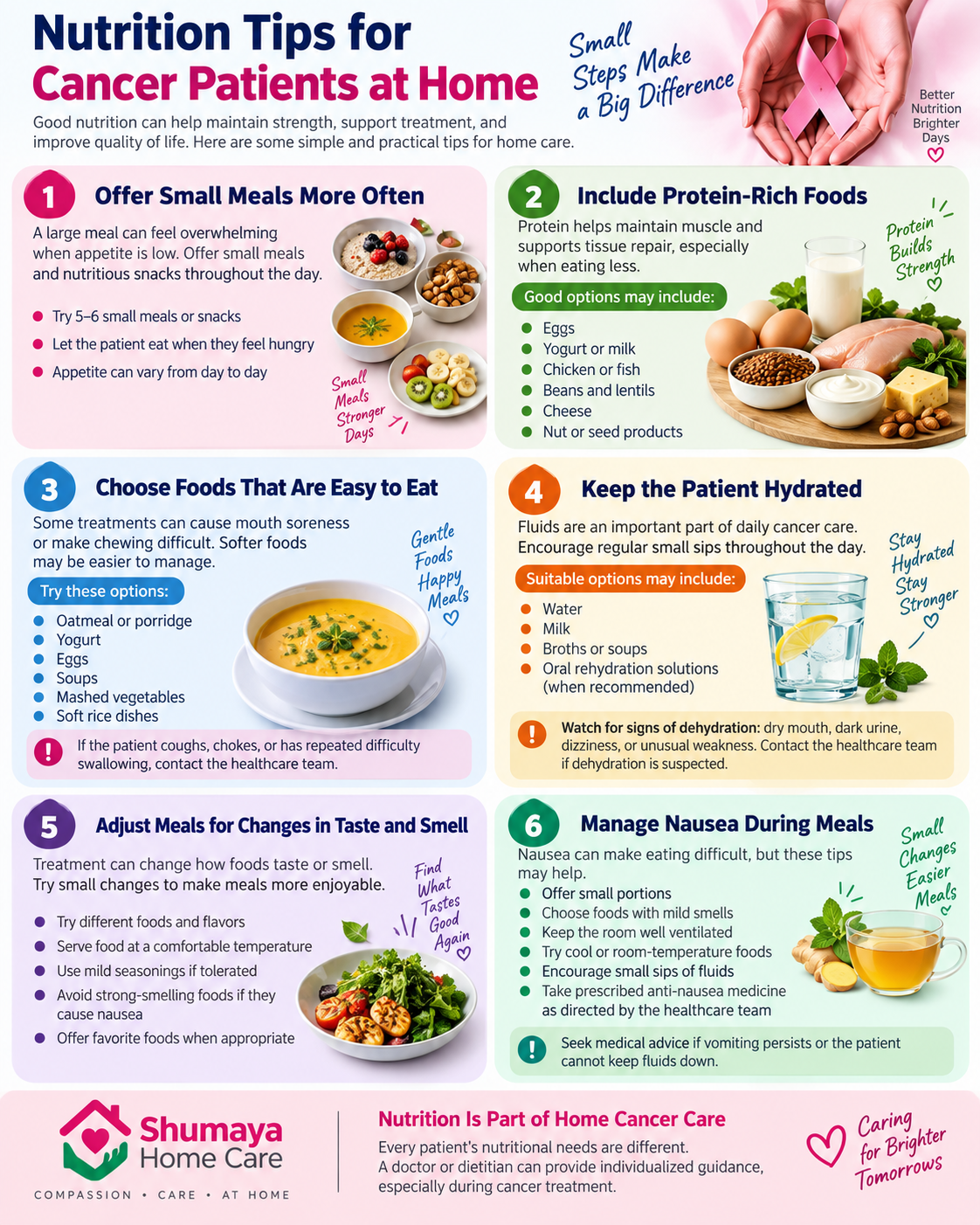
Nutrition Tips for Cancer Patients at Home
Offer Small Meals More Often
A large plate of food may feel overwhelming when appetite is low.
Instead of expecting the patient to eat three large meals, try offering smaller meals and nutritious snacks throughout the day.
A simple routine might include:
Small breakfast
Mid-morning snack
Small lunch
Afternoon snack
Light dinner
Small evening snack if tolerated
Let the patient eat when they feel most comfortable and hungry. On some days, they may manage more food than on others.
Include Protein-Rich Foods
Protein helps the body maintain muscle and repair tissues. When a patient is eating less, including protein in meals and snacks can increase the nutritional value of smaller portions.
Depending on what the patient can tolerate, suitable options may include:
Eggs
Yogurt or milk
Chicken or fish
Beans and lentils
Cheese
Nut or seed products, when appropriate
Other protein-rich foods recommended by the healthcare team
Protein needs differ from one patient to another. Factors such as body size, nutritional status, kidney function, treatment, and other health conditions may affect how much protein is appropriate. A doctor or dietitian can provide individual guidance.
Choose Foods That Are Easy to Eat
Some cancer treatments can cause mouth soreness, dry mouth, or other problems that make eating uncomfortable.
When chewing is difficult, softer foods may be easier to manage.
Examples include:
Soft cooked vegetables
Oatmeal or porridge
Yogurt
Eggs
Soups
Mashed vegetables
Soft rice dishes
Other foods with a texture the patient can safely manage
Food texture should match the patient’s ability to chew and swallow.
If the patient coughs or chokes while eating, has repeated difficulty swallowing, or develops a wet or gurgly voice after swallowing, contact the healthcare team. A swallowing assessment may be needed before changing food or drink textures.
Keep the Patient Hydrated
Fluids are an important part of daily cancer care.
Encourage regular sips of water and other suitable fluids throughout the day. Some patients may find it easier to drink smaller amounts frequently rather than a large glass at once.
Depending on the patient’s medical condition and treatment, suitable choices may include:
Water
Milk
Broths or soups
Oral rehydration solutions when recommended
Other drinks approved by the healthcare team
Some patients, including those with certain heart or kidney conditions, may have fluid restrictions. Follow the treating doctor’s instructions in these situations.
Watch for possible signs of dehydration, such as a dry mouth, very dark urine, passing urine less often, dizziness, or unusual weakness. Contact the healthcare team if dehydration is suspected.
Adjust Meals for Changes in Taste and Smell
Cancer treatment can sometimes change how food tastes or smells. Foods the patient previously enjoyed may suddenly taste different.
Small changes may make meals easier to tolerate:
Try different foods and flavors.
Serve food at a temperature the patient finds comfortable.
Use mild seasonings if tolerated.
Keep strong-smelling foods away if their smell causes nausea.
Offer favorite foods when appropriate.
Taste changes can vary from person to person, so it may take some trial and error to find foods that are comfortable to eat.
Manage Nausea During Meals
Nausea can make eating especially difficult during cancer treatment.
Some patients tolerate small meals better than large ones. Strong food smells may also make nausea worse.
Helpful approaches may include:
Offering small portions
Choosing foods with mild smells
Keeping the room well ventilated
Offering cool or room-temperature foods if hot food smells trigger nausea
Encouraging small sips of fluids
Taking prescribed anti-nausea medicine as directed by the healthcare team
Persistent vomiting, inability to keep fluids down, or signs of dehydration should be reported to the medical team promptly.
Nutrition Tips for Common Eating Problems
Cancer treatment does not affect every patient in the same way. The following simple guide can help families think about common problems:
| Eating problem | What may help |
|---|---|
| Poor appetite | Small, frequent meals and nutritious snacks |
| Nausea | Small portions and foods with mild smells |
| Mouth soreness | Soft foods that are comfortable to eat |
| Dry mouth | Frequent sips of suitable fluids and moist foods |
| Taste changes | Try different flavors and food temperatures |
| Difficulty swallowing | Contact the healthcare team for assessment |
| Unplanned weight loss | Discuss nutrition support with the doctor or dietitian |
These are general suggestions rather than a personal meal plan. A patient’s healthcare team should guide dietary changes when symptoms are severe or persistent.
Watch for Unplanned Weight Loss
Regular or rapid weight loss can be a sign that a patient is not getting enough nutrition.
Families can monitor weight if the healthcare team recommends it and pay attention to changes in appetite, food intake, and strength.
Speak with the patient’s doctor or dietitian if the patient:
Continues to lose weight
Is eating much less than usual
Becomes increasingly weak
Has difficulty maintaining adequate food intake
Is struggling to drink enough fluids
Early nutritional support may help address problems before they become more difficult to manage.
Be Careful With Food Safety
Food safety is especially important when a patient’s immune system may be weakened by cancer or its treatment.
Families providing home patient care should take basic food hygiene seriously.
Helpful habits include:
Wash hands before preparing food.
Keep kitchen surfaces and utensils clean.
Separate raw meat from ready-to-eat foods.
Cook meat, poultry, eggs, and other foods properly.
Refrigerate perishable foods promptly.
Follow the healthcare team’s advice about foods that should be avoided during treatment.
Food restrictions can vary depending on the patient’s condition and treatment. Avoid putting the patient on a highly restrictive diet unless their healthcare team recommends it.
Do Not Start Supplements Without Medical Advice
Families may consider vitamins, minerals, herbal products, or other supplements when a patient is eating poorly.
However, supplements are not automatically safe during cancer treatment. Some supplements, herbs, and high-dose vitamins can interact with medicines or cancer treatment.
Before giving a vitamin, mineral, herbal product, or other supplement, discuss it with the patient’s doctor or oncology team.
A doctor or registered dietitian can determine whether a supplement is needed and which type is appropriate.
When to Contact the Healthcare Team
Families should contact the healthcare team if nutrition problems continue or become worse.
Ask for medical advice if the patient:
Is eating much less than usual
Has ongoing or rapid weight loss
Has repeated vomiting or diarrhea
Cannot drink enough fluids
Has increasing difficulty swallowing
Has persistent mouth problems that interfere with eating
Becomes unusually weak or tired
Shows signs of dehydration
Cannot keep food or fluids down
Coughing or choking during meals should also be reported, particularly if it happens repeatedly.
Do not wait for a routine appointment if the patient is unable to keep fluids down or appears seriously unwell. Follow the oncology team’s instructions for urgent medical care.
A Simple Daily Nutrition Routine
The following is an example rather than a prescribed cancer meal plan. Portions and food choices should be adjusted to the patient’s appetite, symptoms, treatment, medical conditions, and advice from their healthcare team.
Morning:
Offer a small breakfast containing a suitable protein source and another food the patient can comfortably eat.
Mid-morning:
Provide a small nutritious snack and fluids if tolerated.
Lunch:
Offer a manageable meal based on the patient’s preferences and treatment-related symptoms.
Afternoon:
Give another suitable snack or drink.
Evening:
Offer a small dinner containing protein and foods that are comfortable for the patient to eat.
Before bed:
If appropriate, offer a small snack or drink based on the patient’s needs and medical advice.
The routine should remain flexible. The amount and type of food a patient can manage may change from day to day.
How Family Caregivers Can Make Mealtimes Easier
Nutrition is not only about what is placed on the plate. The environment around meals can also affect the patient’s experience.
Try to keep mealtimes calm and avoid pressuring the patient to eat. Let them choose between suitable foods when possible.
A caregiver can also keep a simple record of:
Foods the patient tolerates well
Foods that cause discomfort
Approximate fluid intake
Changes in appetite
Weight changes
Symptoms affecting eating
This information can be useful when discussing nutrition with the patient’s doctor or dietitian.
When Professional Home Care Can Help
Cancer care at home can place a lot of responsibility on family members. A patient may need help with meals, personal care, mobility, medication reminders, and daily routines.
Professional home nursing services in Lahore can provide additional support for families caring for patients at home. Depending on the patient’s care plan, trained healthcare staff can assist with daily patient care and other appropriate support while following instructions from the treating medical team.
For patients who need more consistent assistance, patient care services in Lahore may also help families manage day-to-day care at home.
Professional caregivers can assist with practical daily needs, but nutrition treatment and individualized dietary decisions should remain with the patient’s doctor or qualified dietitian.
Frequently Asked Questions
What foods are best for cancer patients at home?
There is no single diet that is best for every cancer patient. Meals should be based on the patient’s treatment, symptoms, nutritional needs, medical conditions, and preferences. Protein-rich and calorie-dense foods may be useful when intake is low, but a doctor or dietitian can provide individualized advice.
Should cancer patients eat more protein?
Protein is important for maintaining muscle and supporting tissue repair. Patients who are eating poorly or losing weight may need particular attention to protein intake. The appropriate amount depends on the person’s health, treatment, nutritional status, and other medical conditions.
What should I do if a cancer patient does not want to eat?
Do not force large meals. Try small portions, nutritious snacks, foods the patient enjoys, and meals at times when appetite is better. If poor appetite continues or weight loss occurs, contact the healthcare team.
Can cancer patients take vitamins or herbal supplements?
Not without first discussing them with the healthcare team. Some supplements, herbs, and high-dose vitamins can interact with medicines or cancer treatment.
When should we contact the doctor about nutrition?
Contact the healthcare team if the patient has ongoing weight loss, persistent vomiting or diarrhea, difficulty swallowing, signs of dehydration, very poor food or fluid intake, or other symptoms that interfere with nutrition.
Final Thoughts
Good nutrition during cancer treatment does not mean making every meal perfect. The focus should be on safe, manageable, nourishing foods and enough fluids, while adjusting meals to the patient’s symptoms and treatment.
If eating becomes difficult, weight continues to fall, or the patient cannot maintain adequate food and fluid intake, involve the treating doctor or a qualified dietitian rather than trying to manage the problem alone.
For families in Lahore who need help caring for a cancer patient at home, Shumaya Home Care & Patient Service provides professional home nursing and patient care support based on individual care needs. Families can contact Shumaya to discuss home nursing services in Lahore and practical support for their loved one’s care at home.