

Eating well can become harder as dementia progresses. A person may forget to eat, lose interest in food, become distracted during meals, or have difficulty using a spoon or fork. Changes in taste, smell, chewing, or swallowing can also affect how much they eat.
For families and caregivers, the goal is not to create a complicated “dementia diet.” It is to make meals nutritious, familiar, enjoyable, and safe while supporting the person’s changing needs.
These nutrition tips for dementia patients can help families make everyday meals easier to manage.
Why Nutrition Can Become Difficult in Dementia
Dementia can affect more than memory. Changes in thinking, behavior, physical ability, and communication can also affect eating.
A person may:
Forget when they last ate
Forget how to prepare or eat a meal
Not recognize food or drinks
Lose interest in eating
Become distracted during meals
Have difficulty using utensils
Have trouble chewing
Develop swallowing difficulties
Forget to drink enough fluids
Poor food and fluid intake can contribute to unwanted weight loss, weakness, dehydration, and constipation.
Good nutrition does not cure or reverse dementia, but a balanced diet and adequate fluids can support overall health, strength, and daily functioning.
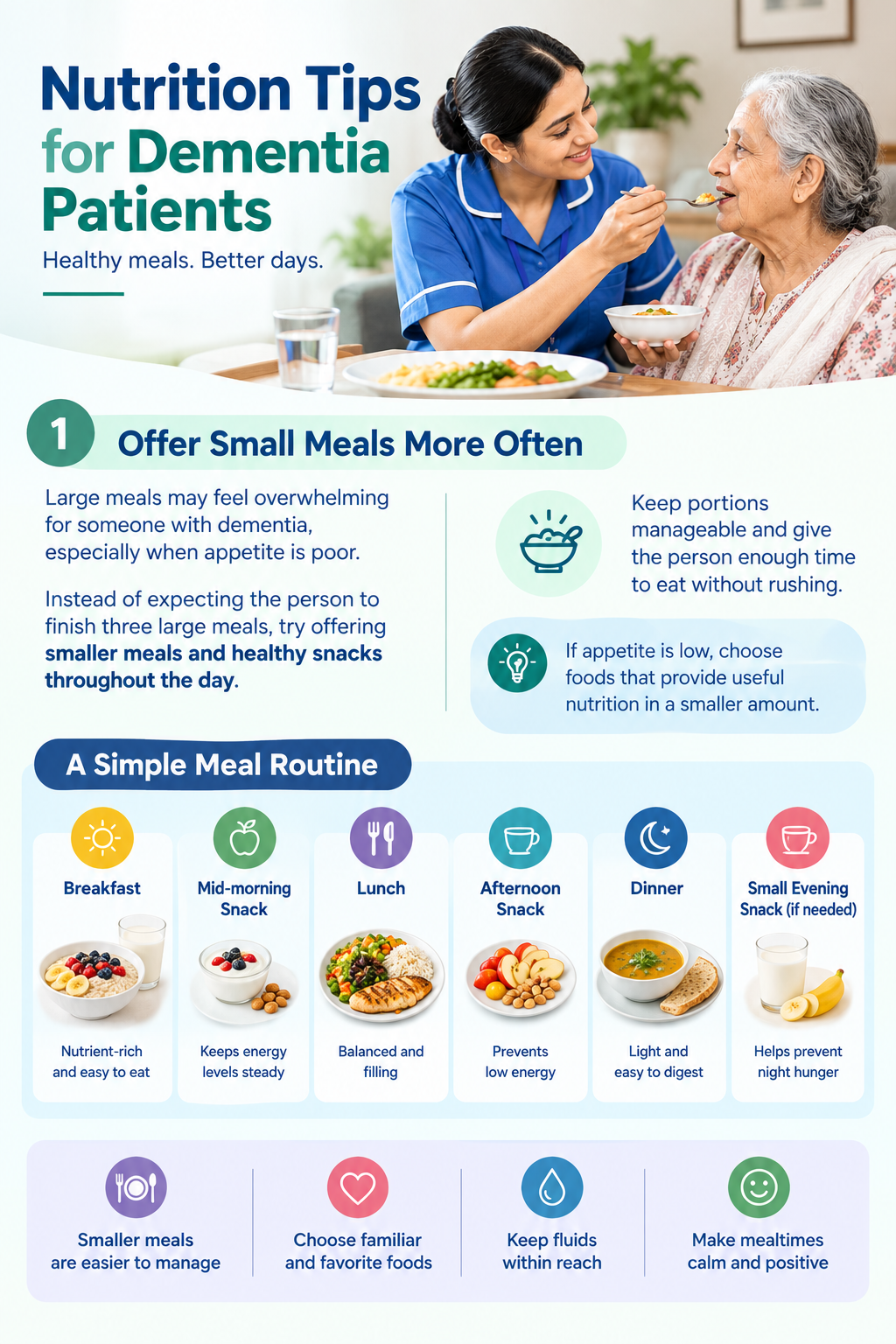
Nutrition Tips for Dementia Patients
Offer Small Meals More Often
Large meals may feel overwhelming for someone with dementia, especially when appetite is poor.
Instead of expecting the person to finish three large meals, try offering smaller meals and healthy snacks throughout the day.
A simple routine might include:
Breakfast
Mid-morning snack
Lunch
Afternoon snack
Dinner
Small evening snack if needed
Keep portions manageable and give the person enough time to eat without rushing.
If appetite is low, choose foods that provide useful nutrition in a smaller amount.
Choose Familiar Foods
Familiar foods can make mealtimes easier and more enjoyable.
Whenever possible, offer foods the person has enjoyed for many years. Familiar home-cooked meals may be easier to accept than unfamiliar dishes.
Depending on the person’s health needs and dietary restrictions, options may include:
Eggs
Daal
Chicken
Fish
Yogurt
Milk
Soft vegetables
Rice
Roti
Soft fruits
Pay attention to the foods the person actually enjoys. A nutritious meal does not need to be complicated.
Include Suitable Protein Foods
Protein helps the body maintain muscle and strength. This can be especially important when a person with dementia is eating less than usual.
Suitable protein sources may include:
Eggs
Chicken
Fish
Daal
Beans
Yogurt
Milk
Cheese
Try including an appropriate protein food as part of regular meals.
However, protein needs vary from person to person. Someone with kidney disease or another condition affecting their diet may need specific dietary advice from a doctor or dietitian.
Make Food Easy to Eat
Some people with dementia have difficulty handling forks, spoons, or knives. In these situations, easy-to-handle foods or suitable finger foods may make eating simpler.
Depending on the person’s chewing and swallowing ability, options might include:
Small sandwiches
Soft fruit pieces
Cooked vegetables
Small pieces of chicken
Cheese pieces
Soft boiled eggs
Food should always be prepared according to the person’s ability to chew and swallow.
A food being small does not automatically make it safe. Foods that are hard, dry, sticky, or difficult to chew may increase choking risk for someone with swallowing problems.
If the person regularly coughs or chokes while eating, speak with a healthcare professional before changing food textures.
Keep Healthy Snacks Available
A person with dementia may not always recognize or communicate that they are hungry.
Keeping suitable snacks visible and easy to reach can help encourage eating between meals.
Depending on the person’s needs, snacks could include:
Yogurt
Soft fruit
Cheese
Boiled egg
Small sandwiches
Other suitable homemade snacks
Avoid leaving foods within reach that could create a choking risk or conflict with the person’s medical or dietary restrictions.
Encourage Regular Fluids
Dehydration can become a problem when someone with dementia forgets to drink or does not recognize thirst.
Rather than waiting for the person to ask for a drink, offer fluids regularly throughout the day.
Depending on their medical needs, suitable options may include:
Water
Milk
Suitable dairy drinks
Soups
Other drinks recommended by their healthcare professional
Keep an appropriate drink within easy reach and give gentle reminders to take a few sips.
Some people may need help holding a cup or remembering how to drink from it.
If a doctor has recommended fluid restriction because of a heart, kidney, or another medical condition, follow that advice.
Keep Mealtimes Calm and Simple
The environment around a meal can affect how well a person with dementia eats.
Try to:
Reduce television and loud background noise
Keep the dining area familiar
Use simple plates and utensils
Limit distractions
Offer one or two choices instead of many options
Sit with the person when possible
Give gentle reminders rather than rushing them
If the person has visual difficulties, using plates that contrast with the food may make the meal easier to see.
A calm and familiar environment can make eating less confusing.
Help If the Person Forgets How to Start Eating
Sometimes a person with dementia may sit in front of food without starting to eat. They may not remember what to do with the utensils or may become distracted.
Simple cues can help.
For example:
Place the food where it is easy to see
Demonstrate the first step
Hand them an appropriate utensil if needed
Give one simple instruction at a time
Gently say, “Here is your lunch”
Allow plenty of time to respond
Avoid giving several instructions at once.
The goal is to provide just enough help for the person to participate safely.
Use Simple Food and Drink Reminders
A person may forget that food is in front of them or may not immediately understand what they are expected to do.
Short prompts are often easier to follow.
For example:
“Here is your breakfast.”
“Would you like some yogurt?”
“Let’s have a drink of water.”
You can also point to the food or demonstrate the action.
Keep your tone calm and supportive. Avoid arguing if the person does not respond immediately.
What to Do When a Dementia Patient Refuses Food
It can be frustrating when someone with dementia refuses food, but forcing them to eat can make mealtimes more stressful.
Instead, try to understand what may be causing the problem.
The person could be:
Not feeling hungry
Tired or distracted
Experiencing mouth or dental pain
Having difficulty chewing
Finding the food unfamiliar
Feeling nauseated or unwell
Experiencing medication-related appetite changes
Having difficulty swallowing
Try offering a familiar food later or giving a smaller portion.
If food refusal continues, the person is losing weight, or there are signs of illness, discuss the problem with their healthcare professional.
Watch for Chewing and Swallowing Problems
Swallowing difficulties can occur as dementia progresses and should not be ignored.
Watch for signs such as:
Coughing or choking during meals
Repeated throat clearing while eating
A wet or gurgly voice after swallowing
Difficulty chewing
Holding food in the mouth
Taking a very long time to finish meals
Avoiding certain textures
Repeatedly having trouble swallowing liquids or food
These signs can indicate a swallowing problem and may increase the risk of food or liquid entering the airway.
If you notice repeated swallowing difficulties, seek advice from a doctor or an appropriate healthcare professional. A speech and language therapist may assess swallowing and recommend suitable food or drink textures when needed.
Do not independently change food textures or thicken drinks unless this has been recommended by a qualified professional.
Don’t Forget Dental and Mouth Health
Mouth problems can make eating uncomfortable.
Dental pain, damaged teeth, poorly fitting dentures, dry mouth, or other oral problems may cause someone to avoid food, particularly foods that require chewing.
If a person suddenly changes their eating habits or avoids foods they previously enjoyed, consider whether a dental or mouth problem could be contributing.
Persistent problems should be discussed with a doctor or dental professional.
Watch for Changes in Eating Habits
Caregivers can learn a lot by noticing changes in the person’s usual eating pattern.
Keep an eye on:
Eating much less than usual
Unexplained weight loss
Drinking very little
Repeatedly refusing food
Increasing difficulty chewing
Coughing during meals
Difficulty swallowing
Holding food in the mouth
Needing much more help with meals
Sudden changes in food preferences
A sudden or ongoing change should be discussed with a healthcare professional.
Loss of appetite can have many causes, including illness, constipation, dental problems, medication effects, depression, and swallowing difficulties.
Create a Simple Daily Meal Routine
A predictable routine can make meals easier to remember.
For example:
Morning: Breakfast and a drink
Late morning: Small snack
Afternoon: Lunch and a drink
Late afternoon: Snack
Evening: Dinner and a drink
The exact schedule should be based on the person’s appetite, sleep pattern, medical needs, and normal routine.
Consistency is often more helpful than trying to make every meal perfect.
When to Seek Medical Advice
Contact a healthcare professional if you notice:
Ongoing poor appetite
Unexplained or continuing weight loss
Repeated refusal of food
Persistent constipation
Signs of dehydration
Difficulty chewing
Increasing difficulty swallowing
Frequent coughing or choking during meals
Major changes in eating behavior
Prompt medical assessment is especially important when swallowing problems are repeated or when the person becomes weak, dehydrated, or unwell.
A doctor or dietitian can help identify the cause and decide whether changes to the person’s diet or nutrition support are needed.
How Caregivers Can Support Nutrition
Supporting meals can become difficult when family members are also managing work, household responsibilities, medicines, appointments, and other care needs.
A trained caregiver or home healthcare professional can assist with practical tasks such as:
Preparing suitable meals
Offering regular drinks
Providing mealtime assistance
Following recommended food textures
Observing changes in eating habits
Supporting a regular daily routine
For families managing dementia care at home in Lahore, professional home-based support can make daily care easier while allowing the person to remain in familiar surroundings.
Frequently Asked Questions
What are the best foods for dementia patients?
There is no single food that treats dementia. A balanced diet can include vegetables, fruits, grains, suitable protein foods, and dairy or alternatives, depending on the person’s health needs and dietary restrictions.
Choose foods the person enjoys and can safely chew and swallow.
Can food cure dementia?
No. There is no specific food that has been proven to cure or reverse dementia. Good nutrition can support overall health, but dementia requires appropriate medical and care support.
How can I encourage a dementia patient to eat?
Offer small portions of familiar foods, reduce distractions, and give the person plenty of time. Gentle reminders, simple instructions, and eating together may also help.
How can I encourage a dementia patient to drink more?
Offer suitable drinks regularly rather than waiting for the person to ask. Keep a drink within easy reach and give gentle reminders. Follow medical advice if the person has a fluid restriction.
Should dementia patients eat smaller meals?
Smaller meals and snacks may be helpful for someone with a poor appetite or who becomes overwhelmed by large portions. The best meal routine depends on the person’s individual needs.
When should I worry about weight loss?
Unexplained or ongoing weight loss should be discussed with a healthcare professional. It may be linked to poor food intake, swallowing problems, dental issues, medication effects, or another health problem.
Quick Summary
Nutrition for a person with dementia is not about finding one special food or following a complicated diet.
Focus on:
Small, manageable meals
Familiar and nutritious foods
Suitable protein sources
Regular fluids
Easy-to-eat foods
Calm mealtimes
Simple reminders and assistance
Safe chewing and swallowing
Monitoring weight and eating changes
If eating, drinking, chewing, or swallowing becomes difficult, seek professional advice rather than trying to manage a persistent problem alone.
Need Support With Dementia Care at Home in Lahore?
If your family is finding it difficult to manage meals, hydration, personal care, or daily routines for a loved one with dementia, professional home care may provide additional support.
Shumaya Home Care & Patient Service provides compassionate dementia and elderly care support at home in Lahore.
Book a Free Consultation
Call: +92 300 1111931