

When someone you love is living with a serious illness, everyday life can feel overwhelming. You may be managing medications, doctor appointments, pain, emotional stress, and countless caregiving responsibilities all at once.
Many families worry about whether they are doing enough to keep their loved one comfortable. They often ask questions such as:
- How can I manage pain at home?
- What if my loved one stops eating?
- How do I know when symptoms are getting worse?
- When should we seek professional help?
These concerns are completely understandable.
Palliative care at home helps patients and families navigate these challenges by focusing on comfort, symptom relief, emotional well-being, and quality of life. It allows patients to receive compassionate care in the familiar surroundings of their own home while staying close to the people they love.
For families seeking additional support, professional Home Nursing Services in Lahore and Home Patient Care in Lahore can provide skilled assistance that complements medical treatment and family caregiving efforts.
What Is Palliative Care at Home?
Palliative care at home is specialized medical and supportive care that helps people with serious illnesses manage symptoms, reduce discomfort, and improve quality of life while remaining in their own homes.
The primary goal is comfort and well-being rather than curing the illness itself.
Palliative care addresses:
- Physical symptoms
- Emotional challenges
- Psychological stress
- Social needs
- Family support
- Daily comfort
Importantly, palliative care can begin at any stage of a serious illness and may be provided alongside ongoing medical treatments.
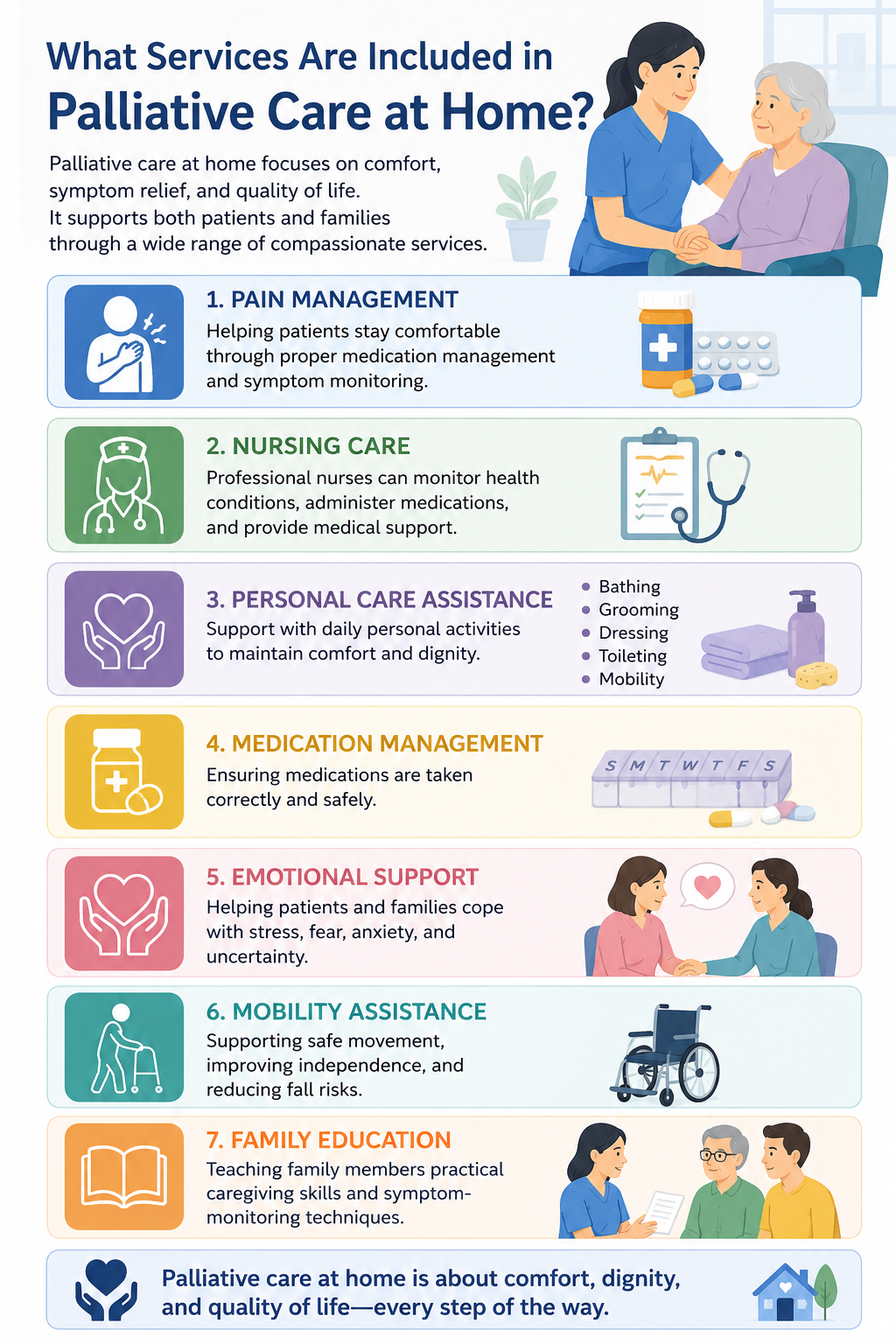
What Services Are Included in Palliative Care at Home?
Many people assume palliative care only involves pain relief. In reality, it includes a wide range of services designed to support both patients and families.
Home palliative care services may include:
Pain Management
Helping patients stay comfortable through proper medication management and symptom monitoring.
Nursing Care
Professional nurses can monitor health conditions, administer medications, and provide medical support.
Personal Care Assistance
Support with:
- Bathing
- Grooming
- Dressing
- Toileting
- Mobility
Medication Management
Ensuring medications are taken correctly and safely.
Emotional Support
Helping patients and families cope with stress, fear, anxiety, and uncertainty.
Mobility Assistance
Supporting safe movement and reducing fall risks.
Family Education
Teaching family members practical caregiving skills and symptom-monitoring techniques.
Who Can Benefit from Palliative Care at Home?
Palliative care can help people living with many serious health conditions.
Cancer Patients
Many families choose cancer patient care at home to help manage pain, treatment side effects, fatigue, and emotional stress.
Heart Disease
Patients with advanced heart conditions often need help managing breathlessness, weakness, and daily activities.
Kidney Disease
People receiving dialysis or living with advanced kidney disease may benefit from symptom management and nursing support.
Chronic Lung Diseases
Conditions such as COPD can cause breathing difficulties that require ongoing monitoring and care.
Neurological Conditions
Patients living with:
- Alzheimer’s disease
- Dementia
- Parkinson’s disease
- Stroke-related disabilities
- Motor neuron diseases
may benefit from long-term home-based support.
Palliative Care vs Hospice Care: What’s the Difference?
Many families use these terms interchangeably, but they are not exactly the same.
| Palliative Care | Hospice Care |
|---|---|
| Can begin at any stage of serious illness | Usually begins when a patient is nearing the end of life |
| Can be provided alongside active treatment | Focuses mainly on comfort rather than curative treatment |
| May continue for months or years | Typically provided during the final stage of illness |
| Focuses on symptom relief and quality of life | Focuses on comfort and dignity near the end of life |
Understanding this difference helps families make informed decisions about care.
Benefits of Palliative Care at Home
Staying in Familiar Surroundings
Most people feel more relaxed and secure in their own homes than in a hospital setting.
Greater Family Involvement
Family members can remain closely involved in care and decision-making.
Personalized Care
Care plans can be adjusted according to the patient’s needs, preferences, and goals.
Fewer Hospital Visits
Good symptom management may reduce emergency hospital visits and unnecessary admissions.
Improved Emotional Well-Being
Being surrounded by loved ones often reduces stress, anxiety, and feelings of isolation.
Managing Common Symptoms at Home
One of the most important parts of home palliative care is helping patients remain comfortable.
Managing Pain at Home
Pain can interfere with sleep, movement, appetite, and emotional well-being.
Families can help by:
- Following medication schedules carefully
- Tracking pain levels
- Reporting worsening pain to healthcare providers
- Encouraging comfortable positioning
- Using pillows for support
Never adjust pain medications without medical guidance.
Managing Shortness of Breath
Breathing difficulties can be frightening for both patients and caregivers.
Helpful measures may include:
- Keeping the room cool and well ventilated
- Encouraging calm breathing techniques
- Supporting proper sitting positions
- Following oxygen therapy instructions if prescribed
Seek medical advice if breathing becomes suddenly worse.
Managing Fatigue
Extreme tiredness is common in serious illnesses.
Families can:
- Encourage rest periods
- Schedule activities during times of higher energy
- Assist with daily tasks
- Avoid pushing patients beyond their comfort level
Managing Loss of Appetite
Patients may eat less than usual due to illness or treatment side effects.
Helpful tips include:
- Offering small meals throughout the day
- Providing favorite foods when appropriate
- Serving nutrient-rich snacks
- Encouraging fluids if medically allowed
Avoid forcing patients to eat large meals.
Managing Anxiety and Emotional Distress
Patients often experience fear, sadness, or uncertainty.
Simple support can make a difference:
- Listen patiently
- Encourage open conversations
- Offer reassurance
- Spend quality time together
- Respect emotional needs
Daily Care Tips for Family Caregivers
Providing care at home involves many small tasks that contribute to comfort and dignity.
Maintain Personal Hygiene
Help with:
- Bathing
- Oral care
- Hair care
- Skin care
- Changing clothes
Proper hygiene helps patients feel comfortable and respected.
Prevent Pressure Sores
For patients spending long periods in bed:
- Change positions regularly
- Use pressure-relieving cushions
- Keep skin clean and dry
- Check skin daily for redness
Families caring for immobile patients may also benefit from learning more about bedridden patient care.
Encourage Safe Movement
When medically appropriate:
- Assist with short walks
- Encourage gentle stretching
- Help patients sit upright regularly
Movement helps reduce stiffness and supports circulation.
Nutrition and Hydration Support
Good nutrition remains important even when appetite decreases.
Focus on:
- Small, frequent meals
- Soft foods if swallowing becomes difficult
- Balanced nutrition
- Adequate hydration when medically appropriate
Always follow dietary recommendations provided by healthcare professionals.
Medication Management at Home
Many palliative care patients take multiple medications.
A safe medication routine should include:
- Written medication schedules
- Pill organizers
- Monitoring side effects
- Keeping an updated medication list
- Following healthcare instructions carefully
Proper medication management helps reduce symptoms and avoid complications.
How Families Can Talk About Difficult Topics
Serious illnesses sometimes lead to conversations that can feel uncomfortable.
Patients may want to discuss:
- Their care preferences
- Future medical decisions
- Personal wishes
- Family concerns
- End-of-life planning
These conversations should be approached with compassion and respect.
Listening carefully and honoring a patient’s wishes can provide comfort and peace of mind.
Supporting Family Caregivers
Family caregivers often carry a heavy emotional burden.
Common challenges include:
- Physical exhaustion
- Emotional stress
- Sleep difficulties
- Anxiety about the future
Caregivers should:
- Take regular breaks
- Accept help from relatives
- Maintain healthy eating habits
- Seek emotional support when needed
Caring for yourself helps you care for your loved one more effectively.
When Should Families Consider Professional Home Nursing Support?
Family caregiving is rewarding, but some situations require professional assistance.
You may benefit from professional nursing care at home if:
- Pain becomes difficult to manage
- Multiple medications are involved
- The patient has mobility challenges
- Wound care is required
- Symptoms change frequently
- Family caregivers are becoming overwhelmed
Professional Home Nursing Services in Lahore can provide skilled care while allowing families to remain actively involved.
Warning Signs That Need Immediate Medical Attention
Contact a healthcare professional immediately if the patient experiences:
- Severe uncontrolled pain
- Difficulty breathing
- Sudden confusion
- High fever
- Persistent vomiting
- Seizures
- Loss of consciousness
- Signs of infection
Prompt medical attention can prevent complications and improve comfort.
Real-Life Caregiving Example
Mrs. Fatima was receiving treatment for advanced breast cancer. Frequent hospital visits left her physically exhausted and emotionally drained.
Her family arranged home-based palliative care support to help manage symptoms and improve daily comfort. Nurses monitored her condition, helped with medication management, and educated family members about symptom monitoring.
Over time, Mrs. Fatima experienced better symptom control and was able to spend more meaningful time with her family in the comfort of her home. Her family also felt more confident in providing daily care.
How Long Can Someone Receive Palliative Care?
There is no fixed timeline.
Some patients receive palliative care for:
- Several weeks
- Several months
- Multiple years
The duration depends on the illness, symptoms, treatment plan, and individual needs.
Palliative Care and Medical Treatment Can Work Together
One common misconception is that accepting palliative care means stopping treatment.
In reality, many patients continue:
- Cancer treatments
- Dialysis
- Heart disease treatments
- Respiratory therapies
- Other medical interventions
Palliative care works alongside medical treatment to improve comfort and quality of life.
Frequently Asked Questions
Does palliative care mean a patient is dying?
No. Palliative care can begin at any stage of a serious illness and may continue alongside active medical treatment.
Can cancer patients receive palliative care at home?
Yes. Many families choose home palliative care to help manage pain, treatment side effects, fatigue, and emotional stress.
How long can someone receive palliative care?
Patients may receive palliative care for weeks, months, or even years depending on their condition and needs.
Can palliative care be provided alongside treatment?
Yes. Palliative care often works together with treatments prescribed by doctors.
Is palliative care only about pain relief?
No. It also addresses emotional, psychological, social, and practical caregiving needs.
Who provides palliative care at home?
Care may involve doctors, nurses, caregivers, therapists, and family members working together.
Important Medical Note
Palliative care supports comfort, symptom management, and quality of life, but it does not replace medical treatment. Always follow the guidance of your doctor regarding medications, treatment plans, emergencies, and healthcare decisions.
Conclusion
Palliative care at home helps people living with serious illnesses receive compassionate support while remaining in the comfort of their own homes. Through symptom management, emotional care, family support, and professional nursing assistance, patients can experience greater comfort, dignity, and quality of life.
Whether caring for someone with cancer, heart disease, dementia, kidney disease, or another serious condition, families do not have to face the journey alone. Professional Home Nursing Services in Lahore, Home Patient Care in Lahore, and home healthcare services in Lahore can provide the guidance and support needed to help loved ones live as comfortably as possible.
With the right care team, informed family support, and a focus on comfort, patients can continue to spend meaningful time with the people who matter most.