
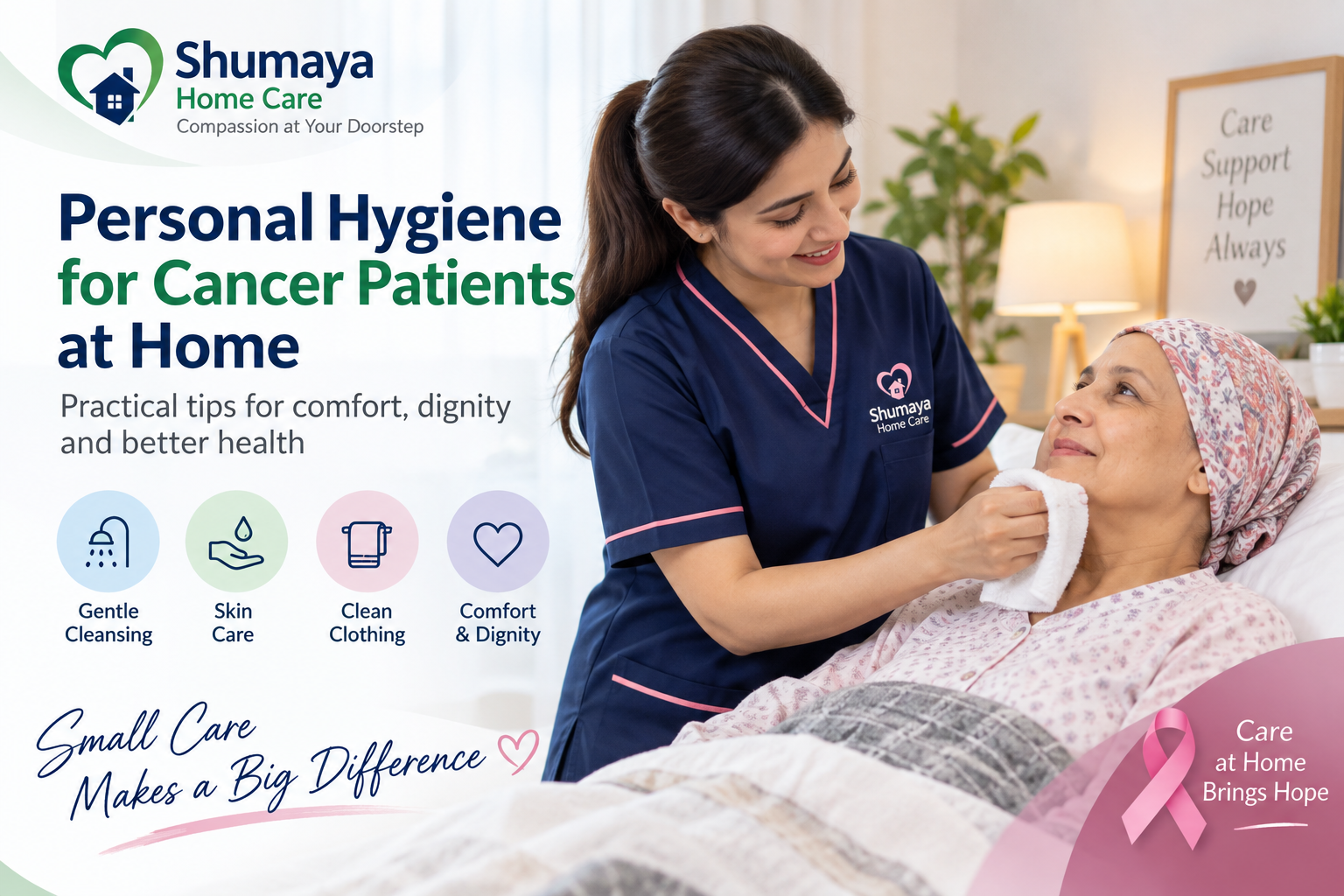
Keeping clean can become harder when a person with cancer is weak, tired, in pain, or dealing with side effects from treatment. Simple tasks such as bathing, brushing teeth, changing clothes, and using the toilet may require extra time or help.
Good personal hygiene can help a cancer patient stay comfortable, protect the skin and mouth, and maintain dignity. For families providing cancer patient care at home, the goal is not to follow a strict routine but to provide gentle care that matches the patient’s condition and treatment plan.
Why Hygiene Matters for Cancer Patients
Some cancer treatments can lower the body’s ability to fight infections. For example, treatment may reduce the number of infection-fighting white blood cells, including neutrophils.
This is why careful hygiene and handwashing can be especially important during some stages of cancer treatment.
Good hygiene can also help:
Keep the skin clean and comfortable
Reduce irritation from sweat and moisture
Support oral health
Keep the patient feeling fresh
Protect the patient’s dignity and comfort
The patient’s oncology or healthcare team may provide additional hygiene instructions based on the type of treatment and blood counts.
Bathing and Body Hygiene
A weak patient may not be able to safely take a shower or bath without help. Depending on their condition, an assisted bath or sponge bath may be more suitable.
Before bathing:
Prepare clean clothes, towels, soap, and other supplies.
Make sure the room is comfortably warm.
Keep the patient covered as much as possible to protect privacy.
Check that the bathroom or bathing area is safe.
Allow the patient to rest if they become tired.
Use lukewarm water and a mild cleanser when appropriate. Avoid vigorous scrubbing, particularly on dry, irritated, bruised, or fragile skin.
After washing, gently pat the skin dry instead of rubbing it.
If the patient has a wound, surgical site, catheter, or other medical device, follow the specific cleaning instructions provided by their healthcare team.
Oral Hygiene for Cancer Patients
Oral care is an important part of personal hygiene for cancer patients at home. Some cancer treatments can cause dry mouth, mouth sores, sensitivity, or other oral problems.
A gentle routine may include:
Brushing with a soft toothbrush
Cleaning the mouth regularly
Keeping the mouth comfortably moist when appropriate
Following the healthcare team’s instructions for mouth rinses
Checking for sores, swelling, unusual patches, or bleeding
If the mouth is very sore or bleeding, contact the patient’s healthcare team for advice. Patients with low platelet counts or certain treatment-related problems may need special instructions about oral care.
Avoid starting new mouth products without checking whether they are suitable for the patient. Alcohol-containing mouthwashes may irritate a dry or sore mouth.
Hand Hygiene and Infection Prevention
Clean hands are one of the simplest ways to reduce the spread of germs.
The patient and caregiver should wash their hands with soap and water:
Before eating or preparing food
After using the toilet
After coughing, sneezing, or blowing the nose
Before and after providing personal care
After handling soiled clothing or bedding
After contact with body fluids
If soap and water are not available, an alcohol-based hand sanitizer can be used when appropriate.
Caregivers should also avoid providing personal care when they are sick if another suitable caregiver is available.
For patients whose treatment has caused a low white blood cell count, the healthcare team may provide additional infection-prevention instructions. Those instructions should take priority over general advice.
Skin Care During Cancer Treatment
Cancer treatment can sometimes make the skin dry, sensitive, irritated, or fragile.
Gentle skin care is usually best:
Use lukewarm rather than very hot water.
Avoid vigorous rubbing or scrubbing.
Pat the skin dry with a clean towel.
Keep skin folds clean and dry.
Use gentle skin products when recommended.
Avoid applying new creams, oils, powders, or other products to damaged or treatment-affected skin without medical advice.
If the patient is receiving radiation therapy, follow the radiation team’s specific instructions for caring for the treated area.
Contact the healthcare team if the skin develops increasing redness, swelling, warmth, pain, drainage, open areas, or other changes that concern you.
Hair and Nail Care
Hair and scalp care should be gentle, particularly when treatment has caused hair loss or scalp sensitivity.
Use a mild shampoo when appropriate and avoid pulling, harsh brushing, or aggressive rubbing. A soft towel can be used to gently dry the hair.
For nails, keep them clean and trim them carefully without cutting the surrounding skin.
If the patient has fragile skin, low blood counts, poor circulation, or problems around the nails, ask the healthcare team for specific nail-care advice.
Toileting and Perineal Hygiene
Patients who are weak, bedridden, or dependent on caregivers may need help with toileting and personal cleaning.
After toileting, clean the genital and anal areas gently and keep the skin dry. If the patient uses an absorbent pad or adult diaper, check it regularly and change it promptly when wet or soiled.
Moisture can cause skin irritation, so keeping the area clean and dry is particularly helpful.
Caregivers should protect the patient’s privacy throughout personal care. Gloves may be appropriate when there is contact with urine, stool, blood, or other body fluids. Wash your hands after removing gloves.
Clean Clothes and Bed Linen
Clean clothing and bedding can make a patient more comfortable and help prevent irritation from sweat, moisture, and dirt.
Change clothes when they become wet or soiled. Change bed linen when it becomes dirty, wet, or contaminated with body fluids.
Choose comfortable clothing that is easy to put on and remove, especially when the patient has limited movement.
After handling soiled laundry, wash your hands thoroughly.
Helping a Weak or Bedridden Cancer Patient With Hygiene
A patient who spends most of the day in bed may need help with several personal-care tasks.
A caregiver may assist with:
Washing the face and body
Brushing teeth
Hair care
Changing clothes
Toileting
Keeping skin clean and dry
Changing soiled bedding
Before starting, explain what you are going to do and gather the supplies you need. Let the patient complete any part of the task they can safely manage.
Personal hygiene should not feel rushed. If the patient becomes tired, short of breath, dizzy, or uncomfortable, stop and allow them to rest. Seek medical advice when symptoms are new, severe, or concerning.
When to Contact the Healthcare Team
Families should know when a hygiene-related change may need medical attention.
Contact the patient’s healthcare team if you notice:
New or worsening redness, swelling, warmth, or drainage from the skin
Persistent or worsening mouth sores
Unusual mouth bleeding
Signs of infection
Severe pain during personal care
New skin breakdown or open areas
A sudden change in the patient’s condition
Fever During Cancer Treatment
A fever can be especially important in a patient receiving cancer treatment because some treatments can lower infection-fighting white blood cells.
If the patient has a temperature of 38°C (100.4°F) or higher, contact their oncology or healthcare team promptly and follow the emergency instructions they have been given. Do not wait for other symptoms to develop.
If the patient’s healthcare team has given a different fever threshold or specific instructions, follow those instructions.
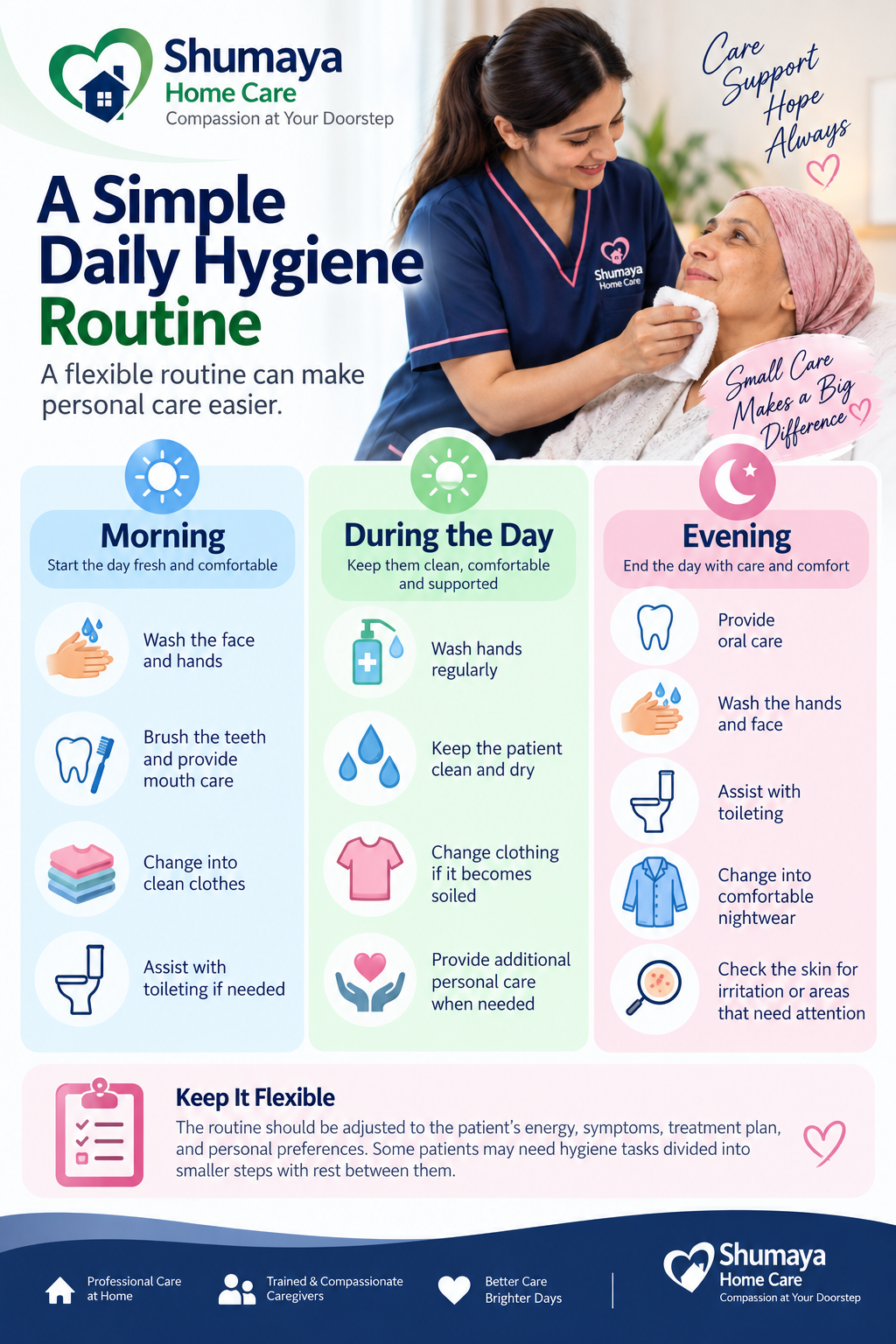
A Simple Daily Hygiene Routine
A flexible routine can make personal care easier.
Morning
Wash the face and hands
Brush the teeth and provide mouth care
Change into clean clothes
Assist with toileting if needed
During the Day
Wash hands regularly
Keep the patient clean and dry
Change clothing if it becomes soiled
Provide additional personal care when needed
Evening
Provide oral care
Wash the hands and face
Assist with toileting
Change into comfortable nightwear
Check the skin for irritation or areas that need attention
The routine should be adjusted to the patient’s energy, symptoms, treatment plan, and personal preferences. Some patients may need hygiene tasks divided into smaller steps with rest between them.
When Professional Home Care May Help
Personal hygiene can become difficult when a cancer patient has limited strength, mobility, or independence. Family members may also struggle to provide daily care while managing work and other responsibilities.
Families in Lahore who need additional support can consider professional patient care services in Lahore for assistance with appropriate daily personal-care needs.
Shumaya Home Care & Patient Service provides home nursing and patient support for families caring for patients at home. Depending on the patient’s needs, trained care staff can assist with personal hygiene and other daily care tasks.
If you need home patient care services in Lahore, contact Shumaya Home Care & Patient Service to discuss the patient’s care needs and available support.
Frequently Asked Questions
How often should a cancer patient bathe?
There is no single bathing schedule for every cancer patient. Bathing can depend on the patient’s condition, skin health, activity level, comfort, and treatment plan. A sponge bath may be useful when a full bath is too tiring or unsafe.
What should I use for a cancer patient’s sensitive skin?
Use gentle products that are suitable for the patient’s skin and follow instructions from their healthcare team. Avoid applying new products to irritated, damaged, or radiation-treated skin without medical advice.
How can I help a weak cancer patient with personal hygiene?
Prepare everything before starting and provide help with tasks the patient cannot safely complete. Let the patient do whatever they can independently, and allow rest when needed.
Is oral hygiene safe during cancer treatment?
Oral hygiene is generally important, but some patients may need special instructions because of mouth sores, bleeding, low platelet counts, or other treatment effects. Follow the patient’s healthcare team’s advice.
When should a caregiver seek professional help?
Professional support may be useful when a patient cannot safely bathe, toilet, groom, or change clothes without assistance, or when the family is finding daily personal care difficult to manage.
Final Thoughts
Personal hygiene for cancer patients at home should be gentle, respectful, and based on the patient’s condition and treatment plan. Simple care with bathing, oral hygiene, handwashing, skin care, toileting, clothing, and bedding can help maintain comfort and dignity.
When personal care becomes difficult for the family to manage, professional home nursing and patient care services in Lahore can provide additional support at home.