
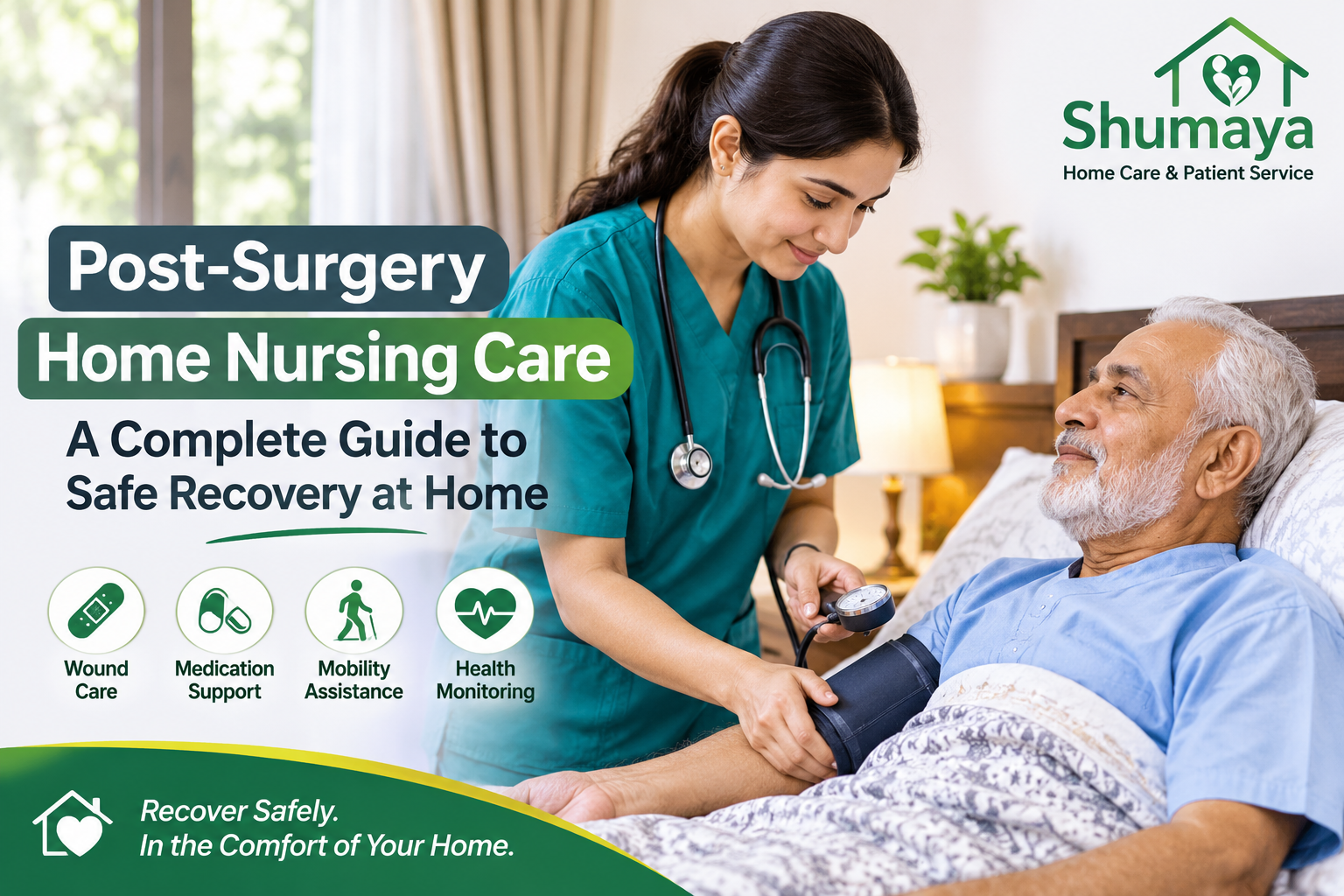
A Complete Guide to Safe Recovery at Home
Recovering after surgery can be challenging, especially when patients need help with wound care, medication, movement, personal hygiene, and everyday activities. Although some patients recover quickly, others require regular nursing support after leaving the hospital.
Post-surgery home nursing care helps patients continue their recovery in a familiar environment while receiving appropriate medical and personal care support. A trained home nurse can assist with monitoring, prescribed treatments, wound care, mobility, and other responsibilities according to the patient’s discharge instructions and medical needs.
For families in Lahore, arranging professional home nursing care can make the transition from hospital to home more organized and manageable.
This guide explains what post-operative care at home involves, when a home nurse may be needed, how families can prepare, and which warning signs require medical attention.
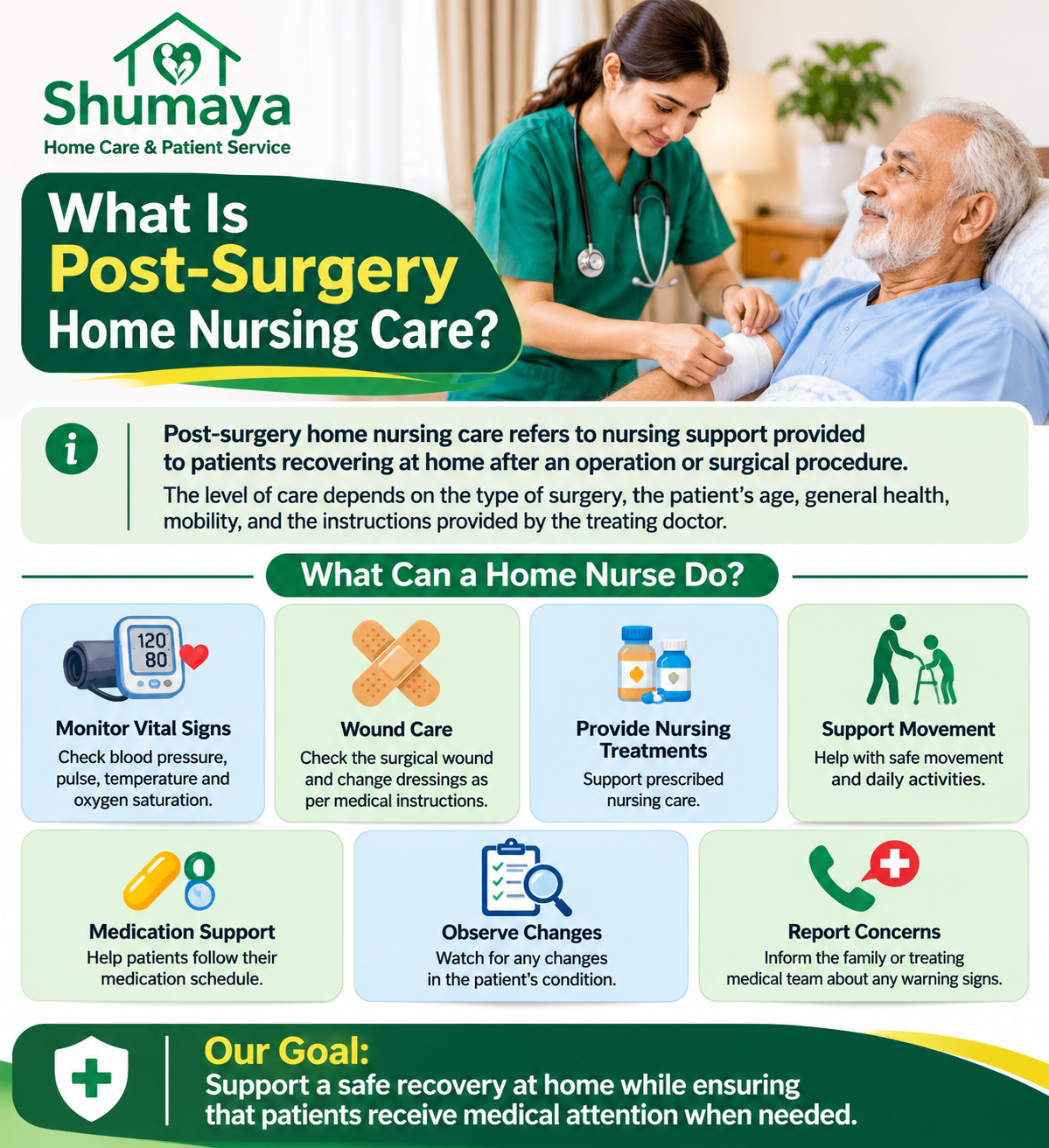
What Is Post-Surgery Home Nursing Care?
Post-surgery home nursing care refers to nursing support provided to patients recovering at home after an operation or surgical procedure.
The level of care depends on the type of surgery, the patient’s age, general health, mobility, and the instructions provided by the treating doctor.
Depending on the patient’s needs and the nurse’s professional scope, home nursing support may include:
Monitoring vital signs such as blood pressure, pulse, temperature, and oxygen saturation when indicated.
Checking the surgical wound and changing dressings according to medical instructions.
Providing prescribed nursing treatments.
Supporting safe movement and daily activities.
Helping patients follow their medication schedule.
Observing changes in the patient’s condition.
Reporting concerning symptoms to the family and treating medical team.
The goal is to support a safe recovery at home while ensuring that patients receive medical attention when their condition requires it.
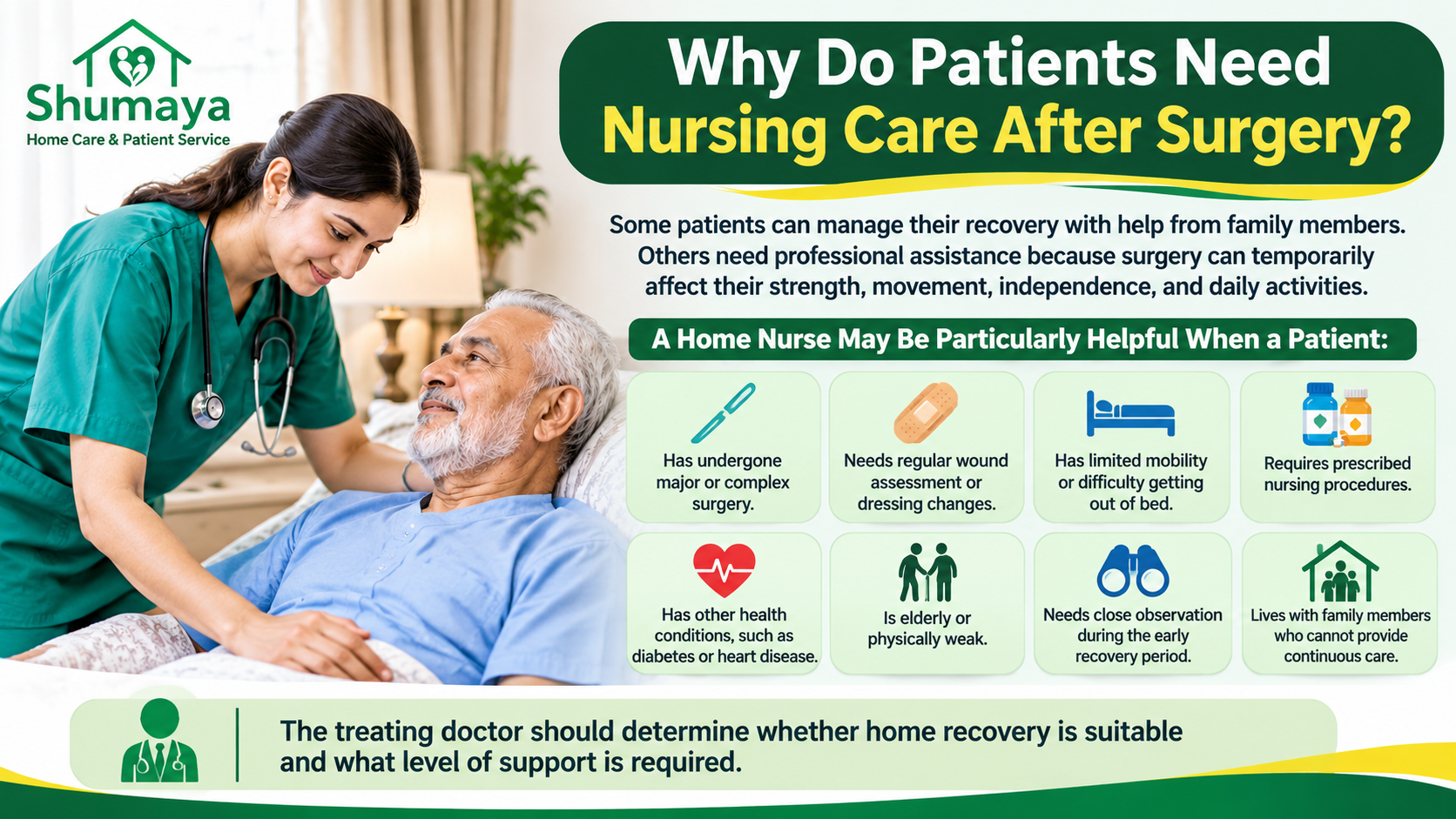
Why Do Patients Need Nursing Care After Surgery?
Some patients can manage their recovery with help from family members. Others need professional assistance because surgery can temporarily affect their strength, movement, independence, and ability to perform daily activities.
A home nurse may be particularly helpful when a patient:
Has undergone major or complex surgery.
Needs regular wound assessment or dressing changes.
Has limited mobility or difficulty getting out of bed.
Requires prescribed nursing procedures.
Has other health conditions, such as diabetes or heart disease.
Is elderly or physically weak.
Needs close observation during the early recovery period.
Lives with family members who cannot provide continuous care.
The treating doctor should determine whether home recovery is suitable and what level of support is required.
Essential Nursing Care After Surgery at Home
Post-operative recovery involves several important aspects of care. A suitable home-care plan should follow the patient’s discharge instructions rather than a general routine.
1. Monitoring Vital Signs
Monitoring vital signs can help identify changes in a patient’s condition during recovery.
Depending on the surgery and medical advice, a nurse may monitor:
Blood pressure: To identify unusual changes that may require medical review.
Heart rate: To observe an unusually fast, slow, or irregular pulse.
Body temperature: To identify fever or possible signs of infection.
Oxygen saturation: When monitoring is recommended, particularly for patients with respiratory or other relevant medical concerns.
The frequency of monitoring should be based on the treating doctor’s instructions and the patient’s condition. Families should not assume that every patient needs the same monitoring schedule.
2. Surgical Wound Care and Dressing Changes
Proper wound care is important for reducing infection risks and supporting healing.
A trained nurse can assist with wound care according to the surgeon’s instructions. This may include:
Checking the wound for unusual changes.
Changing dressings using the prescribed technique.
Maintaining appropriate hand hygiene.
Keeping the dressing clean and dry as instructed.
Observing the surrounding skin.
Reporting signs of possible infection.
Possible warning signs of wound infection include:
Increasing redness around the wound.
Unusual warmth or swelling.
Increasing or worsening pain.
Pus or foul-smelling discharge.
Fever or chills.
Wound edges separating or the wound opening.
Some discomfort and mild changes can occur during normal healing. However, worsening symptoms or unusual changes should be reported to the treating doctor promptly.
Patients and family members should not apply creams, antiseptics, powders, or home remedies unless these are recommended by the medical team.
3. Medication Management
Patients may need several medicines after surgery, including pain relief, antibiotics when prescribed, blood-thinning medicines, or medication for existing health conditions.
A home nurse can help patients follow their prescribed medication schedule within the nurse’s professional scope.
Safe medication support includes:
Following the discharge prescription.
Giving prescribed medicines at the correct times when this is part of the care plan.
Recording doses where appropriate.
Observing and reporting possible side effects.
Checking whether the patient is taking medicines correctly.
Helping the family understand the written medication instructions.
Patients should also ask their doctor or pharmacist when to restart regular medicines that were temporarily stopped before surgery.
Never start, stop, increase, or reduce a medicine without medical advice. This is particularly important for blood thinners, diabetes medicines, blood pressure medicines, and strong pain medicines.
4. Safe Movement and Mobility Assistance
Movement after surgery can help patients regain strength and reduce complications associated with prolonged immobility. However, the appropriate timing and type of movement depend on the procedure and the patient’s condition.
A nurse or trained attendant may help with:
Sitting up and getting out of bed safely.
Walking short distances when permitted.
Changing positions.
Using a walker or other mobility aid.
Following the movement instructions provided by the medical team.
Patients must follow any restrictions on lifting, bending, twisting, weight-bearing, or movement. These restrictions can be especially important after spinal, abdominal, and joint surgeries.
Families should never force a patient to walk or perform exercises before they are medically cleared.
5. Preventing Bedsores and Pressure Injuries
Patients who spend long periods in bed or have limited mobility may develop pressure injuries, commonly called bedsores.
These injuries often affect areas such as the heels, hips, ankles, elbows, and lower back.
Preventive care may include:
Changing positions according to an individualized care plan.
Keeping the skin clean and dry.
Checking pressure-prone areas regularly.
Using pressure-relieving mattresses or cushions when recommended.
Supporting safe movement when permitted.
Maintaining appropriate nutrition and hydration.
There is no single repositioning schedule suitable for every patient. The frequency should depend on mobility, skin condition, overall health, and professional assessment.
6. Nutrition and Hydration
Good nutrition supports the body’s healing process. Patients may need sufficient protein, vitamins, minerals, and fluids during recovery.
Depending on the doctor’s instructions, suitable food choices may include:
Protein-rich foods such as eggs, fish, chicken, lentils, and dairy products.
Fresh vegetables and fruits.
Whole grains.
Adequate fluids, if not medically restricted.
However, dietary needs vary. Patients with kidney disease, heart failure, diabetes, swallowing difficulties, or other medical conditions may require specific dietary or fluid restrictions.
Follow the diet plan provided by the treating doctor or dietitian rather than introducing major dietary changes independently.
How Can a Home Nurse Help After Surgery?
A professional home nurse provides clinical nursing support based on the patient’s condition and prescribed care plan.
Depending on the nurse’s qualifications and the patient’s needs, responsibilities may include:
Monitoring the patient’s condition.
Providing prescribed nursing care.
Performing wound care and dressing changes as instructed.
Supporting medication administration within professional scope.
Observing recovery progress.
Helping with safe mobility.
Communicating concerning changes to the family and treating doctor.
A home nurse does not replace the surgeon, treating doctor, or emergency medical services. Patients still need scheduled medical reviews and urgent assessment when warning signs appear.
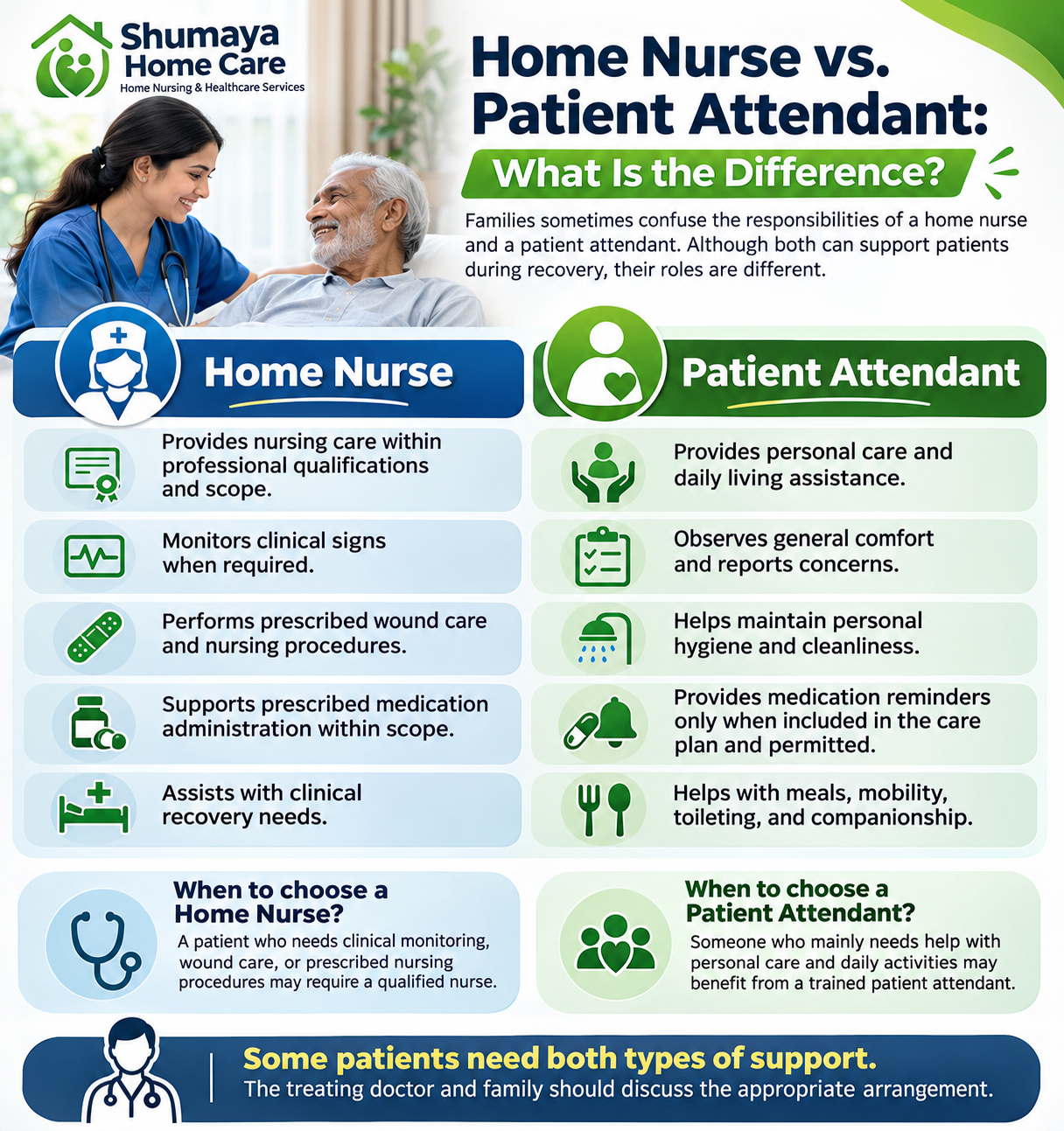
Home Nurse vs. Patient Attendant: What Is the Difference?
Families sometimes confuse the responsibilities of a home nurse and a patient attendant. Although both can support patients during recovery, their roles are different.
| Home Nurse | Patient Attendant |
|---|---|
| Provides nursing care within professional qualifications and scope. | Provides personal care and daily living assistance. |
| Monitors clinical signs when required. | Observes general comfort and reports concerns. |
| Performs prescribed wound care and nursing procedures. | Helps maintain personal hygiene and cleanliness. |
| Supports prescribed medication administration within scope. | Provides medication reminders only when included in the care plan and permitted. |
| Assists with clinical recovery needs. | Helps with meals, mobility, toileting, and companionship. |
A patient who needs clinical monitoring, wound care, or prescribed nursing procedures may require a qualified nurse. Someone who mainly needs help with personal care and daily activities may benefit from a trained patient attendant.
Some patients need both types of support. The treating doctor and family should discuss the appropriate arrangement.
Should You Choose a Male or Female Home Nurse?
Comfort, privacy, and personal preference can influence the choice of a home nurse or patient attendant.
Some patients feel more comfortable receiving personal care from a male or female caregiver. Families may also have preferences based on cultural considerations or the nature of the patient’s care needs.
When arranging home nursing services, discuss:
The patient’s gender preference.
The nurse’s qualifications and experience.
The type of nursing support required.
The expected duty hours.
The patient’s mobility and personal-care needs.
The most important considerations remain professional competence, patient safety, and appropriate care.
How to Reduce the Risk of Complications After Surgery
Two important concerns during recovery are wound infection and blood clots. Families should understand the warning signs and follow the medical team’s prevention instructions.
Preventing Blood Clots
Surgery and reduced movement can increase the risk of blood clots, particularly in the legs.
Prevention may involve:
Moving and walking when permitted by the treating doctor.
Performing prescribed leg movements or exercises.
Using compression stockings or devices only when recommended.
Taking prescribed blood-thinning medication exactly as directed.
Avoiding prolonged immobility when movement is medically permitted.
Report new leg pain, swelling, warmth, or redness to the medical team promptly.
Sudden shortness of breath, chest pain, coughing up blood, or collapse may indicate a medical emergency. Seek emergency medical help immediately.
Preventing Wound Infection
Families and caregivers can reduce infection risks by:
Washing hands before and after wound-related care.
Following the prescribed dressing instructions.
Avoiding unnecessary contact with the surgical wound.
Keeping the dressing clean and dry as directed.
Avoiding unapproved creams or home remedies.
Reporting unusual wound changes promptly.
Warning Signs That Require Medical Attention
Not every change after surgery is an emergency, but certain symptoms should never be ignored.
Contact the treating doctor promptly if the patient develops:
Increasing wound redness, swelling, or pain.
Pus or foul-smelling wound discharge.
Fever or chills.
Persistent vomiting or inability to keep fluids down.
New or worsening pain that is not controlled by the prescribed plan.
Difficulty passing urine or other unexpected problems.
New leg swelling or pain.
Unusual bleeding or wound opening.
Seek emergency medical help immediately if the patient experiences:
Sudden chest pain.
Severe difficulty breathing.
Fainting, collapse, or unresponsiveness.
New facial drooping, weakness on one side, or difficulty speaking.
Severe uncontrolled bleeding.
A sudden serious deterioration in their condition.
Do not wait for the next nursing visit if emergency symptoms develop. A home nurse is not a substitute for emergency hospital care.
What Should Families Check Before Hospital Discharge?
Preparing before the patient returns home can make recovery more organized.
Before leaving the hospital, families should ask the medical team about:
Medication instructions: Which medicines should be taken, at what times, and for how long?
Wound care: How should the wound and dressing be managed?
Bathing: When can the patient shower or bathe?
Activity restrictions: Which movements, exercises, or activities should be avoided?
Diet and fluids: Are there any specific food or fluid restrictions?
Follow-up appointment: When should the patient return for a medical review?
Warning signs: Which symptoms require a doctor call or emergency care?
Contact details: Whom should the family contact if a concern develops?
Keep the discharge summary, prescriptions, investigation reports, and follow-up instructions in an accessible place.
What Equipment May Be Needed After Surgery?
Some patients need additional equipment to recover safely at home. The requirements depend on the procedure, mobility, and medical condition.
Possible equipment includes:
Hospital bed, if the patient needs assistance with positioning.
Walker or wheelchair for mobility support.
Bedside commode for patients who cannot easily reach the bathroom.
Pressure-relieving mattress for patients at risk of pressure injuries.
Prescribed wound-care supplies.
Other equipment recommended by the treating medical team.
Not every patient needs all these items. Families should confirm equipment requirements before purchasing or arranging them.
Can a Patient Recover at Home After Major Surgery?
Many patients can continue recovery at home after major surgery, provided they are medically stable and the treating doctor considers home recovery appropriate.
A safe home-care arrangement may require:
A clear discharge and treatment plan.
Suitable nursing or personal-care support.
Necessary medical equipment.
A safe home environment.
Scheduled follow-up appointments.
Access to emergency medical services.
Some patients need hospital-level monitoring, advanced respiratory support, unstable vital-sign management, or emergency interventions. Having an ICU-trained nurse at home does not automatically make home recovery safe for these patients.
The treating doctor must assess whether home care is appropriate and what equipment, staffing, and clinical support are necessary.
How to Prepare Your Home for Post-Surgery Recovery
A comfortable and organized environment can make daily care easier.
Families can prepare by:
Keeping the patient’s room clean, quiet, and well ventilated.
Placing frequently used items within easy reach.
Removing loose rugs, clutter, and other fall hazards.
Providing suitable lighting, especially at night.
Keeping prescribed medicines and medical documents organized.
Arranging a safe route to the bathroom.
Making sure the patient has access to a phone or a way to call for help.
Arranging nursing or attendant support before the patient arrives home, if needed.
The home setup should also accommodate any mobility restrictions or equipment recommended by the medical team.
How Long Does Post-Surgery Home Nursing Care Last?
The duration of home nursing care varies from patient to patient.
Some patients need only a few days of support, while others require several weeks or longer. Recovery depends on:
The type and complexity of surgery.
The patient’s age and general health.
Existing medical conditions.
Wound healing and pain control.
Mobility and independence.
The level of nursing support prescribed.
The treating doctor should guide the recovery plan and advise when nursing support can be reduced or discontinued.
How to Choose Home Nursing Services in Lahore
Choosing suitable post-surgery home nursing care is an important decision. Families should consider the patient’s clinical needs rather than selecting a service based only on availability or price.
Before arranging care, check:
Nursing qualifications: Confirm the nurse’s relevant qualifications and experience.
Surgical-care experience: Ask whether the nurse has experience with the patient’s type of post-operative needs.
Care requirements: Clearly explain the patient’s condition, discharge instructions, and required procedures.
Duty hours: Discuss whether the patient needs a short visit, a full shift, or 24-hour support.
Gender preference: Communicate whether the patient prefers a male or female nurse or attendant.
Communication: Make sure there is a clear process for reporting changes and contacting the family.
Care plan: Confirm the responsibilities expected from the nurse or attendant.
Families looking for home nursing services in Lahore should choose a provider that understands the difference between clinical nursing care and everyday patient assistance.
You can learn more about Shumaya Home Care’s nursing services in Lahore to understand the available home nursing support.
Frequently Asked Questions
1. What is post-surgery home nursing care?
Post-surgery home nursing care involves professional nursing support for patients recovering at home after an operation. Depending on the patient’s needs, it may include vital-sign monitoring, wound care, prescribed nursing treatments, medication support, and mobility assistance.
2. When should I hire a home nurse after surgery?
A home nurse may be helpful when a patient needs wound care, clinical monitoring, prescribed nursing procedures, or support with recovery after a major operation. The treating doctor can help determine the appropriate level of care.
3. Can a patient attendant provide post-surgery care?
A trained patient attendant can help with personal hygiene, meals, mobility, toileting, and companionship. However, clinical tasks such as nursing assessments and prescribed wound-care procedures should be handled by appropriately qualified healthcare professionals.
4. Is 24-hour nursing care necessary after surgery?
Not every patient needs 24-hour nursing care. The required hours depend on the patient’s condition, mobility, clinical needs, and the treating doctor’s recommendations.
5. Can elderly patients recover at home after surgery?
Many elderly patients can recover at home if they are medically stable and have an appropriate care plan. They may need additional support with mobility, personal hygiene, medication routines, fall prevention, and daily activities.
6. What should I do if a surgical wound looks infected?
Contact the treating doctor promptly if you notice increasing redness, warmth, swelling, worsening pain, pus, foul-smelling discharge, or fever. Seek urgent medical assessment if the patient’s condition deteriorates significantly.
7. Does every post-surgery patient need an ICU-trained nurse?
No. Most patients recovering at home do not require ICU-level nursing. The appropriate nurse’s qualifications and experience should match the patient’s actual clinical needs. Patients requiring hospital-level support should not be moved to home care unless the treating team confirms it is safe.
Professional Post-Surgery Home Nursing Care in Lahore
Recovering after surgery requires patience, proper medical guidance, and suitable support. With an appropriate home-care plan, patients may be able to continue recovery in a familiar environment while families receive help with daily care responsibilities.
Shumaya Home Care & Patient Service provides home nursing and patient-care support in Lahore. Families can discuss their requirements for male or female staff nurses, trained patient attendants, and other home-care assistance according to the patient’s condition and needs.
Whether your loved one needs short-term nursing support after surgery or assistance with daily activities, choosing suitable care can help make the recovery process more organized.
Contact Shumaya Home Care & Patient Service
Phone: +92 300 1111931
Website: https://www.shumayahomecare.pk/
Nursing Services: https://www.shumayahomecare.pk/nursing-services-in-lahore/
Contact our team to discuss your home nursing requirements in Lahore.