
After Surgery, Proper Wound Care Matters
After surgery, many families worry about one important question:
“Are we taking care of the wound the right way?”
That worry is completely normal. Even a small mistake during recovery can slow healing or increase the chance of infection. But here’s the good news — with proper care, most surgical wounds heal safely at home.
Hey there! Whether you’re caring for yourself or helping a loved one recover, this guide will walk you through everything in simple words. We’ll talk about cleaning wounds, changing dressings, spotting infection signs, pain control, nutrition, and how professional Home nursing services in Lahore can make recovery easier.
At Shumaya Home Care & Patient Service, we support families with trusted Patient Care services in Lahore, helping patients recover comfortably and safely at home.
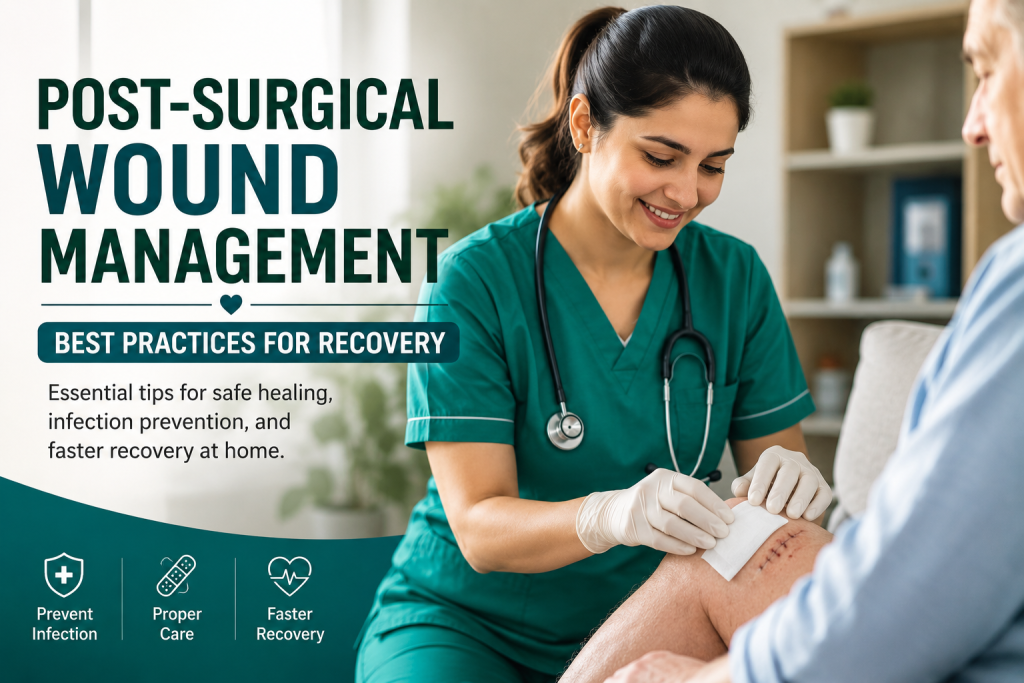
What Is Post-Surgical Wound Management?
Post-surgical wound management means taking care of a surgical cut (also called an incision) after an operation.
This includes:
Keeping the wound clean
Preventing infection
Changing dressings safely
Monitoring healing
Managing pain
Protecting stitches or staples
Good wound care helps the body heal properly and lowers the chance of complications.
Why Proper Wound Care Is So Important
Think about a cracked phone screen. If you keep dropping the phone or exposing it to water, the damage gets worse.
A surgical wound works in a similar way. The body is trying to repair itself, and proper care helps that process happen smoothly.
Good post-operative care helps:
Reduce infection risk
Lower pain and swelling
Prevent wound reopening
Support faster healing
Improve comfort
Reduce hospital readmission
Families in Lahore are increasingly choosing Home nursing services in Lahore because patients often feel calmer and more relaxed recovering at home.
Common Types of Surgical Wounds
Different surgeries create different kinds of wounds.
Closed Surgical Wounds
These are closed using:
Stitches
Staples
Surgical glue
Adhesive strips
Most surgeries use this type.
Open Surgical Wounds
Sometimes doctors leave part of the wound open to allow drainage and reduce infection risk.
These wounds need careful monitoring and dressing care.
Deep Surgical Wounds
These involve deeper tissues or muscles and may take longer to heal.
Professional Patient care services in Lahore can help patients manage these wounds safely at home.
Understanding the Normal Healing Process
Knowing what “normal healing” looks like can reduce stress.
Stage 1: Inflammation
This happens during the first few days.
You may notice:
Mild redness
Swelling
Warmth
Slight discomfort
This is the body starting repairs.
Stage 2: Tissue Growth
New tissue starts forming.
You might notice:
Itching
Tight skin
Less drainage
And yes, that itchy feeling can actually be a sign of healing!
Stage 3: Strengthening
The skin slowly becomes stronger over several weeks or months.
Even if the outside looks healed, the inside may still be recovering.
Healing takes patience.
Best Practices for Post-Surgical Wound Care
Now let’s talk about the daily habits that support safe recovery.
Always Wash Your Hands First
This is one of the most important steps.
Before touching the wound:
Wash hands with soap and water for at least 20 seconds
Dry using a clean towel
Use gloves if advised by your healthcare provider
Clean hands help stop bacteria from entering the wound.
Follow Your Surgeon’s Instructions Carefully
Every surgery is different.
Some wounds should stay dry for a few days. Others may need gentle cleaning sooner.
Always follow:
Dressing instructions
Medicine schedules
Activity restrictions
Follow-up appointments
If anything feels confusing, professional Home Nursing support can help guide families step-by-step.
Keep the Incision Clean and Dry
Most doctors recommend:
Gentle cleaning only
No scrubbing
Patting dry instead of rubbing
Avoid:
Hot tubs
Swimming pools
Long baths
Short showers are usually allowed after some time, depending on your surgery.
Change Dressings Safely
Dressings protect the wound from dirt and germs.
Steps for Safe Dressing Changes
Wash your hands
Prepare clean supplies
Remove old dressing gently
Check the wound carefully
Clean only if instructed
Apply a fresh sterile dressing
Dispose of old materials safely
Never reuse old bandages or dressings.
And yes, tape sticking to your fingers during dressing changes happens to almost everyone!
Watch for Signs of Infection
Here’s something very important: infections often start small.
Call a healthcare professional if you notice:
Increasing redness
Thick yellow or green drainage
Bad smell
Fever
Swelling getting worse
Severe pain
Wound opening
Warm skin around the incision
A little clear drainage can be normal early on. Thick pus-like drainage is not.
Quick treatment can prevent bigger problems.
Don’t Scratch the Wound
Healing wounds can itch.
But scratching may:
Open the skin
Damage stitches
Introduce bacteria
Try:
Watching TV
Reading
Listening to music
Gentle distraction activities
Your skin will thank you later.
Eat Foods That Help Healing
Guess what? Your body needs fuel to repair itself.
Foods That Support Healing
Eggs
Chicken
Fish
Yogurt
Beans
Fruits
Vegetables
Nuts
Protein helps build new tissue.
Vitamin C helps skin repair.
Water helps nutrients move through the body.
Drink Plenty of Water
Hydration is often forgotten during recovery.
Water helps:
Skin healing
Blood circulation
Energy levels
Medicine absorption
Try sipping water regularly throughout the day.
Avoid Smoking
Smoking slows healing because it reduces oxygen supply to tissues.
This can:
Delay recovery
Increase infection risk
Affect stitches
Cause wound breakdown
Even temporary smoking reduction can help recovery.
Control Blood Sugar Levels
For diabetic patients, blood sugar control is very important.
High blood sugar can:
Slow healing
Increase infection risk
Damage tissue repair
This is why diabetic patients often benefit from professional Patient care services in Lahore after surgery.
Do & Don’t Table for Surgical Wound Care
| Do | Don’t |
|---|---|
| Wash hands before touching wound | Scratch the incision |
| Use clean dressings | Reuse old bandages |
| Take medicines on time | Skip antibiotics |
| Follow doctor instructions | Ignore warning signs |
| Rest properly | Lift heavy objects too early |
| Drink water regularly | Smoke during recovery |
Pain Management After Surgery
Some pain after surgery is normal.
But pain should slowly improve over time.
Helpful Pain Management Tips
Take medicines exactly as prescribed
Rest comfortably
Use pillows for support
Avoid sudden movements
Walk gently if approved
Never take extra pain medicine without medical advice.
Real-Life Recovery Example
For example, imagine an elderly patient recovering from hip surgery at home in Lahore.
The patient may:
Need help walking safely
Forget medicine timings
Feel weak during dressing changes
A trained home nurse can:
Monitor healing
Change dressings safely
Help prevent falls
Support the family emotionally
Small support during recovery can make a huge difference.
How Home Nursing Helps After Surgery
Recovering at home feels more peaceful for many patients. But proper support is still important.
Professional Home nursing services in Lahore can help with:
Surgical wound care at home
Dressing changes
Injection support
Medicine management
Mobility support
Infection prevention
Hygiene care
Monitoring vital signs
At Shumaya Home Care & Patient Service, our trained caregivers support patients recovering from surgery with safe and compassionate Patient Care services in Lahore.
Patients Who May Need Extra Recovery Support
Some patients need more attention during healing.
This includes:
Elderly patients
Diabetic patients
Bedridden patients
Cancer patients
Patients recovering from major surgery
Patients with weak immunity
These patients may heal more slowly and benefit from regular nursing support.
Safe Movement After Surgery
Rest is important, but too much bed rest can also create problems.
Doctors may recommend light movement to:
Improve circulation
Prevent stiffness
Reduce blood clot risk
But remember:
Move slowly
Avoid heavy lifting
Stop if pain increases
Always follow your surgeon’s activity advice.
Best Sleeping Positions After Surgery
Comfort matters during recovery.
Depending on the surgery:
Back sleeping may reduce pressure
Pillows may support healing
Side sleeping may need adjustment
Good sleep helps the body repair tissue faster.
Emotional Recovery Matters Too
Surgery can affect emotions as well as the body.
Some patients feel:
Nervous
Frustrated
Tired
Depressed
That’s normal during recovery.
Family encouragement and emotional support can really help.
Sometimes hearing “You’re healing well!” can improve someone’s whole day.
Common Recovery Mistakes to Avoid
Let’s look at a few common mistakes families make.
Ignoring Follow-Up Visits
Even if the wound looks fine, follow-up appointments matter.
Using Random Home Remedies
Some oils or creams may irritate healing skin.
Always ask a healthcare provider first.
Doing Too Much Too Soon
Feeling slightly better doesn’t mean the body is fully healed.
Healing is not a race.
Skipping Medicines
Antibiotics and pain medicines work best when taken correctly.
Not Watching for Infection Signs
Early action can stop serious complications.
Daily Home Recovery Routine
Creating a routine can make recovery easier.
Morning
Check the wound
Take medicines
Eat a healthy breakfast
Afternoon
Rest
Drink water
Take a short walk if approved
Evening
Change dressing if needed
Relax
Sleep on time
Simple routines help patients feel more organized and comfortable.
When Should You Call a Doctor Immediately?
Get medical help right away if:
Bleeding won’t stop
Fever becomes high
Breathing trouble appears
Severe swelling develops
The wound suddenly opens
Pain becomes extreme
Always follow your surgeon’s instructions because recovery plans may differ depending on surgery type.
How Long Does Surgical Wound Healing Take?
Healing time depends on:
Surgery type
Age
Nutrition
Infection prevention
Medical conditions
Some wounds heal within two weeks, while deeper surgeries may take months for full recovery.
Be patient with yourself.
Your body is working hard behind the scenes.
Helpful Tips for Faster Recovery
✅ Eat healthy meals
✅ Drink enough water
✅ Sleep properly
✅ Keep follow-up appointments
✅ Avoid smoking
✅ Take medicines on time
✅ Keep the wound clean
✅ Ask for help when needed
You’ve got this!
Suggested Internal Links for Your Website
To improve SEO and help visitors find related services, connect this article with:
Home Nursing Services in Lahore
Patient Care Services in Lahore
Medication Management for Home Nurses
Benefits of Home Nursing
Critical Care Nursing at Home
Bedridden Patient Care
Elderly Care Services
Duties and Responsibilities of Home Nurses
Frequently Asked Questions (FAQs)
Can I shower after surgery?
Many patients can shower after a few days, but it depends on the surgery type. Always follow your doctor’s advice.
Is redness around the wound normal?
A small amount of redness is common early in healing. But increasing redness or heat may signal infection.
What foods help wounds heal faster?
Protein-rich foods, fruits, vegetables, and water help support recovery.
How often should dressings be changed?
This depends on the surgery and doctor’s instructions. Some need daily changes while others do not.
Can I use creams or oils on my wound?
Only use products approved by your healthcare provider.
When should I worry about wound drainage?
Call a healthcare professional if drainage becomes thick, yellow, green, smelly, or excessive.
Can home nurses help after surgery?
Yes! Professional Home nursing services in Lahore can assist with wound care, medicines, mobility support, and recovery monitoring at home.
Final Thoughts
Post-surgical wound management may seem stressful at first, but proper daily care can make recovery smoother and safer.
Keep the wound clean, follow medical advice, eat healthy foods, rest properly, and watch for infection signs. Small daily habits can support faster healing and reduce complications.
And remember — you don’t have to handle recovery alone.
At Shumaya Home Care & Patient Service, we proudly provide trusted Patient Care services in Lahore and professional Home nursing services in Lahore to help families recover comfortably at home.
Healing takes time, patience, and support — but better days are ahead.