
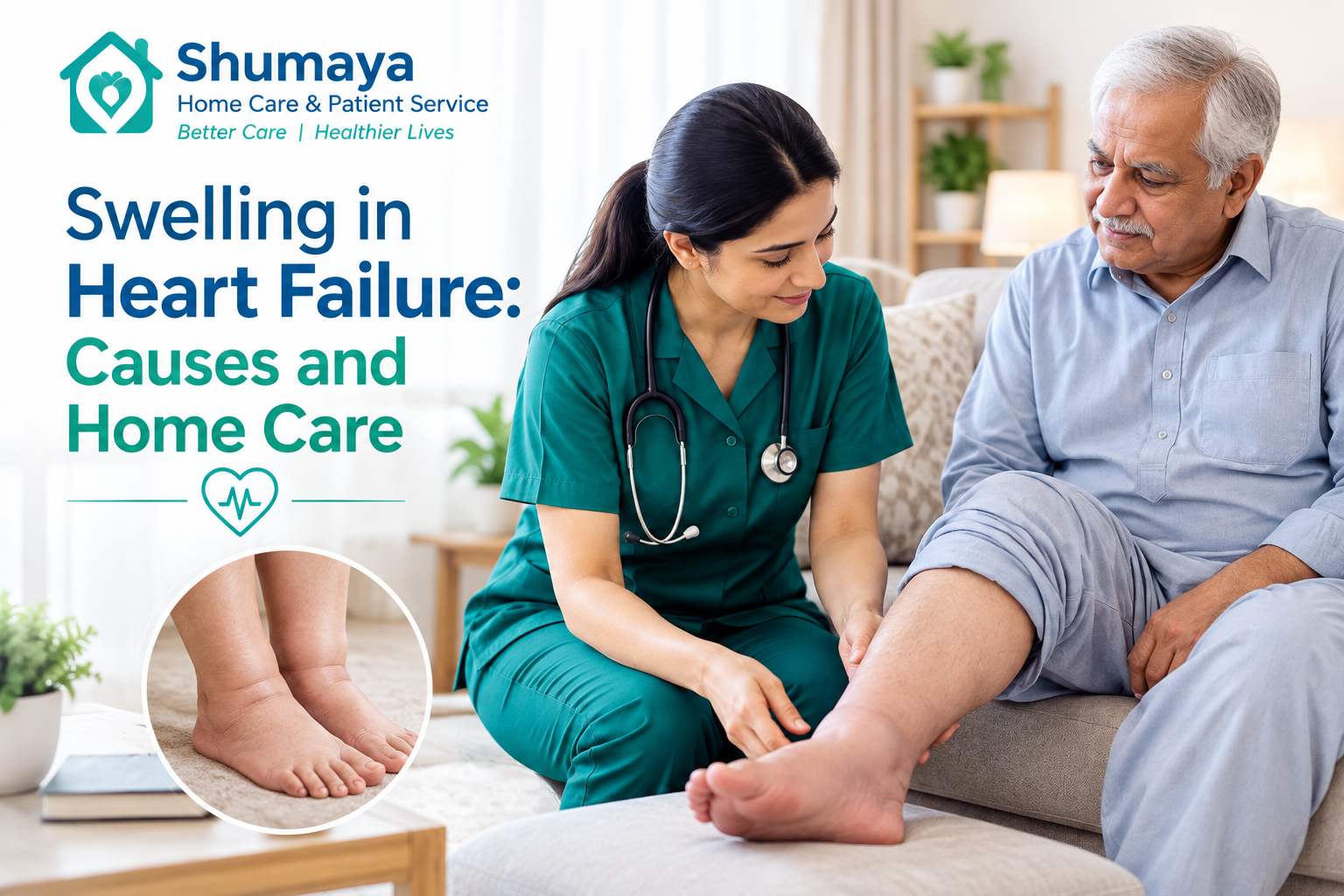
Swelling in the feet, ankles, legs, or abdomen can be a sign of fluid buildup in people with heart failure. It may develop gradually or become noticeable over a short period. For families caring for a heart patient at home, knowing why swelling occurs and when to seek medical help is important.
Heart failure does not mean that the heart has stopped working. It means the heart cannot pump blood as effectively as the body needs. This can contribute to fluid retention, causing swollen legs, weight gain, and sometimes fluid buildup in the lungs.
New or worsening swelling should not be ignored. It may indicate that heart failure is becoming less stable or that another medical problem has developed. Home-care measures can support daily care, but they cannot replace medical assessment or emergency treatment when needed.
This guide explains the causes of swelling in heart failure, practical home-care steps, warning signs, and how professional home nursing and patient-care support may help families in Lahore.
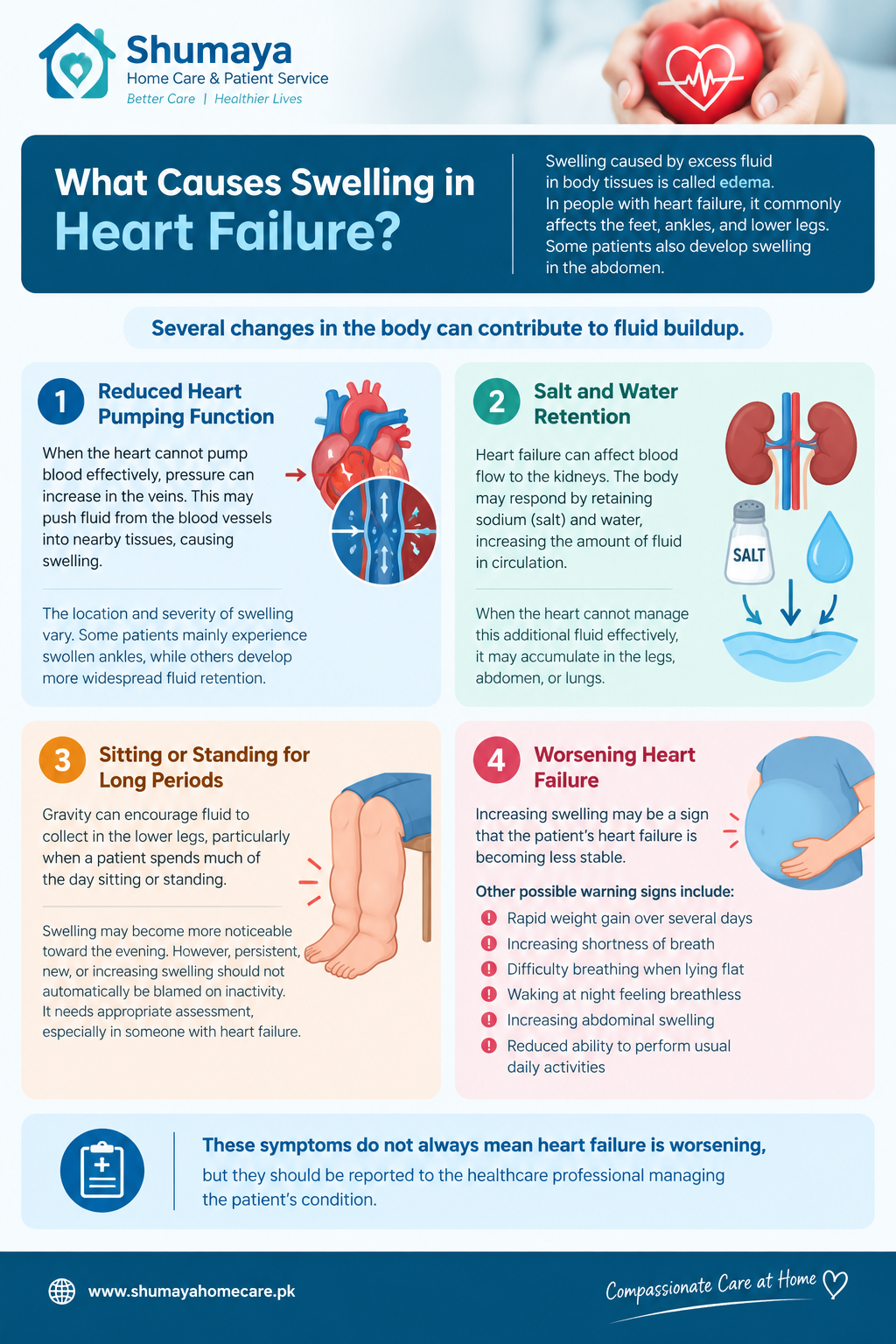
What Causes Swelling in Heart Failure?
Swelling caused by excess fluid in body tissues is called edema. In people with heart failure, it commonly affects the feet, ankles, and lower legs. Some patients also develop swelling in the abdomen.
Several changes in the body can contribute to fluid buildup.
1. Reduced Heart Pumping Function
When the heart cannot pump blood effectively, pressure can increase in the veins. This may push fluid from the blood vessels into nearby tissues, causing swelling.
The location and severity of swelling vary. Some patients mainly experience swollen ankles, while others develop more widespread fluid retention.
2. Salt and Water Retention
Heart failure can affect blood flow to the kidneys. The body may respond by retaining sodium (salt) and water, increasing the amount of fluid in circulation.
When the heart cannot manage this additional fluid effectively, it may accumulate in the legs, abdomen, or lungs.
3. Sitting or Standing for Long Periods
Gravity can encourage fluid to collect in the lower legs, particularly when a patient spends much of the day sitting or standing.
Swelling may become more noticeable toward the evening. However, persistent, new, or increasing swelling should not automatically be blamed on inactivity. It needs appropriate assessment, especially in someone with heart failure.
4. Worsening Heart Failure
Increasing swelling may be a sign that the patient’s heart failure is becoming less stable.
Other possible warning signs include:
Rapid weight gain over several days
Increasing shortness of breath
Difficulty breathing when lying flat
Waking at night feeling breathless
Increasing abdominal swelling
Reduced ability to perform usual daily activities
These symptoms do not always mean heart failure is worsening, but they should be reported to the healthcare professional managing the patient’s condition.
Where Does Swelling Occur in Heart Failure?
The location of swelling can provide useful information, although it cannot identify the cause on its own.
Swelling in the Feet and Ankles
This is a common sign of fluid retention. Shoes may feel tighter, socks may leave deeper marks, and the skin around the ankles may look stretched or shiny.
Swelling in the Legs
Fluid may extend from the ankles into the calves or thighs. Pressing gently on the swollen area may leave a temporary indentation, known as pitting edema.
Avoid repeatedly pressing swollen or fragile skin, particularly if it is painful or damaged.
Swelling in the Abdomen
Fluid can collect inside the abdomen, a condition called ascites. The abdomen may become larger or feel unusually full. The patient may also experience discomfort, reduced appetite, or difficulty moving around.
Abdominal swelling can have causes other than heart failure, so it should be assessed by a healthcare professional.
Fluid in the Lungs
Fluid buildup in the lungs is different from swelling in the legs. It can cause breathlessness, coughing, and difficulty breathing while lying down.
Severe or sudden breathing difficulty is a medical emergency. Call your local emergency service immediately rather than trying to manage the symptoms at home.
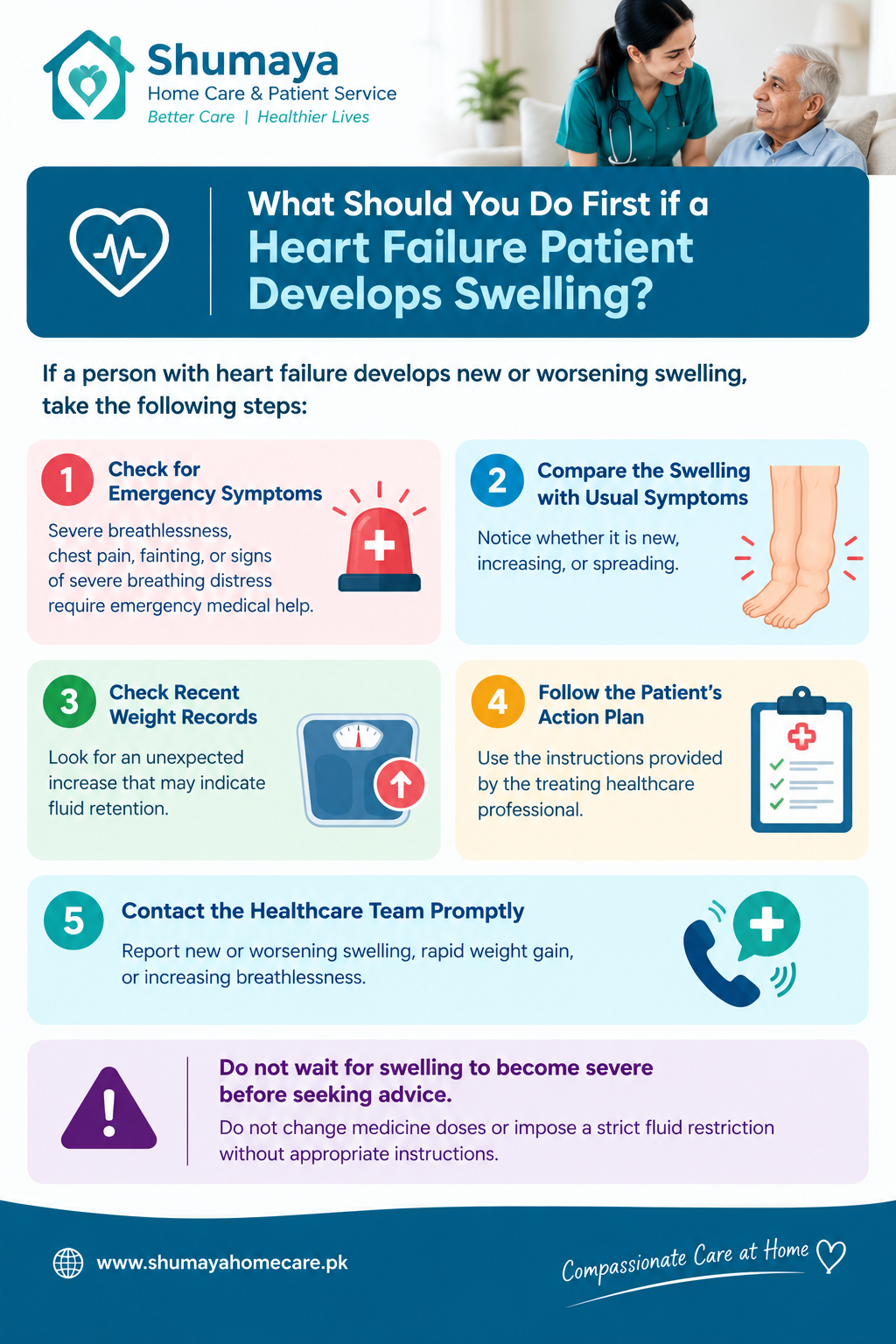
What Should You Do First if a Heart Failure Patient Develops Swelling?
If a person with heart failure develops new or worsening swelling, take the following steps:
Check for emergency symptoms. Severe breathlessness, chest pain, fainting, or signs of severe breathing distress require emergency medical help.
Compare the swelling with usual symptoms. Notice whether it is new, increasing, or spreading.
Check recent weight records. Look for an unexpected increase that may indicate fluid retention.
Follow the patient’s action plan. Use the instructions provided by the treating healthcare professional.
Contact the healthcare team promptly. Report new or worsening swelling, rapid weight gain, or increasing breathlessness.
Do not wait for swelling to become severe before seeking advice. Do not change medicine doses or impose a strict fluid restriction without appropriate instructions.
How to Care for a Heart Failure Patient With Swelling at Home
Home care can help families monitor changes, follow the treatment plan, protect the skin, and support safe daily activities. The following steps should complement, not replace, the patient’s medical care.
1. Monitor Weight Every Day
Daily weight monitoring can help identify fluid retention before swelling becomes more severe.
If the patient can stand safely, help them weigh themselves each morning:
Use the same weighing scale.
Check weight at approximately the same time.
Weigh after using the toilet and before breakfast when practical.
Use similar clothing each time.
Record the result in a notebook or monitoring chart.
Some heart-failure action plans advise contacting the healthcare team for a gain of around 2–3 pounds (0.9–1.4 kg) in one day or 5 pounds (2.3 kg) in one week. These are common warning thresholds, not universal rules.
Follow the patient’s own instructions about weight changes. Report concerning changes promptly, even if the swelling is not obvious.
If the patient cannot stand safely, do not risk a fall to obtain a weight. Ask the healthcare team about an appropriate alternative.
2. Observe Swelling and Other Symptoms
Check the patient’s feet, ankles, and legs regularly. Notice whether swelling is increasing, moving higher up the legs, or making walking more difficult.
Also watch for:
Shoes or clothing becoming tighter
New abdominal swelling
Increasing tiredness
Reduced appetite
Noticeable changes in urination
Breathlessness during usual activities
Difficulty sleeping while lying flat
Record these changes and share them with the treating healthcare professional.
Important: New swelling affecting only one leg, especially with pain, redness, or warmth, needs urgent medical assessment. A blood clot is one possible cause and should not be overlooked.
3. Elevate the Legs Only if Appropriate
For some patients, raising the legs while resting may help reduce fluid pooling in the lower legs.
If the healthcare team agrees:
Use pillows or a suitable footrest to support the legs comfortably.
Avoid positions that make breathing more difficult.
Stop the position change if symptoms worsen.
Leg elevation is not suitable for everyone. Some patients find that raising their legs or lying flat makes breathing more difficult. Seek medical advice if this happens rather than repeatedly changing positions in an attempt to manage the swelling.
4. Follow the Prescribed Salt and Fluid Plan
Some people with heart failure need to limit sodium or follow a specific daily fluid allowance. The right approach depends on their heart condition, kidney function, medicines, and medical advice.
Families can help by:
Following the dietary instructions provided by the healthcare team.
Checking food labels for sodium content.
Avoiding excessive salt when advised.
Measuring daily fluid intake if a limit has been prescribed.
Keeping track of any changes the healthcare team has requested.
Do not impose a strict fluid restriction on your own. Drinking too little can cause dehydration, while drinking more than a prescribed allowance may be unsuitable for some patients.
Potassium-based salt substitutes can also be unsafe for people with certain kidney problems or those taking particular medicines. Ask a healthcare professional before using them.
5. Give Medicines Exactly as Prescribed
Patients with heart failure may receive diuretics, commonly called water tablets, to help the body remove excess salt and water. Other medicines may help manage the condition and reduce the risk of complications.
Families can support safe medicine routines by:
Following the prescribed schedule.
Keeping an up-to-date medication list.
Recording any problems or missed doses.
Reporting concerning symptoms or side effects.
Checking with a doctor or pharmacist before adding medicines or supplements.
Do not increase, reduce, or stop a diuretic without an agreed treatment plan.
Certain anti-inflammatory painkillers, including ibuprofen and naproxen, can worsen fluid retention or kidney function in some patients. Check with a healthcare professional before using these medicines.
If the patient has a written plan allowing a specific medicine adjustment, follow it exactly and contact the healthcare team as instructed.
6. Protect the Skin and Maintain Hygiene
Swollen skin can become stretched and fragile, increasing the risk of skin damage.
At home:
Keep the skin clean and dry.
Dry carefully between the toes and around skin folds.
Apply a gentle moisturizer to dry skin, avoiding areas that remain damp.
Check for blisters, cracks, redness, drainage, or open wounds.
Avoid tight footwear, restrictive clothing, and socks that leave deep marks.
Do not massage swollen legs forcefully.
Seek medical advice for broken skin, spreading redness, warmth, increasing pain, or drainage. Patients with diabetes, poor circulation, or reduced sensation may need closer skin monitoring.
7. Support Safe Movement and Daily Activities
Leg swelling, fatigue, and breathlessness can make walking, bathing, dressing, and using the toilet more difficult.
Help the patient by keeping walking paths clear, providing suitable footwear, and assisting with transfers when necessary. Encourage activity within the limits set by the healthcare team.
Do not force the patient to exercise through unusual breathlessness, dizziness, chest discomfort, or severe fatigue. Follow any activity restrictions provided after hospital discharge or during treatment.
When Is Swelling in Heart Failure an Emergency?
Families should know the difference between symptoms that require emergency help and changes that need prompt medical review.
Seek Emergency Medical Help Immediately
Call your local emergency service if the patient develops:
Severe or sudden shortness of breath
Difficulty breathing at rest
New chest pain, pressure, or tightness
Fainting or collapse
Severe confusion or reduced responsiveness
Blue or grey lips accompanied by breathing distress
Sudden severe breathlessness with pink, frothy sputum
Do not wait for a home nurse, routine appointment, or home-care assessment when these symptoms occur.
Contact the Healthcare Team Promptly
Seek prompt medical advice if:
Swelling is new or getting worse.
Weight rises beyond the patient’s agreed warning threshold.
Breathlessness increases during usual activities.
The patient needs more pillows to sleep comfortably.
They wake at night gasping for breath.
Abdominal swelling or discomfort increases.
Urination changes noticeably.
One leg becomes swollen, painful, red, or warm.
Follow the patient’s individual heart-failure action plan. If symptoms become severe or rapidly worsen, seek emergency help.
Can a Home Nurse Help a Heart Failure Patient With Swelling?
A qualified home nurse may help families follow the care plan and monitor changes, particularly after hospital discharge or when the patient needs regular support at home.
Depending on the nurse’s qualifications, the patient’s needs, and the agreed care plan, support may include:
Checking and recording vital signs.
Monitoring weight and documenting swelling.
Supporting prescribed medication routines within the nurse’s professional scope.
Observing changes in breathing, activity, and general condition.
Providing appropriate skin and wound care.
Reporting concerning changes to the family and healthcare team.
Supporting safe movement and personal care as part of the nursing plan.
A home nurse cannot replace a cardiologist or emergency service. New or worsening symptoms still require appropriate medical assessment.
When Is a Patient Attendant Useful?
A trained patient attendant may help when a patient needs assistance with daily activities but does not require the attendant to perform clinical nursing procedures.
Depending on the patient’s needs, an attendant may assist with:
Bathing, dressing, and personal hygiene.
Meal assistance and daily routines.
Walking support and transfers.
Comfortable positioning and companionship.
Keeping the patient’s surroundings clean and safe.
Supporting routines established by the family and healthcare team.
Patient attendants should not independently assess or treat worsening heart failure, change medicine doses, or perform nursing procedures outside their training.
Some families need both a qualified home nurse and a patient attendant when clinical nursing care and daily living support are both required.
Choosing Home Care Support in Lahore
When arranging care for a person with heart failure, consider the patient’s medical needs and level of independence.
Ask yourself:
Does the patient need clinical nursing care or mainly help with daily activities?
Have they recently been discharged from hospital?
Can they walk and use the toilet safely?
Do they need help with prescribed routines, skin care, or monitoring?
Has the doctor provided a written care plan?
Would they feel more comfortable with a male or female care professional?
Some families prefer a male nurse or male patient attendant for a male patient, while others prefer a female nurse or female patient attendant for personal care. The choice should reflect the patient’s comfort, privacy, preferences, and clinical needs, as well as the staff member’s qualifications.
For families looking for home nursing services in Lahore, Shumaya Home Care & Patient Service can discuss suitable home-care support based on the patient’s needs and the services available.
Frequently Asked Questions
Why do heart failure patients develop swollen feet and ankles?
Heart failure can increase pressure in the veins and cause the body to retain salt and water. Fluid may then collect in the tissues, particularly around the feet, ankles, and lower legs.
How can swelling in heart failure be managed at home?
Follow the prescribed treatment plan, monitor weight and symptoms, follow the recommended salt and fluid guidance, protect the skin, and support safe movement. New or worsening swelling should be reported to the healthcare team.
When is swelling in heart failure dangerous?
Swelling needs prompt medical assessment when it is new or worsening, especially with rapid weight gain or increasing breathlessness. Severe breathing difficulty, chest pain, fainting, or collapse requires emergency medical help.
Should a heart failure patient drink less water when swelling occurs?
Not automatically. Some patients have a prescribed fluid limit, while others do not. Follow the patient’s individual instructions and do not restrict fluids independently.
Can water tablets reduce swelling in heart failure?
Prescribed diuretics help the body remove excess salt and water and may reduce swelling. The dose must follow the patient’s treatment plan. Never increase the dose independently.
Can a home nurse monitor a heart failure patient at home?
A qualified home nurse can assist with monitoring, recording weight and vital signs, following the care plan, and reporting concerning changes. Home nursing does not replace medical reviews or emergency treatment.
Home Care Support for Heart Failure Patients
Swelling can make everyday life more difficult for people with heart failure and their families. Regular monitoring, safe movement, skin care, and following the prescribed treatment plan can help families manage daily care at home.
If your loved one needs clinical nursing support or help with everyday activities, contact Shumaya Home Care & Patient Service to discuss suitable home-care support in Lahore. Depending on the patient’s needs, families may consider a qualified home nurse, a trained patient attendant, or both.
The right support should follow the patient’s medical instructions and level of independence.
Remember: New or worsening swelling needs medical attention. Do not rely on home-care measures alone when symptoms change, and seek emergency help for severe breathing difficulty, chest pain, or collapse.