
Managing Chronic Illness at Home: Tips for Families
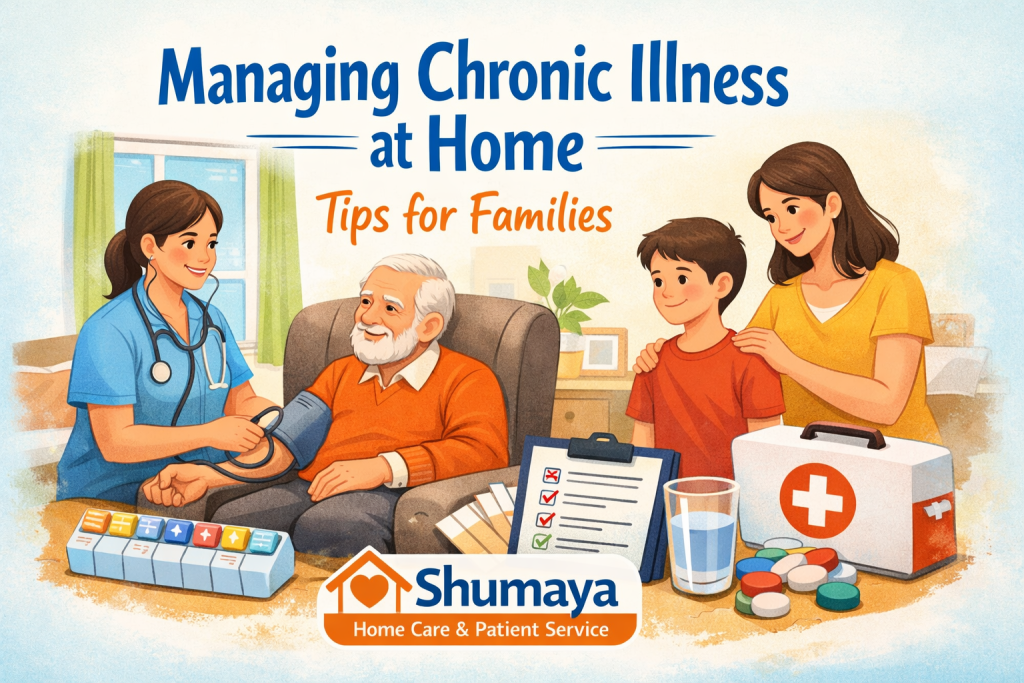
If someone in your family is living with a long-term illness like diabetes, heart disease, stroke, or dementia, you already know—it’s not just a medical issue. It affects daily life, emotions, routines, and even relationships. But here’s the good news: with the right support and planning, managing chronic illness at home can become easier and more comfortable. At Shumaya Home Care & Patient Service, we’ve helped many families with home nursing services in Lahore and patient care services in Lahore, and we understand what works in real life—not just in theory. So let’s talk about it like friends and make things simple. What Does “Chronic Illness” Mean? Let’s start with the basics. A chronic illness is a condition that lasts for a long time and usually needs ongoing care. Some common examples are: Diabetes Heart disease Stroke recovery Arthritis Dementia or Alzheimer’s Paralysis These conditions may not fully go away, but they can be managed well with proper care at home. Why Choose Home Care for Chronic Illness? Have you ever noticed how people feel better in their own home? That’s not just in your head—it’s real. Here’s why many families prefer home nursing services in Lahore: Comfort – Patients stay in a familiar place Family support – Loved ones are always nearby Personal attention – One-on-one care Lower cost – Better for long-term care Less stress – No hospital noise or rush Imagine taking your medicine while sitting in your favorite chair instead of a hospital bed. Feels better, right? Common Challenges Families Face Let’s be honest—caring for someone with a chronic illness isn’t always easy. You might face things like: Confusion about medicines Managing doctor visits Physical exhaustion Emotional stress Lack of medical knowledge Sometimes, you may even think:“Am I doing this right?” And that’s okay. Many families feel the same way. Tip #1: Create a Daily Care Routine Guess what? A simple routine can make a big difference. When everything is planned, it reduces stress for both you and the patient. What to include in a daily routine: Medication timings Meal times Exercise or movement Rest and sleep Hygiene care For example:If your loved one has diabetes, keeping a fixed time for meals and insulin can help control sugar levels. Pro Tip: Write the routine on paper and stick it on the wall. Easy and helpful! Tip #2: Manage Medications Carefully Medicines are a big part of patient care. Missing a dose or taking the wrong one can cause problems. Simple ways to stay on track: Use a pill organizer Set alarms on your phone Keep a medicine chart Double-check doctor instructions If it feels confusing, a trained home nurse can handle this safely. 👉 Learn more about medication support in our guide:[What To Expect From Your Home Nurse] Tip #3: Keep Track of Health Changes Small changes can tell you a lot about a patient’s condition. Watch out for: Fever Sudden weakness Changes in breathing Mood changes Loss of appetite For example:If a heart patient suddenly feels tired all the time, it might need medical attention. Don’t ignore small signs—they matter. Tip #4: Focus on Nutrition and Diet Food is not just food—it’s part of treatment. Different illnesses need different diets: Diabetes → Low sugar, balanced meals Heart disease → Low salt, less oil Stroke recovery → Soft, easy-to-eat food Easy tips: Serve small, frequent meals Include fruits and vegetables Keep the patient hydrated Avoid junk food Think of food as “daily medicine” for the body. Tip #5: Encourage Movement and Exercise You might think rest is best—but too much rest can cause problems. Even small movements help: Improve blood flow Reduce stiffness Boost mood Simple activities: Short walks (if possible) Light stretching Sitting exercises For bedridden patients, a home nurse can help with safe movement. Tip #6: Don’t Ignore Mental Health Here’s something many people forget: Chronic illness doesn’t just affect the body—it affects the mind too. Patients may feel: Sad Angry Lonely Frustrated What you can do: Talk to them daily Listen without judging Encourage hobbies Let them feel involved Even a simple chat like,“Hey, how are you feeling today?”can make a big difference. Tip #7: Maintain Hygiene and Cleanliness Clean surroundings help prevent infections. Daily care includes: Bathing or sponge cleaning Clean clothes Fresh bed sheets Oral care This is especially important for patients who cannot move on their own. 👉 You can also read:[Elderly Patient Care at Home: Benefits & Best Practices] Tip #8: Know When to Get Professional Help Let’s be real—you can’t do everything alone. And that’s perfectly okay. A trained professional from patient care services in Lahore can help with: Medical care Injections and drips Monitoring vital signs Wound care Emergency support When should you consider home nursing? After surgery During serious illness For elderly care When care becomes too difficult to manage 👉 Related guide:[Post-Surgery Care at Home: What You Need to Know] Tip #9: Be Prepared for Emergencies Emergencies can happen anytime. Being ready can save time—and lives. Keep these things ready: Doctor’s contact number List of medicines Emergency kit Nearby hospital info Also, learn basic first aid if possible. Tip #10: Take Care of Yourself Too Here’s something important: You matter too. Caregivers often forget their own health. But if you’re tired or stressed, it affects the patient as well. Simple self-care tips: Take short breaks Ask for help Eat properly Get enough sleep Remember:You can care better when you feel better. Real-Life Example Let’s make this real. Ali’s father had a stroke. At first, the family tried to manage everything alone. They were stressed and confused. Then they hired a professional from home nursing services in Lahore. The nurse helped with: Daily exercises Medicine management Hygiene care Within weeks, things became more organized—and less stressful for everyone. Sometimes, a little help changes everything. Common Questions Families Ask 1. Can chronic illness be fully cured? Most chronic illnesses cannot be completely cured, but they can be controlled with proper care. 2. Is home care safe?