
Importance of Physiotherapy in Home Care
Have you ever seen someone struggle to walk after surgery or feel stiff after being in bed for too long? It can be tough—not just physically, but emotionally too. Now imagine getting better in the comfort of your own home instead of going back and forth to a clinic. Sounds easier, right? That’s where physiotherapy in home care comes in. It plays a big role in helping patients recover, move better, and feel more confident again—right at home. At Shumaya Home Care & Patient Service, we see every day how home nursing services in Lahore combined with physiotherapy can truly change lives. Let’s talk about why it matters so much and how it can help you or your loved ones. What is Physiotherapy in Home Care? Let’s keep it simple. Physiotherapy is a type of treatment that helps people: Move better Reduce pain Gain strength Recover after illness or injury When this care is given at home, it’s called home physiotherapy. Instead of visiting a hospital or clinic, a trained professional comes to you. Pretty convenient, right? 😊 This is often part of patient care services in Lahore, especially for people who: Had surgery Are recovering from a stroke Have difficulty walking Are elderly or bedridden Why is Physiotherapy Important in Home Care? Let’s get to the main question: Why does it matter so much? Here are some simple and real reasons. 1. Helps You Recover Faster When you stay active (even a little), your body heals better. Physiotherapy helps: Improve blood flow Reduce stiffness Speed up healing For example, after knee surgery, simple exercises at home can help you walk again sooner. And the best part? You’re doing it in your own room, not a crowded clinic. 2. Reduces Pain Naturally Pain can make everyday life feel difficult. Physiotherapy uses techniques like: Gentle exercises Stretching Movement training These methods help reduce pain without always depending on medicines. That’s a big win for long-term health! 3. Makes Daily Life Easier Think about simple things like: Getting out of bed Walking to the bathroom Sitting on a chair These may seem small, but they matter a lot. Physiotherapy helps you regain these abilities step by step. At Shumaya Home Care, our home nursing services in Lahore focus on helping patients become more independent again. 4. Prevents Future Problems Here’s something many people don’t think about. Without movement, patients may develop: Muscle weakness Joint stiffness Bed sores Physiotherapy helps prevent these issues before they start. It’s like taking care of your body today so you don’t face bigger problems tomorrow. 5. Keeps the Mind Positive Guess what? Recovery isn’t just physical. When patients start moving again, they often feel: More confident Less stressed More hopeful And honestly, that mental boost is just as important as physical healing. Why Choose Physiotherapy at Home Instead of a Clinic? Good question! Let’s compare. Benefits of Home Physiotherapy Comfort – You’re in your own home No travel stress – No need to go outside Personal attention – One-on-one care Family support – Loved ones can be involved For many families in Lahore, this is why patient care services in Lahore are becoming more popular. How Physiotherapy Works at Home Curious about what actually happens during a home visit? Let’s walk through it. Step-by-Step Process AssessmentThe physiotherapist checks your condition and movement. Care PlanA simple plan is made based on your needs. Exercises & TherapyYou’ll do guided exercises safely. Progress TrackingYour improvement is checked regularly. Family GuidanceYour family learns how to support you. Easy and friendly, right? 😊 Who Needs Physiotherapy in Home Care? You might be wondering, “Is this for me or my loved one?” Here are some common cases: Elderly patients Stroke recovery patients Post-surgery patients People with back or joint pain Bedridden patients Patients with paralysis If moving around feels difficult, physiotherapy can help. Real-Life Example Let’s make it real. Ali, a 65-year-old man in Lahore, had a stroke. He couldn’t walk properly and felt weak. Instead of going to a hospital daily, his family chose home nursing services in Lahore with physiotherapy. Within weeks: He started standing with support Then walking slowly And eventually moving around the house Isn’t that amazing? 💙 Tips to Get the Best Results from Physiotherapy at Home Want better results? Try these simple tips: ✔ Stay Consistent Do your exercises regularly—even on days you feel lazy. ✔ Follow Instructions Your physiotherapist knows what’s best. Trust the process. ✔ Keep a Positive Mindset Recovery takes time, but you’re moving forward! ✔ Involve Family Having support makes a big difference. ✔ Ask Questions Don’t hesitate—understanding helps you improve faster. Common Questions About Physiotherapy in Home Care Let’s answer some questions people often ask. ❓ Is physiotherapy safe at home? Yes! When done by trained professionals, it’s very safe. ❓ How long does recovery take? It depends on the condition. Some people improve in weeks, others take longer. ❓ Do I need equipment? Most exercises use simple tools or body movement. No fancy equipment needed. ❓ Can elderly patients benefit from it? Absolutely! It helps improve balance, strength, and confidence. ❓ Is it better than hospital therapy? For many people, yes—especially for long-term care. How Shumaya Home Care Supports You At Shumaya Home Care & Patient Service, we understand how hard recovery can be. That’s why our patient care services in Lahore include: Skilled physiotherapy support Experienced home nurses 24/7 patient care Personalized care plans Friendly and respectful service We don’t just provide patient care—we stay with you every step of the way. Internal Links You May Find Helpful To learn more, check out these helpful guides: What To Expect From Your Home Nurse Post-Surgery Care at Home: What You Need to Know Pain Management Techniques for Bedridden Patients Managing Chronic Illness at Home: Tips for Families Final Thoughts So, what did we learn today? Physiotherapy in home care is all about helping you move, heal, and feel better—right at home. It: Speeds up recovery Reduces pain Improves daily life
Pain Management Techniques for Bedridden Patients

Simple, Caring Tips for Comfort at Home Taking care of a bedridden patient can feel overwhelming at times—especially when pain becomes part of daily life. You might be wondering, “Am I doing enough to keep them comfortable?” Guess what? You can make a big difference with the right pain management techniques and a little guidance. At Shumaya Home Care & Patient Service, we see every day how proper patient care at home can bring comfort, dignity, and peace to both patients and families. In this guide, we’ll walk you through easy, practical ways to manage pain for bedridden patients—in simple words, just like a friendly chat. What Does “Pain Management” Mean? Let’s keep it simple. Pain management means finding ways to reduce or control pain so the patient feels more comfortable. Pain can be: Mild (a little discomfort) Moderate (noticeable and bothersome) Severe (hard to ignore, affects sleep and mood) For bedridden patients, pain often comes from: Staying in one position too long Pressure sores (bedsores) Muscle stiffness Medical conditions like arthritis, stroke, or cancer Good news: With proper home nursing services in Lahore, most of this pain can be managed right at home. Why Pain Management Matters So Much Think about lying in one position for hours… sounds uncomfortable, right? Now imagine doing that for days or weeks. Without proper care, pain can: Affect sleep Lower mood Slow recovery Cause stress for both patient and family That’s why patient care services in Lahore focus not just on treatment—but also on comfort and quality of life. Common Causes of Pain in Bedridden Patients Before we talk about solutions, let’s understand the problem. 1. Pressure Sores (Bedsores) These happen when the skin stays under pressure for too long. Common areas: Back Hips Heels Elbows 2. Muscle Stiffness When the body doesn’t move much, muscles become tight and painful. 3. Joint Pain Conditions like arthritis can get worse without movement. 4. Nerve Pain Some patients feel burning or tingling due to nerve damage. 5. Emotional Stress Yes, pain isn’t always physical. Feeling helpless or lonely can increase discomfort. Simple Pain Management Techniques You Can Use at Home Now let’s get to the part you’ve been waiting for—what can you actually do? 1. Change Positions Regularly This is one of the easiest and most effective methods. 👉 Try this: Turn the patient every 2 hours Use pillows to support the body Keep joints in a natural position Why it helps:It reduces pressure on the skin and improves blood flow. 2. Use Soft Bedding and Support Comfort starts with the bed. Helpful tips: Use an air mattress or soft foam mattress Keep bedsheets clean and wrinkle-free Add cushions under pressure points Isn’t it amazing how something simple like a pillow can reduce pain? 3. Gentle Massage A light massage can do wonders. How to do it: Use warm oil or lotion Apply gentle pressure Focus on stiff areas Benefits: Relaxes muscles Improves blood circulation Reduces stress 4. Apply Heat or Cold Therapy This is a simple home trick. Warm compress → Helps with stiffness Cold compress → Reduces swelling ⚠️ Always check skin sensitivity before applying. 5. Keep the Skin Clean and Dry Healthy skin = less pain. Daily care: Clean gently with mild soap Dry properly Use moisturizer This helps prevent bedsores, which can be very painful. 6. Encourage Gentle Movement Even small movements can help. Examples: Moving arms and legs Simple stretching Assisted exercises With help from home nursing services in Lahore, these exercises can be done safely. 7. Proper Medication (When Needed) Sometimes, medicines are necessary. These may include: Painkillers Muscle relaxants Anti-inflammatory drugs ⚠️ Always follow the doctor’s advice. 8. Emotional Support Matters Too Here’s something many people forget. A patient who feels cared for often feels less pain. Try this: Talk to them Sit beside them Play their favorite TV show A little kindness goes a long way. Role of Professional Home Nursing Let’s be honest—managing all this alone can be tough. That’s where Home Nursing comes in. At Shumaya, our trained staff provides: Pain assessment Safe patient handling Bed sore prevention Medication management 👉 Learn more about our services here: Home Nursing Services in Lahore Patient Care Services in Lahore With professional help, you don’t have to carry the burden alone. Real-Life Example Let’s make this more real. Ali’s father was bedridden after a stroke. At first, he had: Severe back pain Trouble sleeping Low mood After starting proper patient care at home: He was repositioned regularly Given gentle massages Supported by a trained nurse Within weeks, his pain reduced, and he started sleeping better. Small changes = big results. Daily Pain Care Routine (Easy Checklist) Here’s a simple routine you can follow: Morning: Clean and freshen up the patient Check skin for redness Do light exercises Afternoon: Change position Offer a healthy meal Give medication if needed Evening: Gentle massage Relaxation time (TV, talk, prayer) Night: Comfortable sleeping position Clean bedding Stick to this routine and you’ll see improvement. Common Mistakes to Avoid Let’s save you from some common problems. ❌ Not changing position often❌ Ignoring early signs of bedsores❌ Using rough or hard bedding❌ Skipping doctor advice❌ Forgetting emotional care Avoiding these can make a huge difference. When Should You Call a Doctor? Sometimes, home care isn’t enough. Call a doctor if you notice: Severe or sudden pain Open wounds or bedsores Swelling or redness Fever Patient becomes unresponsive Don’t wait—early action is always better. Frequently Asked Questions (FAQs) 1. How often should I move a bedridden patient? Every 2 hours is ideal to prevent pain and bedsores. 2. What is the best mattress for bedridden patients? An air mattress or pressure-relief mattress works best. 3. Can massage reduce pain? Yes! Gentle massage helps relax muscles and improve blood flow. 4. Is home nursing really helpful? Absolutely. Home nursing services in Lahore provide trained support that improves comfort and safety. 5. What if the patient refuses movement? Try to encourage gently. Explain benefits and keep
How to Choose the Right Caregiver for Your Loved One

Choosing a caregiver for someone you love is a big step. It’s normal to feel confused or even a little worried. You might be thinking, “Will they take good care of my mother?” or “How do I know I’m making the right choice?” If you’re in Lahore, you’re not alone. Many families today are turning to home nursing services in Lahore and patient care services in Lahore because hospitals can feel crowded, expensive, and stressful. The good news? With the right approach, you can find a caregiver who treats your loved one with kindness, respect, and proper care. Let’s walk through it together. Why Choosing the Right Caregiver Matters Think about this… A caregiver isn’t just helping with daily tasks. They become part of your loved one’s daily life. The right caregiver can: Make your loved one feel safe and comfortable Help with faster recovery at home Reduce stress for the whole family Provide emotional support and companionship But the wrong choice can lead to missed medicines, poor care, and constant worry. That’s why taking a little extra time now can save you a lot of stress later. What Does a Caregiver Do? Before choosing, let’s keep things simple. Basic Caregiver (Patient Care) Help with bathing and dressing Assist with eating Support walking and movement Keep the patient clean and comfortable Home Nurse (Medical Care) Give medicines and injections Monitor blood pressure, sugar, etc. Handle wound care Support recovery after surgery Not sure which one you need? Read our guide on What To Expect From Your Home Nurse to understand the difference better. Caregiver vs Home Nurse (Quick Comparison) Feature Caregiver Home Nurse Daily personal care Yes Yes Medical tasks No Yes Training level Basic Professional Best for Elderly support, daily help Recovery, illness, post-surgery Step 1: Understand Your Loved One’s Needs Start here—it makes everything easier. Ask yourself: Do they need medical care or just daily help? Are they recovering from surgery? Do they have a long-term illness like diabetes or stroke? Do they need care during the day, night, or full-time? Example: If your father just had surgery, a nurse is the better choice. If your grandmother needs help with walking and meals, a caregiver may be enough. If you’re dealing with older patients, also check our guide on Elderly Patient Care at Home: Benefits & Best Practices. Step 2: Choose a Trusted Service in Lahore You have two options: Hiring Through a Professional Service Like Shumaya Home Care & Patient Service Benefits: Trained and verified staff Backup available if needed Reliable and accountable Better safety Hiring Independently No proper background checks No replacement if they leave Higher risk In a busy city like Lahore, most families feel safer choosing patient care services in Lahore from a trusted provider. Step 3: Check Experience and Training Would you trust someone with no experience to handle your loved one? Always check: Training and certifications Previous work experience Experience with similar patients Example: A patient with dementia needs someone who understands memory loss and behavior changes. Step 4: Look at Personality (It Matters More Than You Think) Skills are important—but so is attitude. A good caregiver should be: Kind and patient Respectful Honest and reliable Good at communication Simple tip: Watch how they talk to your loved one. Are they calm? Do they listen? Do they show care? Small things can tell you a lot. Step 5: Ask the Right Questions Here are some easy but powerful questions: What experience do you have? Have you handled similar cases? How do you handle emergencies? Are you comfortable with long shifts? Can you provide references? You can also ask:“What would you do if the patient refuses medicine?” Their answer will show how they think and react. Step 6: Start with a Trial Period This is a smart move. Try the caregiver for a few days and observe: Are medicines given on time? Is hygiene maintained? Is your loved one comfortable? Do they follow instructions? If something feels off, it’s okay to make a change. Your loved one’s comfort comes first. Warning Signs of a Bad Caregiver Watch out for these: Not giving medicine on time Using rude or harsh language Ignoring cleanliness Not updating the family Arriving late or missing shifts If you notice these signs, don’t ignore them. Step 7: Focus on Safety and Trust Safety is a top concern for every family. Make sure: The caregiver is background-checked Identity is verified They come from a trusted source At Shumaya Home Care & Patient Service, caregivers are properly checked and matched based on patient needs—so families can feel at ease. Step 8: Communication is Key A good caregiver keeps you informed. They should: Share daily updates Report health changes quickly Follow your instructions carefully You should feel comfortable talking to them anytime. Step 9: Match the Caregiver with the Patient Here’s something many people forget. Not every caregiver suits every patient. Think about: Language (Urdu, Punjabi, etc.) Gender preference Personality match Example: An elderly patient may feel more relaxed with someone who speaks their language or understands their habits. Step 10: Understand Costs Clearly Let’s talk about cost—because it matters. Ask: What is the daily or monthly rate? Are there extra charges? What services are included? Home nursing services in Lahore may cost more than basic care because they include medical support. Always get clear details before starting. Quick Caregiver Selection Checklist Before finalizing, make sure: ✔ Experience checked ✔ Identity verified ✔ Good communication ✔ Patient feels comfortable ✔ Trial period completed Simple, right? Real-Life Example Ali from Lahore needed care for his mother after a stroke. At first, he hired someone without checking properly. The caregiver missed medicines and didn’t communicate. Later, he chose a professional service. The new caregiver: Followed a proper routine Updated the family regularly Treated his mother with respect The result? Less stress and better recovery. When You Should Choose a Nurse Instead Sometimes a caregiver is not enough. You should choose home nursing services
What To Expect From Your Home Nurse

A simple, friendly guide for families in Lahore If you or someone you love is starting home nursing services in Lahore, you might be wondering:“What will the nurse actually do?”“Will they take good care of my loved one?” Good questions—and you’re not alone in asking them. Let’s walk through everything together in a simple way, just like a friendly chat. By the end, you’ll know exactly what to expect from your home nurse and how patient care services in Lahore can make life easier and safer. What Is Home Nursing? (Let’s Keep It Simple) Home nursing means getting medical care at home instead of going to a hospital. A trained nurse comes to your home and helps with things like: Taking care of patients after surgery Helping elderly people with daily needs Managing long-term illnesses Giving medicines and checking health Think of it like this:Instead of staying in a hospital bed, you get care in your own bed—comfortable, peaceful, and surrounded by family. Isn’t that a relief? Why Families Choose Home Nursing Services in Lahore Let’s be real—hospitals can feel stressful. That’s why many families now choose home nursing services in Lahore. Here’s why: Comfort of home – Patients feel relaxed Family support – Loved ones stay close Personal attention – One-on-one care Lower cost for long-term care Less risk of infections Imagine recovering while watching your favorite TV show at home instead of hearing hospital noises all day. Sounds better, right? First Visit: What Happens When the Nurse Arrives? Feeling a bit nervous about the first visit? Totally normal. Here’s what usually happens: 1. Friendly Introduction Your nurse will greet you, introduce themselves, and make you feel comfortable. 2. Health Check They will: Ask about the patient’s condition Check vital signs (blood pressure, pulse, temperature) Review medical reports 3. Care Plan The nurse will follow a care plan (a simple plan for daily care). Don’t worry—it’s not complicated. It just means: What care is needed When medicines should be given What to watch for 4. Talking With Family They’ll also guide family members on how to help. Tip:Don’t be shy—ask questions! That’s what they’re there for. Daily Duties of a Home Nurse So, what will your home nurse actually do every day? Let’s break it down. Basic Patient Care Your nurse will help with: Bathing and cleaning Dressing Feeding (if needed) Moving the patient safely Medical Care This includes: Giving medicines on time Injections (if prescribed) Wound care and dressing Monitoring blood sugar or blood pressure Comfort and Emotional Support Yes, nurses don’t just treat the body—they care about feelings too. They may: Talk kindly with the patient Help reduce stress Keep the patient calm and positive Example:If an elderly patient feels lonely, the nurse may sit and chat for a few minutes. Small things like this matter a lot. How a Home Nurse Helps in Different Situations Every patient is different. Let’s look at a few real-life examples. 1. After Surgery Care A nurse helps with: Changing dressings Preventing infections Helping the patient move safely 2. Elderly Care For older adults, nurses provide: Help with daily activities Fall prevention Regular health checks 👉 You can also read more here:Elderly Patient Care at Home: Benefits & Best Practices 3. Chronic Illness Support For long-term conditions like: Diabetes Heart disease Stroke recovery The nurse ensures: Regular monitoring Medicine management Healthy routine 4. Bedridden Patient Care If a patient can’t move: Prevent bed sores Change positions regularly Maintain hygiene Guess what?These small steps can prevent serious problems later. What Makes a Good Home Nurse? Not all nurses are the same. A good one will: Be kind and patient Listen carefully Follow doctor’s instructions Keep things clean and organized Respect your home and family Quick question for you:Wouldn’t you feel more relaxed with someone who treats your loved one like family? Of course! Your Role as a Family Member Home nursing is a team effort. You and the nurse work together. Here’s how you can help: Share full medical history Follow the nurse’s advice Keep medicines ready Maintain a clean environment Stay involved in care Tip:Write down important instructions so you don’t forget. Common Questions About Home Nursing Let’s answer some questions people often ask. 1. Will the nurse stay all day? It depends. You can choose: Hourly care 12-hour shifts 24/7 care 2. Are home nurses trained? Yes! Professional services like Shumaya Home Care & Patient Service provide trained and experienced nurses. 3. What if something goes wrong? The nurse knows how to handle emergencies and will contact the doctor if needed. 4. Is home nursing safe? Yes, especially when you hire from trusted patient care services in Lahore. Tips to Get the Best Home Nursing Experience Want to make things smooth and stress-free? Try these tips: ✔ Communicate Clearly Tell the nurse everything about the patient’s condition. ✔ Set a Routine Keep a daily schedule for: Medicines Meals Rest ✔ Keep Emergency Numbers Ready Always have: Doctor’s contact Ambulance number ✔ Build Trust Give the nurse time to adjust. Trust grows slowly. ✔ Stay Positive Your attitude matters! A happy environment helps recovery. Signs That Home Nursing Is Working Well How do you know everything is going right? Look for these signs: Patient is comfortable Medicines are given on time Hygiene is maintained Health is improving Patient feels happier If you see these, you’re on the right track! When Should You Consider Home Nursing? You should think about home nursing services in Lahore if: A loved one is recovering after surgery An elderly person needs daily help A patient has a long-term illness Hospital visits are difficult 👉 You may also like:What is Home Care? A Complete Guide for Families A Day in the Life of a Home Nurse (Simple Example) Let’s make it real. Morning: Check vital signs Give medicines Help with breakfast Afternoon: Assist with rest or light movement Change dressings if needed Evening: Give medicines again Help with dinner Prepare patient for sleep Simple, organized, and
Post-Surgery Care at Home: What You Need to Know
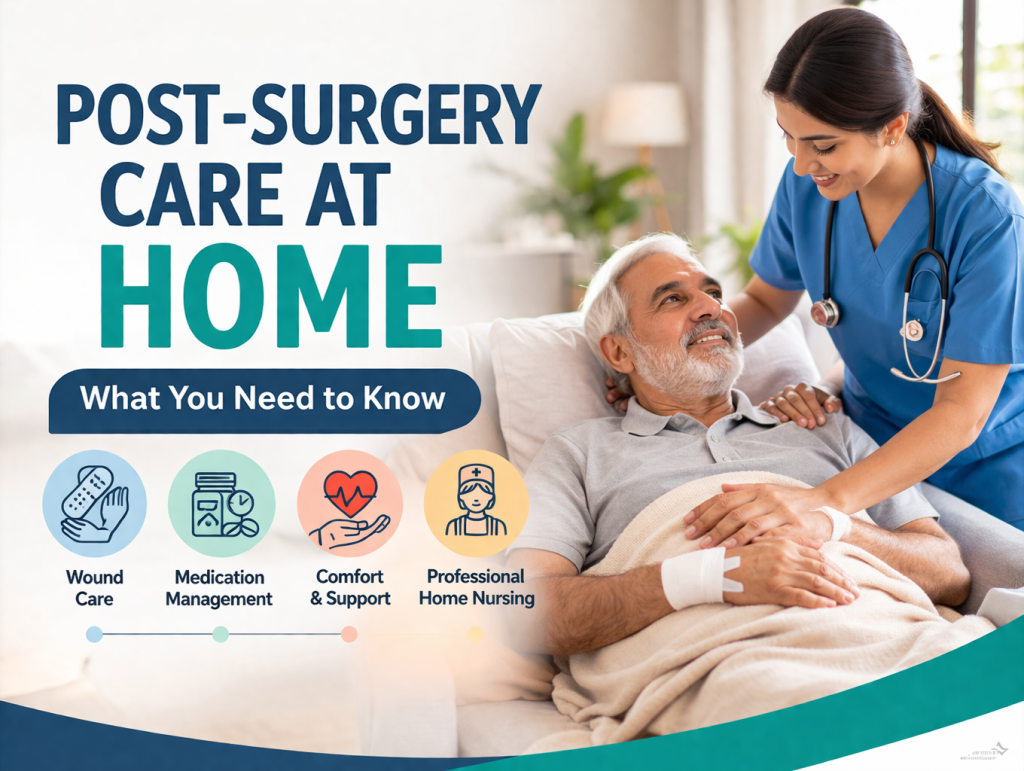
Just got home after surgery, or taking care of someone who did? It can feel a bit scary at first. Hospitals have nurses around all the time, but at home, it’s just you and your family. But guess what? With the right care, recovery at home can be safe, comfortable, and even faster. Let’s walk through everything you need to know about post-surgery care at home in a simple and friendly way. Why Post-Surgery Care at Home Matters After surgery, your body needs time to heal. This is called recovery. During this time, proper care helps: Prevent infections Reduce pain Help wounds heal faster Avoid complications (extra health problems) Make you feel more comfortable Think of it like this:If you water a plant properly, it grows well. If you ignore it, it struggles. Your body works the same way after surgery! That’s why many families choose Home nursing services in Lahore or Patient care services in Lahore to make recovery easier and safer. What Happens After Surgery? When you return home, your body may feel: Weak or tired Sore or painful Slow to move Sensitive around the surgery area This is completely normal. You might also have: Stitches or bandages Medicines to take Doctor’s instructions to follow Your job is simple: follow the care plan and give your body time to heal. Setting Up Your Home for Recovery Before or right after coming home, it helps to prepare your space. Make the Patient Comfortable Keep the bed clean and soft Use extra pillows for support Keep water, medicines, and phone nearby Make sure the room has fresh air Keep Things Safe Remove items that can cause slipping Keep floors dry Ensure good lighting at night Easy Movement Place important items within reach Avoid stairs if possible Use a walking aid if needed Tip: A calm and clean space can help the patient relax and heal faster. Wound Care: Keeping It Clean and Safe Taking care of the wound is one of the most important parts of recovery. Simple Wound Care Tips Always wash your hands before touching the wound Keep the area clean and dry Change bandages as advised Do not touch or scratch the wound Watch for Warning Signs Call a doctor if you notice: Redness or swelling Pus or bad smell Fever Increased pain These could be signs of infection. Home Nursing services in Lahore can help with professional wound care if you’re unsure how to do it. Managing Pain After Surgery Pain is normal after surgery, but it should be controlled. What You Can Do Take medicines exactly as prescribed Don’t skip doses Use pillows to support the body Rest when needed Natural Ways to Feel Better Gentle movement (if allowed) Deep breathing Light massage (away from the wound) Example: After a small surgery, sitting in a comfortable position with pillows can reduce pain a lot. Medicines: Taking Them the Right Way Medicines are a big part of recovery. Important Tips Follow the doctor’s schedule Don’t stop medicines early Don’t take extra doses Use reminders or alarms Types of Medicines You May Have Pain relievers Antibiotics (to stop infection) Anti-swelling medicines If you’re confused, Patient care services in Lahore can help manage medicines safely. Eating Right for Faster Healing Food plays a big role in recovery. Your body needs energy to heal. Best Foods After Surgery Soft foods like soup, yogurt, khichdi Fruits and vegetables Protein foods like eggs, chicken, lentils Plenty of water Foods to Avoid Junk food Oily or spicy meals Sugary drinks Fun tip: Think of food as “fuel” for your body. Better fuel = faster healing! Rest vs Movement: Finding the Balance You might think complete bed rest is best. But that’s not always true. Why Movement Matters Improves blood flow Prevents stiffness Reduces risk of blood clots Safe Movement Tips Start slow Follow doctor’s advice Don’t push too hard Example: A short walk inside the room can help more than lying down all day. Personal Hygiene After Surgery Staying clean helps prevent infections. Hygiene Tips Take baths only when the doctor allows Keep the wound dry Wear clean clothes Change bed sheets regularly If bathing is difficult, sponge cleaning is a good option. Emotional Support: Don’t Ignore This Recovery is not just physical. It’s emotional too. Patients may feel: Sad Worried Frustrated How to Help Talk and listen Stay positive Keep them company Encourage small progress Say things like: “You’re doing great!” or “You’ve got this!” When to Get Professional Help Sometimes, home care needs expert support. You Should Consider Help If: The patient is elderly There is limited mobility Wound care is complicated Medicines are confusing Family members are busy Shumaya Home Care & Patient Service provides trusted Home nursing services in Lahore and Patient care services in Lahore to support families during recovery. How Home Nursing Services Can Help Professional nurses can make recovery much easier. Services Include Wound dressing Injection and IV care Monitoring vital signs Medication management Personal care support Isn’t that a relief? You don’t have to do everything alone. 👉 You can also read our guide on [What is Home Care? A Complete Guide for Families]👉 And learn more from [Why Choose Professional Home Care Services?] (Internal links for better understanding) Common Mistakes to Avoid Let’s quickly look at what NOT to do: Skipping medicines Ignoring doctor’s advice Not cleaning the wound properly Staying in bed all day Lifting heavy items too soon Avoid these, and recovery becomes much smoother. Real-Life Example Let’s say Ahmed had surgery and came home. At first, he stayed in bed all day. He felt weak and slow. Then his family: Helped him walk a little each day Gave healthy food Followed medicine timings Kept his wound clean Within weeks, he started feeling much better. Small steps made a big difference! Frequently Asked Questions (FAQs) 1. How long does recovery take after surgery? It depends on the type of surgery. Some take a few days, others take weeks. Always
Elderly Patient Care at Home: Benefits & Best Practices

Caring for an elderly loved one can feel confusing sometimes.Should you choose hospital care, or is home care the better option? Many families in Lahore are now choosing a simpler and more comfortable solution—elderly patient care at home. With the help of home nursing services in Lahore, your loved one can receive proper care without leaving the comfort of home. They stay close to family, feel relaxed, and often recover better. Let’s walk through everything you need to know in a simple and clear way. What is Elderly Patient Care at Home? Elderly patient care at home means providing medical and daily support to seniors in their own house. This care includes: Help with bathing, dressing, and eating Giving medicines on time Monitoring blood pressure, sugar, and overall health Emotional support and companionship With patient care services in Lahore, trained caregivers and nurses visit your home and provide safe, professional care. Think of it this way:Instead of moving your loved one to a hospital, care comes to your home. Why More Families Are Choosing Home Care Hospitals are important, but they are not always the most comfortable place for long-term care. Now imagine your loved one: Resting in their own bed Eating home-cooked meals Surrounded by family That’s where home nursing makes a real difference. 1. Comfort and Familiar Environment Being at home helps seniors feel calm and secure. Better sleep Less confusion Improved emotional health For example, patients with dementia often feel safer in familiar surroundings. 2. Personalized Attention In hospitals, one nurse may handle many patients.At home, your loved one gets focused, one-on-one care. This means: Care based on their needs Quick response to health changes Better overall attention 3. Family Involvement Would you rather visit your loved one for a short time or stay close all day? With patient care services in Lahore: Family can stay involved You can monitor care closely Emotional support is always there 4. Lower Risk of Infections Hospitals can expose patients to infections. At home: The environment is cleaner Fewer outside germs Safer for elderly with weak immunity 5. Cost-Effective for Long-Term Care Long hospital stays can be expensive. Home nursing services in Lahore often: Offer flexible care plans Reduce hospital costs Save travel and extra expenses Types of Elderly Care at Home Every patient has different needs. Here are the common types of care: 1. Personal Daily Care Bathing and grooming Dressing Feeding Help with walking 2. Medical Care (Home Nursing) Provided by trained and experienced nurses: Injections and IV care Wound dressing Vital signs monitoring Medicine management Learn more about our Home Nursing Services in Lahore to see how professional nurses can support your family. 3. Companion Care Some seniors mainly need emotional support. Caregivers can: Talk and spend time Help reduce loneliness Assist with light daily activities 4. Specialized Care For serious conditions like: Stroke recovery Dementia Paralysis Diabetes You can also read about Support for Chronic Illness at Home to better understand long-term care needs. Best Practices for Elderly Patient Care at Home Let’s look at simple steps you can follow to give safe and effective care. 1. Make the Home Safe Safety should always come first. Remove loose rugs Install grab bars in bathrooms Keep rooms well-lit Use non-slip mats These small changes can prevent falls and injuries. 2. Maintain Hygiene Cleanliness is very important for elderly care. Wash hands before and after care Keep bedding clean Use sanitized medical equipment This helps prevent infections. 3. Follow a Daily Routine A fixed routine makes life easier. Set meal times Keep regular sleep hours Give medicines on time This creates stability and comfort. 4. Manage Medicines Properly Missing doses can cause health issues. Helpful tips: Use a pill organizer Set phone reminders Keep a medicine chart A professional home nurse can handle this safely. 5. Focus on Nutrition Healthy food supports recovery. Include: Soft and easy-to-eat meals Fruits and vegetables Plenty of fluids Avoid: Oily food Too much salt 6. Encourage Light Movement Even small activity helps. Short walks Gentle exercises Sitting movements This improves blood flow and keeps muscles active. 7. Support Emotional Well-Being Elderly patients may feel lonely or worried. You can help by: Talking daily Involving them in family time Watching TV or listening to music together 8. Hire Professional Caregivers Sometimes, family support is not enough—and that’s okay. Trained caregivers: Understand medical needs Handle emergencies Provide proper patient care Learn why families trust professional home care services for their loved ones. Sample Daily Care Routine Here’s a simple example you can follow: Morning: Bathing, breakfast, medicines Afternoon: Rest and light activity Evening: Walk and family time Night: Dinner and sleep routine This keeps the day organized and stress-free. When Hospital Care May Be Needed Home care is helpful, but some situations need hospital support: Severe breathing problems Chest pain Serious injuries Need for surgery In such cases, immediate medical attention is important. Common Challenges and Simple Solutions Caregiver Stress Take breaks and share responsibilities. Medical Emergencies Keep emergency numbers ready and consider trained nursing support. Patient Refuses Help Stay calm and explain gently. Managing Time Create a daily care schedule. Real-Life Example Ahmed from Lahore takes care of his mother after a stroke. At first, he struggled with: Medicines Mobility support Balancing work After hiring a home nursing service in Lahore: A trained nurse manages daily care His mother is improving Ahmed feels less stressed This shows how the right support can make a big difference. Frequently Asked Questions (FAQs) 1. Is home care safe for elderly patients? Yes. With trained caregivers and proper setup, it is safe and comfortable. 2. When should I consider home nursing? After surgery For long-term illness When daily care becomes difficult 3. Can I get 24/7 care at home? Yes, many patient care services in Lahore offer full-time and 24/7 care options. 4. How do I choose the right caregiver? Look for: Experience Verified background Good communication Reliable service provider 5. Can serious conditions be managed at
Understanding the Difference Between Home Nursing & Hospital Care
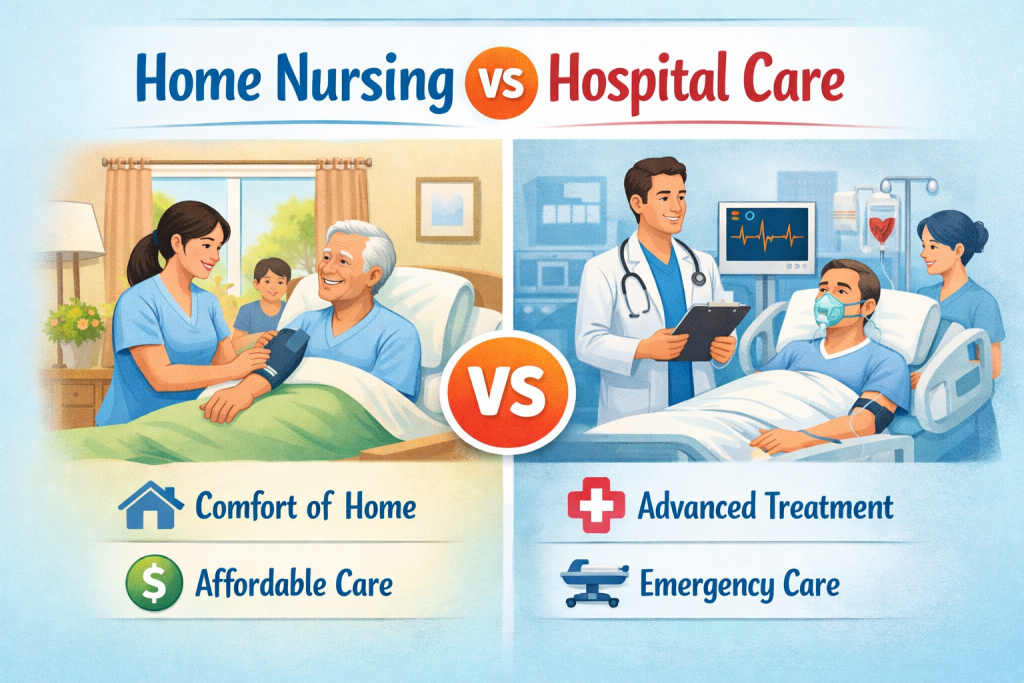
When someone in the family gets sick, one big question often comes up: Should the patient stay in the hospital, or receive care at home? Many families in Lahore face this decision every day. Hospitals are great for serious treatment, but not every patient needs to stay there for a long time. In many cases, Home nursing services in Lahore allow patients to recover safely in their own homes with professional medical help. So how do you know which option is right? In this friendly guide, we’ll explain the difference between Home Nursing and Hospital Care in simple words. By the end, you’ll clearly understand which option may work best for your loved one. Let’s get started. What Is Hospital Care? Hospital care means a patient stays in a hospital where doctors, nurses, and medical equipment are available. Hospitals are designed to treat serious illnesses and emergencies. Patients usually stay in hospital rooms or wards while doctors check their condition and provide treatment. Hospitals are mainly used for: Emergency treatment Surgeries Serious injuries Sudden illness Advanced medical tests Intensive monitoring Hospitals have special machines and trained medical staff who can respond quickly to serious conditions. Example Imagine someone has a heart attack or major accident. In that situation, the patient needs emergency doctors, machines, and immediate treatment. A hospital is the best place for that type of care. However, once the patient becomes stable, many doctors recommend continuing recovery at home with professional Home Nursing. What Is Home Nursing? Now let’s talk about Home Nursing. Home nursing means a trained nurse or caregiver provides medical care in the patient’s home instead of a hospital. This allows the patient to stay comfortable while still receiving professional medical support. At Shumaya Home Care & Patient Service, we provide reliable Home nursing services in Lahore to help patients recover safely in their own homes. Home nurses can help with many tasks, including: Checking blood pressure, temperature, and sugar levels Giving injections or medicines Wound care and dressing Helping patients move safely Supporting elderly patients Assisting bedridden patients Monitoring recovery after surgery This type of Patient care services in Lahore helps families manage medical care without long hospital stays. And honestly, many patients feel happier recovering at home. Isn’t that a comforting thought? 😊 Home Nursing vs Hospital Care: Key Differences Let’s make things simple with a quick comparison. Feature Hospital Care Home Nursing Location Patient stays in hospital Patient stays at home Care team Doctors and hospital nurses Professional home nurse Best for Emergencies and surgery Recovery and long-term care Environment Medical setting Comfortable home setting Family presence Limited visiting hours Family can stay close Cost Higher for long stays Often more affordable In short: Hospitals treat serious conditions first, while Home Nursing supports recovery and ongoing Patient care. Both play an important role in healthcare. When Hospital Care Is the Right Choice There are situations where hospital treatment is necessary. Let’s look at a few examples. 1. Medical Emergencies Conditions like these require immediate hospital care: Heart attacks Stroke Severe breathing problems Serious injuries Heavy bleeding Hospitals have emergency teams and life-saving equipment. 2. Surgery Hospitals are required for operations because they provide: Operation theaters Surgeons and specialists Anesthesia support Surgical equipment After surgery, patients often continue healing with Home nursing services in Lahore. 3. Intensive Monitoring Some patients need machines to monitor: Heart rate Oxygen levels Breathing Hospitals are designed for this level of monitoring. When Home Nursing Is the Better Option Now here’s something many families discover. Once a patient is stable, staying in the hospital is not always necessary. That’s when Patient care services in Lahore can help. 1. Recovery After Surgery After hospital discharge, patients may still need help with: Medicines Wound dressing Walking support Monitoring vital signs A home nurse can safely manage these tasks. Example: Someone who had knee surgery may need help with exercises and movement. A home nurse can guide them every day. 2. Elderly Care at Home Many seniors need support with daily activities such as: Taking medicines Walking safely Personal hygiene Eating properly With Home Nursing, elderly patients can stay in their own homes instead of moving to a hospital. Most seniors feel calmer and happier in familiar surroundings. 3. Bedridden Patient Care Patients who cannot move easily require regular assistance. Home nurses can help with: Turning the patient regularly Preventing bed sores Feeding assistance Hygiene support These services are an important part of Patient care services in Lahore. 4. Long-Term Illness Care Some illnesses require regular monitoring but not hospital admission. For example: Diabetes High blood pressure Stroke recovery Paralysis Professional Home nursing services in Lahore help manage these conditions safely at home. Why Many Families Prefer Home Nursing Let me ask you something. If you were recovering from illness, would you prefer a busy hospital ward or your own room at home? Most people choose home. Here are a few reasons why. 1. Comfort and Familiar Environment Patients can: Sleep in their own bed Eat home-cooked meals Stay close to loved ones A familiar environment often helps patients feel calmer. 2. Lower Stress Hospitals can be noisy and stressful. At home, the patient can relax and focus on recovery. 3. Personal Attention In hospitals, nurses care for many patients. With Home Nursing, the nurse focuses mainly on one patient. That means more attention and better monitoring. 4. Cost Savings for Long Care Long hospital stays can become expensive. For ongoing recovery, Patient care services in Lahore are often more affordable. 5. Family Support Being around family members can improve a patient’s emotional well-being. And emotional support plays a big role in healing. Real-Life Example Let’s look at a simple example. Ali’s mother had a stroke. She stayed in the hospital for treatment for about two weeks. After her condition improved, doctors allowed her to go home. Ali arranged Home nursing services in Lahore for daily care. The nurse helped with: Medicine management Blood pressure checks Physical exercises Walking assistance