

A heart patient may need a home nurse after hospital discharge, heart surgery, or when their condition requires professional monitoring and nursing care. However, not every heart patient needs a nurse full-time. The right level of support depends on the patient’s condition, the doctor’s instructions, and the care required at home.
Some patients can manage their recovery with family support and regular medical follow-ups. Others need help with prescribed nursing procedures, medication administration, wound care, or monitoring changes in their health.
For families caring for a loved one at home, knowing when to arrange professional help can make daily care more manageable.
This guide explains when a heart patient may need a home nurse, what nursing care can include, when a patient attendant may be sufficient, and when medical attention should take priority over home care.
1. When Does a Heart Patient Need a Home Nurse?
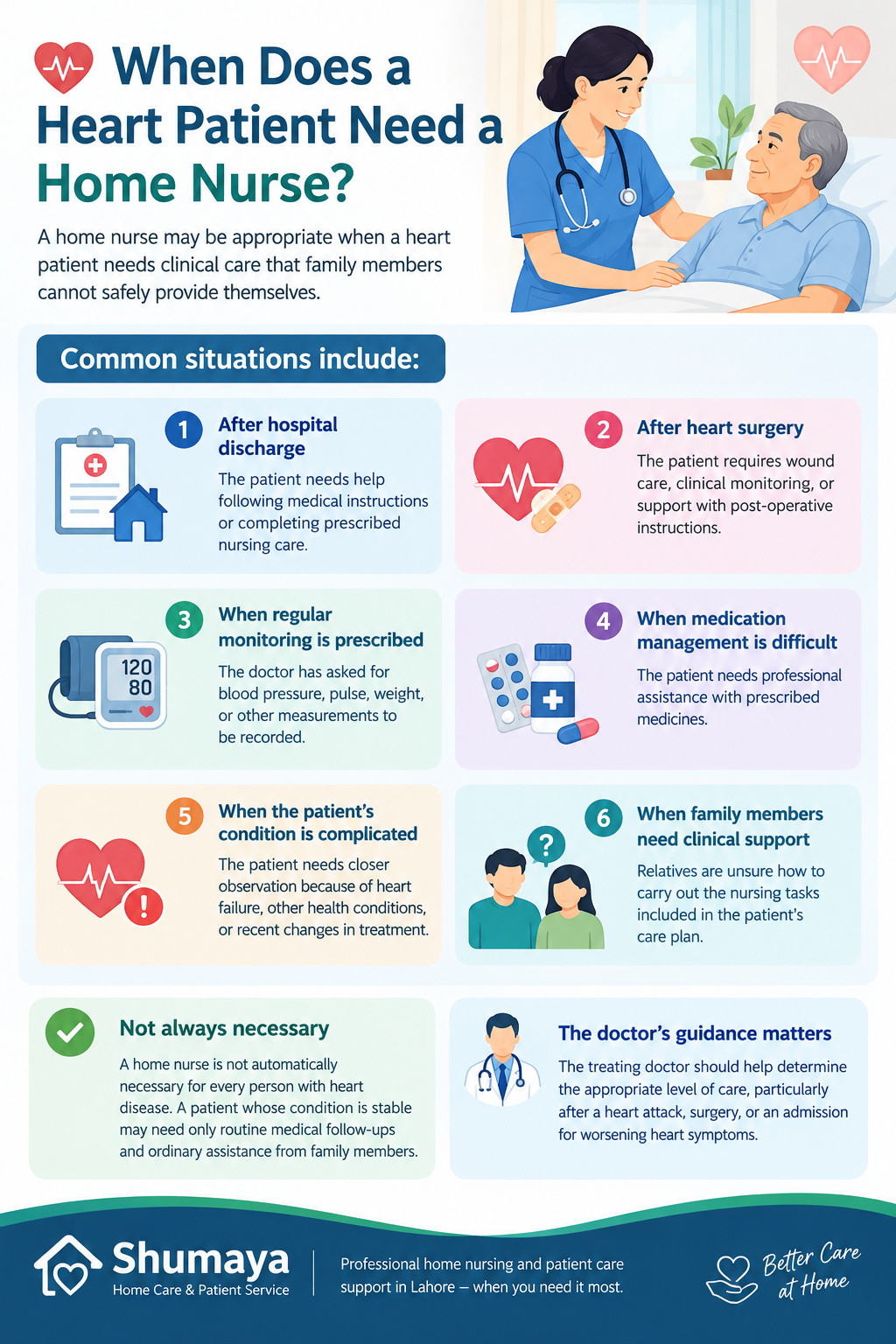
A home nurse may be appropriate when a heart patient needs clinical care that family members cannot safely provide themselves.
Common situations include:
After hospital discharge: The patient needs help following medical instructions or completing prescribed nursing care.
After heart surgery: The patient requires wound care, clinical monitoring, or support with post-operative instructions.
When regular monitoring is prescribed: The doctor has asked for blood pressure, pulse, weight, or other measurements to be recorded.
When medication management is difficult: The patient needs professional assistance with prescribed medicines.
When the patient’s condition is complicated: The patient needs closer observation because of heart failure, other health conditions, or recent changes in treatment.
When family members need clinical support: Relatives are unsure how to carry out the nursing tasks included in the patient’s care plan.
A home nurse is not automatically necessary for every person with heart disease. A patient whose condition is stable may need only routine medical follow-ups and ordinary assistance from family members.
The treating doctor should help determine the appropriate level of care, particularly after a heart attack, surgery, or an admission for worsening heart symptoms.
2. Situations When Professional Nursing Care May Help
After hospital discharge
Returning home after a cardiac event can be reassuring, but recovery may still involve several care instructions.
A home nurse may help the patient follow the discharge plan, record prescribed measurements, provide nursing care, and report concerning changes to the treating team.
Before discharge, families should ask the hospital team which tasks require a qualified nurse, how often they are needed, and which symptoms require urgent medical attention.
After heart surgery
Patients recovering from procedures such as coronary artery bypass surgery or heart valve surgery may need support during the recovery period.
Depending on the surgical team’s instructions, a home nurse may provide:
Prescribed wound care.
Monitoring of vital signs when indicated.
Assistance with the post-operative care plan.
Observation for changes that need medical review.
Guidance for family members on safe care practices.
Increasing wound redness, discharge, worsening pain, or fever should be reported promptly to the surgical team. The family should follow the discharge instructions about where to seek assessment.
A nurse can support recovery, but cannot replace the surgeon’s follow-up appointments or emergency treatment when needed.
When heart failure requires closer support
Heart failure is a condition in which the heart cannot pump blood as effectively as the body needs. Some people remain stable for long periods, while others experience symptoms that require changes in their care.
A home nurse may help follow the prescribed care plan by recording weight, blood pressure, pulse, or other measurements when instructed. The nurse may also observe changes in breathing, swelling, and activity tolerance.
Families should follow the patient’s individual instructions about daily weighing, fluid intake, medicines, and when to contact the healthcare team. Do not change fluid intake or medication doses without medical advice.
New or worsening breathlessness, increasing swelling, or unexplained weight changes need prompt medical guidance. Severe breathing difficulty or other emergency symptoms require immediate medical assistance.
When medicines are difficult to manage
Some heart patients take several medicines for blood pressure, heart rhythm, heart failure, or other cardiovascular conditions. Keeping track of doses and schedules may become difficult after hospital discharge or when memory problems are present.
A qualified home nurse may assist with prescribed medication administration within their professional scope and applicable requirements.
Professional support may be useful when the patient needs help following a complicated medication schedule or requires observation for possible side effects.
Never stop, double, or change a heart medicine without appropriate medical advice. Some medicines can cause serious problems if they are taken incorrectly or discontinued suddenly.
A patient attendant may provide agreed reminders or general assistance, but should not independently make clinical medication decisions or perform nursing procedures beyond their qualifications.
3. What Can a Home Nurse Do for a Heart Patient?
A home nurse’s responsibilities depend on the patient’s condition, professional qualifications, and prescribed care plan.
Home nursing support may include:
Clinical monitoring: Measuring and recording blood pressure, pulse, and other observations as directed.
Medication-related care: Supporting prescribed medication administration within professional scope.
Wound care: Providing prescribed care following cardiac surgery or another procedure.
Observation of symptoms: Reporting changes such as unusual weakness, worsening swelling, or breathing difficulties.
Recovery support: Helping the patient follow the treating team’s instructions.
Family guidance: Explaining the agreed care routine and the signs that require medical attention.
Not every patient requires all these services. Some need occasional nursing visits, while others may need longer shifts or more frequent support.
A nurse also cannot guarantee that complications will be prevented. Serious heart problems can develop even when recent measurements appear normal, so symptoms must always be taken seriously.
4. Home Nurse vs Patient Attendant: Which Does a Heart Patient Need?
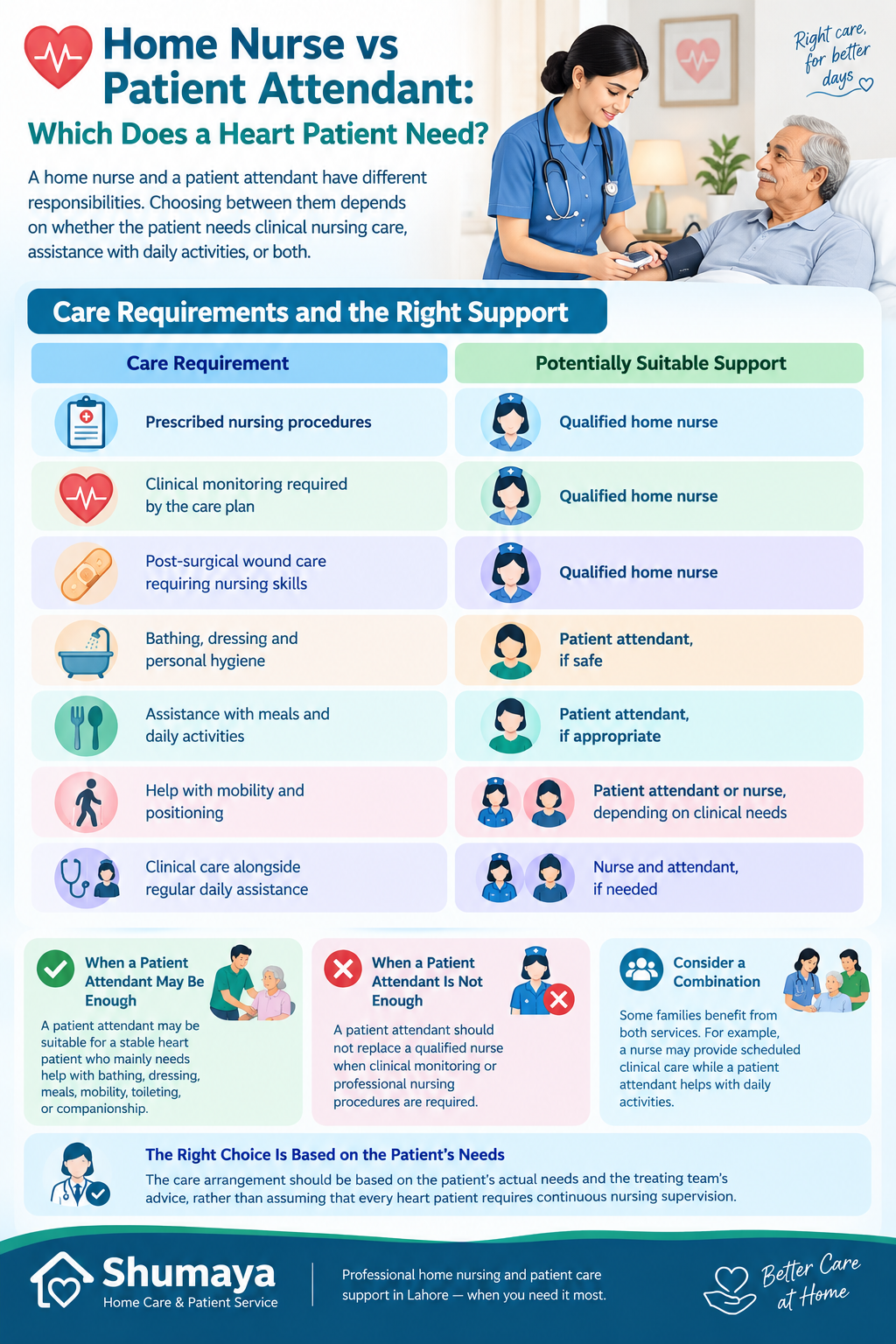
A home nurse and a patient attendant have different responsibilities. Choosing between them depends on whether the patient needs clinical nursing care, assistance with daily activities, or both.
| Care requirement | Potentially suitable support |
|---|---|
| Prescribed nursing procedures | Qualified home nurse |
| Clinical monitoring required by the care plan | Qualified home nurse |
| Post-surgical wound care requiring nursing skills | Qualified home nurse |
| Bathing, dressing and personal hygiene | Patient attendant, if safe |
| Assistance with meals and daily activities | Patient attendant, if appropriate |
| Help with mobility and positioning | Patient attendant or nurse, depending on clinical needs |
| Clinical care alongside regular daily assistance | Nurse and attendant, if needed |
A patient attendant may be suitable for a stable heart patient who mainly needs help with bathing, dressing, meals, mobility, toileting, or companionship.
However, a patient attendant should not replace a qualified nurse when clinical monitoring or professional nursing procedures are required.
Some families benefit from a combination of services. For example, a nurse may provide scheduled clinical care while a patient attendant helps with daily activities.
The care arrangement should be based on the patient’s actual needs and the treating team’s advice, rather than assuming that every heart patient requires continuous nursing supervision.
5. How to Choose the Right Home-Care Support
Before arranging home nursing care, discuss the patient’s needs with the treating doctor and clarify the tasks that must be completed at home.
Consider these questions:
Has the doctor prescribed nursing procedures or regular clinical monitoring?
Is the patient recovering from heart surgery or a recent hospital admission?
Does the patient need help with medicines or wound care?
Can family members safely manage the patient’s daily activities?
How many hours of support are needed, and are nursing visits or longer shifts more suitable?
Does the patient have preferences about a male or female care professional?
Families seeking home nursing services in Lahore should explain the patient’s diagnosis, discharge instructions, mobility, prescribed procedures, and required care hours before arranging staff.
Should you choose a male or female nurse?
Families may prefer a male or female nurse based on the patient’s comfort, privacy, cultural preferences, and personal-care needs. A patient’s gender alone does not determine which nurse is appropriate.
When the primary need is bathing, toileting, dressing, mobility assistance, or companionship, a male or female patient attendant may be suitable if the patient’s condition permits.
When professional clinical care is needed, qualifications and relevant nursing experience should remain the main considerations.
Shumaya Home Care & Patient Service provides home nursing and patient care support in Lahore. Families can discuss the patient’s needs to determine whether a qualified nurse, a trained patient attendant, or a combination of support is appropriate.
6. When Should a Heart Patient Seek Medical Help?
Home nursing is intended to support an appropriate care plan. It should never delay medical assessment when a patient’s condition worsens.
Seek emergency medical assistance immediately for:
New or severe chest pain, pressure, or tightness.
Severe or sudden difficulty breathing.
Fainting or loss of consciousness.
Sudden facial drooping, weakness on one side, or difficulty speaking.
Any rapid deterioration that suggests a serious medical emergency.
Do not wait for a home nurse to arrive before seeking emergency assistance. Follow local emergency guidance.
Other changes, such as increasing leg swelling, worsening breathlessness, persistent dizziness, or unexpected weight changes, should be discussed promptly with the treating healthcare team. The urgency depends on the symptoms and the patient’s individual care plan.
If the patient has written instructions from their cardiologist or hospital team, follow those instructions and seek help when the specified warning signs occur.
Frequently Asked Questions
Does every heart patient need a home nurse after hospital discharge?
No. Some patients can recover at home with family support, a clear care plan, and scheduled medical follow-ups. Others need professional nursing procedures, wound care, or closer monitoring. The treating team should help determine the appropriate level of support.
How long does a heart patient need a home nurse?
There is no single duration for every patient. Some may need a few nursing visits, while others require longer support during recovery or ongoing illness. The schedule should be based on clinical needs and reviewed as the patient’s condition changes.
Can an elderly heart patient receive care at home?
Yes, when home care is suitable for the patient’s medical condition and support needs. An elderly patient may benefit from nursing care, daily living assistance, or both. The care plan should account for mobility, memory, other medical conditions, and the risk of falls.
Can a patient attendant look after a heart patient?
A patient attendant can assist with daily activities such as bathing, dressing, meals, toileting, mobility, and companionship when these tasks are safe. A qualified nurse is needed when the patient requires professional nursing care or clinical procedures.
Can a home nurse replace a cardiologist?
No. A home nurse supports the prescribed care plan but does not replace the cardiologist, necessary investigations, follow-up appointments, or emergency treatment.
Can I arrange a home nurse for a heart patient in Lahore?
Families in Lahore can seek home nursing support based on the patient’s needs. Before arranging care, explain the patient’s condition, prescribed nursing tasks, expected hours, and any required qualifications so the appropriate service can be considered.

Home Nursing Support for Heart Patients in Lahore
Caring for a heart patient at home can be challenging, especially after hospital discharge, surgery, or a change in health. The right level of support can help families follow the prescribed care plan while managing daily responsibilities.
Shumaya Home Care & Patient Service provides home nursing and patient care support in Lahore. Depending on the patient’s requirements, families may consider a qualified male or female staff nurse for nursing care or a trained patient attendant for daily living assistance.
If your loved one needs support after a cardiac event or hospital stay, speak with the treating doctor about the care required and contact Shumaya to discuss a suitable arrangement.
Call +92 300 1111931 to discuss home nursing and patient care services in Lahore.
For severe or sudden symptoms, seek emergency medical assistance rather than waiting for a home-care appointment.