

Caring for a loved one with a heart condition can be both rewarding and challenging. Many families worry about whether they are doing enough, how to handle daily care, and what signs might indicate a problem.
The good news is that many heart patients can recover well and maintain a good quality of life at home with the right support. Small daily actions—such as managing medications, preparing healthy meals, monitoring symptoms, and providing emotional encouragement—can make a meaningful difference.
If you’re wondering how to take care of a heart patient at home, this guide will walk you through practical steps that families can follow to help keep their loved ones safe, comfortable, and supported.
Understanding the Needs of a Heart Patient
Heart patients are not all the same. Some may be recovering after a heart attack or heart surgery, while others may be living with long-term conditions such as heart failure or irregular heart rhythms.
Most heart patients benefit from:
Taking medications as prescribed
Following a heart-healthy diet
Monitoring symptoms regularly
Staying physically active as advised by a doctor
Managing stress
Attending follow-up appointments
The exact care plan should always follow the recommendations of the patient’s healthcare provider.
Different Heart Conditions May Need Different Care
Understanding the patient’s specific condition can help families provide better support.
Heart Attack Recovery
Patients recovering from a heart attack often need:
Strict medication adherence
Gradual return to daily activities
Regular follow-up visits
Lifestyle changes to support heart health
Heart Failure
Heart failure patients often require close monitoring of:
Weight changes
Swelling in the feet and legs
Breathing difficulties
Fluid intake
Arrhythmias (Irregular Heartbeats)
Patients with arrhythmias may need:
Heart rate monitoring
Medication management
Observation for dizziness or fainting
Recovery After Heart Surgery
Patients recovering from procedures such as bypass surgery may need:
Incision care
Infection monitoring
Activity restrictions
Assistance with mobility during recovery
Creating a Safe and Comfortable Home Environment
A comfortable home environment can reduce stress and support recovery.
Make Daily Activities Easier
Consider:
Removing tripping hazards
Keeping essential items within reach
Providing comfortable seating
Ensuring good lighting throughout the home
Encourage Rest
Heart patients often need extra rest, especially during recovery.
Try to:
Maintain a regular schedule
Avoid excessive household noise
Allow time for breaks throughout the day
A calm environment can help reduce physical and emotional strain.
Help the Patient Take Medications Correctly
Medication management is one of the most important aspects of heart patient care.
Common medications may include:
Blood pressure medicines
Blood thinners
Cholesterol-lowering drugs
Diuretics
Heart rhythm medications
Medication Safety Tips
Follow prescription instructions carefully
Use a pill organizer
Set reminders for medication times
Never stop medications without medical advice
Keep an updated medication list
Many complications occur because medications are missed or taken incorrectly.
Families who need assistance with medication administration may benefit from professional home nursing services in Lahore.
How to Monitor Blood Pressure at Home
Many heart patients are advised to monitor their blood pressure regularly.
Best Practices
Check blood pressure at the same time each day
Sit comfortably with feet flat on the floor
Rest quietly for a few minutes before measuring
Avoid caffeine or smoking before testing if advised
Record results in a notebook or mobile app
Tracking readings can help doctors identify trends and adjust treatment when necessary.
Monitor Symptoms Every Day
Daily monitoring helps detect changes before they become serious.
Watch for Symptoms Such As
Shortness of breath
Swelling in the feet, ankles, or legs
Chest discomfort
Increased fatigue
Dizziness
Rapid heartbeat
Irregular heartbeat
Keep a Daily Record
Track:
Blood pressure
Weight
Symptoms
Medication intake
Physical activity
This information can be valuable during medical appointments.
Managing Fluid Intake
Some heart patients, particularly those with heart failure, may need to monitor how much fluid they consume.
Important Tips
Follow the doctor’s instructions regarding fluids
Avoid drinking excessive amounts if restrictions have been advised
Keep track of daily fluid intake when recommended
Report sudden swelling or weight gain to a healthcare provider
Fluid needs vary from patient to patient, so individual medical advice should always be followed.
Encourage a Heart-Healthy Diet
Nutrition plays a major role in supporting heart health.
Foods That Are Often Recommended
Fresh vegetables
Fruits
Whole grains
Fish
Lean chicken
Beans and lentils
Low-fat dairy products
Foods to Limit
Excess salt
Fried foods
Processed foods
Sugary drinks
Foods high in saturated fats
Why Salt Matters
Too much sodium can cause the body to hold extra fluid, which may increase strain on the heart.
Reading food labels and preparing meals at home can help reduce sodium intake.
Encourage Safe Physical Activity
Many heart patients benefit from regular movement when approved by their doctor.
Suitable Activities May Include
Short walks
Light stretching
Doctor-approved exercises
Breathing exercises
Activities to Avoid
Heavy lifting
Sudden intense exercise
Activities that cause severe shortness of breath
The goal is to stay active without overworking the heart.
Helping a Heart Patient Get Better Rest
Quality sleep is an important part of recovery and long-term heart health.
Ways to Improve Sleep
Maintain a consistent bedtime
Keep the sleeping area comfortable
Avoid heavy meals close to bedtime
Limit caffeine late in the day
Follow prescribed medication schedules
If the patient experiences breathing difficulties during sleep, report this to a healthcare provider.
Support Emotional and Mental Well-Being
Living with a heart condition can affect emotional health.
Some patients may experience:
Anxiety
Fear about the future
Frustration
Depression
How Families Can Help
Listen patiently
Encourage social interaction
Celebrate small improvements
Offer reassurance and support
Encourage professional counseling if needed
Emotional support can positively influence overall recovery.
What Home Nurses Commonly Observe in Heart Patients
Experienced caregivers and nurses often notice patterns that can affect recovery.
Common issues include:
Missed medication doses
Eating high-salt foods without realizing it
Ignoring swelling in the feet or legs
Delaying medical appointments
Returning to strenuous activities too quickly
Recognizing these common challenges can help families avoid unnecessary complications.
A Sample Daily Routine for a Heart Patient
Having a structured routine can make care easier.
Morning
Wake up at a consistent time
Check blood pressure if advised
Take morning medications
Eat a heart-healthy breakfast
Afternoon
Enjoy a light lunch
Take a short walk if approved
Rest as needed
Stay hydrated according to medical advice
Evening
Eat a balanced dinner
Take evening medications
Review symptoms and daily notes
Prepare for a good night’s sleep
A simple routine helps maintain consistency and supports recovery.
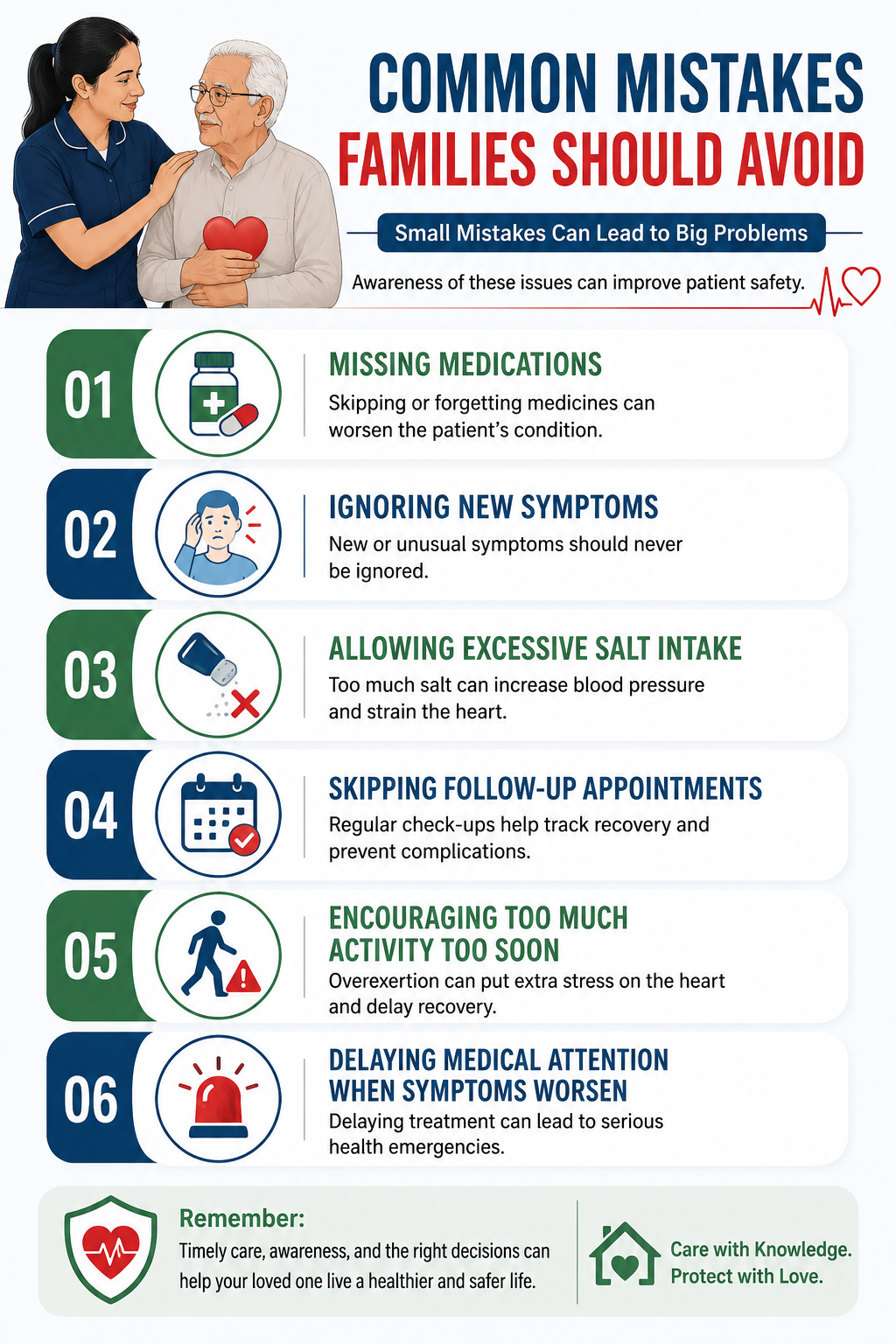
Common Mistakes Families Should Avoid
Even caring families can make mistakes.
Try to avoid:
Missing medications
Ignoring new symptoms
Allowing excessive salt intake
Skipping follow-up appointments
Encouraging too much activity too soon
Delaying medical attention when symptoms worsen
Awareness of these issues can improve patient safety.
When to Seek Immediate Medical Help
Some symptoms require urgent medical attention.
Call emergency services or seek immediate medical care if the patient experiences:
Severe chest pain
Crushing chest pressure
Sudden severe shortness of breath
Fainting
Loss of consciousness
Sudden confusion
Difficulty speaking
Weakness on one side of the body
Severe dizziness
Blue lips or fingertips
Heavy sweating with chest discomfort
Quick action can save lives during a heart emergency.
Caring for Yourself as a Caregiver
Looking after a heart patient can be demanding.
Family caregivers should also pay attention to their own well-being.
Helpful Tips
Take breaks when possible
Share responsibilities with other family members
Ask for help when needed
Maintain your own health appointments
Get enough rest
Providing good care becomes easier when caregivers are also taking care of themselves.
Home Care for Heart Patients in Lahore
Many families in Lahore care for elderly parents and heart patients while balancing work, school, and household responsibilities.
Managing medications, monitoring symptoms, preparing heart-healthy meals, and attending medical appointments can become challenging over time.
In these situations, professional patient care services in Lahore can provide valuable support while allowing patients to remain comfortable in their own homes.
How Professional Home Nursing Services Can Help
Some heart patients require additional support beyond what family members can provide alone.
Professional home nursing services in Lahore may assist with:
Medication administration
Blood pressure monitoring
Heart rate monitoring
Recovery after heart surgery
Mobility assistance
Patient education
Symptom observation
Depending on the patient’s condition, families may also benefit from services such as:
Medication management support
Critical care nursing
Elderly patient care
Post-surgical nursing care
Emergency patient support
Bedridden patient care
These services can help families manage complex care needs more confidently.
Frequently Asked Questions
Can a heart patient recover completely at home?
Many heart patients can recover successfully at home when they follow medical advice, take medications correctly, and maintain healthy habits.
How often should blood pressure be checked?
This depends on the patient’s condition and doctor’s recommendations. Some patients may need daily monitoring, while others may require less frequent checks.
Is walking good for heart patients?
In many cases, yes. However, the amount and type of exercise should be approved by the patient’s healthcare provider.
What should a heart patient avoid eating?
Foods high in salt, saturated fats, and added sugars are often limited. Individual dietary recommendations may vary.
When should I worry about swelling?
New or worsening swelling in the feet, ankles, legs, or abdomen should be reported to a healthcare provider, especially if accompanied by weight gain or breathing difficulties.
Conclusion
Learning how to take care of a heart patient at home involves more than helping with daily tasks. It requires attention to medications, nutrition, symptom monitoring, physical activity, emotional well-being, and regular medical follow-up.
By creating healthy routines and staying alert to warning signs, families can play an important role in supporting recovery and long-term heart health.
For families seeking additional support, Shumaya Home Care & Patient Service provides compassionate home nursing services in Lahore and patient care services in Lahore, helping heart patients receive professional care in the comfort and familiarity of their own homes.