
How to Care for a TB Patient at Home: A Complete Guide for Families

Patient Care Guide How to Care for a TB Patient at Home: A Complete Guide for Families A tuberculosis diagnosis can feel overwhelming, but most patients recover fully at home with the right precautions, medication routine, and family support. Here’s what every caregiver in Lahore needs to know. ✓ Doctor Reviewed Information ✓ Family Care Guide ✓ Easy to Understand Quick Navigation What Is TB? Home Care Steps Preventing Spread Emotional Support Warning Signs Common Mistakes FAQs Related Care Guides Home Nursing Services in Lahore Skilled nursing support for patients recovering at home. Medical Attendant Services Day-to-day patient monitoring and assistance. Diabetic Patient Home Care Managing chronic conditions safely at home. Medication Management for Home Nurses Keeping treatment schedules on track. What Is Tuberculosis (TB)? Tuberculosis is an infectious disease caused by the bacterium Mycobacterium tuberculosis. It usually affects the lungs, though it can also affect other parts of the body such as the kidneys, spine, or brain. TB spreads through the air when a person with active pulmonary TB coughs, sneezes, laughs, or speaks. It does not spread by sharing food, shaking hands, or touching common household items. ℹ️ Good News TB is treatable and curable with the right combination of antibiotics. Most people start feeling better within a few weeks, but the entire treatment course — usually several months — must be completed. Can a TB Patient Be Cared for at Home? Yes. Many TB patients can safely recover at home if their doctor believes hospitalization isn’t necessary. Home care is generally suitable when: The patient is stable They are taking prescribed TB medicines Family members follow infection control measures Follow-up appointments are attended regularly The home has good ventilation ⚠️ Precaution The first few weeks of treatment are especially important, as the patient may still be able to spread the bacteria. Following your doctor’s advice closely during this period protects the whole household. How to Care for a TB Patient at Home Providing good care doesn’t require complicated medical knowledge — small daily habits make recovery smoother and safer. 1. Make Sure Medication Is Taken Correctly The most important part of TB treatment is taking medication exactly as prescribed. Give medicines at the same time every day Use a medication schedule or reminder Never skip doses Complete the full treatment even if the patient feels better Report side effects to the doctor instead of stopping medication 🚨 Why This Matters Stopping treatment too early can allow the bacteria to become drug-resistant, making TB much harder to treat. 2. Encourage Plenty of Rest The body needs energy to fight infection. Patients should get enough sleep every night, take short rest breaks during the day, and avoid heavy physical work until approved by their doctor. As recovery progresses, light activity may be recommended. 3. Provide a Healthy Diet A nutritious diet helps the immune system recover. Include foods such as eggs, chicken, fish, lentils and beans, milk and yogurt, fresh fruits, leafy green vegetables, whole grains, and nuts and seeds. 💡 Caregiver Tip If the patient has a poor appetite, offer smaller meals more frequently instead of three large ones, and encourage enough water unless the healthcare provider has advised otherwise. 4. Monitor Symptoms Every Day Keeping track of the patient’s condition helps identify problems early. Watch for: Watch For Why It Matters Persistent fever May indicate treatment isn’t yet working Increasing cough Sign that symptoms are worsening Difficulty breathing Requires prompt medical attention Weight loss / poor appetite Affects recovery and immune strength Fatigue Normal early on, but should gradually improve Medication side effects Should always be reported to the doctor A simple notebook or mobile app can help record symptoms and medication schedules. 5. Keep Follow-Up Appointments Regular medical visits let doctors confirm the infection is responding to treatment. Never skip follow-up examinations, laboratory tests, chest X-rays if recommended, or medication reviews. Preventing TB from Spreading at Home Protecting other family members is just as important as caring for the patient. Keep the Room Well Ventilated Fresh air helps reduce the concentration of TB bacteria indoors. Open windows whenever possible and allow sunlight into the room — good airflow makes it harder for bacteria to remain suspended in the air. Practice Good Cough Etiquette Cover mouth and nose with a tissue or elbow while coughing or sneezing Dispose of used tissues safely Wash hands afterward Wear Masks When Recommended During the early stages of treatment, healthcare providers may recommend that the patient wears a mask around others, and that caregivers wear masks during close contact if advised. Always follow your doctor’s guidance on mask use. Limit Close Contact During the Infectious Period Until the doctor confirms the patient is no longer infectious: avoid unnecessary visitors, reduce prolonged close contact, keep distance where practical, and ensure good airflow in shared spaces. These precautions are usually temporary. Maintain Good Hand Hygiene Everyone in the household should wash their hands regularly, especially after helping the patient, handling tissues, cleaning the patient’s room, or before preparing food. Emotional Support Matters Too Living with tuberculosis can be emotionally challenging — some patients worry about their health or feel isolated because of temporary precautions. Family support can make a big difference. Listen without judgment Encourage them to complete treatment Include them in family conversations when appropriate Celebrate small improvements Reassure them that TB is treatable 💡 Caregiver Tip Avoid blaming or criticizing the patient. Compassion and patience help build confidence during recovery. Warning Signs That Need Immediate Medical Attention Most patients recover well, but certain symptoms require prompt medical care. 🚨 Seek Emergency Medical Care Immediately If the Patient Experiences Severe difficulty breathing Coughing up large amounts of blood Persistent high fever Chest pain that worsens Severe weakness or confusion Loss of consciousness Serious medication reactions (widespread rash, yellowing of skin/eyes, severe vomiting) Common Mistakes Families Should Avoid Don’t Do Instead Stop medication once the patient feels better Complete the full prescribed course Miss follow-up appointments Attend every scheduled check-up and test
How to Take Care of a Diabetic Patient at Home

How to Take Care of a Diabetic Patient at Home | Shumaya Home Care 🏥 Home Care Guide How to Take Care of a Diabetic Patient at Home 📅 Published June 2026 ⏱ 15 min read 👤 Shumaya Home Care Team 📍 Lahore, Pakistan Caring for a loved one with diabetes can feel overwhelming at first. You may worry about keeping their blood sugar under control, preparing the right meals, giving medicines on time, or knowing when a problem needs immediate medical attention. The good news is that many people with diabetes live healthy and active lives with the right care at home. Small daily habits can make a big difference in preventing complications. This guide explains how to take care of a diabetic patient at home in simple, practical steps. Whether you’re caring for a parent, spouse, or another family member, you’ll learn how to create a safe daily routine and recognize warning signs that need medical attention. If your loved one requires extra support, Home Nursing Services in Lahore and Home Patient Care in Lahore can also help families manage diabetes with professional care in the comfort of home. Understanding Diabetes Diabetes is a long-term health condition in which the body has difficulty controlling the amount of sugar (glucose) in the blood. Glucose is the body’s main source of energy, but it needs a hormone called insulin to move from the bloodstream into the body’s cells. When insulin is not available or does not work properly, blood sugar levels become too high. Over time, uncontrolled diabetes can affect the heart, kidneys, eyes, nerves, and blood vessels. The goal of home care is to help keep blood sugar levels as close to the target range as possible while supporting the patient’s overall health and quality of life. Types of Diabetes Families Should Know Type 1 Diabetes People with Type 1 diabetes do not produce enough insulin. They need insulin injections or an insulin pump every day. Home caregivers should pay close attention to blood sugar monitoring, insulin timing, meal planning, signs of low blood sugar, and emergency preparedness. Type 2 Diabetes Type 2 diabetes is the most common form. The body either doesn’t make enough insulin or cannot use it effectively. Treatment may include healthy eating, regular physical activity, diabetes tablets, insulin injections (for some patients), and weight management. Many older adults receiving Home Patient Care in Lahore have Type 2 diabetes along with other conditions such as high blood pressure or heart disease. Gestational Diabetes Some women develop diabetes during pregnancy. Although it usually improves after childbirth, careful monitoring is still needed to protect both mother and baby. Why Proper Home Care Is So Important Good home care helps reduce the risk of many serious complications, including: Heart disease and stroke Kidney damage Vision problems Nerve damage Foot ulcers and serious infections Slow wound healing A well-planned daily routine also helps the patient feel more confident, comfortable, and independent. Create a Daily Diabetes Care Routine One of the best ways to manage diabetes is by following a consistent daily routine. A predictable schedule helps maintain stable blood sugar levels and reduces missed medications or meals. Time Activity 7:00 AM Wake up, check blood sugar if advised, drink a glass of water 7:30 AM Take morning medication or insulin as prescribed 8:00 AM Eat a healthy breakfast with balanced carbohydrates, protein, and fiber 10:30 AM Light snack if recommended by the doctor or dietitian 12:30 PM Balanced lunch and medications if prescribed 2:00 PM Short walk or light physical activity if appropriate 4:00 PM Check blood sugar if advised, enjoy a healthy snack 6:30 PM Dinner with portion-controlled carbohydrates and vegetables 8:00 PM Relaxation, family time, or gentle stretching 9:00 PM Inspect feet, take evening medication if prescribed 10:00 PM Prepare for sleep and maintain a regular bedtime Monitor Blood Sugar Regularly Checking blood sugar is one of the most important parts of diabetes care at home. It helps families understand how food, medicines, exercise, illness, and stress affect glucose levels. Your doctor will recommend how often testing should be done — some patients check before meals, after meals, before bedtime, or whenever they feel unwell. Keep a Blood Sugar Record Time Blood Sugar Before/After Meal Notes Morning 110 mg/dL Before breakfast Feeling well Afternoon 155 mg/dL After lunch Walked for 20 minutes Evening 130 mg/dL Before dinner Took medication ⚠️ Important Never change medication doses without medical advice. Work closely with the patient’s doctor if readings remain consistently too high or too low. Make Healthy Eating Part of Everyday Life Food has one of the biggest effects on blood sugar. Instead of thinking about a “diabetes diet,” think about creating balanced meals that the whole family can enjoy. A balanced meal usually includes high-fiber vegetables, whole grains, lean protein, healthy fats, and controlled portions of carbohydrates. Regular meal timing is also important because skipping meals can cause blood sugar levels to become unstable, especially for patients taking insulin. Foods That Support Better Blood Sugar Control 🥦 Vegetables Spinach Cucumber Cauliflower Broccoli Bitter gourd (karela) 🍎 Fruits (in moderation) Apples & Pears Guava Oranges Berries 🌾 Whole Grains Brown rice Whole wheat roti Oats Barley 🍗 Healthy Protein Chicken & Fish Eggs Lentils & Beans Low-fat dairy 🥑 Healthy Fats Nuts & Seeds Olive oil Avocados 🚫 Foods to Limit Sugary drinks Sweets & pastries Deep-fried foods Processed snacks 🌟 Real-Life Example A 68-year-old father living with Type 2 diabetes — his daughter prepares balanced meals, reminds him to take his medicine after breakfast, and goes for a 20-minute evening walk with him every day. She also keeps a notebook of his blood sugar readings and checks his feet each night for cuts or redness. These simple habits don’t require expensive equipment but help lower the risk of complications significantly. Medication Management for Diabetic Patients at Home Taking diabetes medication correctly is one of the most important parts of managing the condition. Even if a patient eats healthy
How to Take Care of a Dialysis Patient at Home: A Complete Family Care Guide

Dialysis Patient Home Care Guide How to Take Care of a Dialysis Patient at Home: A Complete Family Care Guide When a loved one starts dialysis, life often changes for the entire family. There may be new medications to manage, dietary restrictions to follow, medical appointments to attend, and concerns about keeping the patient healthy and comfortable. Article Contents How Do You Take Care of a Dialysis Patient at Home? Understanding Dialysis and Why Home Care Matters Common Problems Dialysis Patients Experience at Home Create a Consistent Daily Routine Monitor Weight Every Day Follow the Recommended Dialysis Diet Medication Management Protect the Dialysis Access Site Safe Physical Activity Emotional Well-Being FAQs & Final Thoughts How to Take Care of a Dialysis Patient at Home When a loved one starts dialysis, life often changes for the entire family. There may be new medications to manage, dietary restrictions to follow, medical appointments to attend, and concerns about keeping the patient healthy and comfortable. Many family caregivers worry about making mistakes or missing important warning signs. The good news is that with the right knowledge and a consistent routine, you can help a dialysis patient live safely and comfortably at home. If you’re searching for how to take care of a dialysis patient at home, this guide covers the daily care, nutrition, safety measures, and emotional support that families need to know. How Do You Take Care of a Dialysis Patient at Home? Follow the prescribed dialysis schedule. Monitor weight daily. Follow dietary and fluid restrictions. Ensure medications are taken correctly. Protect the dialysis access site. Watch for signs of infection. Encourage safe physical activity. Attend all follow-up appointments. Monitor blood pressure if advised by the doctor. Seek medical help when serious symptoms occur. Proper home care helps reduce complications, improves comfort, and supports a better quality of life. Understanding Dialysis and Why Home Care Matters Dialysis is a treatment used when the kidneys can no longer remove waste products and excess fluids effectively. Hemodialysis Blood is filtered through a machine that removes toxins and extra fluid. Peritoneal Dialysis A special fluid inside the abdomen helps remove waste products from the body. Regardless of the type of dialysis, home care remains a major part of the patient’s overall health and well-being. Reduce hospital visits Lower infection risk Improve comfort Support independence Help manage symptoms more effectively Common Problems Dialysis Patients Experience at Home Many dialysis patients experience symptoms that can affect their daily lives. Fatigue after dialysis sessions Dry or itchy skin Muscle cramps Poor appetite Sleep problems Dizziness Swelling in the feet or legs Mood changes Weakness Not every symptom is an emergency, but persistent or worsening symptoms should be discussed with the healthcare provider. Create a Consistent Daily Routine Sample Daily Routine for a Dialysis Patient Time Activity 7:00 AM Wake up and personal hygiene 8:00 AM Breakfast and medications 10:00 AM Light activity or walking 12:30 PM Lunch 2:00 PM Rest period 4:00 PM Family interaction or relaxation 6:00 PM Dinner 8:00 PM Medication review 9:00 PM Bedtime A routine can reduce stress and make treatment schedules easier to follow. Monitor Weight Every Day Daily weight checks are extremely important for dialysis patients. Tips for Weight Monitoring Weigh the patient at the same time every day Use the same scale Record measurements in a notebook Report unusual changes to the dialysis team Follow the Recommended Dialysis Diet Nutrition is one of the most important parts of dialysis care. Diet requirements vary from person to person, so always follow the plan provided by the doctor or renal dietitian. Limit Salt Intake Excess Salt Can Cause Swelling High blood pressure Increased thirst Fluid retention Foods often high in salt include chips, pickles, fast food, instant noodles, processed meats, and packaged snacks. Control Fluid Intake Many dialysis patients need to limit fluid consumption. Water Tea Coffee Soups Ice cream Soft drinks Follow the exact fluid allowance recommended by the healthcare team. Watch Potassium Levels High potassium can affect heart function. Depending on medical advice, patients may need to limit: Bananas Oranges Tomatoes Potatoes Dried fruits Never make dietary changes without consulting the healthcare provider. Choose High-Quality Protein Egg whites Chicken Fish Lean meat Certain dairy products if approved Protein helps maintain muscle strength and support recovery. Foods Often Recommended for Dialysis Patients Egg whites Chicken Fish Rice White bread Apples Berries Cabbage Cauliflower Cucumbers Foods Often Limited Processed meats Salted snacks Dark-colored soft drinks Excess dairy products Instant noodles High-potassium fruits Make Sure Medications Are Taken Correctly Dialysis patients often take multiple medications. Blood pressure medications Iron supplements Vitamins Phosphate binders Diabetes medications Medication Management Tips Use a pill organizer Set phone reminders Maintain an updated medication list Refill prescriptions before they run out Never skip prescribed doses Protect the Dialysis Access Site The dialysis access site is often called the patient’s “lifeline.” AV Fistula AV Graft Dialysis Catheter Watch for Infection Signs Redness Swelling Warmth Pain Drainage Fever Protect the Access Site Avoid tight clothing Avoid heavy lifting Avoid sleeping on the access arm Avoid blood pressure checks on the access arm if advised by the doctor If the Patient Performs Dialysis at Home Some patients receive dialysis treatments at home. Important Safety Measures Wash hands thoroughly before procedures Keep supplies clean and dry Follow sterile techniques carefully Store equipment properly Follow training instructions exactly Report equipment issues immediately For peritoneal dialysis patients, cleanliness is especially important because infections can become serious very quickly. Encourage Safe Physical Activity Unless restricted by the doctor, gentle movement is usually beneficial. Walking Light stretching Chair exercises Gentle range-of-motion activities Better circulation Improved mood Reduced stiffness Increased energy Support Emotional Well-Being Living with kidney disease and ongoing dialysis can be emotionally challenging. Anxiety Frustration Sadness Fear Isolation Families Can Help By Listening patiently Encouraging social interaction Including patients in family activities Maintaining normal routines Celebrating small successes Maintain Good Hygiene Regular hand washing Daily bathing when appropriate Clean clothing Clean bedding Proper wound care
How to Take Care of a Heart Patient at Home

Caring for a loved one with a heart condition can be both rewarding and challenging. Many families worry about whether they are doing enough, how to handle daily care, and what signs might indicate a problem. The good news is that many heart patients can recover well and maintain a good quality of life at home with the right support. Small daily actions—such as managing medications, preparing healthy meals, monitoring symptoms, and providing emotional encouragement—can make a meaningful difference. If you’re wondering how to take care of a heart patient at home, this guide will walk you through practical steps that families can follow to help keep their loved ones safe, comfortable, and supported. Understanding the Needs of a Heart Patient Heart patients are not all the same. Some may be recovering after a heart attack or heart surgery, while others may be living with long-term conditions such as heart failure or irregular heart rhythms. Most heart patients benefit from: Taking medications as prescribed Following a heart-healthy diet Monitoring symptoms regularly Staying physically active as advised by a doctor Managing stress Attending follow-up appointments The exact care plan should always follow the recommendations of the patient’s healthcare provider. Different Heart Conditions May Need Different Care Understanding the patient’s specific condition can help families provide better support. Heart Attack Recovery Patients recovering from a heart attack often need: Strict medication adherence Gradual return to daily activities Regular follow-up visits Lifestyle changes to support heart health Heart Failure Heart failure patients often require close monitoring of: Weight changes Swelling in the feet and legs Breathing difficulties Fluid intake Arrhythmias (Irregular Heartbeats) Patients with arrhythmias may need: Heart rate monitoring Medication management Observation for dizziness or fainting Recovery After Heart Surgery Patients recovering from procedures such as bypass surgery may need: Incision care Infection monitoring Activity restrictions Assistance with mobility during recovery Creating a Safe and Comfortable Home Environment A comfortable home environment can reduce stress and support recovery. Make Daily Activities Easier Consider: Removing tripping hazards Keeping essential items within reach Providing comfortable seating Ensuring good lighting throughout the home Encourage Rest Heart patients often need extra rest, especially during recovery. Try to: Maintain a regular schedule Avoid excessive household noise Allow time for breaks throughout the day A calm environment can help reduce physical and emotional strain. Help the Patient Take Medications Correctly Medication management is one of the most important aspects of heart patient care. Common medications may include: Blood pressure medicines Blood thinners Cholesterol-lowering drugs Diuretics Heart rhythm medications Medication Safety Tips Follow prescription instructions carefully Use a pill organizer Set reminders for medication times Never stop medications without medical advice Keep an updated medication list Many complications occur because medications are missed or taken incorrectly. Families who need assistance with medication administration may benefit from professional home nursing services in Lahore. How to Monitor Blood Pressure at Home Many heart patients are advised to monitor their blood pressure regularly. Best Practices Check blood pressure at the same time each day Sit comfortably with feet flat on the floor Rest quietly for a few minutes before measuring Avoid caffeine or smoking before testing if advised Record results in a notebook or mobile app Tracking readings can help doctors identify trends and adjust treatment when necessary. Monitor Symptoms Every Day Daily monitoring helps detect changes before they become serious. Watch for Symptoms Such As Shortness of breath Swelling in the feet, ankles, or legs Chest discomfort Increased fatigue Dizziness Rapid heartbeat Irregular heartbeat Keep a Daily Record Track: Blood pressure Weight Symptoms Medication intake Physical activity This information can be valuable during medical appointments. Managing Fluid Intake Some heart patients, particularly those with heart failure, may need to monitor how much fluid they consume. Important Tips Follow the doctor’s instructions regarding fluids Avoid drinking excessive amounts if restrictions have been advised Keep track of daily fluid intake when recommended Report sudden swelling or weight gain to a healthcare provider Fluid needs vary from patient to patient, so individual medical advice should always be followed. Encourage a Heart-Healthy Diet Nutrition plays a major role in supporting heart health. Foods That Are Often Recommended Fresh vegetables Fruits Whole grains Fish Lean chicken Beans and lentils Low-fat dairy products Foods to Limit Excess salt Fried foods Processed foods Sugary drinks Foods high in saturated fats Why Salt Matters Too much sodium can cause the body to hold extra fluid, which may increase strain on the heart. Reading food labels and preparing meals at home can help reduce sodium intake. Encourage Safe Physical Activity Many heart patients benefit from regular movement when approved by their doctor. Suitable Activities May Include Short walks Light stretching Doctor-approved exercises Breathing exercises Activities to Avoid Heavy lifting Sudden intense exercise Activities that cause severe shortness of breath The goal is to stay active without overworking the heart. Helping a Heart Patient Get Better Rest Quality sleep is an important part of recovery and long-term heart health. Ways to Improve Sleep Maintain a consistent bedtime Keep the sleeping area comfortable Avoid heavy meals close to bedtime Limit caffeine late in the day Follow prescribed medication schedules If the patient experiences breathing difficulties during sleep, report this to a healthcare provider. Support Emotional and Mental Well-Being Living with a heart condition can affect emotional health. Some patients may experience: Anxiety Fear about the future Frustration Depression How Families Can Help Listen patiently Encourage social interaction Celebrate small improvements Offer reassurance and support Encourage professional counseling if needed Emotional support can positively influence overall recovery. What Home Nurses Commonly Observe in Heart Patients Experienced caregivers and nurses often notice patterns that can affect recovery. Common issues include: Missed medication doses Eating high-salt foods without realizing it Ignoring swelling in the feet or legs Delaying medical appointments Returning to strenuous activities too quickly Recognizing these common challenges can help families avoid unnecessary complications. A Sample Daily Routine for a Heart Patient Having a structured routine can make care easier. Morning Wake
How to Take Care of a TB Patient at Home

Tuberculosis (TB) can be stressful for both patients and families. Many caregivers feel worried after hearing the diagnosis. Questions like “How do we keep everyone safe?” or “What should the patient eat?” are very common. The good news is that many TB patients recover successfully at home with proper treatment, healthy routines, and family support. Small daily steps can help the patient feel more comfortable while also reducing the risk of infection inside the home. In this guide, we’ll explain how to take care of a TB patient at home in a simple and practical way. You’ll learn about medicines, hygiene, food, caregiver safety, emotional support, and when professional home nursing services in Lahore may help families manage recovery more safely. Quick TB Home Care Tips Make sure medicines are taken daily Keep windows open for fresh air Encourage proper cough hygiene Give healthy meals and enough fluids Help the patient rest properly Wash hands regularly Watch for warning signs Follow doctor instructions carefully Understanding Tuberculosis (TB) Tuberculosis is an infection that usually affects the lungs. It spreads through tiny droplets released into the air when an infected person coughs, sneezes, laughs, or talks. TB is treatable, but recovery takes time. Most patients need several months of regular medicine to fully recover. Common symptoms may include: A cough lasting more than 2–3 weeks Fever Night sweats Weight loss Weakness Chest pain Tiredness Loss of appetite Doctors may perform tests and scans to confirm the condition and decide the treatment plan. Why Proper Home Care Is Important for TB Patients Medicines are only one part of recovery. TB patients also need: Nutritious food Proper rest Emotional support Good hygiene A clean environment Regular follow-up care Families who stay consistent with daily care routines often help patients recover more comfortably and safely. How to Prevent TB From Spreading at Home One of the biggest concerns for families is protecting others in the household. Here are some simple but important safety steps. Keep the Room Well Ventilated Fresh air helps reduce the spread of germs indoors. Try to: Open windows daily Let sunlight enter the room Keep airflow moving whenever possible A bright and airy room is usually healthier for both the patient and caregivers. Encourage Proper Mask Use Doctors may recommend that the patient wear a mask during the early stage of treatment, especially when around others. Caregivers may also use masks during close contact if advised by the doctor. Teach Proper Cough Hygiene The patient should: Cover their mouth while coughing or sneezing Use tissues when possible Throw used tissues away safely Wash hands regularly These habits help reduce the spread of infection. Avoid Sharing Personal Items Avoid sharing: Towels Cups Plates Spoons Toothbrushes Bedding items Wash commonly used items properly with soap and warm water. When Does a TB Patient Stop Being Contagious? This is one of the most common questions families ask. Many TB patients become less contagious after taking proper medicines for a few weeks. However, this can vary depending on: The severity of infection Medicine response Overall health condition Whether treatment is taken correctly Only a doctor can confirm when the patient is no longer likely to spread TB. Even if symptoms improve, medicines must continue for the full prescribed duration. Cleaning Tips for Homes With a TB Patient Keeping the home clean can help families feel safer and more comfortable. Helpful Cleaning Habits Wash bedsheets and pillow covers regularly Clean frequently touched surfaces Dispose of tissues properly Keep the patient’s room dust-free Allow sunlight into the room Wash hands after caregiving tasks There is usually no need for extreme cleaning methods. Simple hygiene and regular cleaning are often enough when combined with proper treatment. Medicine Management for TB Patients TB medicines must be taken exactly as prescribed. Skipping doses or stopping treatment early can make the infection harder to treat. Tips for Safe Medicine Management Give medicines at the same time every day Use alarms or medicine charts Never stop medicines without doctor approval Watch for side effects Attend all follow-up appointments For example, some families place medicine reminders on the refrigerator or kitchen wall so elderly patients do not miss their doses. Families caring for weak or elderly patients may sometimes need additional help through patient care services in Lahore or medication management support. Best Foods for TB Patients Healthy meals help the body recover and regain strength. Many TB patients lose appetite or weight during illness, so nutrition becomes very important. Protein-Rich Foods Protein helps repair body tissues and maintain strength. Good options include: Eggs Chicken Fish Lentils Beans Yogurt Milk Fresh Fruits and Vegetables Fruits and vegetables provide vitamins and minerals that support recovery. Helpful choices may include: Bananas Apples Oranges Spinach Carrots Tomatoes Plenty of Fluids Encourage the patient to drink enough fluids such as: Water Fresh juice Soup Milk Proper hydration may help reduce weakness and tiredness. Foods and Habits to Avoid Doctors may advise avoiding: Smoking Alcohol Excessively oily foods Too much junk food Always follow the patient’s medical advice and dietary recommendations. Helping a TB Patient Stay Comfortable TB recovery can feel physically and emotionally exhausting. Patients sometimes feel isolated or discouraged during long treatment periods. Help the Patient Get Enough Rest The body needs time and energy to heal. Make sure the patient has: Comfortable bedding A calm sleeping area Enough sleep Reduced physical stress Encourage Gentle Movement After doctor approval, light movement may help maintain strength. Simple activities may include: Short indoor walks Gentle stretching Sitting in sunlight briefly Avoid heavy physical activity unless approved by a doctor. Provide Emotional Support Kindness and patience matter a lot during recovery. Families can help by: Speaking calmly Encouraging treatment completion Avoiding blame or fear Spending supportive time with the patient A caring home environment often helps patients stay motivated during treatment. Caregiver Protection Tips Caregivers should also take care of their own health. Helpful safety habits include: Washing hands frequently Wearing masks if recommended Avoiding crowded sleeping
How to Care for a Diabetic Patient at Home

Caring for someone with diabetes at home may feel confusing at first, but guess what? With the right steps and a little patience, you can make daily life much safer and more comfortable for your loved one. Diabetes is a long-term health condition that affects how the body uses sugar (glucose). If blood sugar levels become too high or too low, it can lead to serious health problems. That’s why proper patient care at home is so important. At Shumaya Home Care & Patient Service, we understand how stressful it can feel when a family member needs extra support. Many families in Lahore now choose Home nursing services in Lahore because professional help can make diabetes management easier, safer, and less tiring for everyone. In this guide, we’ll talk about simple and practical ways to care for a diabetic patient at home. We’ll explain everything in easy language, just like a friendly conversation. What Is Diabetes? Before we talk about care, let’s quickly understand diabetes. Our body uses sugar for energy. A hormone called insulin helps move sugar from the blood into the body’s cells. In diabetes, the body either: Doesn’t make enough insulin Or can’t use insulin properly This causes blood sugar levels to rise. Common Types of Diabetes Type 1 Diabetes The body stops making insulin. People with Type 1 diabetes usually need insulin injections every day. Type 2 Diabetes This is more common. The body still makes insulin, but it doesn’t work well. Gestational Diabetes This happens during pregnancy and usually improves after delivery. No matter the type, proper patient care services in Lahore can help people live healthier and happier lives. Why Home Care Matters for Diabetic Patients Managing diabetes isn’t only about taking medicine. A diabetic patient may need help with: Healthy meals Blood sugar monitoring Medicine reminders Exercise Foot care Wound care Emergency support Without proper care, diabetes can affect the: Eyes Kidneys Heart Feet Nerves That’s why many families trust Home Nursing services in Lahore for daily support. And honestly? Having someone nearby who understands diabetes can bring huge peace of mind. Signs That a Diabetic Patient Needs Extra Help at Home Sometimes family members try to manage everything alone. But there are signs that extra support may be needed. Watch for These Signs Frequent weakness or tiredness Forgetting medicines Trouble walking safely Repeated infections Slow wound healing Sudden weight loss Vision problems Confusion or dizziness Very high or very low blood sugar levels If you notice these issues, professional patient care services in Lahore may help keep the patient safe. Daily Care Tips for Diabetic Patients at Home Now let’s talk about the most important part — everyday care. 1. Monitor Blood Sugar Regularly Checking blood sugar is one of the biggest parts of diabetes care. A glucometer is a small machine used to test blood sugar levels. Why Monitoring Matters Regular checking helps you: Know if medicines are working Prevent emergencies Understand how food affects sugar levels Catch problems early Helpful Tips Test at the same time daily Keep a notebook of readings Wash hands before testing Follow the doctor’s instructions For example, if blood sugar keeps rising after dinner, the doctor may suggest changing the meal plan. Isn’t it amazing how one small test can tell us so much? 2. Give Medicines on Time Medicines help control blood sugar levels. Some patients take tablets, while others need insulin injections. Important Medicine Tips Never skip doses Use alarms for reminders Store insulin properly Don’t change medicine doses without a doctor If insulin is needed, trained nurses from Home nursing services in Lahore can safely give injections at home. That can really help families who feel nervous about insulin shots. 3. Help the Patient Eat Healthy Meals Food plays a huge role in diabetes management. The goal isn’t to stop eating tasty food forever. It’s about balance. Foods That Are Usually Better Choices Whole wheat roti Brown rice Vegetables Lentils Eggs Fish Chicken Yogurt Fruits in moderate amounts Foods to Limit Sugary drinks Mithai and desserts White bread Fried snacks Fast food Too much rice Simple Meal Tips Eat smaller meals more often Avoid skipping meals Drink enough water Control portion sizes For example, instead of drinking a large bottle of soft drink, try lemon water without sugar. Small changes can make a big difference. 4. Encourage Safe Physical Activity Exercise helps lower blood sugar naturally. Now don’t worry — the patient doesn’t need to become a gym hero overnight! Simple daily movement is enough for many people. Easy Activities Walking Light stretching Chair exercises Gentle yoga Household movement Safety Tips Check blood sugar before heavy exercise Wear comfortable shoes Keep water nearby Stop if dizziness happens Even a 20–30 minute walk can help improve energy and sugar control. You’ve got this! 5. Watch for Low Blood Sugar (Hypoglycemia) Low blood sugar can happen if: Meals are skipped Too much insulin is taken Exercise is excessive Signs of Low Blood Sugar Sweating Shaking Fast heartbeat Confusion Hunger Weakness Irritability What To Do Give a quick sugar source such as: Fruit juice Glucose tablets Candy Honey After 15 minutes, check blood sugar again if possible. If the patient becomes unconscious, seek emergency medical help immediately. 6. Know the Signs of High Blood Sugar High blood sugar can also become dangerous. Symptoms May Include Extreme thirst Frequent urination Blurry vision Tiredness Dry mouth Headaches If blood sugar stays high for a long time, contact a doctor. Professional Home Nursing support can also help monitor the patient closely. 7. Take Care of the Patient’s Feet Diabetes can reduce feeling in the feet and slow wound healing. Even a small cut may turn into a serious infection. Daily Foot Care Tips Check feet every day Wash with lukewarm water Dry carefully between toes Use soft socks Avoid walking barefoot Trim nails carefully If you notice redness, swelling, or wounds, don’t ignore it. Many diabetic patients need wound care support from trained nurses. 8. Prevent Infections
Post-Surgical Wound Management: Best Practices for Recovery
After Surgery, Proper Wound Care Matters After surgery, many families worry about one important question:“Are we taking care of the wound the right way?” That worry is completely normal. Even a small mistake during recovery can slow healing or increase the chance of infection. But here’s the good news — with proper care, most surgical wounds heal safely at home. Hey there! Whether you’re caring for yourself or helping a loved one recover, this guide will walk you through everything in simple words. We’ll talk about cleaning wounds, changing dressings, spotting infection signs, pain control, nutrition, and how professional Home nursing services in Lahore can make recovery easier. At Shumaya Home Care & Patient Service, we support families with trusted Patient Care services in Lahore, helping patients recover comfortably and safely at home. What Is Post-Surgical Wound Management? Post-surgical wound management means taking care of a surgical cut (also called an incision) after an operation. This includes: Keeping the wound clean Preventing infection Changing dressings safely Monitoring healing Managing pain Protecting stitches or staples Good wound care helps the body heal properly and lowers the chance of complications. Why Proper Wound Care Is So Important Think about a cracked phone screen. If you keep dropping the phone or exposing it to water, the damage gets worse. A surgical wound works in a similar way. The body is trying to repair itself, and proper care helps that process happen smoothly. Good post-operative care helps: Reduce infection risk Lower pain and swelling Prevent wound reopening Support faster healing Improve comfort Reduce hospital readmission Families in Lahore are increasingly choosing Home nursing services in Lahore because patients often feel calmer and more relaxed recovering at home. Common Types of Surgical Wounds Different surgeries create different kinds of wounds. Closed Surgical Wounds These are closed using: Stitches Staples Surgical glue Adhesive strips Most surgeries use this type. Open Surgical Wounds Sometimes doctors leave part of the wound open to allow drainage and reduce infection risk. These wounds need careful monitoring and dressing care. Deep Surgical Wounds These involve deeper tissues or muscles and may take longer to heal. Professional Patient care services in Lahore can help patients manage these wounds safely at home. Understanding the Normal Healing Process Knowing what “normal healing” looks like can reduce stress. Stage 1: Inflammation This happens during the first few days. You may notice: Mild redness Swelling Warmth Slight discomfort This is the body starting repairs. Stage 2: Tissue Growth New tissue starts forming. You might notice: Itching Tight skin Less drainage And yes, that itchy feeling can actually be a sign of healing! Stage 3: Strengthening The skin slowly becomes stronger over several weeks or months. Even if the outside looks healed, the inside may still be recovering. Healing takes patience. Best Practices for Post-Surgical Wound Care Now let’s talk about the daily habits that support safe recovery. Always Wash Your Hands First This is one of the most important steps. Before touching the wound: Wash hands with soap and water for at least 20 seconds Dry using a clean towel Use gloves if advised by your healthcare provider Clean hands help stop bacteria from entering the wound. Follow Your Surgeon’s Instructions Carefully Every surgery is different. Some wounds should stay dry for a few days. Others may need gentle cleaning sooner. Always follow: Dressing instructions Medicine schedules Activity restrictions Follow-up appointments If anything feels confusing, professional Home Nursing support can help guide families step-by-step. Keep the Incision Clean and Dry Most doctors recommend: Gentle cleaning only No scrubbing Patting dry instead of rubbing Avoid: Hot tubs Swimming pools Long baths Short showers are usually allowed after some time, depending on your surgery. Change Dressings Safely Dressings protect the wound from dirt and germs. Steps for Safe Dressing Changes Wash your hands Prepare clean supplies Remove old dressing gently Check the wound carefully Clean only if instructed Apply a fresh sterile dressing Dispose of old materials safely Never reuse old bandages or dressings. And yes, tape sticking to your fingers during dressing changes happens to almost everyone! Watch for Signs of Infection Here’s something very important: infections often start small. Call a healthcare professional if you notice: Increasing redness Thick yellow or green drainage Bad smell Fever Swelling getting worse Severe pain Wound opening Warm skin around the incision A little clear drainage can be normal early on. Thick pus-like drainage is not. Quick treatment can prevent bigger problems. Don’t Scratch the Wound Healing wounds can itch. But scratching may: Open the skin Damage stitches Introduce bacteria Try: Watching TV Reading Listening to music Gentle distraction activities Your skin will thank you later. Eat Foods That Help Healing Guess what? Your body needs fuel to repair itself. Foods That Support Healing Eggs Chicken Fish Yogurt Beans Fruits Vegetables Nuts Protein helps build new tissue. Vitamin C helps skin repair. Water helps nutrients move through the body. Drink Plenty of Water Hydration is often forgotten during recovery. Water helps: Skin healing Blood circulation Energy levels Medicine absorption Try sipping water regularly throughout the day. Avoid Smoking Smoking slows healing because it reduces oxygen supply to tissues. This can: Delay recovery Increase infection risk Affect stitches Cause wound breakdown Even temporary smoking reduction can help recovery. Control Blood Sugar Levels For diabetic patients, blood sugar control is very important. High blood sugar can: Slow healing Increase infection risk Damage tissue repair This is why diabetic patients often benefit from professional Patient care services in Lahore after surgery. Do & Don’t Table for Surgical Wound Care Do Don’t Wash hands before touching wound Scratch the incision Use clean dressings Reuse old bandages Take medicines on time Skip antibiotics Follow doctor instructions Ignore warning signs Rest properly Lift heavy objects too early Drink water regularly Smoke during recovery Pain Management After Surgery Some pain after surgery is normal. But pain should slowly improve over time. Helpful Pain Management Tips Take medicines exactly as prescribed Rest comfortably Use pillows for support
Medication Management for Home Nurses
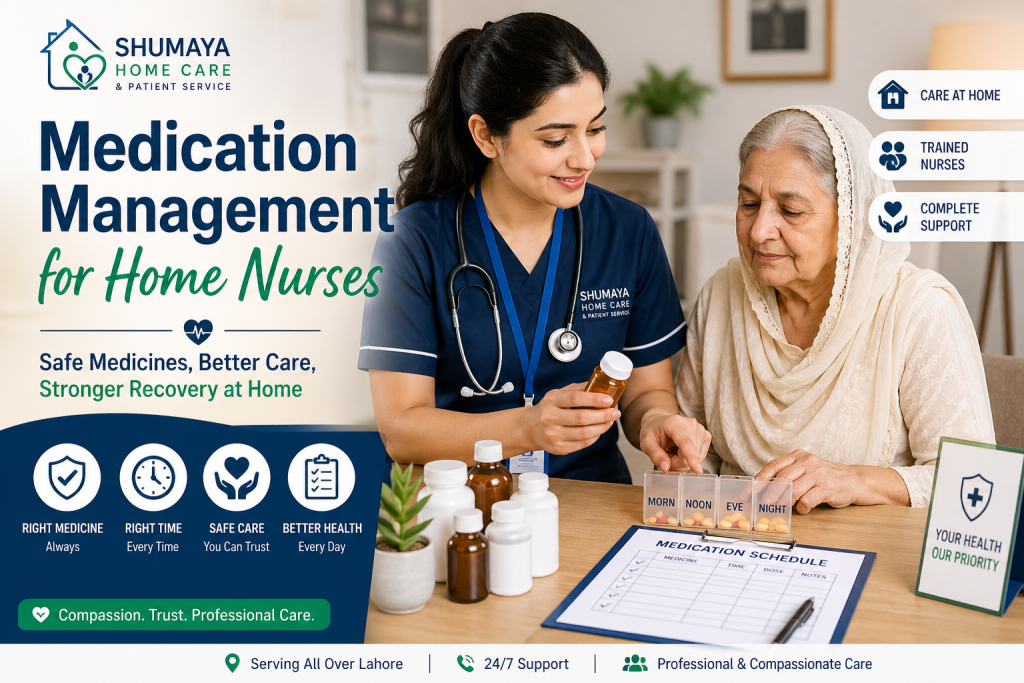
Simple, safe, and smart care at home Let’s make medicines less confusing 😊 Have you ever looked at a table full of medicines and thought,“Wait… which one goes first?” You’re not alone. Many families feel stressed when a loved one has multiple medicines, different timings, and special instructions. One small mistake can cause big problems. That’s why medication management for home nurses is so important. It keeps patients safe, helps them recover faster, and gives families peace of mind. Let’s walk through it together—step by step, in a simple way. What is Medication Management? In easy words, medication management means: 👉 Giving the right medicine👉 To the right patient👉 At the right time👉 In the right dose👉 In the right way It’s a key part of Home Nursing, especially in professional home nursing services in Lahore. Why Is It So Important? Let’s take a real-life example. Mr. Khan is recovering after surgery. He has: Painkillers Antibiotics Blood pressure medicine Now imagine if: He skips a dose Takes the wrong tablet Takes medicine at the wrong time 👉 His recovery slows down… or worse, complications start. That’s why proper patient care services in Lahore focus heavily on safe medicine handling. The Role of Home Nurses in Medication Management Home nurses don’t just “give medicines.” They manage the whole process carefully. 1. Understanding the Prescription First, nurses: Read doctor’s instructions clearly Confirm dose and timing Check special instructions (before/after food) 2. Medication Reconciliation (Very Important!) Sounds like a big term—but it’s simple. 👉 It means checking all medicines a patient is taking (old + new). Why? Because sometimes: Two medicines may not work well together The same medicine may be given twice by mistake Home nurses make sure everything is safe and correct. 3. Giving Medicines Safely Nurses make sure: Tablets are taken properly Syrups are measured correctly Injections are given safely IV drips are handled with care No guesswork—everything is done with care. 4. Monitoring the Patient After giving medicine, nurses don’t just walk away. They check: Blood pressure Blood sugar levels Pain levels Any unusual reaction 👉 This helps catch problems early. 5. Keeping Proper Records Every dose is recorded: Medicine name Time given Patient response This helps doctors adjust treatment if needed. 6. Guiding Family Members Guess what? Nurses teach you too! They explain: How to give medicines What side effects to watch What to do in emergencies Isn’t that reassuring? The Golden Rule: The 5 Rights of Medication Every trained nurse follows this simple rule: ✔ Right Patient✔ Right Medicine✔ Right Dose✔ Right Time✔ Right Route (tablet, injection, IV) 👉 This reduces mistakes and keeps patients safe. Common Medication Errors at Home (And How to Avoid Them) Let’s be honest—mistakes can happen. ❌ Common Errors: Giving the wrong dose Skipping medicines Mixing medicines without advice Using expired drugs Confusing similar-looking tablets ✅ How Home Nurses Prevent These: Double-checking every medicine Following doctor-approved plans Keeping clear records Monitoring patient closely 👉 That’s why professional patient care matters. Challenges in Managing Medicines at Home Some common problems include: 🔸 Too Many Medicines (Polypharmacy) Especially in elderly patients. 🔸 Confusing Schedules Morning, afternoon, night—it adds up! 🔸 Forgetfulness Very common in daily life. 🔸 Side Effects Some medicines may not suit the patient. Simple Tips for Safe Medication at Home Don’t worry—you can manage this 💪 🟢 Make a Medicine Chart Write: Name Dose Time Stick it somewhere visible. 🟢 Set Phone Alarms A simple reminder can prevent missed doses. 🟢 Use Pill Boxes Weekly organizers make life easier. 🟢 Label Medicines Clearly Avoid mix-ups. 🟢 Never Change Dose Yourself Always ask a doctor or nurse first. Safe Storage of Medicines Did you know storage matters a lot? Follow these tips: Keep in a cool, dry place Avoid sunlight Keep away from children Refrigerate only if required 👉 Nurses guide you on this too. Special Medicines Need Extra Care Some medicines require expert handling. 💉 Injections Must be given by trained nurses Require clean technique 💧 IV Drips Need close monitoring Wrong flow can be risky 💊 High-Risk Medicines Like insulin or blood thinners: Need exact dose Require regular monitoring 👉 This is where home healthcare services in Lahore really help. Drug Interactions: A Hidden Risk Here’s something many people don’t think about… 👉 Some medicines don’t work well together. This can cause: Weak effect Strong side effects Dangerous reactions Home nurses check this carefully before giving medicines. Daily Medication Safety Checklist ✔ You can use this every day: ✔ Did I give the right medicine? ✔ Was the dose correct? ✔ Was it on time? ✔ Did I check for side effects? ✔ Did I record it? Simple—but very effective! When Do You Need a Home Nurse? Ask yourself: Are medicines getting confusing? Is the patient elderly or weak? Are injections or drips involved? Are doses being missed? 👉 If yes, it’s time to consider home nursing services in Lahore. How Shumaya Home Care Helps You At Shumaya Home Care & Patient Service, we make medication management safe and stress-free. Our trained nurses: Follow doctor-approved care plans Double-check every medicine Maintain proper records Monitor patient health daily Guide families with patience 👉 Learn more about our services: Home Nursing Services in Lahore Patient Care Services in Lahore Post-Hospital Care at Home We’re here to support you at every step ❤️ Real-Life Example Mrs. Ahmed, age 70, had: Diabetes High blood pressure Her family was confused about: Insulin timing Multiple tablets After hiring a home nurse: ✔ Medicines were given on time✔ Sugar levels improved✔ Family felt relaxed That’s the difference proper care makes. Common Questions (FAQs) ❓ What if a dose is missed? Don’t double it. Ask a nurse or doctor. ❓ Can I stop medicine when I feel better? No. Always complete the course. ❓ What are warning signs? Watch for: Rash Vomiting Dizziness Call for help immediately. ❓ Can family manage medicines alone? Yes—but for complex cases, professional help is safer. Quick Daily Routine Example Morning Give
Nursing Techniques for Home Care

A Simple, Friendly Guide by Shumaya Home Care & Patient Service Taking care of a loved one at home can feel overwhelming sometimes, right? You want to do everything perfectly—but you’re not always sure how. Here’s the good news: with the right nursing techniques for home care, you can make a huge difference in your patient’s comfort, safety, and recovery. And if things ever feel like too much, trusted home nursing services in Lahore (like us at Shumaya Home Care & Patient Service) are always here to support you. Let’s walk through everything in a simple, easy way. What Are Nursing Techniques for Home Care? In simple words, nursing techniques are the correct and safe ways to take care of a patient at home. These include: Keeping the patient clean Giving medicines properly Helping with movement Monitoring health These techniques are used daily in patient care services in Lahore to ensure patients recover safely and comfortably at home. Why These Techniques Matter So Much Let’s think about this for a second… If a patient: Misses medicine Stays in one position too long Isn’t kept clean 👉 It can lead to pain, infection, or slow recovery. That’s why proper home nursing isn’t just helpful—it’s necessary. In busy cities like Lahore, where families juggle work and home responsibilities, having trained support at home makes life much easier. Basic Nursing Techniques Used in Home Care Let’s break things down into simple, practical steps you can understand and even follow. 1. Hand Hygiene (Clean Hands = Safe Care) This is the most important step. Always: Wash hands before and after care Use sanitizer if needed Wear gloves for tasks like wound care 👉 Example: Before touching a wound, clean hands help prevent infection. 2. Proper Patient Positioning Staying in one position too long can cause bed sores. Nurses: Change position every 2–3 hours Use pillows for support Keep the body straight and comfortable 👉 This is very important for bedridden patients. 3. Medication Management Medicines must be given carefully. Make sure: Right medicine is given Correct dose is followed Timing is not missed 👉 A simple mistake here can delay recovery. 4. Monitoring Vital Signs Vital signs tell us how the patient is doing. These include: Temperature Blood pressure Pulse Breathing 👉 Any sudden change should be taken seriously. 5. Wound Care and Dressing For injuries or surgeries, proper care is a must. Steps include: Cleaning the wound Changing dressings regularly Watching for infection (redness, swelling, smell) 👉 Clean wounds heal faster—simple and true. 6. Personal Hygiene Care A clean patient is a comfortable patient 😊 This includes: Bathing Oral care Hair and nail care 👉 It also helps prevent infections. 7. Feeding and Nutrition Support Food plays a big role in healing. Nurses help with: Feeding patients who can’t eat alone Giving soft or special diets Making sure the patient drinks enough water 👉 Good nutrition supports faster recovery. 8. Mobility and Light Exercise Even small movements help a lot. Nurses: Help patients sit or walk Guide simple exercises Prevent stiffness 👉 Movement keeps the body active. Advanced Nursing Techniques at Home Some patients need more medical care. That’s where trained nurses step in. 1. IV Therapy (Drips) Used for: Fluids Medicines Nutrition 👉 Should always be handled by professionals. 2. Catheter Care For patients who cannot urinate normally. Care includes: Cleaning Monitoring Preventing infection 3. Oxygen Therapy For breathing problems. Nurses: Set oxygen levels Monitor breathing Ensure safe use 4. Post-Surgery Care After hospital discharge, care continues at home. Includes: Pain control Dressing changes Recovery monitoring 👉 This is where home nursing services in Lahore become very helpful. A Simple Daily Home Nursing Routine Wondering what a full day of care looks like? Here’s an easy example: Morning Check temperature and blood pressure Give medicines Help with bathing and hygiene Afternoon Provide meals Light movement or exercise Rest time Evening Give medicines Change position Spend time with the patient Night Ensure comfort Final health check Help patient sleep peacefully 👉 Having a routine makes everything easier—for both patient and caregiver. Infection Control at Home Homes can be safe care spaces with the right steps. Always: Keep surroundings clean Dispose of waste properly Use gloves when needed Clean medical equipment regularly 👉 Small habits can prevent big problems. Emotional Care Matters Too ❤️ Care isn’t just physical. Patients also need: Kind words Listening Emotional support 👉 A simple “How are you feeling today?” can mean a lot. Home Care vs Hospital Care (Quick Comparison) Let’s make it super simple: Feature Home Care Hospital Comfort High Medium Family Access Anytime Limited Attention One-on-one Shared Environment Familiar Clinical 👉 That’s why many families now choose patient care services in Lahore at home. Tips for Family Caregivers If you’re helping at home—you’re doing something truly meaningful 💙 Here are some simple tips: Wash hands before care Keep a daily routine Write down medicine times Watch for health changes Don’t hesitate to ask for help 👉 You don’t have to do everything alone. Common Mistakes to Avoid Let’s stay safe by avoiding these: Skipping hygiene Giving wrong medicine doses Not repositioning the patient Ignoring infection signs Delaying medical help When Should You Hire a Home Nurse? You may need home nursing services in Lahore if: The patient is bedridden There is a long-term illness Recovery after surgery is needed Family members feel overwhelmed 👉 Getting help is a smart and caring decision. Why Choose Shumaya Home Care & Patient Service? At Shumaya Home Care & Patient Service, we provide trained and compassionate staff for home nursing services in Lahore. Our nurses: Follow safe nursing techniques Provide respectful and kind care Support both patients and families 👉 Your loved one’s comfort is always our priority. Helpful Guides for You Want to learn more? Check these: What is Home Nursing? Benefits of Home Nursing Duties and Responsibilities of Home Nurses 10 Signs Your Loved One Needs Home Care Services These guides will help you better understand home nursing
Types of Home Nursing Services: A Simple Guide for Every Family in Lahore
Caring for a loved one at home can feel overwhelming sometimes. You want the best care… but also comfort, safety, and peace of mind. Here’s the good news:👉 You don’t have to choose between hospital care and comfort. With home nursing services in Lahore, you can get professional medical and personal care right at home. But many families ask:“What types of home nursing services are available—and which one is right for us?” Let’s walk through it together in the simplest way possible. What Are Home Nursing Services? In simple words: Home nursing services mean trained nurses or caregivers come to your home to take care of a patient. This can include: Medical care Daily living support Recovery help Instead of staying in a hospital, the patient gets patient care at home in a familiar and peaceful environment. At Shumaya Home Care & Patient Service, we provide trusted patient care services in Lahore designed to make life easier for both patients and families. Why Families in Lahore Prefer Home Nursing Let’s be real—hospitals can be stressful and crowded, especially in busy areas of Lahore like DHA, Johar Town, and Model Town. Here’s why many families now choose home healthcare services in Lahore: 🏡 Comfort of home 👨👩👧 Family can stay close anytime 🧑⚕️ One-on-one care 🚗 No travel or hospital rush 💰 Flexible and often more manageable costs Think about it:Would recovery feel better in a hospital bed… or your own room? Main Types of Home Nursing Services Now let’s break down the different types of home nursing services in Lahore in a simple way. 1. Short-Term Home Nursing Care This is for patients who need care for a short period. Best for: After surgery Minor illness recovery Injury healing Services include: Wound dressing Medication support Vital signs check 👉 Example:After a surgery, a patient may need care for 7–14 days. A home nurse can handle everything while the patient rests comfortably. 2. Long-Term Patient Care Some patients need care for months or longer. Best for: Chronic illnesses Elderly patients Bedridden individuals Includes: Daily assistance Medication reminders Hygiene care Health monitoring 👉 This type of patient care services in Lahore is very helpful for families managing ongoing health conditions. 3. Post-Hospital Recovery Care Leaving the hospital doesn’t mean full recovery. Post-hospital home nursing helps patients recover safely at home. Includes: Monitoring health condition Preventing complications Helping with movement Managing medicines 👉 Proper care at this stage can help avoid going back to the hospital. 4. Elderly Care (Senior Care at Home) As parents and grandparents grow older, they may need extra help. Elderly home care in Lahore includes: Walking assistance Help with dressing and eating Companionship Medication support 👉 Real-life example:An elderly father living with family may need daily support. A caregiver ensures he stays safe and comfortable. 5. ICU Care at Home Yes, advanced care can also be provided at home. ICU care at home includes: Oxygen support Ventilator care Continuous monitoring Skilled nursing 👉 This is ideal for patients who need close attention but prefer staying at home. 6. Palliative Care (Comfort-Focused Care) This type focuses on comfort for patients with serious illnesses. Best for: Cancer patients Long-term serious conditions Focus: Pain management Emotional support Family support 👉 It’s about making the patient feel calm, respected, and cared for. 7. Physiotherapy at Home Movement is a big part of recovery. Home physiotherapy helps with: Strength improvement Pain relief Mobility recovery Best for: Stroke recovery Injury rehab Post-surgery patients 👉 Regular sessions can bring noticeable improvement over time. 8. Mother & Baby Care New moms need support too! Includes: Newborn care guidance Mother’s recovery support Feeding help Hygiene care 👉 This makes the early days smoother and less stressful. 9. Specialized Medical Care at Home Some treatments can be safely done at home. Includes: Injections IV drips Catheter care Wound care 👉 No need for repeated clinic visits—care comes to you. 10. Companion Care (Non-Medical Support) Not all care is medical. Sometimes, people just need someone around. Includes: Talking and companionship Meal help Light household support 👉 Especially helpful for elderly individuals who feel alone. Home Nursing vs Hospital Care (Quick Comparison) Let’s make this super simple 👇 Feature Home Nursing Hospital Care Comfort High (home environment) Low Family Access Anytime Limited Personal Attention One-on-one Shared Cost Flexible Often higher Recovery Speed Often faster Can be slower How to Choose the Right Home Nursing Service Feeling unsure? That’s completely normal. Ask yourself: What kind of care is needed? Is it short-term or long-term? Does the patient need medical or daily help? Is special equipment required? 👉 Still confused?Our team at Shumaya Home Care & Patient Service can guide you step by step. Why Choose Shumaya Home Care & Patient Service? We understand that choosing care is a big decision. Here’s what makes us a trusted choice for home nursing services in Lahore: ✔ Trained and experienced nurses ✔ 24/7 patient care availability ✔ Personalized care plans ✔ Quick response across Lahore ✔ Respectful and friendly staff We don’t just provide patient care—we support families during difficult times. Real-Life Situations Where Home Nursing Helps Here are some everyday examples: Surgery recovery → Short-term care Diabetes management → Long-term care Elderly parent → Daily assistance Stroke patient → Physiotherapy 👉 Every situation is different, and the right care makes all the difference. Helpful Tips for Families Here are a few simple tips: ✔ Choose trained caregivers only ✔ Keep a daily routine ✔ Make the home safe (no slippery floors) ✔ Stay involved in care ✔ Ask questions when unsure 👉 Small steps can improve care a lot. Learn More About Home Care You might also find these helpful: 👉 https://shumayahomecare.com/what-is-home-nursing 👉 https://shumayahomecare.com/benefits-of-home-nursing 👉 https://shumayahomecare.com/prepare-home-for-recovery 👉 https://shumayahomecare.com/signs-you-need-home-care Common Questions About Home Nursing Services 1. What are the best home nursing services in Lahore? The best services are those that provide trained staff, reliable support, and personalized care—like Shumaya Home Care & Patient Service. 2. Is home nursing safe? Yes, when provided