
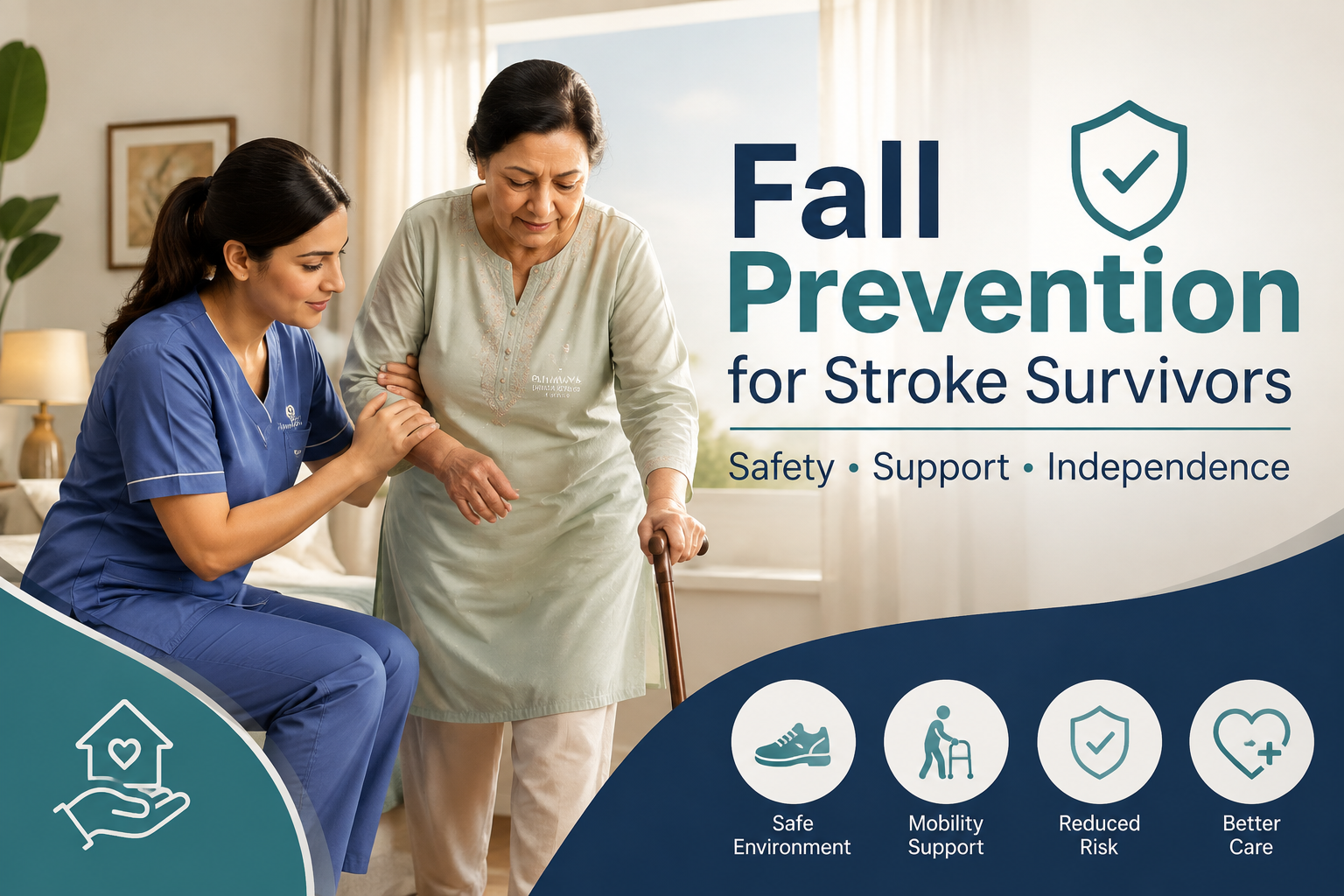
Fall Prevention for Stroke Survivors
A stroke changes how the body moves — balance shifts, one side weakens, and even a short walk to the bathroom can suddenly feel risky. Here's how families in Lahore and beyond can lower fall risk and support safer recovery at home.
Falls are one of the most common setbacks during stroke recovery. A single fall can lead to fractures, hospital readmission, or a loss of confidence that slows progress for months. The good news? Many falls can be reduced with the right home setup, the right habits, and the right support.
Stroke can affect the brain's ability to control muscles, judge distances, or process what the eyes see. Knowing which after-effects apply to your loved one helps you focus on the right precautions instead of guessing.
Small changes around the house often prevent the most falls.
Remove loose rugs, stray cables, and clutter from hallways and rooms the patient uses often.
Install grab bars near the toilet and inside the shower, and use non-slip mats where floors tend to get wet.
Use night lights in hallways and bathrooms, since many falls happen during nighttime trips to the toilet.
Store frequently used items at waist height so the patient doesn't need to stretch, bend, or climb.
A stable chair or railing along the main walking route gives the patient something to hold onto.
Beyond the home setup, daily routines play a big role in staying safe.
- 1
Stand up slowly. Sudden standing can cause dizziness, especially if blood pressure drops. Encourage sitting on the edge of the bed for a moment before standing.
- 2
Use assistive devices consistently. A cane, walker, or quad stick should be used every time, not just on "hard" days.
- 3
Wear proper footwear. Non-slip, closed-back shoes work better than loose slippers.
- 4
Take mobility slowly, especially at night. Fatigue and low light both increase risk after dark.
- 5
Follow the physiotherapy plan. Regular, guided exercises rebuild strength and balance over time as part of the patient's overall stroke recovery, and skipping sessions often slows progress.
Moving between the bed, a chair, and the toilet is one of the moments when stroke survivors are most likely to fall, so it deserves its own attention.
- ✓Clear the area first. Remove anything the patient could trip over between the bed and the chair.
- ✓Lock the wheels. If a wheelchair is involved, always apply the brakes before the patient moves.
- ✓Position the chair close. A shorter distance means fewer unsupported steps.
- ✓Explain the movement first. Tell the patient what's about to happen so they can help, rather than being moved suddenly.
- ✓Support the strong side, not the weak one. Pulling on a weak arm can cause pain or injury; let the patient lead with their stronger side instead.
If transfers feel difficult or unsafe, a physiotherapist can show the family the correct technique for that specific patient.
Even caring families sometimes get this wrong.
- Rushing the patient to move faster than they're ready for, out of good intentions
- Removing the walker or cane too early once the patient "seems fine"
- Leaving the patient alone during bathroom visits, one of the highest-risk moments
- Ignoring small stumbles, which are often early warning signs of a bigger fall risk
- Skipping non-slip footwear at home because "it's just around the house"
Recognizing these patterns early can prevent a setback before it happens.
Not every stumble is an emergency, but some signs need urgent attention.
- Loses consciousness, even briefly
- Has a severe or worsening headache
- Develops new weakness, numbness, or confusion
- Has speech that suddenly becomes worse
- Struggles to breathe
- Has severe pain, bruising, or a suspected fracture
- Falls are happening repeatedly
- Dizziness is becoming frequent
- Balance has suddenly gotten worse
- There have been several near-falls
- New vision problems appear
Falls in stroke survivors should never be treated as "just a stumble." A quick check-up can catch problems early.
Watching for fall risk around the clock isn't always possible for families juggling work and other responsibilities.
Trained nursing staff can help with supervised mobility, physiotherapy support, and safe transfers between bed, chair, and bathroom as part of a patient's daily care routine, giving families peace of mind alongside the patient's recovery.
For families in Lahore, working with a home nursing service that understands stroke recovery, such as Shumaya Home Care & Patient Service, can make daily safety far more manageable, especially in the weeks right after a stroke when the patient is still relearning movement.
It varies. Some patients regain steady balance within weeks, while others need ongoing support for months. Physiotherapy progress is the best guide.
It depends on their mobility level. Many families start with supervised periods and gradually increase independence as balance improves, often with input from a physiotherapist.
Not all, but many benefit from one, at least temporarily. A physiotherapist can recommend the right device based on the specific weakness or balance issue.
Stay calm, don't rush to lift them, and check for pain, injury, or confusion first. If any urgent warning signs are present, get medical help right away. Otherwise, help them up slowly and let the doctor know at the next visit.
Keep the bed at a height that's easy to get in and out of, add a night light, keep the path to the bathroom clear, and place a phone or call button within reach.
Fall prevention for stroke survivors comes down to a mix of home safety, patient habits, and steady support. None of these need to be complicated, but they do need to be consistent. With the right precautions in place, families can help their loved one recover with confidence, one safe step at a time.