

Caring for a bedridden loved one at home can be physically and emotionally challenging. Many families find themselves responsible for helping with daily activities, hygiene, feeding, mobility, and comfort while also managing their own responsibilities.
Whether a person is bedridden because of aging, stroke, surgery, paralysis, cancer, or another medical condition, proper care can help prevent complications and improve quality of life. While many families provide excellent care at home, some may also seek support from patient care services in Lahore when caregiving needs become more demanding.
If you’re wondering how to care for a bedridden patient at home, this guide explains the most important caregiving practices in a simple and practical way.
What Is a Bedridden Patient?
A bedridden patient is someone who spends most or all of their time in bed due to illness, injury, disability, or recovery from a medical condition.
Some patients may only need temporary assistance, while others may require long-term support and monitoring.
Because they have limited movement, bedridden patients often need help with:
- Personal hygiene
- Eating and drinking
- Position changes
- Medication management
- Skin care
- Emotional support
Why Proper Bedridden Patient Care Is Important
When a person remains in bed for extended periods, they become more vulnerable to certain health problems.
These may include:
- Bed sores (pressure ulcers)
- Muscle weakness
- Joint stiffness
- Poor circulation
- Chest infections
- Urinary tract infections
- Depression and social isolation
Good bedridden patient care can reduce these risks and help maintain comfort, dignity, and overall well-being.
Create a Safe and Comfortable Environment
A clean and organized room can make daily care easier for both the patient and caregiver.
Helpful Tips
- Keep the room clean and well ventilated.
- Allow natural sunlight into the room when possible.
- Maintain a comfortable temperature.
- Remove unnecessary furniture or clutter.
- Keep essential items within easy reach.
- Ensure adequate lighting during the day and night.
If available, an adjustable hospital bed can make repositioning and caregiving much easier.
Reposition the Patient Regularly
One of the most important aspects of bedridden patient care is preventing prolonged pressure on the skin.
Remaining in one position for too long can reduce blood flow and increase the risk of pressure sores.
How Often Should a Bedridden Patient Be Repositioned?
Most healthcare professionals recommend changing positions approximately every two hours unless advised differently by a doctor.
Common positions include:
- Lying on the back
- Lying on the left side
- Lying on the right side
Pillows can be placed under the arms, legs, knees, and back to improve comfort and reduce pressure points.
Prevent Bed Sores Before They Develop
Bed sores are among the most common complications in bedridden patients.
They typically develop in areas where bones press against the bed, including:
- Heels
- Hips
- Tailbone
- Elbows
- Ankles
- Shoulders
Tips to Prevent Bed Sores
- Reposition the patient regularly.
- Keep skin clean and dry.
- Use pressure-relieving mattresses if available.
- Check the skin daily.
- Smooth out wrinkles in bedsheets.
- Ensure adequate nutrition and hydration.
Early Warning Signs
Watch for:
- Persistent redness
- Swelling
- Skin discoloration
- Warm areas on the skin
- Open wounds
Prompt attention can prevent the condition from worsening.
Maintain Daily Personal Hygiene
Good hygiene helps prevent infections and keeps patients comfortable.
Oral Care
Brush teeth twice daily whenever possible.
For patients who cannot brush independently:
- Use a soft toothbrush.
- Gently clean the tongue.
- Keep the mouth moist.
Bathing
Depending on the patient’s condition, caregivers may provide:
- Bed baths
- Sponge baths
- Assisted bathing
Pay extra attention to skin folds and areas prone to sweating.
Hair and Nail Care
- Wash hair regularly.
- Keep hair clean and combed.
- Trim nails carefully to prevent scratches and skin injuries.
Provide Proper Nutrition
Good nutrition helps maintain strength, supports healing, and reduces the risk of complications.
A healthy diet often includes:
- Eggs
- Chicken
- Fish
- Lentils
- Yogurt
- Milk
- Fruits
- Vegetables
- Whole grains
Why Protein Matters
Protein supports:
- Muscle maintenance
- Tissue repair
- Wound healing
Always follow dietary recommendations provided by the patient’s doctor or dietitian.
Prevent Dehydration
Many bedridden patients drink less than they should.
Dehydration may cause:
- Weakness
- Dizziness
- Confusion
- Constipation
- Urinary infections
Encourage fluids throughout the day unless the doctor has advised fluid restrictions.
Suitable options may include:
- Water
- Soups
- Milk
- Fresh juices
- Oral hydration solutions if recommended
Encourage Gentle Movement and Exercise
Limited movement can lead to stiffness and muscle weakness.
When medically appropriate, simple exercises may help:
- Improve blood circulation
- Reduce stiffness
- Maintain flexibility
- Support joint health
Examples include:
- Arm stretches
- Leg movements
- Ankle rotations
- Assisted range-of-motion exercises
Consult a physiotherapist or doctor before starting any exercise routine.
Manage Medications Safely
Medication management is a key part of caring for a bedridden patient.
Helpful Medication Tips
- Follow the prescribed schedule.
- Use medication organizers if needed.
- Keep an updated medication list.
- Never change doses without medical advice.
- Monitor for side effects.
A medication chart can help caregivers stay organized.
Watch for Signs of Infection
Bedridden patients may be at greater risk of infections.
Contact a healthcare professional if you notice:
- Fever
- Difficulty breathing
- Persistent cough
- Red or swollen skin
- Foul-smelling wounds
- Confusion
- Pain during urination
Early treatment often prevents more serious health problems.
Support the Patient’s Emotional Well-Being
Being confined to bed can affect a person’s emotional health.
Many patients experience:
- Loneliness
- Anxiety
- Frustration
- Sadness
Ways to Offer Emotional Support
- Spend quality time together.
- Encourage family visits.
- Play favorite music.
- Read books or newspapers aloud.
- Help them stay socially connected.
- Involve them in family conversations.
Simple daily interactions can greatly improve a patient’s mood.
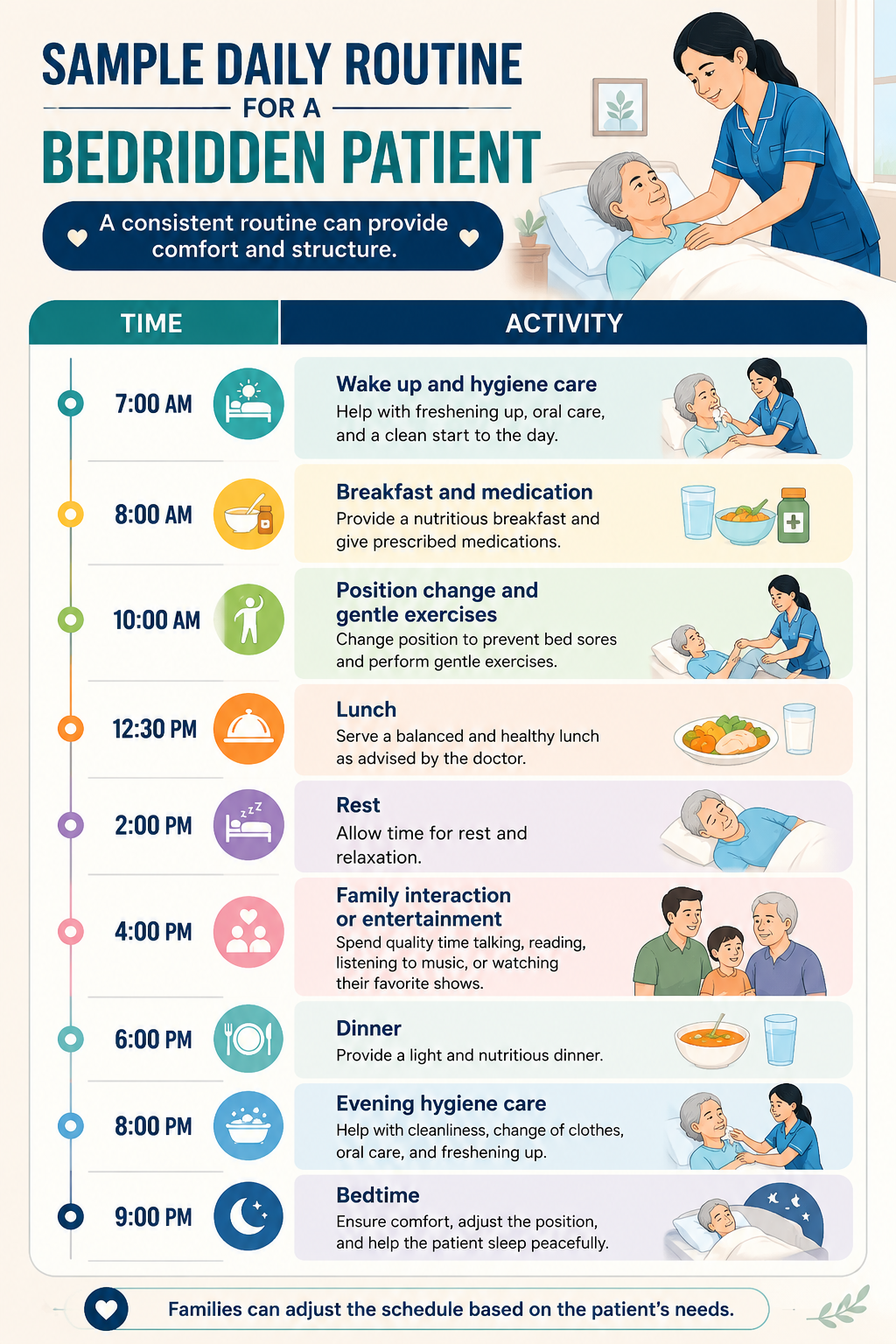
Sample Daily Routine for a Bedridden Patient
A consistent routine can provide comfort and structure.
| Time | Activity |
|---|---|
| 7:00 AM | Wake up and hygiene care |
| 8:00 AM | Breakfast and medication |
| 10:00 AM | Position change and gentle exercises |
| 12:30 PM | Lunch |
| 2:00 PM | Rest |
| 4:00 PM | Family interaction or entertainment |
| 6:00 PM | Dinner |
| 8:00 PM | Evening hygiene care |
| 9:00 PM | Bedtime |
Families can adjust the schedule based on the patient’s needs.
Common Mistakes Families Should Avoid
Even dedicated caregivers can unintentionally overlook important aspects of care.
Try to avoid:
- Leaving the patient in one position for too long
- Ignoring early skin changes
- Missing medications
- Inadequate hydration
- Skipping hygiene routines
- Delaying medical attention
- Neglecting emotional support
Awareness of these issues can improve patient comfort and safety.
When Family Care May Not Be Enough
Many families successfully manage home care, but some situations require additional support.
Professional patient care services in Lahore may be helpful when a patient needs assistance with:
- Bathing and personal hygiene
- Feeding support
- Mobility assistance
- Long-term monitoring
- Daily caregiving activities
- Advanced bedridden patient care
For patients with more complex medical needs, trained nurses from home nursing services in Lahore can assist with:
- Medication administration
- Wound dressing changes
- Catheter care
- Post-surgical recovery support
- Health monitoring
This support can help families provide safer and more comfortable care at home.
Benefits of Professional Home Care Support
Depending on the patient’s condition, professional caregivers can provide extra assistance when family caregiving becomes difficult.
Many families choose home nursing services in Lahore because trained nurses can help with:
- Wound care
- Medication management
- Post-hospital recovery
- Elderly patient care
- Chronic disease management
- Bedridden patient care
Others may prefer patient care services in Lahore for assistance with everyday personal care and companionship.
The right support depends on the patient’s health condition and the family’s caregiving needs.
Frequently Asked Questions
How often should a bedridden patient be turned?
Most bedridden patients should be repositioned every two hours unless their doctor recommends otherwise.
How can bed sores be prevented?
Regular position changes, good skin care, proper nutrition, hydration, and pressure-relief mattresses can help prevent bed sores.
What foods are good for bedridden patients?
Protein-rich foods, fruits, vegetables, whole grains, and adequate fluids are often recommended. Always follow medical advice for specific dietary needs.
How often should a bedridden patient be bathed?
Daily hygiene care is important. The bathing schedule may vary depending on the patient’s condition and comfort.
When should a doctor be called?
Seek medical attention if the patient develops fever, breathing difficulties, confusion, severe pain, new wounds, or signs of infection.
Final Thoughts
Understanding how to care for a bedridden patient at home can help families provide safer and more comfortable care. Simple practices such as maintaining hygiene, preventing bed sores, providing nutritious meals, encouraging gentle movement, and offering emotional support can make a meaningful difference in a patient’s daily life.
While family caregiving remains the foundation of home care, some patients may benefit from additional support. Professional patient care services in Lahore and home nursing services in Lahore can assist families when medical or long-term caregiving needs become more challenging, helping patients receive compassionate care in the comfort of their own homes.