

Keeping track of heart medications is an important part of caring for a heart patient at home. Many people with heart disease take several medicines to control blood pressure, manage heart failure, prevent blood clots, or regulate an irregular heartbeat. Each medicine may have a different dose, schedule, and set of instructions.
For families caring for an elderly parent, a patient recovering from heart surgery, or someone living with a long-term heart condition, managing these medicines can become confusing. Missed doses, accidental double doses, and changes to prescriptions can create health risks.
A simple medication-tracking routine can help families stay organized and follow the prescribed treatment plan. This guide explains how to create a medication list, track daily doses, manage missed doses safely, and know when professional help is needed.
1. Create a Complete List of Heart Medications
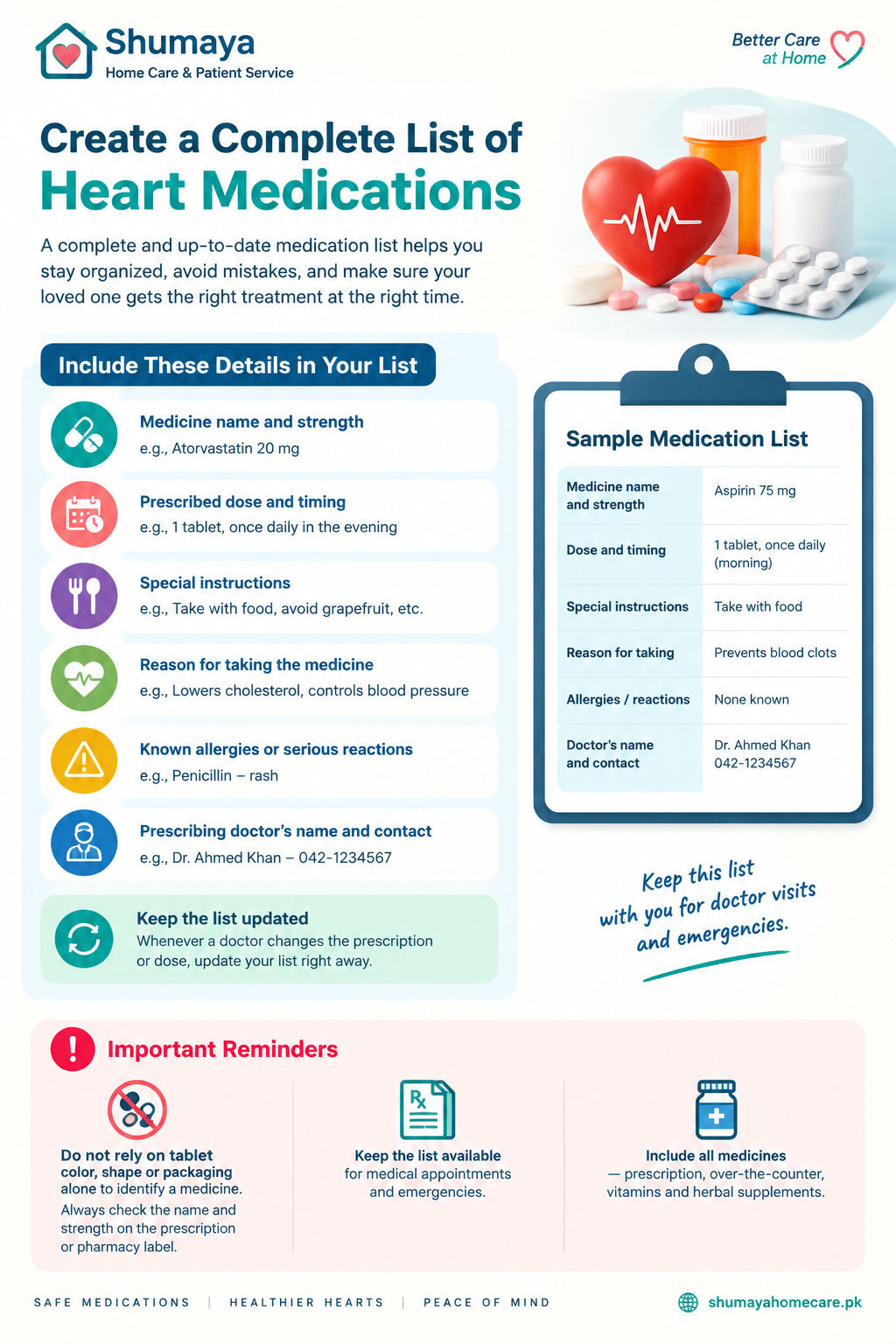
Start by preparing an up-to-date list of every medicine the patient takes. Include prescription medicines, over-the-counter products, vitamins, and herbal supplements.
Your medication list should include:
Medicine name and strength
Prescribed dose and timing
Special instructions, such as taking it with food
Reason for taking the medicine, if known
Known medicine allergies or serious previous reactions
Prescribing doctor’s name and contact details, if available
Update the list whenever a doctor changes the prescription.
Keep the list available for medical appointments and emergencies. Do not identify tablets by color or shape alone. Check the medicine name and strength against the prescription or pharmacy label.
2. Use a Daily Medication Schedule
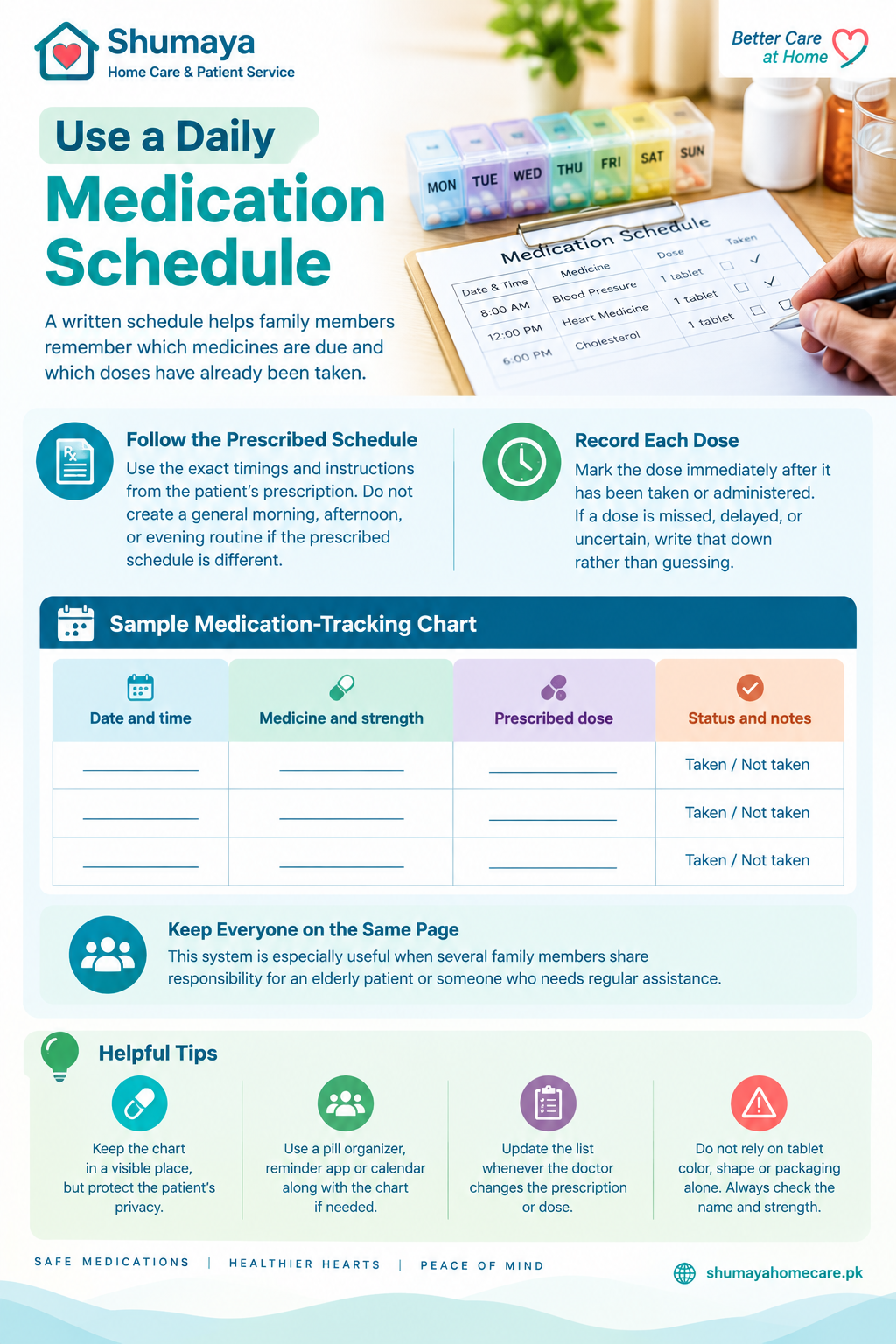
A written schedule helps family members remember which medicines are due and which doses have already been taken.
Use the exact timings and instructions on the patient’s prescription. Do not create a general morning, afternoon, or evening routine if the prescribed schedule is different.
A simple medication-tracking chart can look like this:
| Date and time | Medicine and strength | Prescribed dose | Status and notes |
|---|---|---|---|
| __________ | __________ | __________ | Taken / Not taken |
| __________ | __________ | __________ | Taken / Not taken |
| __________ | __________ | __________ | Taken / Not taken |
Record each dose immediately after it has been taken or administered. If a dose is missed, delayed, or uncertain, write that down rather than guessing.
This system is especially useful when several family members share responsibility for an elderly patient or someone who needs regular assistance.
3. Use Medication Reminders and Pill Organizers Safely
Phone alarms, written checklists, calendars, and medication reminder apps can help patients follow their prescribed schedule.
A weekly pill organizer may also be useful for some medicines. However, not every medicine is suitable for storage outside its original packaging. Some medicines need protection from light or moisture or must remain in their original container.
Ask a pharmacist before transferring medicines into a pill organizer.
Choose a reminder system that the patient and caregiver can use consistently. If the patient has memory problems, poor eyesight, or difficulty handling tablets, a family member may need to supervise the routine.
Remember that a reminder is not proof that a dose has been taken. Always check the medication record before giving another dose.
4. Assign One Person to Coordinate Medication Tracking
When several people care for a heart patient, confusion can occur if nobody knows who last gave a dose.
Families should agree on who will maintain the medication list and daily record. If responsibility changes between caregivers, everyone should use the same record.
The person coordinating medication tracking should:
Check the schedule before a dose is given.
Confirm the medicine and prescribed dose.
Record the dose immediately afterward.
Communicate missed doses or concerns to the next caregiver.
Update the record when the prescription changes.
Make sure refills are arranged before medicines run out.
For an elderly patient with memory difficulties or a complicated medication schedule, this shared system can make daily care more organized.
5. Know What to Do if a Dose Is Missed
If a heart patient misses a dose, the correct action depends on the medicine and the time since the missed dose.
Check the medicine’s patient information leaflet or contact a pharmacist or prescribing clinician for instructions.
Do not automatically take the missed dose as soon as you remember.
Do not double the next dose to make up for a missed one unless a qualified healthcare professional has specifically instructed you to do so.
Record the missed dose and any advice received.
Ask for guidance if you are unsure whether a dose has already been taken.
Some heart medicines require particular care when doses are missed. Families should follow medicine-specific instructions instead of relying on a general rule.
6. Monitor Side Effects and Changes in Symptoms
Families should watch for new or unusual symptoms, especially after a medicine is started or its dose is changed.
Depending on the medicine, possible problems may include dizziness, unusual tiredness, a slow heartbeat, low blood pressure, or unexpected bleeding.
Record the symptoms, when they started, and any recent medication changes. Contact the treating clinician if symptoms are new, persistent, or concerning.
Seek emergency medical help for chest pain, severe difficulty breathing, fainting, signs of a stroke, or serious bleeding.
Do not stop, reduce, or change a heart medicine on your own. Some medicines can cause harm if stopped suddenly. Ask the prescribing clinician what to do if you suspect a side effect.
7. Check Medicines Carefully After Hospital Discharge
After a heart attack, heart surgery, or hospital admission, a patient’s medication plan may change. New medicines may be added, existing doses may be adjusted, and some previous medicines may be stopped.
Before the patient returns home, ask the healthcare team to explain:
Which medicines should be continued.
Which medicines have been stopped or changed.
The correct dose and timing of each medicine.
What to do if a dose is missed.
Which side effects require medical attention.
When prescriptions need refilling.
When the next medication review is due.
Compare the latest discharge prescription with the medicines already at home. If the instructions conflict, contact the treating clinician or pharmacist for clarification before making changes.
Do not assume that an old prescription remains valid or that a medicine should be stopped simply because it is absent from an older list.
8. Prevent Medicine Shortages and Storage Problems
Running out of a heart medicine can interrupt the prescribed treatment plan. Check the remaining supply regularly and arrange refills in advance.
Families should also:
Store medicines according to the instructions on their labels.
Protect them from heat, moisture, and sunlight when required.
Keep them away from children.
Check expiry dates.
Keep prescriptions and medicine lists together in an accessible place.
If a medicine is unavailable, ask the pharmacist or prescribing clinician about the next step. Do not substitute another medicine, change the dose, or stop treatment without professional advice.
9. When Can a Home Nurse or Patient Attendant Help?
Some heart patients can manage their medicines independently with reminders. Others need support because of older age, memory problems, poor eyesight, limited mobility, or recovery after hospitalization.
The right type of home-care support depends on the patient’s needs.
A qualified home nurse may provide nursing assessments, monitor the patient’s condition according to the care plan, and undertake medication-related tasks within their qualifications and professional scope.
A patient attendant may help with daily routines, reminders, meals, mobility, and other personal-care needs. They should not independently decide medicine doses, change prescriptions, or perform clinical tasks beyond their authorized role.
Families in Lahore who need additional assistance can explore home nursing services in Lahore through Shumaya Home Care & Patient Service.
Suitable home-care support may help families organize daily routines and care for elderly patients or people recovering after a hospital stay. All medication-related support should follow the prescribed plan and applicable professional requirements.
Frequently Asked Questions
How can I remember whether my family member has taken their heart medicine?
Use a written medication chart, checklist, or reminder system. Record each dose immediately after it is taken, and make sure everyone involved in care follows the same record.
What should I do if I think a heart patient has taken an extra dose?
Seek prompt advice from an emergency medical service, poison information service if available, or healthcare professional. Do not wait for symptoms to develop. Keep the medicine packaging available and explain the medicine name, strength, possible amount taken, and approximate time.
Do not induce vomiting or give additional medicines unless instructed by a healthcare professional. If the patient collapses, has a seizure, has severe difficulty breathing, or cannot be awakened, seek emergency help immediately.
Should a patient stop taking heart medicine when they feel better?
No. Many heart medicines help control an underlying condition even when symptoms improve. Stopping suddenly may be harmful, depending on the medicine. Consult the prescribing clinician before making changes.
Can a patient attendant manage heart medications?
A patient attendant may help with reminders and practical daily routines within their permitted role. Clinical medication tasks depend on the worker’s qualifications, applicable rules, and the patient’s care plan. A qualified nurse may be more suitable when nursing assessment or clinical medication support is needed.
When should a heart patient’s medication list be reviewed?
Review the list whenever a medicine is started, stopped, or changed, especially after a hospital admission or specialist appointment. Ask the doctor or pharmacist to review the complete list periodically and check for possible interactions or other concerns.
Support for Heart Patients at Home in Lahore
A clear medication routine helps families keep track of prescribed doses, identify problems, and share accurate information with healthcare professionals.
The most important steps are to maintain an up-to-date medication list, record doses consistently, follow medicine-specific instructions, and ask for professional advice whenever something is unclear.
If your family needs help caring for an elderly heart patient or someone recovering after hospitalization, Shumaya Home Care & Patient Service can help you explore suitable home nursing and patient-care support in Lahore.
Contact Shumaya Home Care & Patient Service to discuss your family’s home-care needs.