
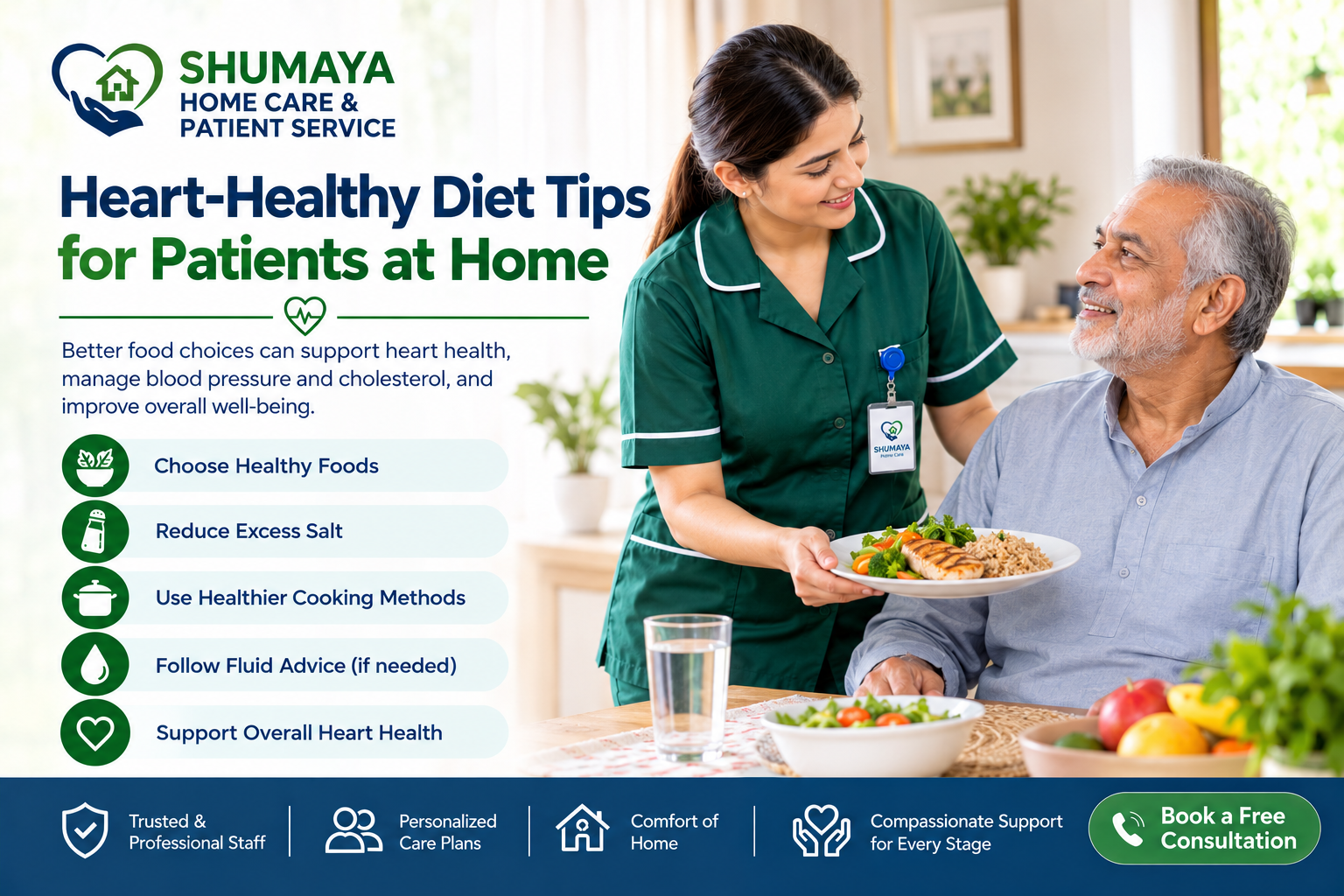
A heart-healthy diet can help patients manage blood pressure and cholesterol while supporting their overall health. For people living with heart disease, choosing suitable foods, reducing excess salt, and following any prescribed fluid restrictions can be important parts of daily care.
Families caring for a heart patient at home can start with simple changes, such as preparing meals with less salt, choosing vegetables and whole grains, and limiting foods high in saturated fat. However, patients with heart failure, kidney disease, or diabetes may need an individual diet plan from their healthcare team.
This guide explains practical heart-healthy diet tips for patients at home, including food choices, cooking methods, and precautions families should understand.
1. Choose Heart-Healthy Foods for Daily Meals
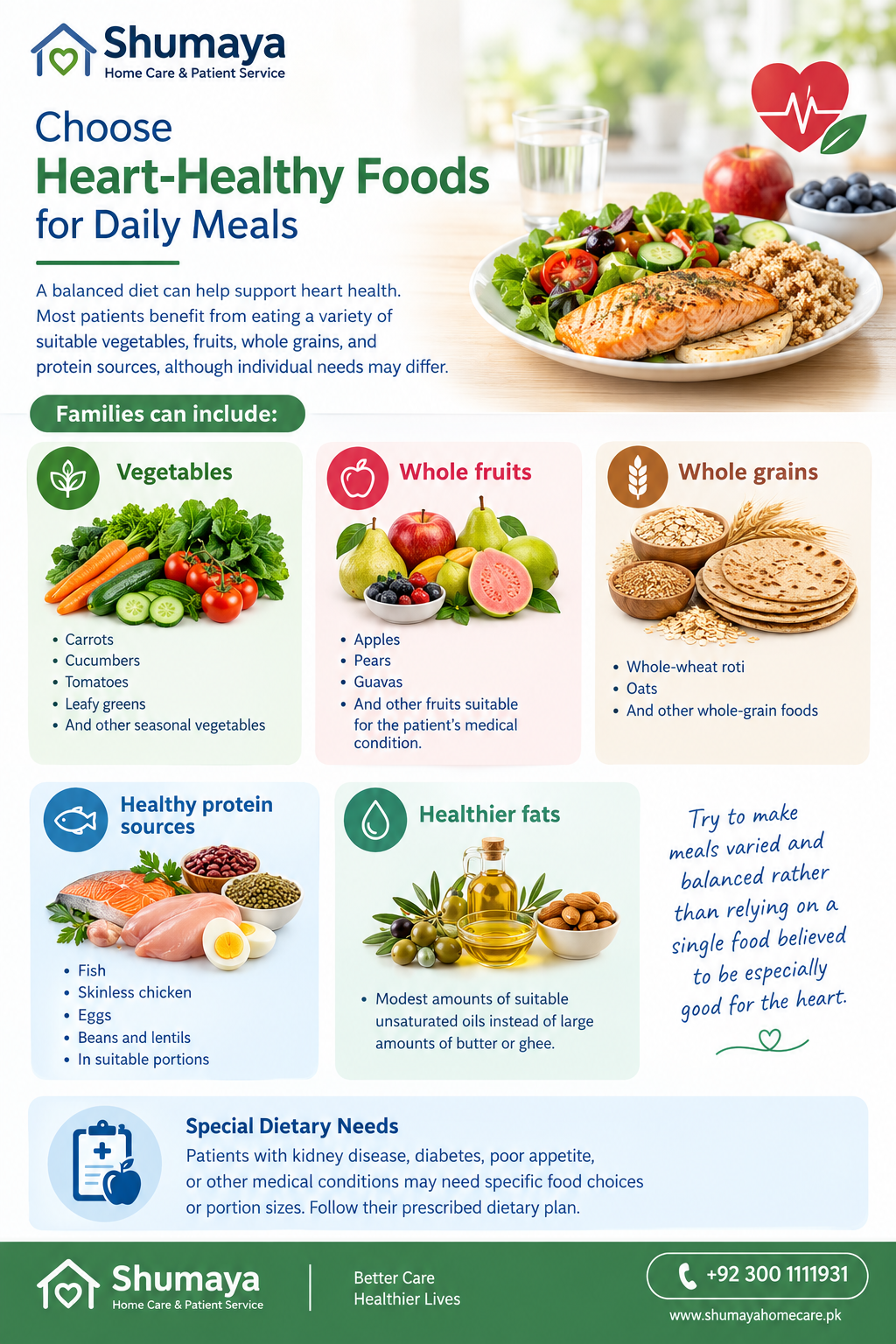
A balanced diet can help support heart health. Most patients benefit from eating a variety of suitable vegetables, fruits, whole grains, and protein sources, although individual needs may differ.
Families can include:
Vegetables: Carrots, cucumbers, tomatoes, leafy greens, and other seasonal vegetables.
Whole fruits: Apples, pears, guavas, and other fruits suitable for the patient’s medical condition.
Whole grains: Whole-wheat roti, oats, and other whole-grain foods.
Healthy protein sources: Fish, skinless chicken, eggs, beans, and lentils in suitable portions.
Healthier fats: Modest amounts of suitable unsaturated oils instead of large amounts of butter or ghee.
Try to make meals varied and balanced rather than relying on a single food believed to be especially good for the heart.
Patients with kidney disease, diabetes, poor appetite, or other medical conditions may need specific food choices or portion sizes. Follow their prescribed dietary plan.
2. Reduce Excess Salt in Everyday Cooking
Too much sodium can raise blood pressure. For some patients with heart failure, excess sodium may also contribute to fluid retention.
To reduce sodium at home:
Use less salt when preparing meals.
Limit salty snacks, pickles, papad, and heavily salted sauces.
Reduce processed meats and packaged foods that contain large amounts of sodium.
Compare food labels when choosing packaged products.
Use lemon, garlic, herbs, and suitable spices to add flavor without extra salt.
Traditional Pakistani meals can still fit into a heart-healthy eating pattern. For example, families can prepare daal, vegetables, chicken, and fish with less salt and moderate amounts of oil.
Remember that sodium and salt are not exactly the same measurement. Sodium listed on a food label refers to the sodium content, not the total weight of salt.
Do not aim for an extremely low-salt diet without medical guidance. Follow the sodium target recommended by the patient’s healthcare professional.
Important: Potassium-based salt substitutes may be unsafe for people with kidney disease or those taking certain medicines that increase potassium levels. Ask the healthcare team before using them.
3. Eat More Vegetables, Fruits, and Fiber-Rich Foods
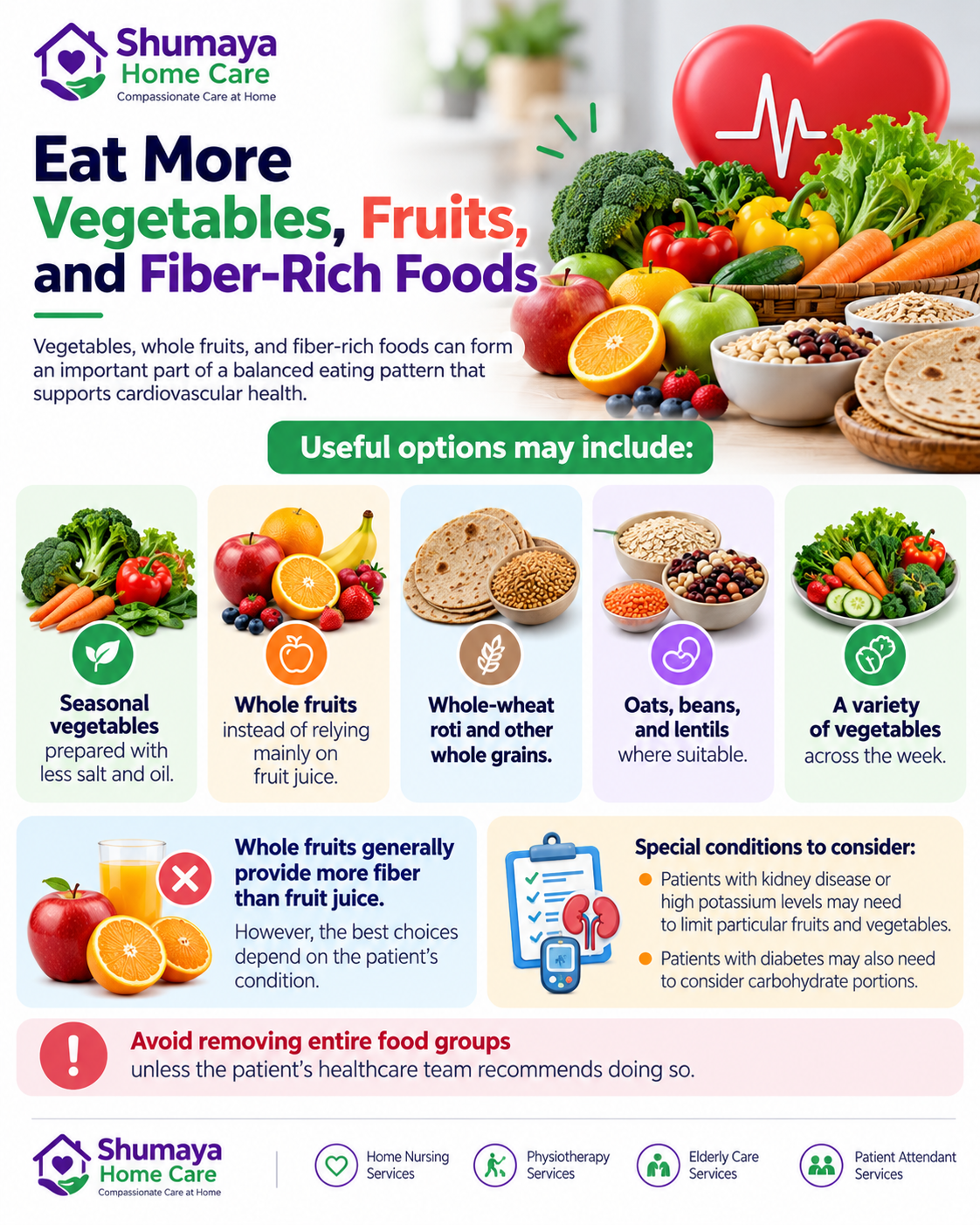
Vegetables, whole fruits, and fiber-rich foods can form an important part of a balanced eating pattern that supports cardiovascular health.
Useful options may include:
Seasonal vegetables prepared with less salt and oil.
Whole fruits instead of relying mainly on fruit juice.
Whole-wheat roti and other whole grains.
Oats, beans, and lentils where suitable.
A variety of vegetables across the week.
Whole fruits generally provide more fiber than fruit juice. However, the best choices depend on the patient’s condition.
For example, some patients with kidney disease or high potassium levels may need to limit particular fruits and vegetables. Patients with diabetes may also need to consider carbohydrate portions.
Families should avoid removing entire food groups unless the patient’s healthcare team recommends doing so.
4. Choose Healthier Protein and Cooking Methods
Protein helps maintain muscle strength and supports recovery after illness or surgery. The amount and type a patient needs can depend on age, appetite, kidney function, and medical condition.
Suitable protein sources may include fish, skinless chicken, eggs, beans, and lentils, prepared according to the patient’s dietary plan.
To make meals healthier:
Bake, grill, steam, or roast foods instead of deep-frying them.
Use modest amounts of suitable cooking oil.
Remove visible fat from meat where appropriate.
Limit sausages and other processed meats.
Reduce meals prepared with large amounts of ghee, butter, or cream.
Choose less heavily salted marinades and sauces.
Rather than removing all fat, replace some foods high in saturated fat with suitable sources of unsaturated fat.
These small changes can make everyday meals more heart-friendly without requiring families to prepare completely different food from the rest of the household.
5. Be Careful With Foods High in Saturated Fat
Eating too much saturated fat can increase LDL cholesterol in many people, which is associated with a higher risk of cardiovascular disease.
Try to limit frequent or large portions of:
Fatty cuts of meat.
Butter and large amounts of ghee.
Cream-heavy dishes.
Deep-fried snacks.
Commercial baked goods high in saturated fat.
Families can make gradual changes by using less ghee, choosing leaner protein sources, and serving grilled or baked food more often.
The goal is a balanced eating pattern that can be maintained over time, not a strict diet based on avoiding every food that contains fat.
6. Follow Individual Fluid Advice for Heart Failure
Some patients with heart failure are advised to limit their daily fluid intake. However, fluid restriction is not necessary for every heart patient, and the appropriate amount depends on the patient’s condition and medical plan.
If the doctor has prescribed a fluid limit:
Follow the exact daily amount advised.
Keep a record of drinks and other fluids as instructed.
Ask the healthcare team which foods or liquids need to be included in the count.
Report difficulty following the restriction.
Do not independently reduce or increase the patient’s fluid intake. Too little fluid can also cause harm.
Families should contact the healthcare team promptly if the patient develops new or worsening swelling, rapid unexplained weight gain, or increased breathlessness. Follow any heart failure action plan provided by the clinician.
Seek emergency medical help if the patient develops chest pain, severe breathlessness, fainting, or signs of another acute medical emergency.
7. Adapt Meals to the Patient’s Appetite and Needs
Some heart patients experience fatigue, reduced appetite, or difficulty managing large meals, particularly during recovery from illness or hospital admission.
Depending on the patient’s condition, families may find it helpful to:
Offer smaller meals if large portions are difficult to manage.
Maintain regular meal times.
Include suitable protein sources in meals.
Offer foods that fit the prescribed diet and the patient’s preferences.
Monitor changes in appetite and weight when advised.
Do not force food or introduce nutritional supplements without appropriate advice.
Persistent poor appetite, unplanned weight loss, difficulty swallowing, or an inability to eat enough should be discussed with a healthcare professional. A dietitian may help develop a suitable meal plan.
8. Consider Medicines and Other Medical Conditions
A heart-healthy diet must fit the patient’s treatment plan. Some medicines and medical conditions affect what a person should eat or drink.
Patients taking warfarin
Warfarin interacts with vitamin K, which is found in foods such as spinach and other leafy green vegetables. Patients generally need a consistent intake of vitamin K rather than avoiding these foods completely.
Discuss major dietary changes with the prescribing clinician or anticoagulation team, and follow the recommended INR monitoring schedule.
Patients taking certain heart medicines
Some blood pressure and heart medicines can increase potassium levels. Potassium supplements and potassium-based salt substitutes may therefore be unsafe for certain patients.
Do not start supplements or make major dietary changes without checking with the healthcare team.
Patients with diabetes
Meal planning should account for carbohydrate portions and blood glucose management as well as heart health.
Patients with kidney disease
Some patients need specific limits on sodium, potassium, phosphorus, protein, or fluids. These restrictions vary, so a general heart-healthy diet may need to be adjusted by a doctor or dietitian.
Patients should never stop or change prescribed heart medicines because of dietary advice.
9. How Families Can Support a Heart-Healthy Diet at Home
Family support can make it easier for a patient to follow dietary instructions consistently.
Practical steps include:
Planning meals around the patient’s prescribed diet.
Preparing meals with less excess salt and saturated fat.
Keeping suitable snacks available.
Recording appetite or weight changes when advised.
Following prescribed sodium and fluid limits.
Asking questions about food and medicine interactions.
Attending follow-up appointments and discussing nutrition concerns.
For older adults or patients who have difficulty preparing meals, eating independently, or managing daily activities, additional support may also be helpful.
A patient attendant may assist with meal preparation, feeding, and other daily activities when these tasks are included in the care plan. A qualified home nurse may provide clinical monitoring and nursing care within their professional scope. Dietary changes should remain guided by the patient’s doctor or dietitian.
Families can also read our guide to medication management for heart patients at home for more information about supporting safe medication routines.
When Should You Contact a Doctor?
Contact the patient’s healthcare team if you notice:
New or worsening swelling in the legs or feet.
Rapid, unexplained weight gain.
Persistent poor appetite or unplanned weight loss.
Repeated dizziness or unusual weakness.
Difficulty following a prescribed fluid restriction.
Questions about dietary changes or possible food and medicine interactions.
Seek emergency medical help for chest pain, severe breathing difficulty, fainting, or other signs of an acute medical emergency. Do not delay emergency care while trying dietary changes at home.
Home Care Support for Heart Patients in Lahore
A suitable diet is one part of caring for a heart patient at home. Some patients also need help with personal care, mobility, daily activities, prescribed medication routines, or recovery after a hospital stay.
Shumaya Home Care & Patient Service provides home nursing services and patient-care support in Lahore according to individual care needs.
Families seeking home nursing services in Lahore or elderly patient care at home can discuss the type of assistance their loved one requires. Male or female care staff may be considered according to the patient’s needs, personal comfort, and care requirements.
Contact Shumaya Home Care & Patient Service at +92 300 1111931 to discuss suitable home-care support.
Frequently Asked Questions
1. What foods are best for heart patients at home?
Vegetables, whole fruits, whole grains, beans, lentils, fish, and suitable lean protein sources can form part of a heart-healthy eating pattern. The right choices and portions depend on the patient’s medical conditions and prescribed diet.
2. Can heart patients eat roti and rice?
Yes, many heart patients can eat roti and rice in suitable portions. Whole-wheat roti and other whole-grain options can provide more fiber. Patients with diabetes or other dietary restrictions may need individualized portion guidance.
3. Should heart patients avoid salt completely?
Not necessarily. Reducing excess sodium can help many patients, but the appropriate daily amount depends on their condition and medical advice. Follow the recommendations provided by the healthcare team.
4. Do all heart failure patients need to drink less water?
No. Fluid restriction is prescribed when appropriate for the patient’s condition. Families should follow the clinician’s instructions rather than limiting fluids independently.
5. Can a home nurse help care for a heart patient?
A qualified home nurse may assist with clinical monitoring and nursing care within their professional scope. A patient attendant may help with personal care, feeding, mobility, and daily activities according to the agreed care plan.
6. Where can families find home-care support for heart patients in Lahore?
Families can contact Shumaya Home Care & Patient Service to discuss home nursing or patient-attendant support based on their loved one’s condition and daily care needs.
Medical disclaimer: This article provides general educational information and does not replace advice from a doctor or registered dietitian. Patients with heart failure, kidney disease, diabetes, or other complex conditions may need an individualized diet plan.