
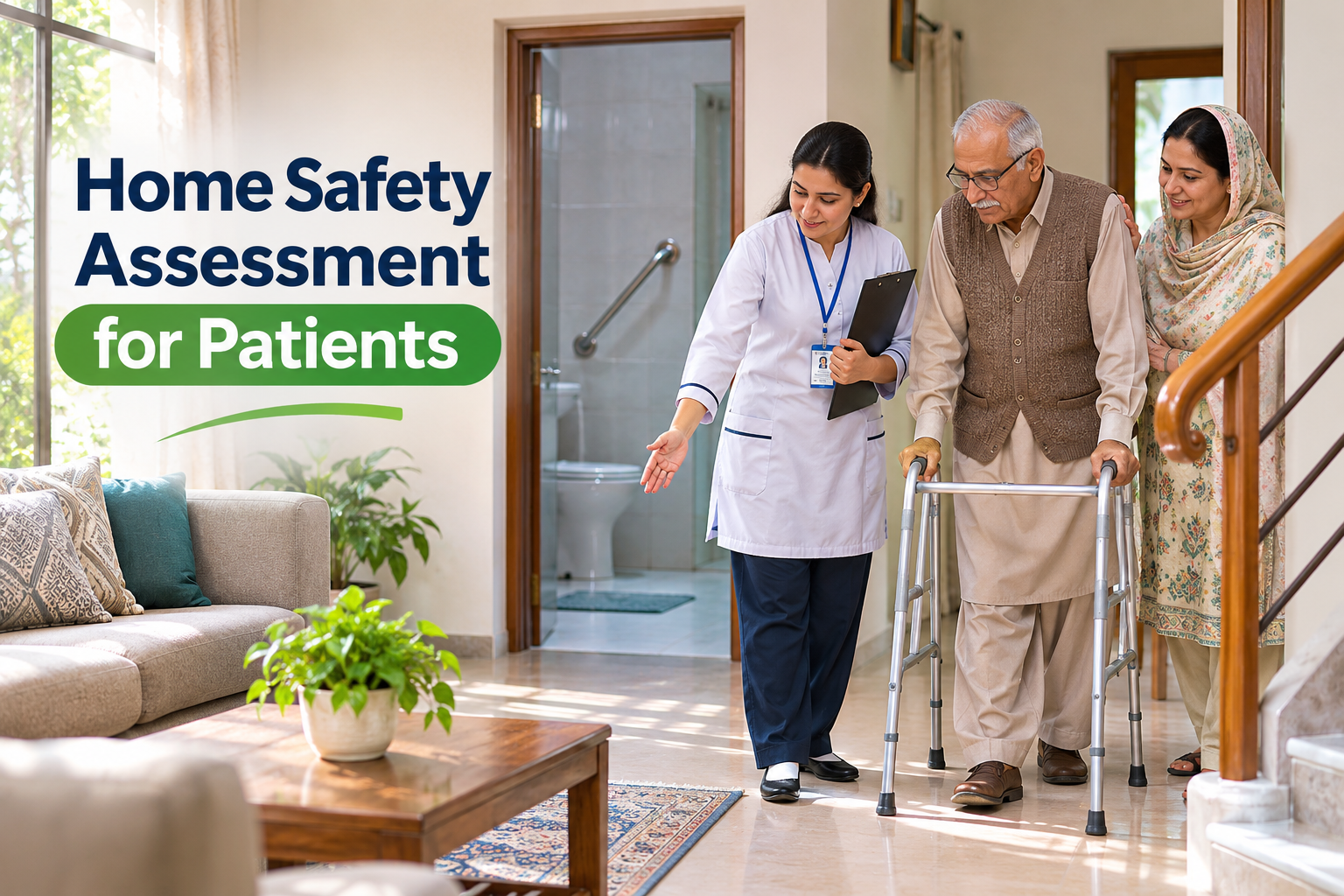
A Complete Room-by-Room Guide
A safe home environment plays an important role in a patient’s recovery, comfort, and daily well-being. Whether someone is elderly, recovering from surgery, living with a long-term illness, or spending most of the day in bed, simple changes around the house can reduce avoidable risks and make everyday activities easier.
However, home safety involves more than removing loose rugs or installing grab bars. A patient’s mobility, balance, eyesight, medical condition, medication effects, and ability to perform daily activities must also be considered.
A home safety assessment for patients helps families identify potential hazards and decide which changes, equipment, or professional support may be needed.
This guide explains how to check each area of the home, recognize common safety risks, and create a more supportive environment for patients.
What Is a Home Safety Assessment?
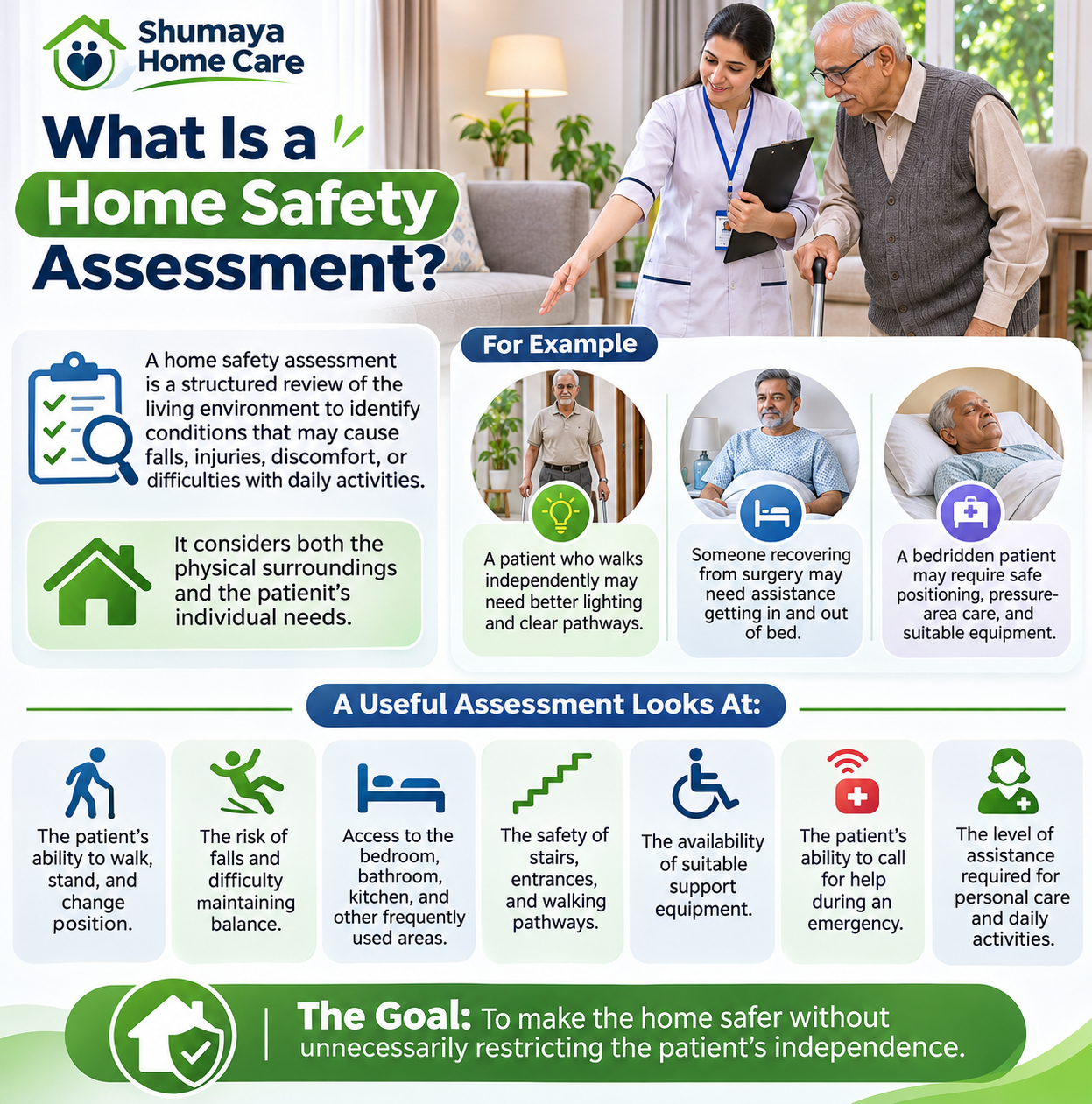
A home safety assessment is a structured review of the living environment to identify conditions that may cause falls, injuries, discomfort, or difficulties with daily activities.
It considers both the physical surroundings and the patient’s individual needs.
For example, a patient who walks independently may need better lighting and clear pathways. Someone recovering from surgery may need assistance getting in and out of bed, while a bedridden patient may require safe positioning, pressure-area care, and suitable equipment.
A useful assessment considers:
The patient’s ability to walk, stand, and change position.
The risk of falls and difficulty maintaining balance.
Access to the bedroom, bathroom, kitchen, and other frequently used areas.
The safety of stairs, entrances, and walking pathways.
The availability of suitable support equipment.
The patient’s ability to call for help during an emergency.
The level of assistance required for personal care and daily activities.
The goal is to make the home safer without unnecessarily restricting the patient’s independence.
Why Is Home Safety Important for Patients?
Patients may be more vulnerable to household accidents because of weakness, reduced mobility, poor balance, pain, vision problems, or the effects of certain medicines.
A safer home can help:
Reduce the risk of slips, trips, and falls.
Make movement between rooms easier.
Support independence during daily activities.
Improve comfort for patients with limited mobility.
Make personal care and transfers safer.
Help family members provide care with greater confidence.
Home safety is particularly important after hospital discharge, surgery, a stroke, or an illness that affects strength and movement.
Who Should Perform a Home Safety Assessment?
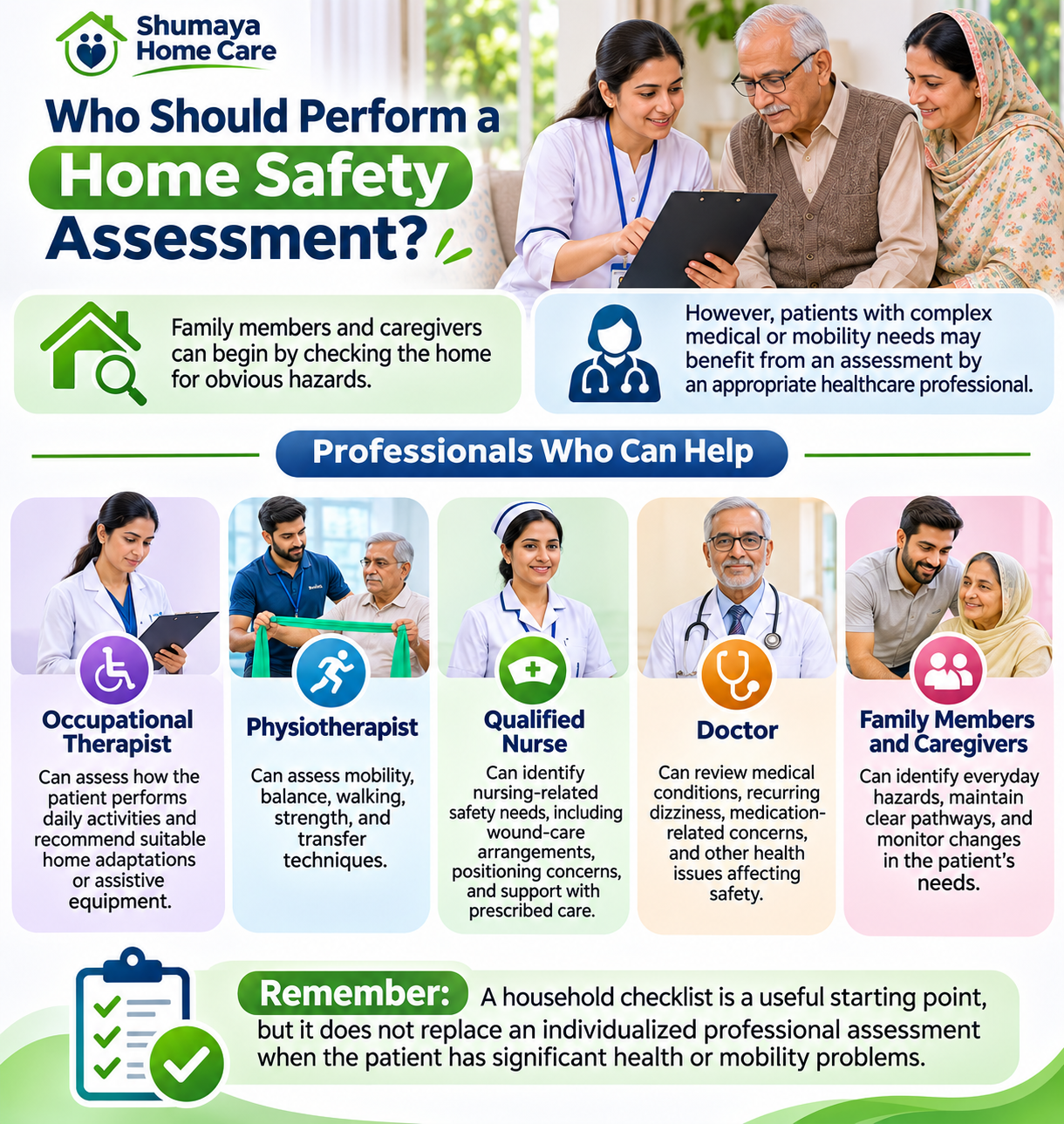
Family members and caregivers can begin by checking the home for obvious hazards. However, patients with complex medical or mobility needs may benefit from an assessment by an appropriate healthcare professional.
Different professionals can contribute in different ways:
Occupational therapist: Can assess how the patient performs daily activities and recommend suitable home adaptations or assistive equipment.
Physiotherapist: Can assess mobility, balance, walking, strength, and transfer techniques.
Qualified nurse: Can identify nursing-related safety needs, including wound-care arrangements, positioning concerns, and support with prescribed care.
Doctor: Can review medical conditions, recurring dizziness, medication-related concerns, and other health issues affecting safety.
Family members and caregivers: Can identify everyday hazards, maintain clear pathways, and monitor changes in the patient’s needs.
A household checklist is a useful starting point, but it does not replace an individualized professional assessment when the patient has significant health or mobility problems.
Room-by-Room Home Safety Assessment
A room-by-room review helps families identify hazards that may otherwise be overlooked.
1. Bedroom Safety
Patients often spend considerable time in their bedrooms, especially during recovery or when mobility is limited. The bedroom should be comfortable, accessible, and arranged to support safe movement.
Check the following:
Keep enough space around the bed for safe movement.
Remove loose rugs, unnecessary furniture, and electrical cables from walking areas.
Place frequently used items, such as a phone, water, glasses, and prescribed personal-care supplies, within easy reach.
Ensure the bed is at a suitable height for the patient’s ability to get in and out safely.
Provide adequate lighting, including a bedside light for nighttime use.
Keep a walking aid within reach if the patient has been advised to use one.
Make sure the patient can call for assistance when needed.
Important: Bed rails should not be installed automatically as a fall-prevention measure. They can create risks of entrapment or injury, particularly for patients who are confused, have dementia, move unpredictably, or attempt to climb over them. Their use should be based on an individualized professional assessment. Safer alternatives may be more appropriate.
2. Bathroom and Toilet Safety
Bathrooms are common places for slips and falls because floors can become wet and patients may have difficulty standing, bending, or transferring.
Recommended safety measures include:
Install securely fixed grab bars near the toilet and in suitable shower or bathing areas.
Use a stable, non-slip shower chair when appropriate.
Keep the bathroom floor dry and clean.
Use properly secured non-slip flooring or suitable anti-slip surfaces.
Ensure the toilet is accessible and at a suitable height for the patient.
Keep towels, toiletries, and personal-care items within easy reach.
Provide adequate lighting, especially at night.
Make sure the bathroom door can be accessed safely if the patient needs assistance.
Avoid loose anti-slip mats that can move underfoot and create a tripping hazard. Grab bars should be securely installed into suitable supporting structures rather than attached with unreliable fittings.
Patients who cannot safely bathe or use the toilet independently may need assistance from a trained caregiver or healthcare professional.
3. Hallways and Walking Pathways
Clear pathways help patients move around the home more safely, whether they walk independently or use a walking aid.
Check that:
Hallways and doorways are free from clutter.
Electrical wires do not cross walking routes.
Furniture does not block movement.
Floors are dry and even.
Frequently used rooms are easy to access.
Walking aids can pass through doorways without difficulty.
Lighting is sufficient throughout the route.
If a patient uses a wheelchair or walker, check that there is enough space to turn and move comfortably.
4. Stairs and Entrances
Stairs and entrances can be particularly challenging for elderly patients and people recovering from surgery, stroke, or other conditions affecting movement.
Improve safety by:
Installing secure handrails, preferably on both sides where practical.
Keeping stairs clear of objects and loose coverings.
Ensuring steps are in good condition.
Providing adequate lighting at the top and bottom of stairs.
Using clearly visible step edges where appropriate.
Keeping entrance pathways clear and free from uneven obstacles.
Do not encourage a patient with poor balance or significant weakness to use stairs without an appropriate assessment and assistance.
If stairs are difficult to manage, consider whether the patient’s essential activities can be arranged on one floor.
5. Living Room Safety
The living room should allow patients to sit, stand, and move without unnecessary difficulty.
Review the following:
Arrange furniture to create clear walking routes.
Avoid low tables and objects that may be difficult to see.
Use stable chairs with suitable back and arm support.
Make sure sofas are not so low or soft that standing becomes difficult.
Keep remote controls, phones, and other frequently used items within reach.
Remove loose rugs and trailing wires.
Provide adequate lighting.
Patients who struggle to stand from a chair may benefit from an appropriate seating assessment rather than simply using a higher or softer chair.
6. Kitchen Safety
Patients who prepare food or spend time in the kitchen should be able to reach everyday items without stretching, climbing, or carrying heavy objects.
Consider these precautions:
Keep frequently used utensils and food items within easy reach.
Store heavy objects in lower cupboards.
Clean spills immediately.
Keep appliance wires away from walking pathways.
Avoid placing hot liquids near the edge of counters.
Ensure the floor remains dry.
Use suitable assistance when lifting or carrying heavy items.
Patients with weakness, poor balance, memory problems, or reduced coordination may need supervision during cooking and other kitchen activities.
7. Lighting and Visibility
Poor lighting can make it difficult to recognize obstacles, judge distances, and move safely.
Check that:
Bedrooms, bathrooms, hallways, and staircases are well lit.
Switches are easy to reach.
Night lights are available along frequently used routes.
Bulbs are working and provide sufficient illumination.
Curtains and furniture do not unnecessarily block natural light.
Patients with poor eyesight may also benefit from clear visual contrasts between floors, steps, furniture, and doorways.
8. Electrical and Fire Safety
Electrical and fire hazards should also be included in a home safety assessment.
Follow these precautions:
Avoid overloaded electrical sockets.
Replace damaged wires and faulty plugs.
Keep electrical appliances away from water.
Store medicines and flammable household products safely.
Keep cooking areas clear of unnecessary materials.
Ensure smoke alarms are installed and working where required.
Keep emergency exits and access routes clear.
Family members should know how to respond to a fire or other emergency. If a patient cannot leave the home independently, prepare an evacuation plan that accounts for their mobility and assistance needs.
Home Safety Checklist for Patients
Use this checklist to review important areas of the home. The items should be adapted to the patient’s condition and abilities.
| Area | Safety check |
|---|---|
| Bedroom | Bed area is accessible and clutter-free |
| Bedroom | Phone or call device is within reach |
| Bathroom | Grab bars are securely installed where needed |
| Bathroom | Floor is dry and suitable anti-slip measures are in place |
| Hallways | Walking pathways are clear |
| Stairs | Handrails are secure and lighting is adequate |
| Living room | Chairs are stable and movement areas are clear |
| Kitchen | Frequently used items are easy to reach |
| Lighting | Night lighting is available along important routes |
| Electrical safety | Wires and sockets are in good condition |
| Emergency planning | Emergency contacts and an assistance plan are available |
Review the checklist regularly, especially when the patient’s condition, mobility, or care arrangements change.
Special Home Safety Considerations for Different Patients
Not every patient has the same safety requirements. The home environment should be adjusted according to the person’s health condition and level of independence.
Home Safety for Elderly Patients
Older adults may experience reduced balance, weaker muscles, vision changes, or difficulty walking. These changes can increase the risk of falls.
Families should:
Keep frequently used items within easy reach.
Remove loose rugs and unnecessary obstacles.
Provide adequate lighting.
Ensure footwear fits properly and has a suitable grip.
Arrange assistance for bathing and other difficult activities when needed.
Discuss recurring dizziness, falls, or changes in balance with a healthcare professional.
For more age-specific guidance, read our Home Safety Checklist for Seniors.
Home Safety for Bedridden Patients
Bedridden patients need special attention because they may be unable to change position or perform personal-care activities independently.
Important considerations include:
Keep the bed area clean, accessible, and comfortable.
Follow an individualized repositioning plan recommended by the healthcare team.
Keep skin clean and dry.
Check pressure-prone areas regularly, according to the patient’s care plan.
Use suitable support surfaces or equipment when recommended.
Keep prescribed medicines and care supplies organized.
Ensure the patient can call for help.
Watch for persistent redness or discoloration, unusual warmth, firmness, blisters, open skin, or pain around pressure-prone areas. These changes should be assessed by a healthcare professional. Do not massage an area that may be affected by pressure damage.
Home Safety After Surgery
Patients recovering from surgery may temporarily have difficulty walking, standing, bathing, or performing everyday tasks.
Before the patient returns home:
Arrange a clear route between the bedroom, bathroom, and main living area.
Keep essential items within reach.
Follow the surgeon’s instructions about movement and weight-bearing.
Arrange suitable assistance for bathing, dressing, and mobility if required.
Keep wound-care supplies organized as instructed.
Follow prescribed precautions when getting in and out of bed.
Do not attempt lifting or transfers beyond your ability. Avoid pulling the patient by their arms. If the patient needs significant assistance, ask a physiotherapist or healthcare professional to demonstrate an appropriate transfer method and advise whether equipment is needed.
Home Safety for Patients with Dementia or Alzheimer’s Disease
Patients with dementia may experience confusion, memory problems, poor judgment, or difficulty recognizing hazards.
Families can improve safety by:
Keeping furniture arrangements familiar and consistent.
Providing clear signs or labels where helpful.
Securing medicines and household chemicals.
Reducing access to unsafe areas when necessary.
Maintaining adequate lighting.
Monitoring access to stairs, kitchens, and entrances.
Providing appropriate supervision based on the patient’s needs.
Safety arrangements should support dignity and independence wherever possible while reducing foreseeable risks.
Common Fall Risks Families Should Not Ignore
Fall prevention requires more than making the home look tidy. A patient’s health and physical abilities can also affect their risk.
Pay attention to:
Previous falls or near-falls.
Dizziness when standing up.
Weakness in the legs or difficulty maintaining balance.
Poor eyesight or difficulty seeing obstacles.
Shoes or slippers that do not fit securely.
Walking aids that are unsuitable or incorrectly adjusted.
Medicines that may cause dizziness, drowsiness, or changes in blood pressure.
Difficulty getting in and out of bed or standing from a chair.
If a patient experiences repeated falls, new dizziness, or a sudden change in mobility, arrange a medical review. Do not stop or change prescribed medicines without advice from the prescribing clinician.
Daily Practices That Help Maintain a Safe Home
A safe home requires regular attention. Even after an initial assessment, new hazards can appear as the patient’s needs change.
Families and caregivers should:
Keep floors and walking pathways clear.
Clean spills promptly.
Check that lighting is working.
Keep emergency contact details accessible.
Ensure walking aids and other equipment are in good condition.
Follow the patient’s prescribed care and mobility instructions.
Check that essential items remain within reach.
Review safety arrangements after illness, surgery, or changes in mobility.
For patients who need help with daily activities, a consistent care routine can make it easier to maintain a safe and comfortable environment.
When Is Professional Home Care Assistance Needed?
Some patients need more than basic household adjustments. They may require regular support with personal care, mobility, medication routines, wound care, or monitoring under an appropriate care plan.
Professional assistance may be helpful when a patient:
Cannot safely bathe, dress, or use the toilet independently.
Needs help moving between the bed and chair.
Has limited mobility or is bedridden.
Requires prescribed nursing procedures or wound-care support.
Needs assistance following a post-surgical care plan.
Has dementia or another condition requiring supervision.
Lives alone and cannot reliably call for help.
The type of support should match the patient’s needs.
Home nurse: A qualified nurse may provide nursing care within their professional scope, such as prescribed nursing procedures, wound assessment and dressing care, and monitoring relevant to the patient’s care plan.
Patient attendant: A trained patient attendant may assist with personal hygiene, bathing, dressing, feeding, mobility, toileting, and companionship, according to the patient’s needs and care instructions.
A patient who requires clinical nursing care should not rely on a patient attendant as a substitute for a qualified nurse.
How Shumaya Home Care Supports Patients at Home in Lahore
A safe and comfortable home environment can make daily care easier for patients and their families. However, some patients also need reliable assistance with personal care, mobility, and nursing-related needs.
Shumaya Home Care & Patient Service provides home nursing services in Lahore Pakistan, along with home patient services for individuals who need support at home.
Our available care support includes:
Male and female staff nurses.
Male and female patient attendants.
Assistance for elderly and bedridden patients.
Post-surgical patient care support.
Nursing support for patients with ongoing health needs.
Assistance with daily personal-care activities.
Care support according to the patient’s condition and requirements.
The appropriate staff member depends on the patient’s medical needs and the level of assistance required. For clinical concerns, families should continue to follow the advice of the patient’s doctor and relevant healthcare professionals.
If your family needs elderly patient care at home in Lahore Pakistan, or professional assistance for a patient with limited mobility, contact Shumaya Home Care to discuss the available support.
Contact Shumaya Home Care:
Phone: +92 300 1111931
Website: https://www.shumayahomecare.pk/
Frequently Asked Questions
1. What is included in a home safety assessment for patients?
It generally includes checking the bedroom, bathroom, hallways, stairs, kitchen, lighting, electrical safety, and emergency arrangements. The assessment should also consider the patient’s mobility, balance, eyesight, medical condition, and ability to perform daily activities.
2. Who can perform a home safety assessment?
Family members can identify common household hazards. An occupational therapist can assess daily activities and home adaptations, while a physiotherapist can assess mobility and transfers. Nurses and doctors can address relevant nursing and medical concerns.
3. How can I make my home safer for an elderly patient?
Keep walking pathways clear, improve lighting, remove loose rugs, install securely fixed grab bars where appropriate, and ensure the patient has suitable footwear and walking support. Consider an individualized assessment if the patient has balance problems or a history of falls.
4. How can I prevent falls at home?
Remove trip hazards, keep floors dry, improve lighting, use suitable footwear, and ensure walking aids are correctly selected and adjusted. Also discuss dizziness, weakness, vision problems, and possible medication side effects with a healthcare professional.
5. What equipment may be needed for a bedridden patient?
Depending on the patient’s condition, suitable equipment may include an appropriate bed, pressure-relieving support surface, positioning aids, mobility or transfer equipment, and personal-care supplies. A healthcare professional should help determine what is appropriate.
6. Are bed rails safe for elderly patients?
Not always. Bed rails can cause entrapment or injury, particularly for people with confusion, dementia, or a tendency to climb over them. Their use should follow an individualized professional assessment rather than being treated as a routine fall-prevention solution.
7. How often should a home safety assessment be repeated?
Review the home whenever the patient’s condition, mobility, medication, or care needs change. It is also helpful to carry out regular checks to identify new hazards and ensure equipment remains suitable.
8. When should a family arrange professional home care assistance?
Consider professional support when a patient needs help with bathing, dressing, toileting, mobility, feeding, or prescribed nursing care. Patients with complex needs may require a qualified nurse or assessment by another appropriate healthcare professional.
Final Thoughts
A home safety assessment is an important step in creating a comfortable and supportive environment for patients. By reviewing each room, identifying fall risks, choosing suitable equipment, and considering the patient’s individual needs, families can reduce avoidable hazards and support safer daily living.
For patients who need additional help, professional home nursing and patient-care support can make it easier to manage daily activities at home.
The most effective approach combines a safer environment, appropriate medical guidance, and care that respects the patient’s needs and independence.