
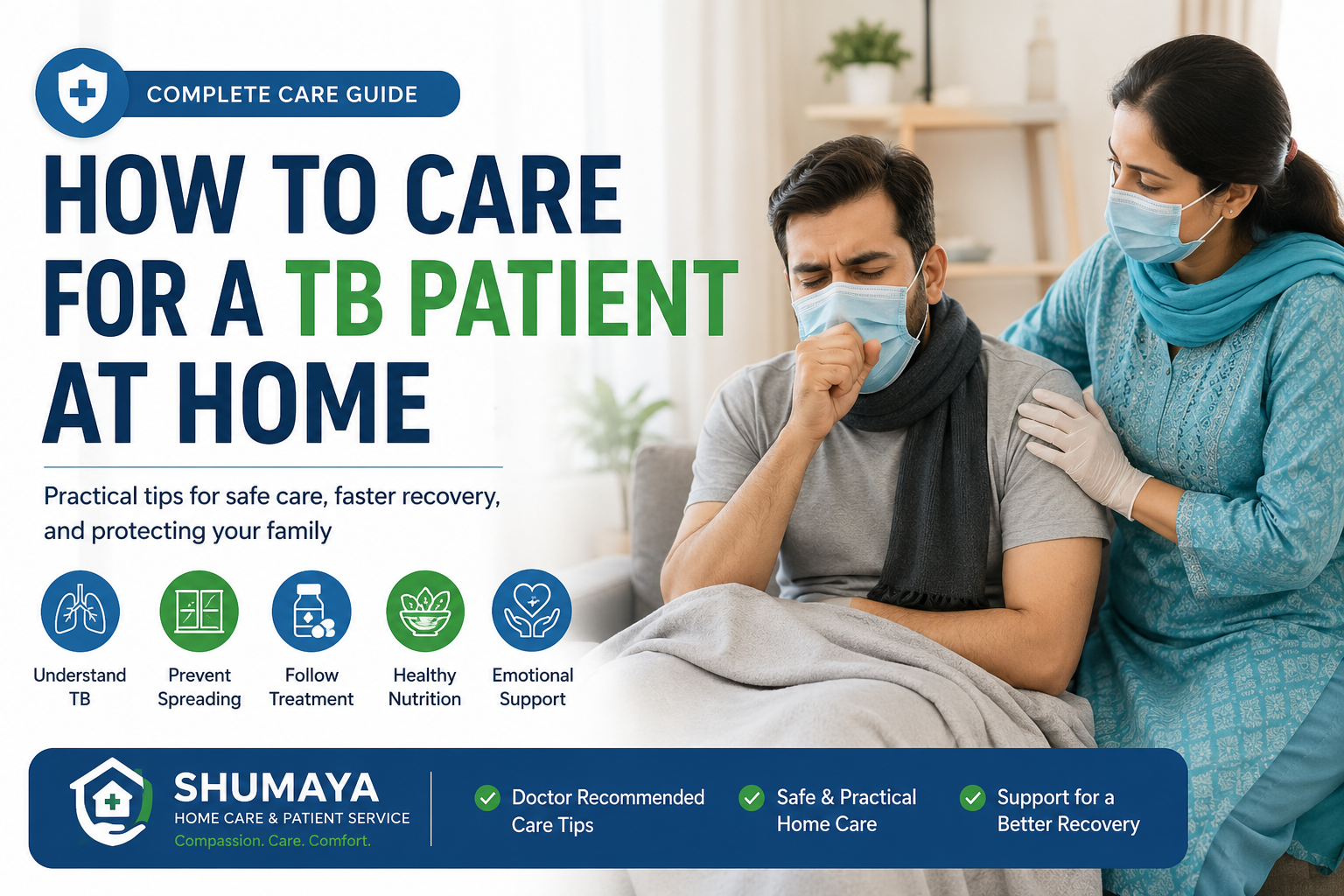
How to Care for a TB Patient at Home: A Complete Guide for Families
A tuberculosis diagnosis can feel overwhelming, but most patients recover fully at home with the right precautions, medication routine, and family support. Here's what every caregiver in Lahore needs to know.
What Is Tuberculosis (TB)?
Tuberculosis is an infectious disease caused by the bacterium Mycobacterium tuberculosis. It usually affects the lungs, though it can also affect other parts of the body such as the kidneys, spine, or brain.
TB spreads through the air when a person with active pulmonary TB coughs, sneezes, laughs, or speaks. It does not spread by sharing food, shaking hands, or touching common household items.
ℹ️ Good News
TB is treatable and curable with the right combination of antibiotics. Most people start feeling better within a few weeks, but the entire treatment course — usually several months — must be completed.
Can a TB Patient Be Cared for at Home?
Yes. Many TB patients can safely recover at home if their doctor believes hospitalization isn't necessary. Home care is generally suitable when:
- The patient is stable
- They are taking prescribed TB medicines
- Family members follow infection control measures
- Follow-up appointments are attended regularly
- The home has good ventilation
⚠️ Precaution
The first few weeks of treatment are especially important, as the patient may still be able to spread the bacteria. Following your doctor's advice closely during this period protects the whole household.
How to Care for a TB Patient at Home
Providing good care doesn't require complicated medical knowledge — small daily habits make recovery smoother and safer.
1. Make Sure Medication Is Taken Correctly
The most important part of TB treatment is taking medication exactly as prescribed.
- Give medicines at the same time every day
- Use a medication schedule or reminder
- Never skip doses
- Complete the full treatment even if the patient feels better
- Report side effects to the doctor instead of stopping medication
🚨 Why This Matters
Stopping treatment too early can allow the bacteria to become drug-resistant, making TB much harder to treat.
2. Encourage Plenty of Rest
The body needs energy to fight infection. Patients should get enough sleep every night, take short rest breaks during the day, and avoid heavy physical work until approved by their doctor. As recovery progresses, light activity may be recommended.
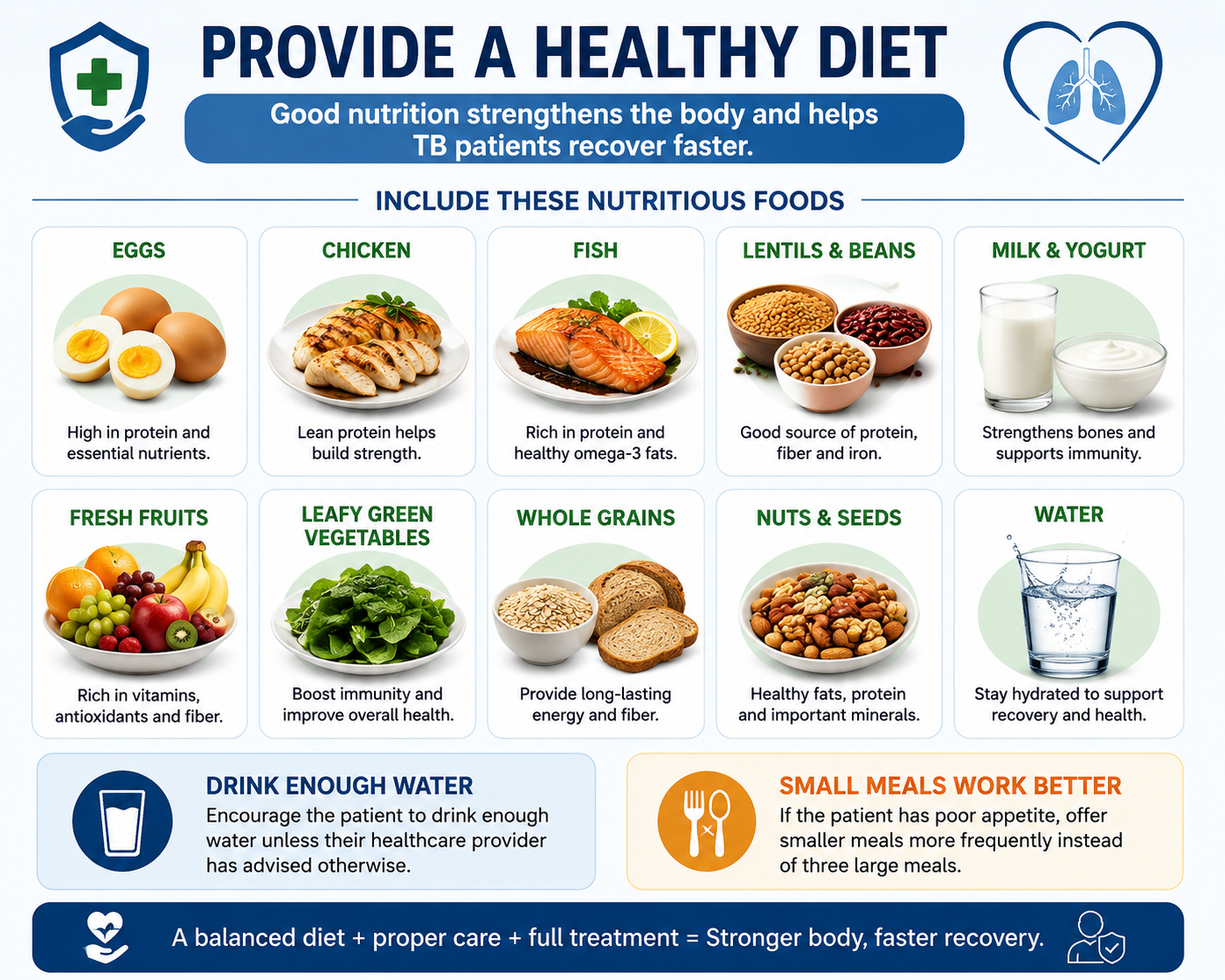
3. Provide a Healthy Diet
A nutritious diet helps the immune system recover. Include foods such as eggs, chicken, fish, lentils and beans, milk and yogurt, fresh fruits, leafy green vegetables, whole grains, and nuts and seeds.
💡 Caregiver Tip
If the patient has a poor appetite, offer smaller meals more frequently instead of three large ones, and encourage enough water unless the healthcare provider has advised otherwise.
4. Monitor Symptoms Every Day
Keeping track of the patient's condition helps identify problems early. Watch for:
| Watch For | Why It Matters |
|---|---|
| Persistent fever | May indicate treatment isn't yet working |
| Increasing cough | Sign that symptoms are worsening |
| Difficulty breathing | Requires prompt medical attention |
| Weight loss / poor appetite | Affects recovery and immune strength |
| Fatigue | Normal early on, but should gradually improve |
| Medication side effects | Should always be reported to the doctor |
A simple notebook or mobile app can help record symptoms and medication schedules.
5. Keep Follow-Up Appointments
Regular medical visits let doctors confirm the infection is responding to treatment. Never skip follow-up examinations, laboratory tests, chest X-rays if recommended, or medication reviews.
Preventing TB from Spreading at Home
Protecting other family members is just as important as caring for the patient.
Keep the Room Well Ventilated
Fresh air helps reduce the concentration of TB bacteria indoors. Open windows whenever possible and allow sunlight into the room — good airflow makes it harder for bacteria to remain suspended in the air.
Practice Good Cough Etiquette
- Cover mouth and nose with a tissue or elbow while coughing or sneezing
- Dispose of used tissues safely
- Wash hands afterward
Wear Masks When Recommended
During the early stages of treatment, healthcare providers may recommend that the patient wears a mask around others, and that caregivers wear masks during close contact if advised. Always follow your doctor's guidance on mask use.
Limit Close Contact During the Infectious Period
Until the doctor confirms the patient is no longer infectious: avoid unnecessary visitors, reduce prolonged close contact, keep distance where practical, and ensure good airflow in shared spaces. These precautions are usually temporary.
Maintain Good Hand Hygiene
Everyone in the household should wash their hands regularly, especially after helping the patient, handling tissues, cleaning the patient's room, or before preparing food.
Emotional Support Matters Too
Living with tuberculosis can be emotionally challenging — some patients worry about their health or feel isolated because of temporary precautions. Family support can make a big difference.
- Listen without judgment
- Encourage them to complete treatment
- Include them in family conversations when appropriate
- Celebrate small improvements
- Reassure them that TB is treatable
💡 Caregiver Tip
Avoid blaming or criticizing the patient. Compassion and patience help build confidence during recovery.
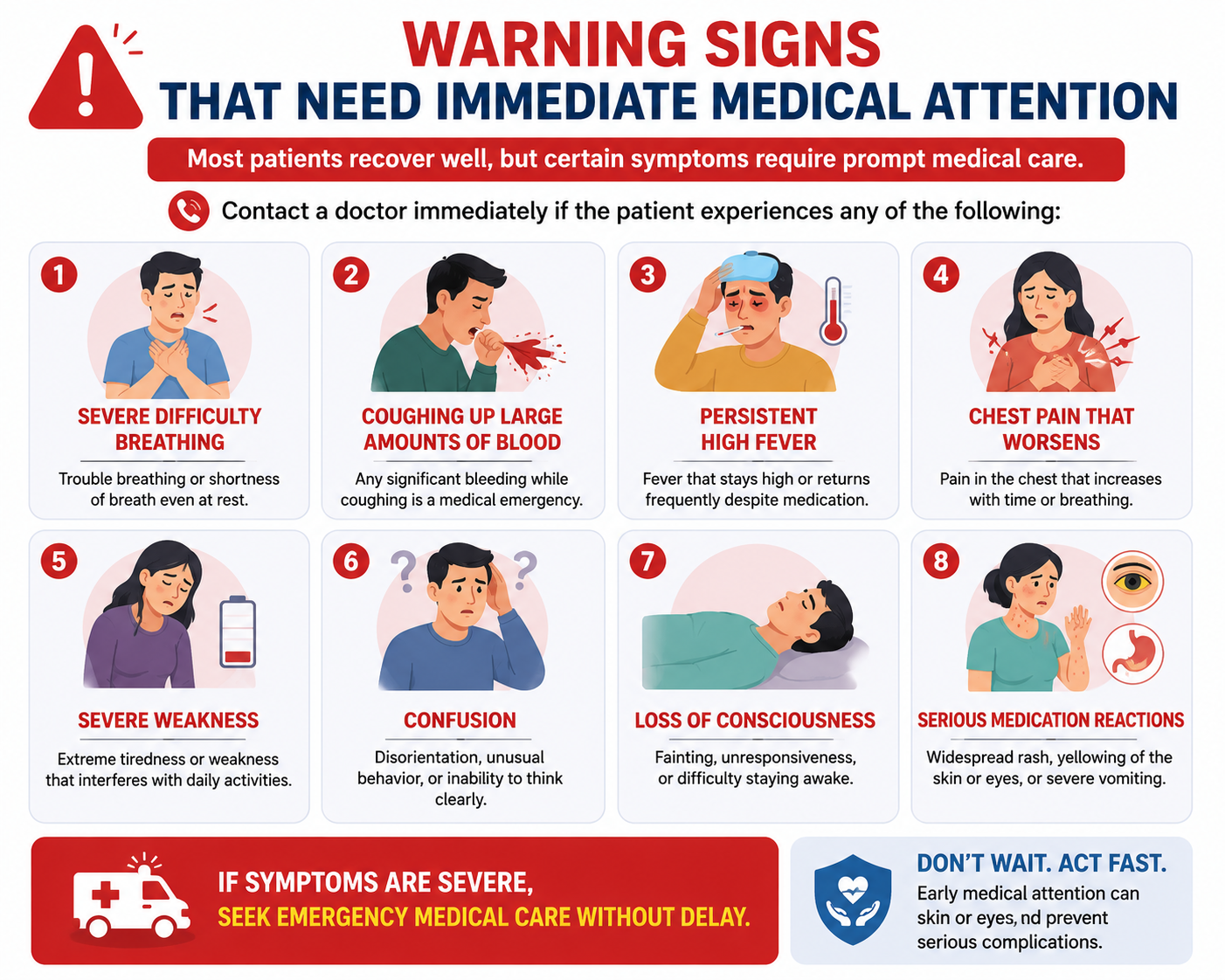
Warning Signs That Need Immediate Medical Attention
Most patients recover well, but certain symptoms require prompt medical care.
🚨 Seek Emergency Medical Care Immediately If the Patient Experiences
- Severe difficulty breathing
- Coughing up large amounts of blood
- Persistent high fever
- Chest pain that worsens
- Severe weakness or confusion
- Loss of consciousness
- Serious medication reactions (widespread rash, yellowing of skin/eyes, severe vomiting)
Common Mistakes Families Should Avoid
| Don't | Do Instead |
|---|---|
| Stop medication once the patient feels better | Complete the full prescribed course |
| Miss follow-up appointments | Attend every scheduled check-up and test |
| Allow poor room ventilation | Keep windows open and rooms well-aired |
| Ignore persistent symptoms | Report changes to the doctor promptly |
| Follow health advice from social media | Rely on the treating physician's guidance |
| Stay quiet about side effects | Inform the doctor right away |
When Professional Home Nursing Can Help
Some families need additional support, especially if the patient is older, weak, or has other medical conditions. Professional Home Nursing Services in Lahore can assist by:
- Monitoring the patient's overall condition
- Helping with medication schedules
- Checking vital signs
- Supporting proper nutrition and hydration
- Educating family members about infection prevention
- Coordinating care with the treating physician
ℹ️ How Shumaya Home Care Can Help
At Shumaya Home Care & Patient Service, our experienced nursing team provides compassionate Patient Care Services in Lahore, helping families manage recovery safely while following the doctor's treatment plan.
Frequently Asked Questions
Can a TB patient recover completely?
Yes. Most people recover fully when they take all prescribed medications and complete the entire treatment course.
Is TB spread by sharing food or utensils?
No. TB mainly spreads through the air when someone with active pulmonary TB coughs, sneezes, or speaks.
How long is a TB patient contagious?
This varies from person to person. Many patients become much less infectious after starting effective treatment, but only a doctor can determine when they are no longer contagious.
What foods are good for TB patients?
A balanced diet that includes lean protein, fruits, vegetables, whole grains, dairy products, and healthy fats supports recovery.
Can children stay in the same house as a TB patient?
Children may be at higher risk of infection. Follow your doctor's advice regarding contact, screening, and preventive measures, especially during the early stage of treatment.
Should TB medication be stopped if the patient feels better?
No. Stopping treatment early can lead to drug-resistant TB and increase the risk of the disease returning.
This article is for general informational purposes only and does not replace professional medical advice. Always follow your doctor's treatment plan and consult a qualified healthcare provider for diagnosis and treatment decisions.
Need Professional Home Nursing Support in Lahore?
Our experienced nurses provide compassionate care for TB patients recovering safely at home, from medication support to daily monitoring.
📞 +92 300 1111931 · ✉️ info@shumayahomecare.pk