

How to Take Care of a Diabetic Patient at Home
This guide explains how to take care of a diabetic patient at home in simple, practical steps. Whether you're caring for a parent, spouse, or another family member, you'll learn how to create a safe daily routine and recognize warning signs that need medical attention. If your loved one requires extra support, Home Nursing Services in Lahore and Home Patient Care in Lahore can also help families manage diabetes with professional care in the comfort of home.
Understanding Diabetes
Diabetes is a long-term health condition in which the body has difficulty controlling the amount of sugar (glucose) in the blood. Glucose is the body's main source of energy, but it needs a hormone called insulin to move from the bloodstream into the body's cells. When insulin is not available or does not work properly, blood sugar levels become too high. Over time, uncontrolled diabetes can affect the heart, kidneys, eyes, nerves, and blood vessels.
The goal of home care is to help keep blood sugar levels as close to the target range as possible while supporting the patient's overall health and quality of life.
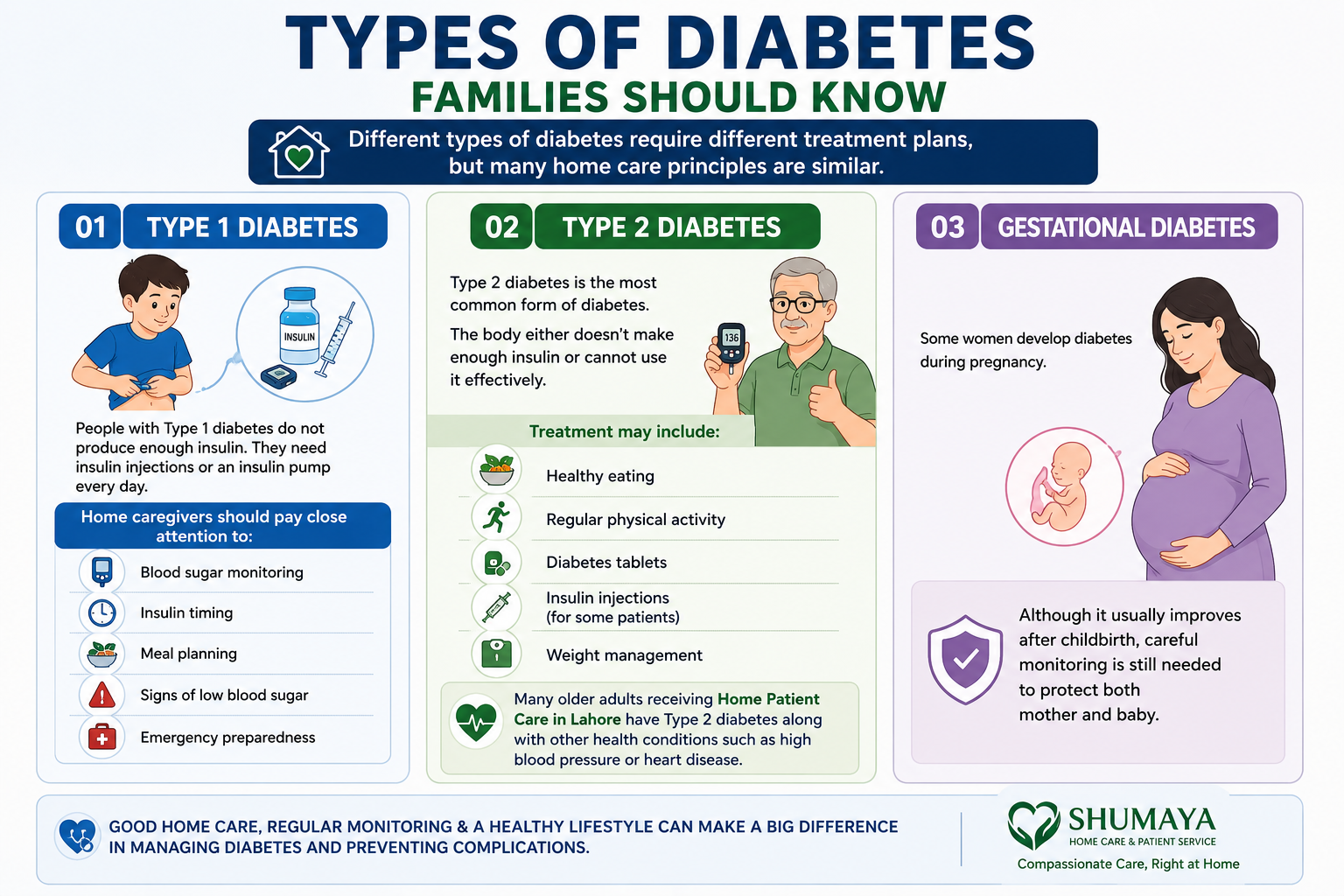
Types of Diabetes Families Should Know
Type 1 Diabetes
People with Type 1 diabetes do not produce enough insulin. They need insulin injections or an insulin pump every day. Home caregivers should pay close attention to blood sugar monitoring, insulin timing, meal planning, signs of low blood sugar, and emergency preparedness.
Type 2 Diabetes
Type 2 diabetes is the most common form. The body either doesn't make enough insulin or cannot use it effectively. Treatment may include healthy eating, regular physical activity, diabetes tablets, insulin injections (for some patients), and weight management. Many older adults receiving Home Patient Care in Lahore have Type 2 diabetes along with other conditions such as high blood pressure or heart disease.
Gestational Diabetes
Some women develop diabetes during pregnancy. Although it usually improves after childbirth, careful monitoring is still needed to protect both mother and baby.
Why Proper Home Care Is So Important
Good home care helps reduce the risk of many serious complications, including:
- Heart disease and stroke
- Kidney damage
- Vision problems
- Nerve damage
- Foot ulcers and serious infections
- Slow wound healing
A well-planned daily routine also helps the patient feel more confident, comfortable, and independent.
Create a Daily Diabetes Care Routine
One of the best ways to manage diabetes is by following a consistent daily routine. A predictable schedule helps maintain stable blood sugar levels and reduces missed medications or meals.
| Time | Activity |
|---|---|
| 7:00 AM | Wake up, check blood sugar if advised, drink a glass of water |
| 7:30 AM | Take morning medication or insulin as prescribed |
| 8:00 AM | Eat a healthy breakfast with balanced carbohydrates, protein, and fiber |
| 10:30 AM | Light snack if recommended by the doctor or dietitian |
| 12:30 PM | Balanced lunch and medications if prescribed |
| 2:00 PM | Short walk or light physical activity if appropriate |
| 4:00 PM | Check blood sugar if advised, enjoy a healthy snack |
| 6:30 PM | Dinner with portion-controlled carbohydrates and vegetables |
| 8:00 PM | Relaxation, family time, or gentle stretching |
| 9:00 PM | Inspect feet, take evening medication if prescribed |
| 10:00 PM | Prepare for sleep and maintain a regular bedtime |
Monitor Blood Sugar Regularly
Checking blood sugar is one of the most important parts of diabetes care at home. It helps families understand how food, medicines, exercise, illness, and stress affect glucose levels. Your doctor will recommend how often testing should be done — some patients check before meals, after meals, before bedtime, or whenever they feel unwell.
Keep a Blood Sugar Record
| Time | Blood Sugar | Before/After Meal | Notes |
|---|---|---|---|
| Morning | 110 mg/dL | Before breakfast | Feeling well |
| Afternoon | 155 mg/dL | After lunch | Walked for 20 minutes |
| Evening | 130 mg/dL | Before dinner | Took medication |
Never change medication doses without medical advice. Work closely with the patient's doctor if readings remain consistently too high or too low.
Make Healthy Eating Part of Everyday Life
Food has one of the biggest effects on blood sugar. Instead of thinking about a "diabetes diet," think about creating balanced meals that the whole family can enjoy. A balanced meal usually includes high-fiber vegetables, whole grains, lean protein, healthy fats, and controlled portions of carbohydrates. Regular meal timing is also important because skipping meals can cause blood sugar levels to become unstable, especially for patients taking insulin.
Foods That Support Better Blood Sugar Control
🥦 Vegetables
- Spinach
- Cucumber
- Cauliflower
- Broccoli
- Bitter gourd (karela)
🍎 Fruits (in moderation)
- Apples & Pears
- Guava
- Oranges
- Berries
🌾 Whole Grains
- Brown rice
- Whole wheat roti
- Oats
- Barley
🍗 Healthy Protein
- Chicken & Fish
- Eggs
- Lentils & Beans
- Low-fat dairy
🥑 Healthy Fats
- Nuts & Seeds
- Olive oil
- Avocados
🚫 Foods to Limit
- Sugary drinks
- Sweets & pastries
- Deep-fried foods
- Processed snacks
A 68-year-old father living with Type 2 diabetes — his daughter prepares balanced meals, reminds him to take his medicine after breakfast, and goes for a 20-minute evening walk with him every day. She also keeps a notebook of his blood sugar readings and checks his feet each night for cuts or redness. These simple habits don't require expensive equipment but help lower the risk of complications significantly.
Medication Management for Diabetic Patients at Home
Taking diabetes medication correctly is one of the most important parts of managing the condition. Even if a patient eats healthy meals and stays active, missing medicines or taking them at the wrong time can cause blood sugar levels to become too high or too low.
Family caregivers should know: the name of each medicine, the correct dose, when it should be taken, whether it should be taken before or after meals, possible side effects, and what to do if a dose is missed.
Tips for Safe Medication Management
- Set reminders on a mobile phone
- Use a weekly pill organizer
- Keep an updated medication list
- Store medicines according to instructions
- Refill prescriptions before they run out
- Attend regular follow-up appointments
How to Give Insulin Safely at Home
Some people with diabetes need insulin injections every day. General safety tips include: wash hands before handling insulin, check the insulin label before each injection, make sure the insulin has not expired, use a new needle each time, and rotate injection sites to avoid skin damage.
Abdomen, upper arms, thighs, and buttocks. If you are unsure about insulin administration, trained nurses providing Home Nursing Services in Lahore can teach family members or administer insulin safely at home.
Recognizing Low Blood Sugar (Hypoglycemia)
Low blood sugar happens when glucose levels drop below normal. It can develop quickly and should be treated promptly.
Common Symptoms
- Sweating and shaking
- Sudden hunger and dizziness
- Fast heartbeat and headache
- Blurred vision and confusion
- Irritability and weakness
Give about 15 grams of fast-acting carbohydrates — 3–4 glucose tablets, half a cup of regular fruit juice, or 1 tablespoon of honey. Wait 15 minutes, then recheck blood sugar. If still low, repeat the treatment.
Do NOT give food or drinks by mouth if the person is unconscious or unable to swallow. Call emergency medical services immediately. Left untreated, severe hypoglycemia can lead to seizures or unconsciousness.
Recognizing High Blood Sugar (Hyperglycemia)
Blood sugar can also become too high due to missed medication, eating too many carbohydrates, illness or infection, stress, or lack of physical activity.
Symptoms of High Blood Sugar
- Increased thirst and frequent urination
- Dry mouth and blurred vision
- Fatigue and headache
- Slow-healing wounds
The patient has severe chest pain, difficulty breathing, loss of consciousness, repeated vomiting, severe confusion, seizures, very high blood sugar with dehydration, or signs of diabetic ketoacidosis (deep rapid breathing, fruity-smelling breath, severe nausea).
Encourage Regular Physical Activity
Exercise helps the body use insulin more effectively and supports healthier blood sugar levels. Suitable activities may include walking, light stretching, gentle cycling, and chair exercises for older adults.
Exercise Safety Tips
- Check blood sugar when recommended
- Wear comfortable footwear
- Drink enough water
- Carry a quick source of glucose if advised
- Avoid exercising when blood sugar is dangerously high or low
- Stop if chest pain, severe dizziness, or shortness of breath occurs
Daily Foot Care Is Essential
One of the most common diabetes complications affects the feet. High blood sugar can reduce blood flow and damage nerves, making it harder to notice cuts or injuries. Even a small wound can become infected if not treated promptly.
How to Care for Diabetic Feet
- Look for cuts, blisters, redness, or swelling every day
- Wash feet with lukewarm water and dry carefully, especially between toes
- Apply moisturizer to dry skin (avoid between toes)
- Trim toenails carefully
- Wear clean socks and comfortable, well-fitting shoes every day
- Never walk barefoot, even inside the house
A cut not healing, increasing redness or swelling, pus or drainage, black or blue skin, fever with a foot wound, or severe pain or sudden numbness. Early treatment helps prevent more serious complications.
Mrs. Farah, a 72-year-old woman with Type 2 diabetes, has her son check her feet before bedtime every night. One evening, he noticed a small blister caused by a new pair of shoes. Instead of ignoring it, he contacted her doctor and followed the wound care instructions. The blister healed without becoming infected — a perfect example of how small daily habits and early action can make a big difference.
Managing Diabetes During Illness
Even a common illness like the flu, a cold, or a stomach infection can affect blood sugar levels. When the body is fighting an illness, it releases stress hormones that can make blood sugar rise.
- Continue taking diabetes medication or insulin unless the doctor advises otherwise
- Check blood sugar more often as recommended
- Encourage small, frequent sips of water to prevent dehydration
- Eat small, easy-to-digest meals if possible
- Contact the doctor if symptoms worsen or blood sugar remains difficult to control
The patient is vomiting repeatedly, has severe diarrhea, becomes confused, or cannot keep fluids down.
Support Good Mental Health
Living with diabetes can sometimes feel frustrating or emotionally exhausting. Family support plays an important role in helping patients stay motivated. People with diabetes are more likely to experience anxiety or depression than those without the condition.
Simple ways to reduce stress include listening without judgment, encouraging hobbies, spending quality time together, celebrating small health improvements, and helping with daily tasks when needed.
Loss of interest in favorite activities, persistent sadness, changes in sleep, loss of appetite, withdrawal from family, or feeling hopeless or overwhelmed. If present, encourage the patient to speak with their doctor or a mental health professional.
Encourage Healthy Sleep Habits
A good night's sleep (7–9 hours) supports better blood sugar control, energy levels, and overall health. Tips for better sleep: go to bed and wake up at the same time each day, keep the bedroom quiet and comfortable, avoid heavy meals before bedtime, and limit caffeine later in the day.
Prevent Long-Term Diabetes Complications
Regular home care combined with medical follow-up helps protect important organs and improve quality of life.
Areas That Need Ongoing Attention
Heart Health
Support heart health by following a balanced diet, staying physically active, taking prescribed medications, managing blood pressure and cholesterol, and avoiding tobacco products.
Kidney Health
Keep blood sugar under control, attend regular medical checkups, stay hydrated if permitted by the doctor, and complete recommended urine and blood tests.
Eye Health
High blood sugar may damage the small blood vessels in the eyes. Patients should have regular eye examinations, even if their vision seems normal. Seek advice promptly for blurred vision, dark spots, or sudden vision changes.
Nerve Health
Nerve damage (diabetic neuropathy) can cause tingling, burning, numbness, or pain in the hands or feet. Daily foot care and good blood sugar management help reduce this risk.
Common Mistakes Families Should Avoid
Skipping Blood Sugar Checks
Checking only when the patient feels unwell may allow problems to go unnoticed.
Missing Medication Doses
Use reminders or medication organizers to reduce missed doses.
Ignoring Foot Problems
A small blister or cut can become infected quickly. Inspect feet every day.
Long Gaps Between Meals
Irregular meal times increase the risk of blood sugar fluctuations.
Giving Sugary Foods Too Often
Sugary foods are only for treating low blood sugar, not high blood sugar.
Stopping Medication Early
Never stop diabetes treatment because blood sugar improves. Always consult the doctor first.
Caring for an Elderly Diabetic Patient at Home
Older adults with diabetes often need extra attention because they may also have conditions such as arthritis, poor vision, memory problems, or reduced mobility. Family caregivers should focus on making daily life safer and more comfortable.
- Keep walkways free of clutter to reduce fall risk
- Make sure medications are clearly labeled
- Encourage regular meals and adequate hydration
- Schedule routine medical appointments
- Monitor for signs of confusion or dizziness
- Check blood sugar as advised and inspect feet every day
Daily Caregiver Checklist
- Blood sugar checked as recommended
- Medicines or insulin taken on time
- Healthy meals eaten at regular times
- Adequate water intake throughout the day
- Physical activity completed (if appropriate)
- Feet checked for cuts, redness, or swelling
- Skin kept clean and dry
- Any unusual symptoms recorded
- Follow-up appointments scheduled when needed
When Professional Home Nursing Support Can Help
Many families successfully manage diabetes at home. However, there are times when additional support from trained healthcare professionals can make daily care safer and less stressful.
Professional Home Nursing Services in Lahore may be helpful if the patient:
- Needs insulin injections but has difficulty administering them
- Has limited mobility or is bedridden
- Requires regular blood sugar monitoring
- Needs wound or diabetic foot care
- Is recovering after surgery while managing diabetes
- Has multiple chronic conditions requiring close observation
Blood sugar monitoring · Medication & insulin assistance · Vital signs monitoring · Wound & diabetic foot care · Personal hygiene assistance · Post-hospital recovery support · Health education for family caregivers
Frequently Asked Questions
Yes. With proper medication, healthy eating, regular physical activity, routine medical care, and consistent blood sugar management, many people with diabetes live long, active, and fulfilling lives.
There is no single schedule that suits everyone. Some patients need to check several times a day, while others may test less frequently. The doctor will recommend the right schedule based on the patient's type of diabetes, medications, and overall health.
Yes. Whole fruits can be part of a healthy diet because they provide vitamins, minerals, and fiber. However, portion size matters, and fruit juices should generally be limited because they can raise blood sugar more quickly than whole fruit.
For many people, yes. Walking is one of the easiest forms of exercise and may help improve blood sugar control, heart health, and overall fitness. Patients should speak with their doctor before starting a new exercise program.
In many cases, yes. With the right support, many older adults with diabetes can continue living safely at home. Some families manage independently, while others benefit from professional Home Patient Care in Lahore for assistance with medications, mobility, hygiene, and daily monitoring.
Professional nursing support may be helpful if the patient requires insulin administration, has diabetic foot ulcers or difficult-to-heal wounds, needs regular blood sugar monitoring, is recovering after surgery, has limited mobility, or has multiple health conditions requiring close observation.
Key Takeaways
Caring for a diabetic patient at home becomes easier when families build healthy daily habits and stay consistent with the treatment plan. Remember:
- Monitor blood sugar as advised by the healthcare provider
- Take medications and insulin exactly as prescribed
- Follow a balanced diet with portion control
- Encourage regular physical activity suitable for the patient's condition
- Check the feet every day for cuts, blisters, or signs of infection
- Support good personal hygiene and skin care
- Help the patient manage stress and get enough sleep
- Attend regular medical checkups and recommended screenings
- Know the warning signs that require urgent medical attention
- Seek professional help when additional nursing support is needed
Conclusion
Learning how to take care of a diabetic patient at home is about more than checking blood sugar or giving medication. It means creating a safe, healthy environment where the patient can manage diabetes with confidence and maintain the best possible quality of life.
Families play an important role by encouraging healthy meals, supporting regular exercise, monitoring for complications, and offering emotional reassurance. For patients who need extra assistance, professional home nursing can provide additional support without requiring frequent hospital visits.
Shumaya Home Care & Patient Service is committed to supporting families with reliable Home Nursing Services in Lahore and Home Patient Care in Lahore. Our trained nursing staff provides personalized care based on each patient's medical needs, helping individuals manage diabetes safely while remaining comfortable in familiar surroundings.