
Have you ever seen someone struggle to walk after surgery or feel stiff after being in bed for too long? It can be tough—not just physically, but emotionally too. Now imagine getting better in the comfort of your own home instead of going back and forth to a clinic. Sounds easier, right?
That’s where physiotherapy in home care comes in. It plays a big role in helping patients recover, move better, and feel more confident again—right at home.
At Shumaya Home Care & Patient Service, we see every day how home nursing services in Lahore combined with physiotherapy can truly change lives. Let’s talk about why it matters so much and how it can help you or your loved ones.

What is Physiotherapy in Home Care?
Let’s keep it simple.
Physiotherapy is a type of treatment that helps people:
Move better
Reduce pain
Gain strength
Recover after illness or injury
When this care is given at home, it’s called home physiotherapy.
Instead of visiting a hospital or clinic, a trained professional comes to you. Pretty convenient, right? 😊
This is often part of patient care services in Lahore, especially for people who:
Had surgery
Are recovering from a stroke
Have difficulty walking
Are elderly or bedridden
Why is Physiotherapy Important in Home Care?
Let’s get to the main question: Why does it matter so much?
Here are some simple and real reasons.
1. Helps You Recover Faster
When you stay active (even a little), your body heals better.
Physiotherapy helps:
Improve blood flow
Reduce stiffness
Speed up healing
For example, after knee surgery, simple exercises at home can help you walk again sooner.
And the best part? You’re doing it in your own room, not a crowded clinic.
2. Reduces Pain Naturally
Pain can make everyday life feel difficult.
Physiotherapy uses techniques like:
Gentle exercises
Stretching
Movement training
These methods help reduce pain without always depending on medicines.
That’s a big win for long-term health!
3. Makes Daily Life Easier
Think about simple things like:
Getting out of bed
Walking to the bathroom
Sitting on a chair
These may seem small, but they matter a lot.
Physiotherapy helps you regain these abilities step by step.
At Shumaya Home Care, our home nursing services in Lahore focus on helping patients become more independent again.
4. Prevents Future Problems
Here’s something many people don’t think about.
Without movement, patients may develop:
Muscle weakness
Joint stiffness
Bed sores
Physiotherapy helps prevent these issues before they start.
It’s like taking care of your body today so you don’t face bigger problems tomorrow.
5. Keeps the Mind Positive
Guess what? Recovery isn’t just physical.
When patients start moving again, they often feel:
More confident
Less stressed
More hopeful
And honestly, that mental boost is just as important as physical healing.
Why Choose Physiotherapy at Home Instead of a Clinic?
Good question! Let’s compare.
Benefits of Home Physiotherapy
Comfort – You’re in your own home
No travel stress – No need to go outside
Personal attention – One-on-one care
Family support – Loved ones can be involved
For many families in Lahore, this is why patient care services in Lahore are becoming more popular.
How Physiotherapy Works at Home
Curious about what actually happens during a home visit? Let’s walk through it.
Step-by-Step Process
Assessment
The physiotherapist checks your condition and movement.Care Plan
A simple plan is made based on your needs.Exercises & Therapy
You’ll do guided exercises safely.Progress Tracking
Your improvement is checked regularly.Family Guidance
Your family learns how to support you.
Easy and friendly, right? 😊
Who Needs Physiotherapy in Home Care?
You might be wondering, “Is this for me or my loved one?”
Here are some common cases:
Elderly patients
Stroke recovery patients
Post-surgery patients
People with back or joint pain
Bedridden patients
Patients with paralysis
If moving around feels difficult, physiotherapy can help.
Real-Life Example
Let’s make it real.
Ali, a 65-year-old man in Lahore, had a stroke. He couldn’t walk properly and felt weak.
Instead of going to a hospital daily, his family chose home nursing services in Lahore with physiotherapy.
Within weeks:
He started standing with support
Then walking slowly
And eventually moving around the house
Isn’t that amazing? 💙
Tips to Get the Best Results from Physiotherapy at Home
Want better results? Try these simple tips:
✔ Stay Consistent
Do your exercises regularly—even on days you feel lazy.
✔ Follow Instructions
Your physiotherapist knows what’s best. Trust the process.
✔ Keep a Positive Mindset
Recovery takes time, but you’re moving forward!
✔ Involve Family
Having support makes a big difference.
✔ Ask Questions
Don’t hesitate—understanding helps you improve faster.
Common Questions About Physiotherapy in Home Care
Let’s answer some questions people often ask.
❓ Is physiotherapy safe at home?
Yes! When done by trained professionals, it’s very safe.
❓ How long does recovery take?
It depends on the condition. Some people improve in weeks, others take longer.
❓ Do I need equipment?
Most exercises use simple tools or body movement. No fancy equipment needed.
❓ Can elderly patients benefit from it?
Absolutely! It helps improve balance, strength, and confidence.
❓ Is it better than hospital therapy?
For many people, yes—especially for long-term care.
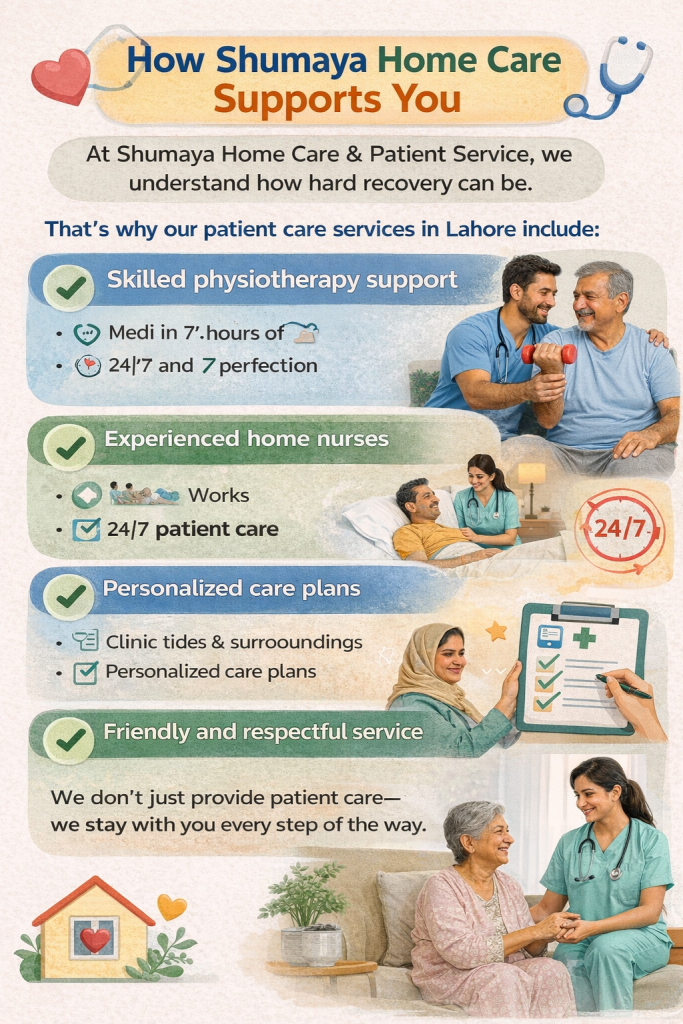
How Shumaya Home Care Supports You
At Shumaya Home Care & Patient Service, we understand how hard recovery can be.
That’s why our patient care services in Lahore include:
Skilled physiotherapy support
Experienced home nurses
24/7 patient care
Personalized care plans
Friendly and respectful service
We don’t just provide patient care—we stay with you every step of the way.
Internal Links You May Find Helpful
To learn more, check out these helpful guides:
Final Thoughts
So, what did we learn today?
Physiotherapy in home care is all about helping you move, heal, and feel better—right at home.
It:
Speeds up recovery
Reduces pain
Improves daily life
Prevents future problems
Boosts confidence
And when combined with home nursing services in Lahore, it becomes even more effective.
If you or your loved one needs support, remember—you’re not alone.