
Simple, Caring Tips for Comfort at Home
Taking care of a bedridden patient can feel overwhelming at times—especially when pain becomes part of daily life. You might be wondering, “Am I doing enough to keep them comfortable?”
Guess what? You can make a big difference with the right pain management techniques and a little guidance.
At Shumaya Home Care & Patient Service, we see every day how proper patient care at home can bring comfort, dignity, and peace to both patients and families. In this guide, we’ll walk you through easy, practical ways to manage pain for bedridden patients—in simple words, just like a friendly chat.

What Does “Pain Management” Mean?
Let’s keep it simple.
Pain management means finding ways to reduce or control pain so the patient feels more comfortable.
Pain can be:
- Mild (a little discomfort)
- Moderate (noticeable and bothersome)
- Severe (hard to ignore, affects sleep and mood)
For bedridden patients, pain often comes from:
- Staying in one position too long
- Pressure sores (bedsores)
- Muscle stiffness
- Medical conditions like arthritis, stroke, or cancer
Good news: With proper home nursing services in Lahore, most of this pain can be managed right at home.
Why Pain Management Matters So Much
Think about lying in one position for hours… sounds uncomfortable, right? Now imagine doing that for days or weeks.
Without proper care, pain can:
- Affect sleep
- Lower mood
- Slow recovery
- Cause stress for both patient and family
That’s why patient care services in Lahore focus not just on treatment—but also on comfort and quality of life.
Common Causes of Pain in Bedridden Patients
Before we talk about solutions, let’s understand the problem.
1. Pressure Sores (Bedsores)
These happen when the skin stays under pressure for too long.
Common areas:
- Back
- Hips
- Heels
- Elbows
2. Muscle Stiffness
When the body doesn’t move much, muscles become tight and painful.
3. Joint Pain
Conditions like arthritis can get worse without movement.
4. Nerve Pain
Some patients feel burning or tingling due to nerve damage.
5. Emotional Stress
Yes, pain isn’t always physical. Feeling helpless or lonely can increase discomfort.
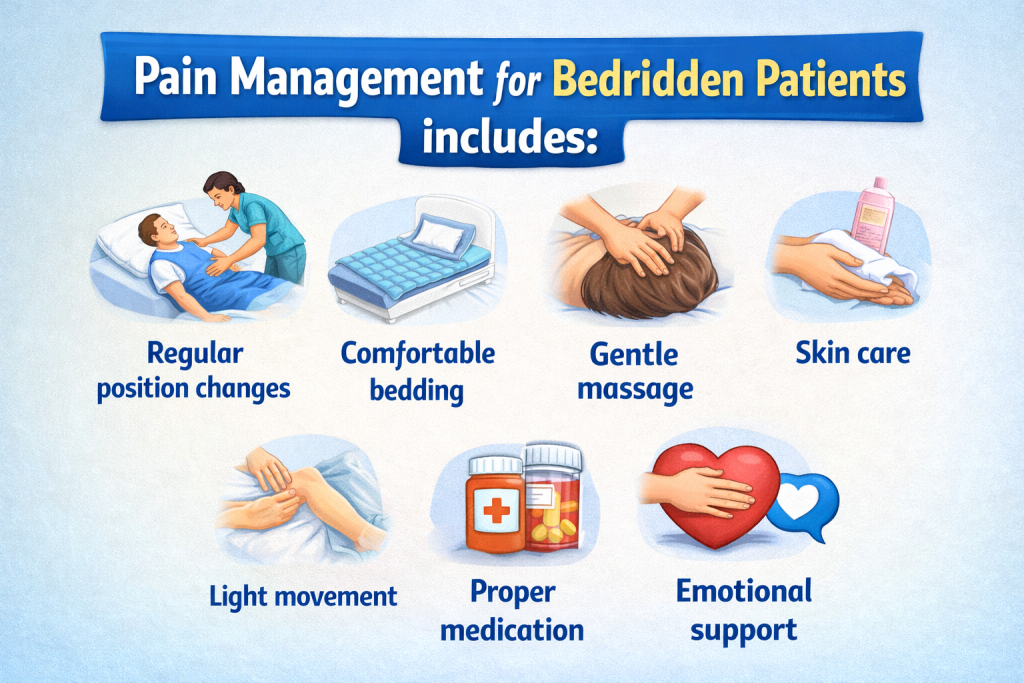
Simple Pain Management Techniques You Can Use at Home
Now let’s get to the part you’ve been waiting for—what can you actually do?
1. Change Positions Regularly
This is one of the easiest and most effective methods.
👉 Try this:
- Turn the patient every 2 hours
- Use pillows to support the body
- Keep joints in a natural position
Why it helps:
It reduces pressure on the skin and improves blood flow.
2. Use Soft Bedding and Support
Comfort starts with the bed.
Helpful tips:
- Use an air mattress or soft foam mattress
- Keep bedsheets clean and wrinkle-free
- Add cushions under pressure points
Isn’t it amazing how something simple like a pillow can reduce pain?
3. Gentle Massage
A light massage can do wonders.
How to do it:
- Use warm oil or lotion
- Apply gentle pressure
- Focus on stiff areas
Benefits:
- Relaxes muscles
- Improves blood circulation
- Reduces stress
4. Apply Heat or Cold Therapy
This is a simple home trick.
- Warm compress → Helps with stiffness
- Cold compress → Reduces swelling
⚠️ Always check skin sensitivity before applying.
5. Keep the Skin Clean and Dry
Healthy skin = less pain.
Daily care:
- Clean gently with mild soap
- Dry properly
- Use moisturizer
This helps prevent bedsores, which can be very painful.
6. Encourage Gentle Movement
Even small movements can help.
Examples:
- Moving arms and legs
- Simple stretching
- Assisted exercises
With help from home nursing services in Lahore, these exercises can be done safely.
7. Proper Medication (When Needed)
Sometimes, medicines are necessary.
These may include:
- Painkillers
- Muscle relaxants
- Anti-inflammatory drugs
⚠️ Always follow the doctor’s advice.
8. Emotional Support Matters Too
Here’s something many people forget.
A patient who feels cared for often feels less pain.
Try this:
- Talk to them
- Sit beside them
- Play their favorite TV show
A little kindness goes a long way.
Role of Professional Home Nursing
Let’s be honest—managing all this alone can be tough.
That’s where Home Nursing comes in.
At Shumaya, our trained staff provides:
- Pain assessment
- Safe patient handling
- Bed sore prevention
- Medication management
👉 Learn more about our services here:
- Home Nursing Services in Lahore
- Patient Care Services in Lahore
With professional help, you don’t have to carry the burden alone.
Real-Life Example
Let’s make this more real.
Ali’s father was bedridden after a stroke. At first, he had:
- Severe back pain
- Trouble sleeping
- Low mood
After starting proper patient care at home:
- He was repositioned regularly
- Given gentle massages
- Supported by a trained nurse
Within weeks, his pain reduced, and he started sleeping better.
Small changes = big results.
Daily Pain Care Routine (Easy Checklist)
Here’s a simple routine you can follow:
Morning:
- Clean and freshen up the patient
- Check skin for redness
- Do light exercises
Afternoon:
- Change position
- Offer a healthy meal
- Give medication if needed
Evening:
- Gentle massage
- Relaxation time (TV, talk, prayer)
Night:
- Comfortable sleeping position
- Clean bedding
Stick to this routine and you’ll see improvement.
Common Mistakes to Avoid
Let’s save you from some common problems.
❌ Not changing position often
❌ Ignoring early signs of bedsores
❌ Using rough or hard bedding
❌ Skipping doctor advice
❌ Forgetting emotional care
Avoiding these can make a huge difference.
When Should You Call a Doctor?
Sometimes, home care isn’t enough.
Call a doctor if you notice:
- Severe or sudden pain
- Open wounds or bedsores
- Swelling or redness
- Fever
- Patient becomes unresponsive
Don’t wait—early action is always better.
Frequently Asked Questions (FAQs)
1. How often should I move a bedridden patient?
Every 2 hours is ideal to prevent pain and bedsores.
2. What is the best mattress for bedridden patients?
An air mattress or pressure-relief mattress works best.
3. Can massage reduce pain?
Yes! Gentle massage helps relax muscles and improve blood flow.
4. Is home nursing really helpful?
Absolutely. Home nursing services in Lahore provide trained support that improves comfort and safety.
5. What if the patient refuses movement?
Try to encourage gently. Explain benefits and keep movements slow and comfortable.
Helpful Tips You Can Start Today
Here are some quick wins:
- Keep a pain diary (note when pain increases)
- Use comfortable clothing
- Maintain a calm environment
- Stay patient and positive
You’re doing something truly meaningful.
How Shumaya Home Care Can Help
At Shumaya Home Care & Patient Service, we understand your challenges.
Our patient care services in Lahore are designed to make life easier for you and your loved ones.
We provide:
- Skilled home nurses
- 24/7 patient care
- Personalized pain management plans
- Friendly and respectful support
We don’t just care for patients—we support families too.
Quick Summary
Let’s wrap it up!
Pain management for bedridden patients includes:
- Regular position changes
- Comfortable bedding
- Gentle massage
- Skin care
- Light movement
- Proper medication
- Emotional support
With the right steps and support, you can improve comfort and quality of life.