
A stroke changes more than movement or speech. For many families, the hardest part of recovery isn't the physical therapy — it's watching a loved one's mood and personality shift in ways no one warned them about.
Bedridden Patient Care
Complete family guide
Palliative Care at Home
Comfort & quality of life
Nursing Services in Lahore
Trained care at home
Why Emotional Changes Happen After a Stroke
A stroke damages part of the brain, and the brain controls emotions just as much as it controls arms, legs, and speech. Depending on which area was affected, a patient may struggle to control how they feel or how they react.
There's also the emotional weight of the stroke itself. Losing the ability to walk, talk, or care for oneself is a huge adjustment. It's normal for a patient to grieve the life they had before, even while they're grateful to be alive.
Common Emotional Changes to Expect
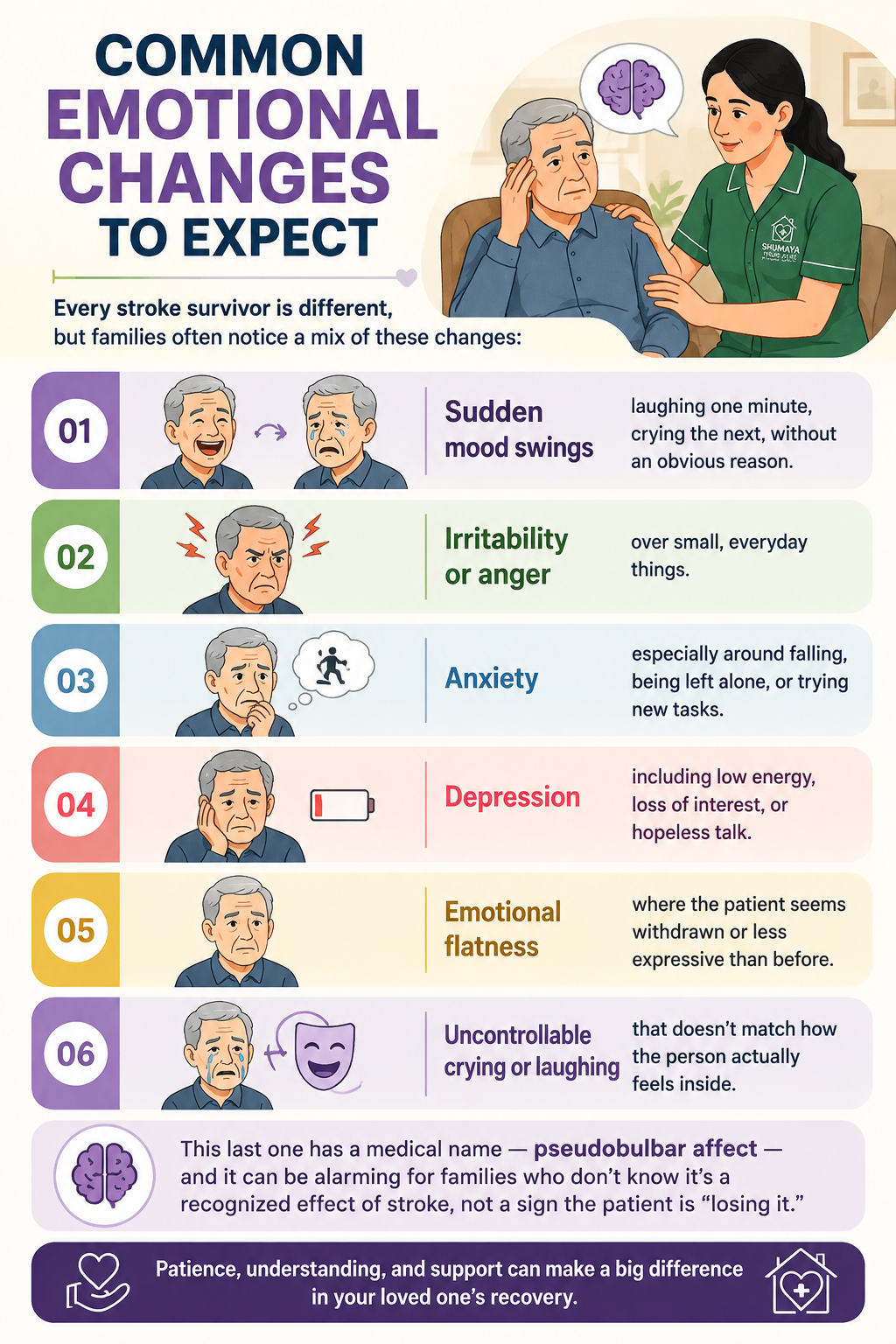
Every stroke survivor is different, but families often notice a mix of these changes:
- ✓Sudden mood swings — laughing one minute, crying the next, without an obvious reason
- ✓Irritability or anger over small, everyday things
- ✓Anxiety, especially around falling, being left alone, or trying new tasks
- ✓Depression, including low energy, loss of interest, or hopeless talk
- ✓Emotional flatness, where the patient seems withdrawn or less expressive than before
- ✓Uncontrollable crying or laughing that doesn't match how the person actually feels inside
This last one has a medical name — pseudobulbar affect — and it can be alarming for families who don't know it's a recognized effect of stroke, not a sign the patient is "losing it."
Is This Depression, or Something Else?
Families often ask whether these changes are just sadness about the stroke, or something more serious. Post-stroke depression is common and real, and it's different from general low mood. It can affect sleep, appetite, motivation, and participation in rehabilitation, so it should not be ignored.
The safest step is to mention any lasting sadness, hopelessness, or loss of interest to the patient's doctor. Emotional changes after stroke are treatable — a doctor can tell whether therapy, medication, or both would help.
How Families Can Respond
You don't need to have the perfect words. What helps most is consistency and patience.
Stay calm during outbursts
Reacting with frustration usually makes things worse. A quiet, steady voice helps the patient settle faster.
Name the change without blame
Something like, "I know this is hard right now," works better than asking, "Why are you so upset?"
Give the patient time to respond
Communication can become harder after a stroke. Avoid finishing sentences for them or rushing their answers — giving them time reduces frustration and helps them feel involved.
Keep routines predictable
A steady daily schedule for meals, therapy, and rest gives an unsettled brain something familiar to hold onto.
Watch for triggers
Tiredness, pain, or too much noise and activity often make emotional swings worse. Reducing these where possible can prevent a hard moment before it starts.
Celebrate small wins
Recovery can feel painfully slow to a stroke survivor. Recognizing small progress, like holding a spoon steadier than last week, can lift mood in a real way.
When to Call a Doctor
Reach out to the patient's doctor if you notice:
- Talk of hopelessness or not wanting to be here anymore
- Emotional changes getting worse instead of better over several weeks
- Complete withdrawal from family, food, or activities they used to enjoy
- Anger that leads to harming themselves or others
- Sudden, severe changes in behavior or confusion — this can signal a medical issue, not just an emotional one
These signs deserve a medical conversation, not a wait-and-see approach.
Where Home Nursing Support Fits In
Managing physical recovery and emotional ups and downs at the same time is a lot for one family to carry alone. For families managing stroke recovery at home in Lahore, trained home nursing support can make daily care easier.
A nurse who visits regularly can:
- ✓Notice changes in mood and behavior early
- ✓Support daily routines and personal care
- ✓Assist with medication schedules as directed by the doctor
- ✓Communicate any concerns to the family promptly
- ✓Give family caregivers time to rest
This kind of support doesn't replace medical or psychological treatment — it works alongside it, making daily life more manageable while the patient's doctor handles the emotional and medical side of recovery. Regular physiotherapy support can also play a role in this stage of recovery, helping the patient rebuild confidence alongside their emotional healing.
FAQs
Do emotional changes after stroke go away with time?
For many patients, mood stabilizes as the brain heals and daily routines return. Some emotional effects can last longer, which is why ongoing check-ins with a doctor matter.
Can medication help with post-stroke mood swings?
Yes. Doctors sometimes prescribe medication for depression or pseudobulbar affect after stroke, alongside therapy and family support.
Why does a stroke survivor suddenly cry or laugh?
This is often pseudobulbar affect — a common effect of stroke where emotional expression doesn't match how the person actually feels inside. It's a recognized medical condition, not a sign of instability, and a doctor can advise on ways to manage it.
Is it normal for a stroke survivor to seem like a different person?
Personality shifts after stroke are common and usually connected to the specific part of the brain affected. It doesn't mean the person is gone — it means their brain needs time and support to heal.
If your family is navigating stroke recovery at home, professional home nursing and patient care support can ease the load — for both the patient and the people caring for them.
Explore More
Need support caring for a stroke patient at home?
Talk to our team in Lahore for a free consultation on nursing and patient care plans.