
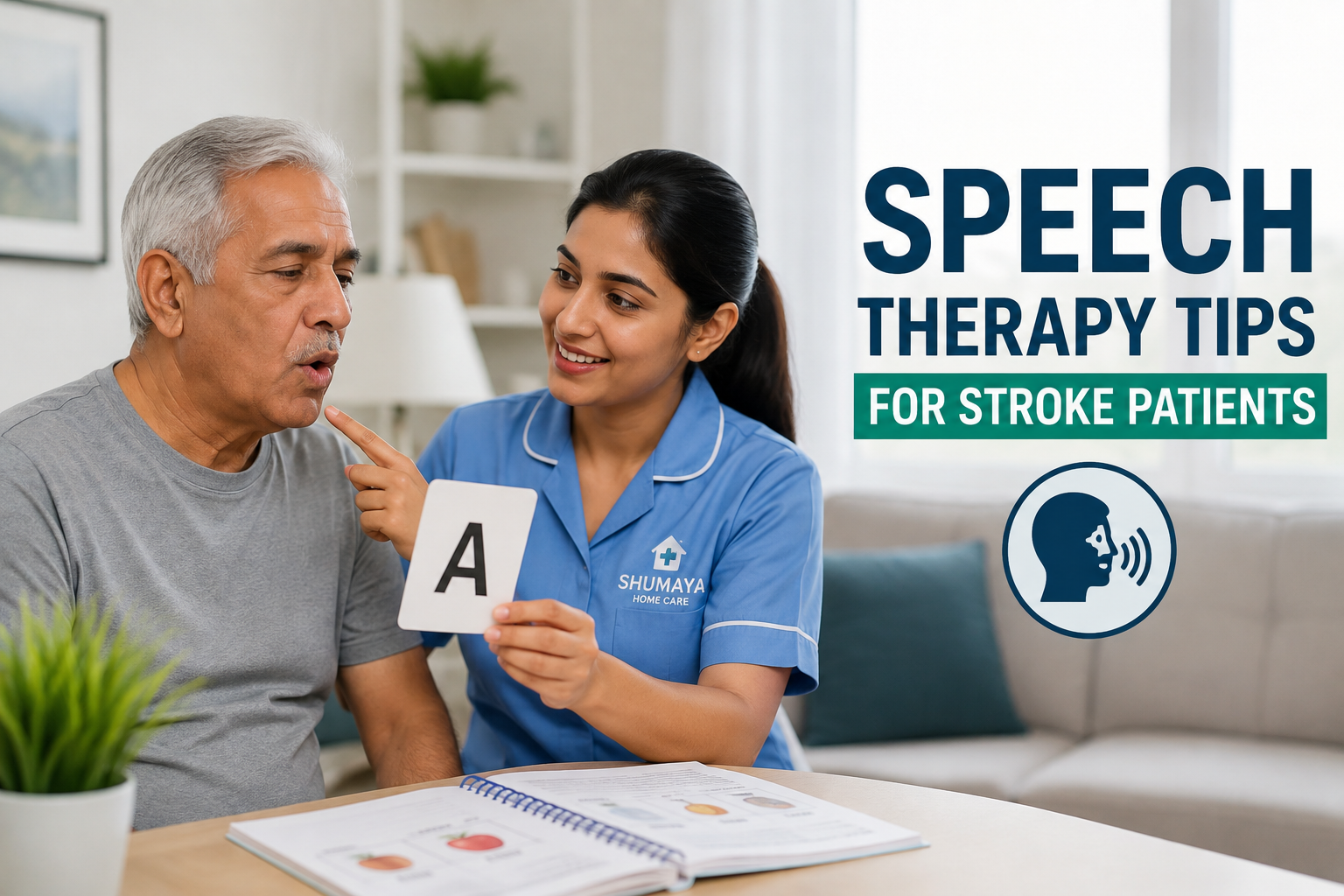
A stroke can take away the words a person has used their whole life. Here's how families in Lahore can support speech recovery every day, alongside professional therapy.
A stroke can change so much in a single day. One moment a person is talking, laughing, and telling stories the way they always have. The next, they may struggle to find a word, slur their speech, or feel unable to say what they mean at all.
For families in Lahore caring for a loved one after a stroke, this is one of the hardest parts of recovery. You know what they want to say, but the words just won't come out the way they used to.
The good news is that speech often improves with the right support. Speech therapy for stroke patients, combined with steady practice at home, can help rebuild communication step by step. Here's what actually helps.
Stroke can affect speech in a few different ways, and it helps to know which one you're dealing with:
Trouble finding words, forming sentences, or understanding what others say.
Slurred or slow speech caused by weak muscles in the mouth, face, or tongue.
The brain struggles to coordinate the movements needed to speak, even though the muscles themselves work fine.
A speech-language therapist can figure out which of these is affecting your loved one and build a plan around it. Getting this diagnosis early makes a real difference in how therapy is planned.
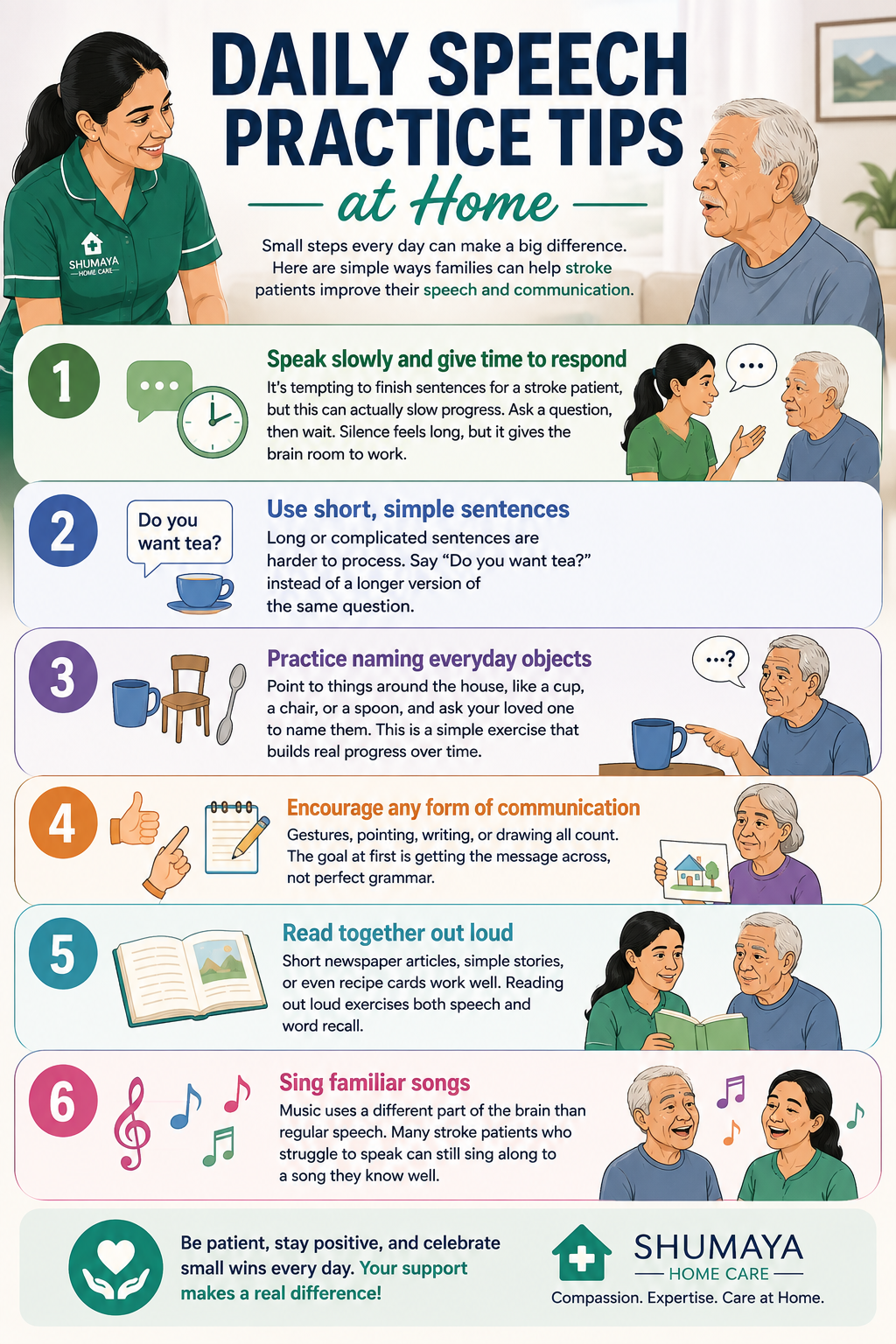
Therapy sessions matter, but the practice that happens between sessions matters just as much. Here are ways families can help every day:
It's tempting to finish sentences for a stroke patient, but this can actually slow progress. Ask a question, then wait. Silence feels long, but it gives the brain room to work.
Long or complicated sentences are harder to process. Say "Do you want tea?" instead of a longer version of the same question.
Point to things around the house, like a cup, a chair, or a spoon, and ask your loved one to name them. This is a simple exercise that builds real progress over time.
Gestures, pointing, writing, or drawing all count. The goal at first is getting the message across, not perfect grammar.
Short newspaper articles, simple stories, or even recipe cards work well. Reading out loud exercises both speech and word recall.
Music uses a different part of the brain than regular speech. Many stroke patients who struggle to speak can still sing along to a song they know well.
The environment around a stroke patient affects how well they communicate, sometimes more than people realize.
- Keep background noise low during conversations. A television playing in the background or several people talking at once makes it much harder to focus on forming words.
- Face the person directly when speaking so they can see your mouth and expressions. This gives extra clues that support understanding, especially in the early weeks after a stroke.
- Avoid correcting every mistake. Constant correction can make a patient anxious or reluctant to try speaking at all. Gentle encouragement works better than pointing out every error.
- Involve the whole family in conversations, not just the main caregiver. Hearing different voices and having natural conversations, rather than only therapy-style drills, keeps recovery feeling normal rather than clinical.
A few habits can unintentionally slow speech recovery:
- Talking for the patient instead of letting them try first
- Raising your voice, which does not help since the issue is usually language, not hearing
- Skipping daily practice because progress feels slow
- Treating a bad day as a step backward instead of a normal part of recovery
Recovery after a stroke is rarely a straight line. Some days will be better than others, and that's expected.
Home practice supports recovery, but it works best alongside guidance from a trained speech-language therapist. A professional can track progress properly, adjust exercises as the patient improves, and catch warning signs that need medical attention, such as sudden trouble swallowing or new confusion.
Families managing stroke recovery at home in Lahore often combine professional therapy visits with the daily exercises above. Skilled home nursing services in Lahore can help coordinate this care, keep track of the patient's progress, and support the family between therapy sessions.
This varies widely. Some patients see noticeable change within weeks, while others continue improving for a year or more. Regular practice makes a real difference in the pace of recovery.
Many patients regain most or all of their speech, especially with early therapy. Others make strong progress but keep some lasting changes. Every recovery path looks a little different.
Yes, this is very common. Frustration usually eases as small wins build up. Patience from family members goes a long way here.
Helping a loved one find their words again takes patience, but small daily efforts add up. Simple conversations, everyday practice, and a calm, supportive home environment all support the work being done in speech therapy sessions.
Shumaya Home Care can help bridge the gap between hospital-based therapy and daily home care, giving stroke patients steady, family-focused support in Lahore.
Book a Free Consultation