
A stroke can happen in seconds, but the warning signs often show up before the worst of it. Many families later say the same thing: "We noticed something was off, but we weren't sure what to do." That short gap between noticing and acting is exactly where lives are saved or lost.
If you're caring for an elderly parent, a bedridden patient, or anyone recovering from surgery at home, knowing the early signs of stroke isn't optional — it's part of everyday patient care. This guide walks you through what to watch for, what to do in the moment, and how home nursing support can help patients recover safely afterward.
If stroke recovery is on your mind, these guides can help too.
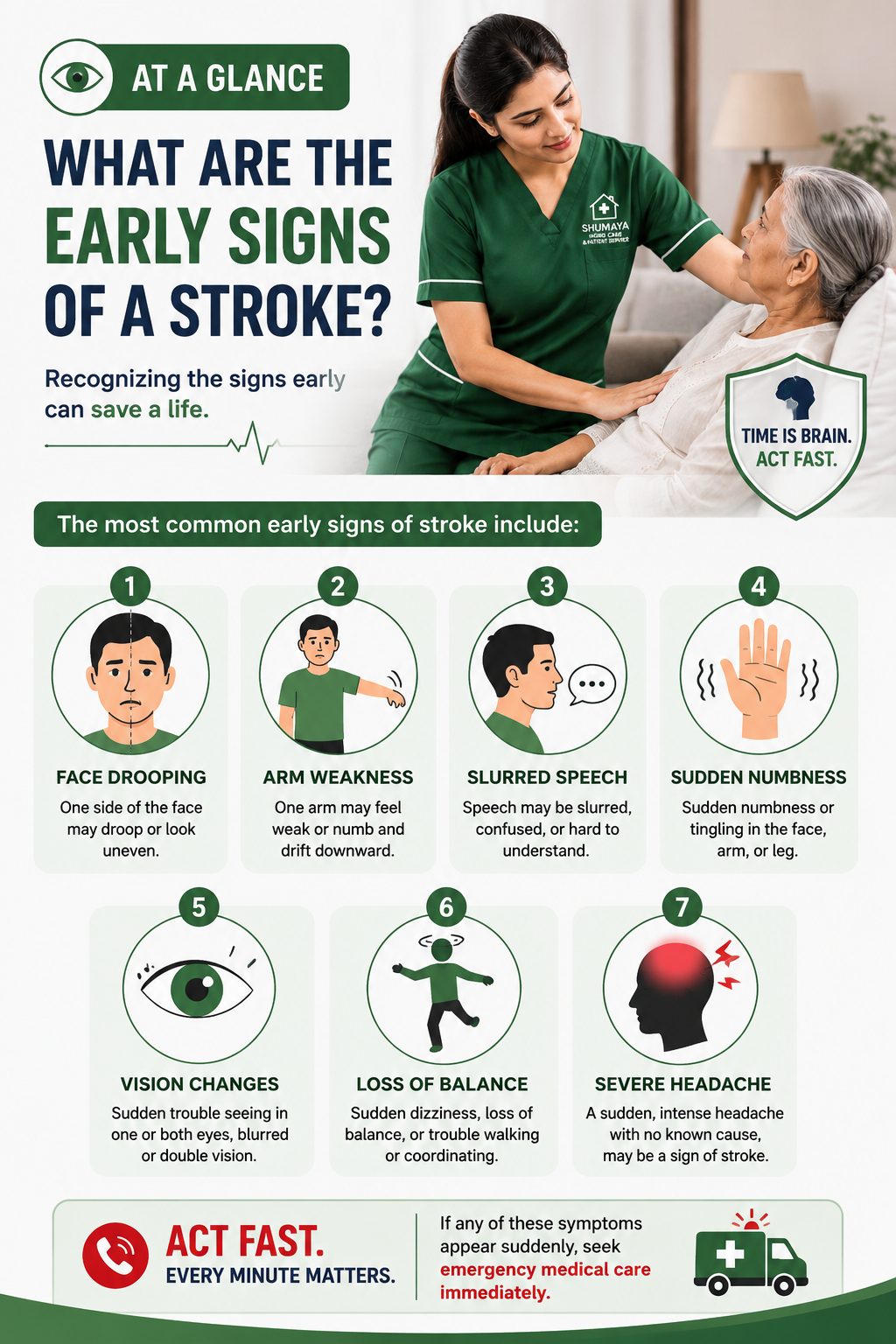
The most common early signs of stroke include:
If any of these symptoms appear suddenly, seek emergency medical care immediately.
A stroke happens when blood flow to part of the brain is suddenly cut off or reduced. Without blood, brain cells start to die within minutes. That's why doctors often say "time is brain" — the faster a stroke is treated, the better the chances of recovery.
There are two main types: one caused by a blocked blood vessel, and one caused by a burst blood vessel. Both need emergency medical attention right away.
The signs of stroke usually appear suddenly. Here are the ones families should never ignore:
Sudden weakness or numbness on one side of the face, arm, or leg
Slurred or confused speech, or trouble understanding what others are saying
Drooping on one side of the face, especially noticeable when the person smiles
Sudden vision problems in one or both eyes
Loss of balance or coordination, sudden dizziness, or trouble walking
A severe headache with no known cause, sometimes described as the "worst headache of their life"
These signs can appear alone or together. Even if they go away quickly, they still need medical attention — a brief episode can be a warning sign of a bigger stroke coming later.
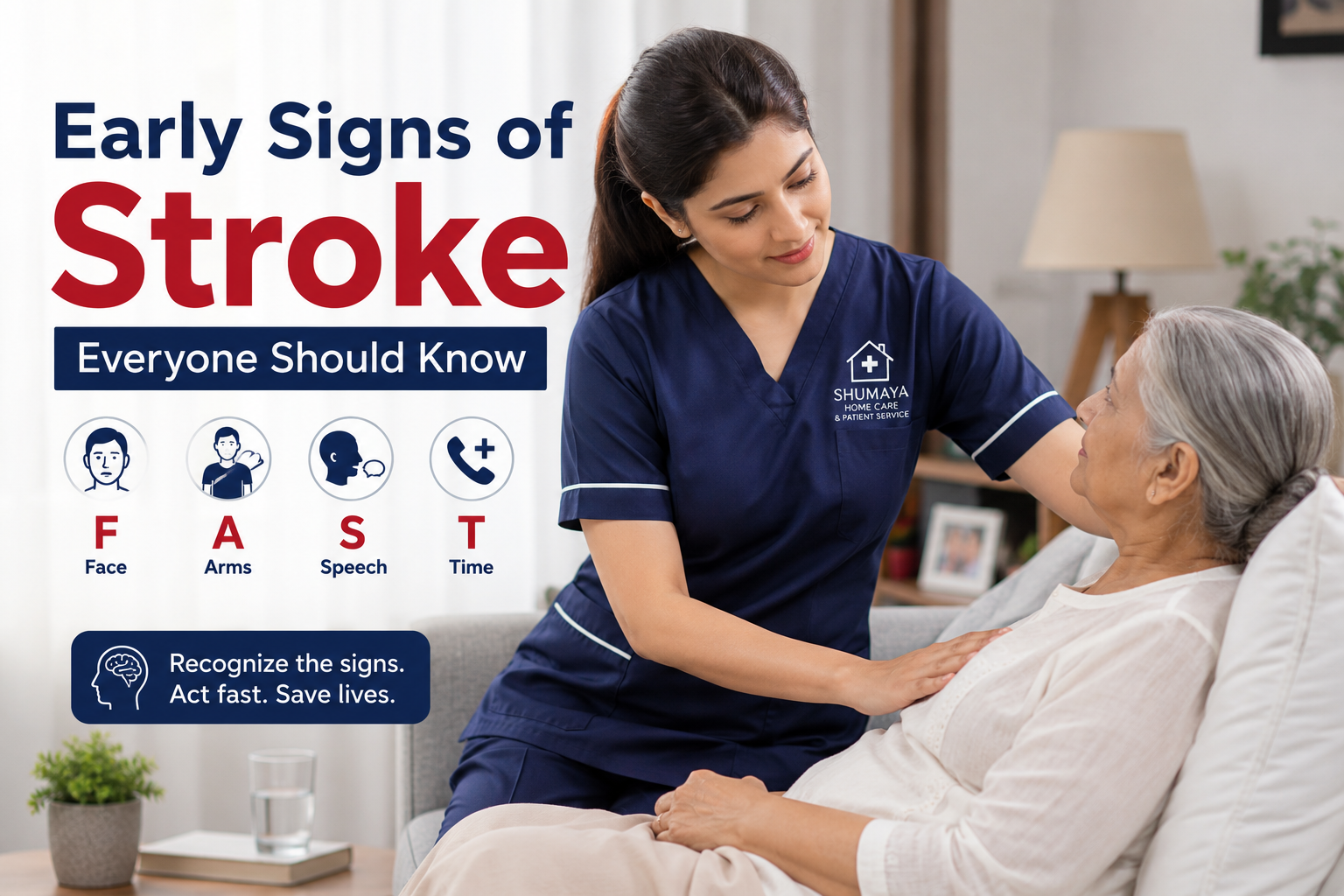
Doctors use a simple method called F.A.S.T. to help families recognize a stroke quickly:
Keeping this checklist in mind, especially for elderly care or patients with heart conditions and diabetes, can make a real difference in how fast help arrives.
Some patients need extra attention because they're more likely to have a stroke:
- Older adults, especially those over 65
- Patients with high blood pressure or heart disease
- Diabetic patients
- People who've had a stroke before
- Patients who smoke or have poor circulation
If you're already managing daily care for someone in one of these groups, it helps to build stroke awareness into your regular routine — not just as a one-time lesson.
Many people ignore symptoms because they disappear after a few minutes. This can be a Transient Ischemic Attack (TIA), often called a mini-stroke.
A TIA is a warning sign that a major stroke could happen soon. Even if the person feels normal again, they should be evaluated by a doctor immediately. Don't wait to see if the symptoms come back.
Stay calm and note the time symptoms started — doctors will ask.
Call for emergency medical help right away. Don't wait to see if symptoms pass.
Keep the person still and comfortable. Don't give them food, water, or medicine.
Loosen tight clothing and monitor their breathing.
If they lose consciousness, check breathing and be ready to assist until help arrives.
Never try to drive the person to the hospital yourself if an ambulance is available — emergency responders can start treatment on the way.
Recovery after a stroke doesn't end at the hospital. Many patients need help relearning basic movements, managing medication, and adjusting to daily life again. This is where trained home nursing support becomes valuable — helping with mobility, medication management, and physiotherapy exercises without the patient having to stay in the hospital longer than needed.
Families in Lahore managing post-stroke recovery at home often find it easier with a professional patient care team involved, especially in the first few weeks when the risk of falls or complications is highest.
Recognizing the early signs of stroke can be the difference between a full recovery and permanent damage. Whether you're caring for a parent, a bedridden patient, or someone recovering from surgery, staying alert to these warning signs is one of the simplest ways to protect the people you care for.
If you need extra support with daily patient care, recovery monitoring, or elderly care at home, a trained home nursing team can help you stay prepared — not just after a stroke, but every day.
Whether it's post-stroke recovery, elderly care, or daily monitoring, our trained home nursing team can help you stay prepared — every day, not just after an emergency.
Book a Free Consultation