
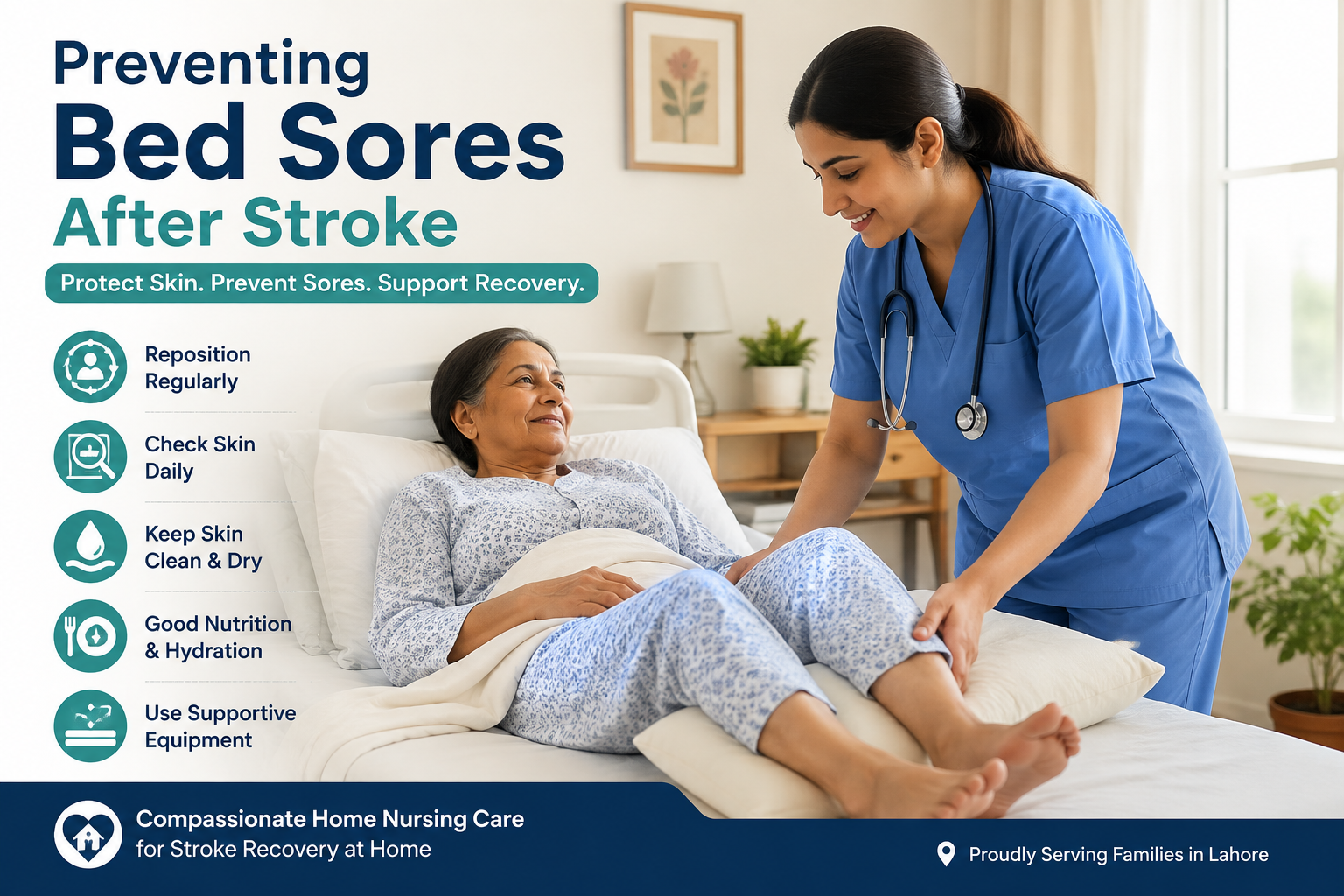
When a loved one comes home after a stroke, families usually focus on the big things first — movement, speech, daily routines. But there's a quieter risk that often gets missed: bed sores. With the right home nursing care and a few daily habits, most are preventable.
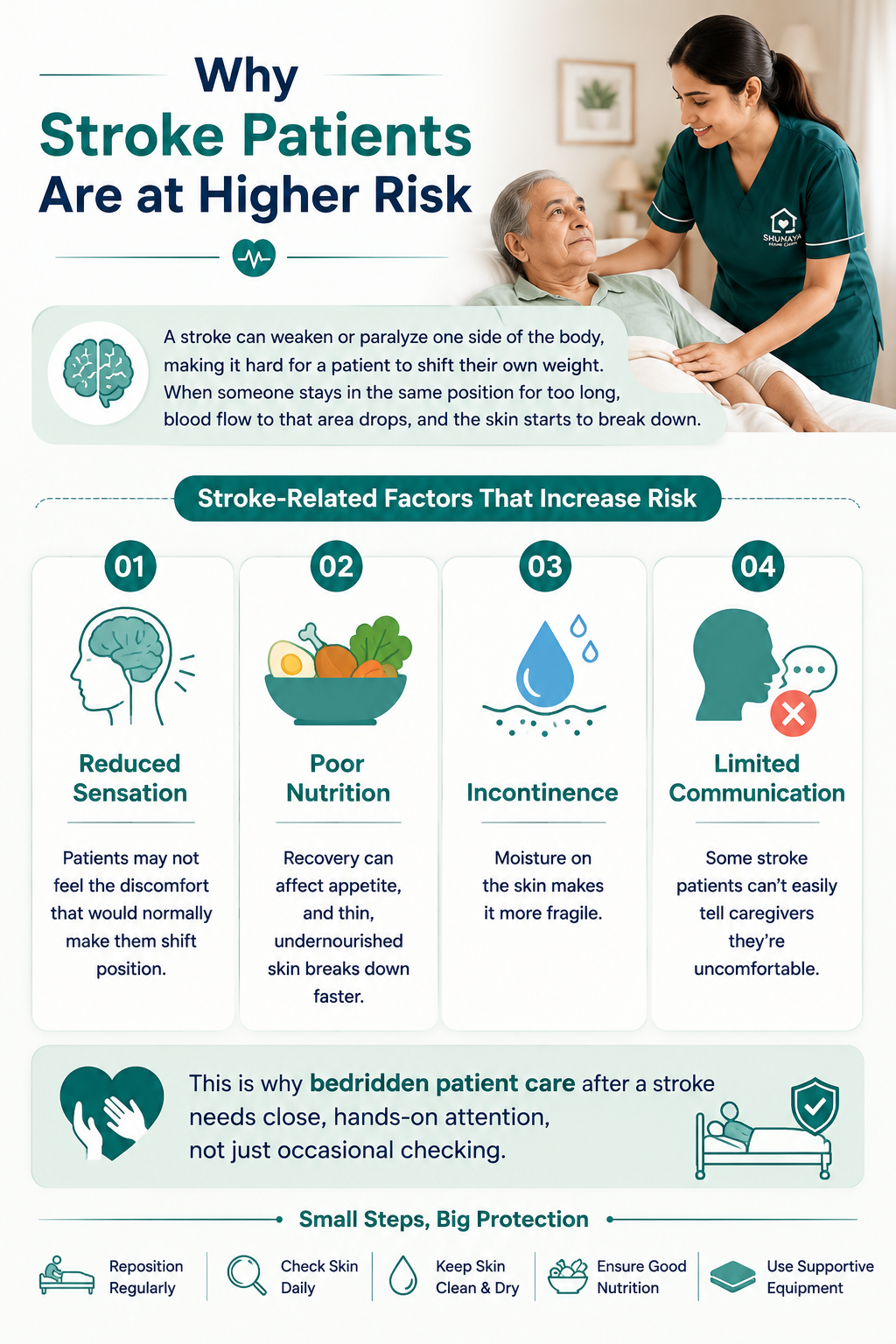
A stroke can weaken or paralyze one side of the body, making it hard for a patient to shift their own weight. When someone stays in the same position for too long, blood flow to that area drops, and the skin starts to break down.
A few other stroke-related factors raise the risk:
This is why bedridden patient care after a stroke needs close, hands-on attention, not just occasional checking.
Bed sores tend to form over bony areas where there's less natural padding. Watch closely for:
- Heels and ankles
- Hips and lower back (tailbone)
- Shoulder blades
- Elbows
- The back of the head, if the patient lies flat often
If your loved one favors one side of the body due to weakness from the stroke, that side needs extra attention.
Catching a bed sore early makes all the difference. During daily care, look for:
- Redness that doesn't fade after removing pressure for 10–15 minutes
- Warm or firm patches of skin compared to the surrounding area
- Skin that looks shiny or feels different in texture
- Small blisters or open areas, which mean the sore has already progressed
A simple daily skin check — done during bathing or repositioning — catches most problems before they become serious.
The single best way to prevent bed sores is regular repositioning. For stroke patients who can't move independently, this means:
- Changing position at least every 2 hours if bedbound
- Shifting weight every 15–20 minutes for those in a wheelchair
- Using pillows or foam wedges to support the weak side and relieve pressure on bony areas
- Avoiding dragging the patient across sheets, which can cause friction injuries — lift gently instead
Keeping a simple repositioning schedule on the wall or phone helps caregivers stay consistent, especially during the first few weeks home.
Healthy skin resists pressure damage better. A few daily habits go a long way:
- Keep skin clean and dry, especially after any incontinence episodes
- Use a mild, fragrance-free moisturizer to prevent dryness and cracking
- Avoid harsh scrubbing — pat skin dry instead of rubbing
- Check bedding regularly for wrinkles or dampness, both of which increase friction
Skin heals and stays strong when the body gets enough protein, vitamins, and fluids. After a stroke, appetite can be low, so families often need to be intentional about:
- Offering protein-rich foods like eggs, lentils, chicken, or dairy
- Encouraging small, frequent meals if large portions feel overwhelming
- Keeping the patient hydrated throughout the day, unless a doctor has advised fluid limits
- Speaking with a doctor about supplements if the patient isn't eating well
Good nutrition supports both stroke recovery and skin health at the same time.
A few tools make prevention easier at home:
Home nursing services can help families choose the right equipment based on the patient's specific mobility level and risk factors.
Some situations need medical attention right away, not just home care.
- An open sore or wound that isn't healing
- Signs of infection, such as pus, odor, or increasing redness
- Fever along with a skin wound
- A sore that keeps returning in the same spot despite repositioning
Left untreated, bed sores can lead to serious infections, so early medical involvement matters.
Caring for a stroke patient at home is demanding, especially in the early weeks. A trained home nurse can:
- Perform regular skin checks and document any changes
- Manage a consistent repositioning schedule
- Assist with safe, gentle movement to avoid friction injuries
- Coordinate with doctors if a sore does develop
For families in Lahore managing stroke recovery at home, professional patient care services can take pressure off the family while keeping the patient safer and more comfortable.
Preventing bed sores after a stroke comes down to consistency — daily skin checks, regular repositioning, good nutrition, and the right equipment. These small habits protect a patient's comfort and safety throughout recovery.
- Check skin daily during bathing or repositioning
- Reposition every 2 hours in bed, every 15–20 minutes in a wheelchair
- Keep skin clean, dry, and moisturized
- Support recovery with protein-rich meals and steady hydration
- Call a doctor at the first sign of an open wound or infection